- Company Articles
- Products and Technology
- Product knowledge
- Reusable Design: End Support for Roller Track Placon Mount with Wheel in Lean Manufacturing

Reusable Design: End Support for Roller Track Placon Mount with Wheel in Lean Manufacturing
Related Product
End Support for Roller Track Placon Mount with Wheel
End support for roller track placon mount with wheel,the special design with end wheel,make it with more flexible function for roller track and pipe connection and give more option for selection for building flow rack system.
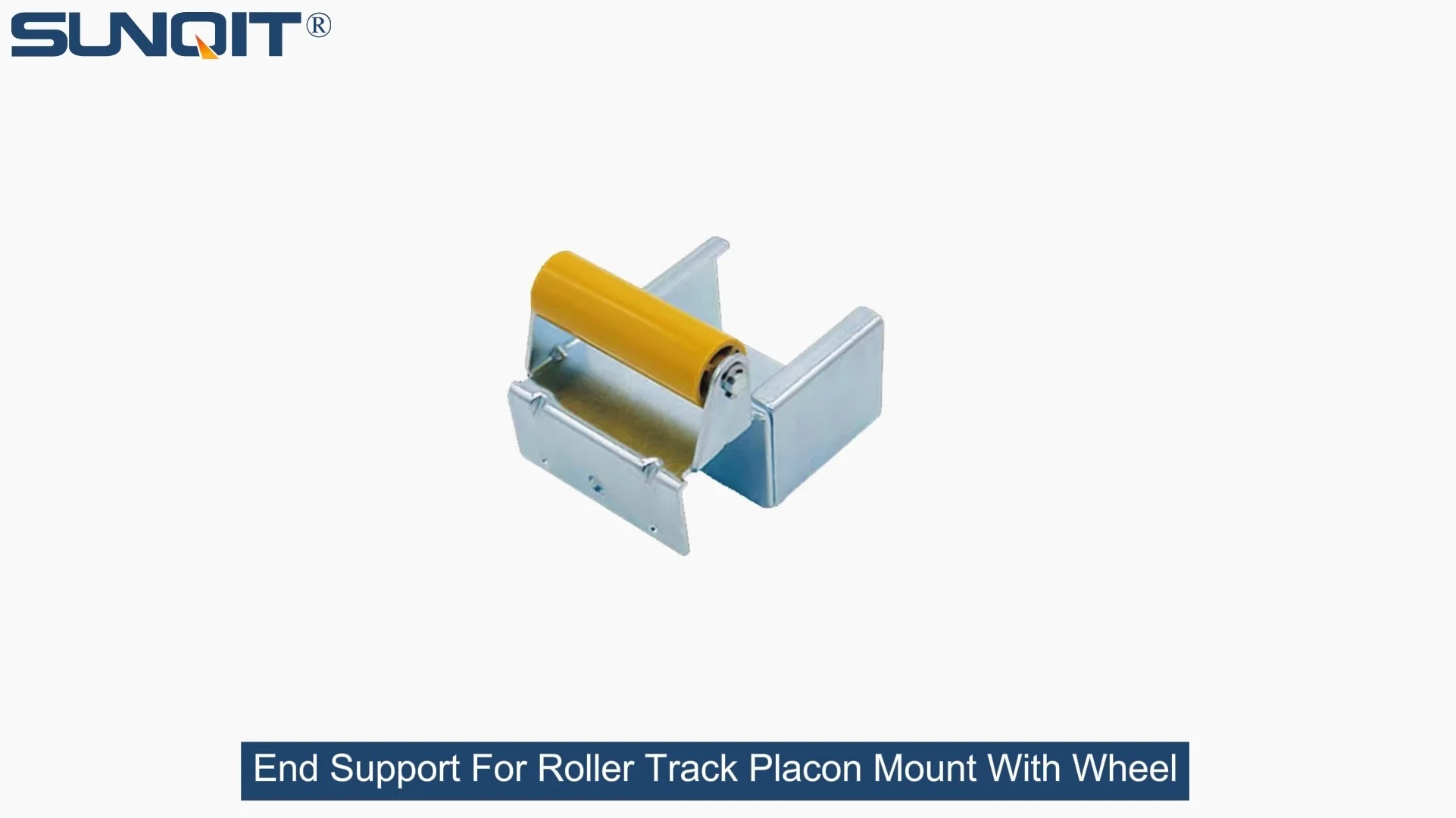
Lean manufacturing isn't just about cutting waste—it's about breathing life into production processes. It's about creating systems that adapt, evolve, and keep up with the ever-changing rhythm of modern manufacturing. In this world of constant iteration, every component matters. Take something as seemingly small as the End Support for Roller Track Placon Mount with Wheel . At first glance, it's just a part of a roller track system. But dig deeper, and you'll find it's a quiet hero—one that turns rigid production lines into flexible, living ecosystems where efficiency and sustainability coexist.
Today, we're diving into how this unassuming component, paired with our broader lean system , is redefining what it means to build production lines that don't just work hard, but work smart—reusing, adapting, and growing with your business every step of the way.
The Art of Reusable Design: More Than Just "Built to Last"
In manufacturing, change is the only constant. A factory might produce smartphone components this month and shift to wearable tech next quarter. A medical device plant could scale up production for a new instrument, then downsize as demand stabilizes. In these scenarios, traditional fixed equipment often becomes a liability—bolted down, hard to modify, and eventually destined for the scrap heap when the next production line upgrade comes along.
That's where reusable design changes the game. It's not just about durability (though that's a given). It's about designing components that can be repurposed , reconfigured , and reused across different production setups. Think of it like a toolkit where every piece has multiple jobs—so when your needs shift, you're not starting from scratch. Our lean pipe system has always been built on this idea: aluminum pipes and joints that snap together, break down, and snap again into new shapes, no welding or heavy tools required.
And the End Support for Roller Track Placon Mount with Wheel ? It's the epitome of this philosophy. Let's break down why:
| Design Feature | What It Means for Your Factory |
|---|---|
| Integrated Wheel Mechanism | Makes moving and repositioning roller tracks a one-person job—no need for forklifts or heavy lifting during line reconfigurations. |
| Placon Mount Compatibility | Snaps easily onto aluminum profiles, so you can mount it on existing workbenches, racks, or stands without drilling new holes. |
| Durable Aluminum Build | Lightweight yet strong enough to handle heavy loads, ensuring it lasts through multiple reuses without wear and tear. |
| Modular Connection Points | Works with other roller track accessories (like guides, stops, or connectors), so you can customize its function based on the task. |
Where It Shines: Real-World Applications in Lean Manufacturing
Great design means nothing if it doesn't solve real problems. Let's walk through a few scenarios where the End Support with Wheel becomes more than a part—it becomes a catalyst for smoother, more flexible operations.
1. 3C Assembly: Keeping Up with Tech's Fast Pace
The 3C industry (computers, communications, consumer electronics) moves at lightning speed. New phone models, smaller tablets, slimmer laptops—each requires production lines that can switch between products in days, not weeks. Imagine a factory floor where roller tracks carry circuit boards from one station to the next. With traditional fixed end supports, changing the track's angle or length to fit a new product would mean dismantling and rebuilding. But with the End Support's wheeled design?
"We recently helped a 3C manufacturer reconfigure their assembly line for a new smartwatch model," says one of our design engineers. "They needed to lower the roller track by 15cm to match the height of their new ESD workbench . With the wheeled end supports, their team adjusted the entire track in under an hour—no tools, no downtime. The old setup would've taken half a day and required new mounting brackets. That's the difference reusable design makes."
2. Medical Device Production: Precision Meets Flexibility
Medical manufacturing demands two things: absolute precision and strict compliance with cleanroom standards. But that doesn't mean production lines have to be rigid. A client in the medical device sector recently came to us with a challenge: they needed a roller track system to transport delicate surgical instrument components between sterilization and assembly. The catch? Their production volume fluctuates seasonally, so the line needed to expand or contract without compromising sterility.
We paired our aluminum roller track with the End Support with Wheel. The wheels allowed them to add or remove track sections quickly during peak seasons, while the aluminum build (easy to sanitize) kept their cleanroom compliant. "It's like having a production line that breathes," they told us. "We're not stuck with a fixed layout when demand spikes—we just roll out more track and keep moving."
3. Warehousing & Logistics: Streamlining Material Flow
Warehouses are all about flow—getting materials from point A to point B with minimal effort. Flow racks and roller tracks are the backbone of this, but they're often installed as permanent fixtures. When a warehouse reorganizes its storage zones (a common task as inventory mixes change), fixed tracks become obstacles.
The End Support with Wheel turns roller tracks into "mobile highways." A logistics client in automotive parts used this to their advantage: during morning shifts, they use the tracks to feed assembly lines with small components; in the afternoon, they reposition the same tracks to handle larger parts for evening shipments. No disassembly, no waste—just a quick roll and lock into place.

Working in Harmony: Synergy with Other Lean Tools
Lean manufacturing isn't about single components—it's about systems working together. The End Support with Wheel doesn't stand alone; it's part of a larger ecosystem of tools designed to make your entire production line more agile. Let's see how it plays with some of our other key products:
With Lean Pipe Workbenches: A Unified Workstation
Our lean pipe workbench is the heart of many assembly lines—customizable, sturdy, and built to adapt. Pair it with roller tracks supported by the End Support with Wheel, and you've got a workstation where materials flow directly to the operator. No more walking to fetch parts; the track delivers them right where they're needed. And when the workbench needs to be repositioned (to make space for a new machine, say), the wheeled supports let you move the entire track-and-workbench setup as a unit.
With Conveyors: Seamless Material Handling
Conveyors are great for long-distance material transport, but they can be rigid. By connecting conveyor ends to roller tracks with wheeled supports, you create "buffer zones" that absorb small delays in the line. For example, if a conveyor is temporarily backed up, the roller track (on wheels) can be adjusted to reroute materials to a secondary workstation—keeping the flow steady without shutting down the entire line.
With Flow Racks: Dynamic Storage That Adapts
Flow racks use gravity to feed materials forward, making picking faster. But what if you need to change the rack's angle to accommodate heavier or lighter items? The End Support with Wheel lets you tilt the roller track (and thus the flow rack) incrementally, fine-tuning the speed of material movement. It's like having a flow rack that can "learn" what works best for each product.

Sustainability: Good for the Planet, Great for Your Bottom Line
Let's talk about the elephant in the room: cost. Reusable design sounds great, but does it actually save money? The short answer: absolutely . Think about it: every time you reuse a component instead of buying a new one, you're cutting down on material costs, shipping, and disposal fees. Over time, those savings add up—especially in industries where production lines change frequently.
Take our lean tube and roller track systems, for example. A study by the Lean Manufacturing Institute found that manufacturers using reusable components reduce their equipment costs by 30-40% over five years compared to those using traditional fixed systems. And that's not counting the labor savings from faster reconfigurations or the reduced downtime during line changes.
But the benefits go beyond the balance sheet. In a world where consumers and regulators care deeply about sustainability, reusable design helps you reduce your carbon footprint. Fewer raw materials mined, fewer components sent to landfills, less energy used in production—these aren't just "green" talking points. They're competitive advantages. Clients increasingly ask: "Is your equipment sustainable?" With reusable components like the End Support with Wheel, you can answer with confidence.

Beyond the Part: Custom Solutions That Grow with You
At the end of the day, every factory is unique. What works for a 3C assembly line might not work for a heavy machinery plant. That's why we don't just sell components—we build lean solutions tailored to your specific needs. The End Support with Wheel is a versatile tool, but its real power shines when it's part of a system designed around your challenges.
For example, a client in automotive parts manufacturing needed a roller track system that could handle both small bolts and large engine components. We combined the End Support with Wheel with variable-height aluminum profiles and our stainless steel swivel roller balls (for smooth, multi-directional movement). The result? A single track system that adapts to different part sizes, reducing the need for multiple dedicated tracks.
Another client in e-commerce logistics wanted to optimize their order fulfillment area. We integrated wheeled roller tracks with our turnover trolleys , creating a "pick-and-pass" system where orders roll directly to packing stations. During peak shopping seasons, they simply add more track sections (using the same End Supports) to scale up—no new infrastructure required.
Small Parts, Big Impact: The Future of Lean Manufacturing
Lean manufacturing is often talked about in big terms: "eliminating waste," "optimizing workflows," "digital transformation." But the magic happens in the details—the components that make those big goals possible. The End Support for Roller Track Placon Mount with Wheel might not be the star of the production line, but it's the unsung hero that keeps the show running smoothly.
It's a reminder that in manufacturing, flexibility isn't a luxury—it's a necessity. And reusable design isn't just a trend; it's the future. A future where your production line doesn't just keep up with change—it embraces it. A future where every component, from the smallest joint to the largest workstation, is working double-time to create value, not waste.
So whether you're building a new line from scratch or upgrading an existing one, remember: the right parts can turn a good production process into a great one. And with reusable design on your side, you're not just investing in equipment—you're investing in a manufacturing system that grows, adapts, and thrives, no matter what the future brings.