- Company Articles
- Products and Technology
- Product knowledge
- Reusable Design: How Internal Straight Aluminum Joints Reduce Waste in Production

Reusable Design: How Internal Straight Aluminum Joints Reduce Waste in Production
Related Product
Internal straight aluminum joint
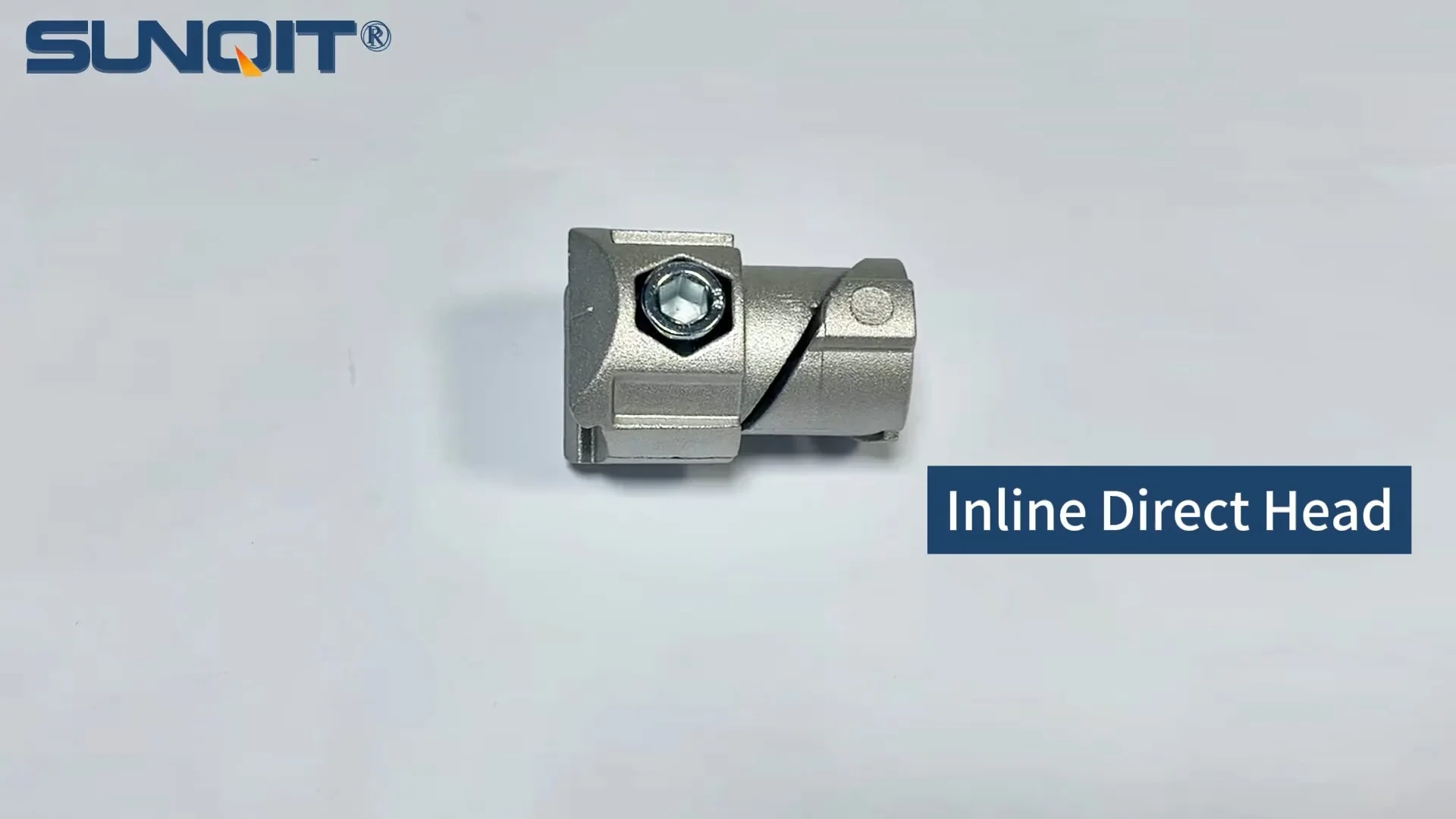
Aluminum pipe joint inside connection used for two pcs 28pcs aluminum pipe connection in straight angle,it connects two pcs pipe from inside.
Walk into any manufacturing plant, and you'll likely see the same silent problem hiding in plain sight: waste. It's in the pile of scrap metal by the loading dock, the half-assembled workbench that's "no longer the right size," the hours workers spend dismantling and rebuilding material racks because a new product line requires a different layout. For decades, manufacturing has operated on a "build, use, discard" cycle—one that's not just costly for businesses, but increasingly unsustainable for the planet. But what if the solution to this waste crisis was as simple as rethinking the tiny connectors that hold our production systems together? Enter internal straight aluminum joints: unassuming, versatile, and quietly revolutionizing how factories reduce waste, one reconfiguration at a time.
In this article, we'll dive into the world of these underrated components, exploring how their reusable design is cutting down on material scrap, slashing downtime, and aligning production lines with the circular economy. We'll talk to the plant managers who've swapped welded steel for aluminum extrusion profiles, the workers who no longer dread "rework days," and the data that proves: sometimes, the smallest parts make the biggest difference in building a waste-free future.
The Hidden Cost of "One-and-Done" Production Systems
Before we can appreciate the magic of internal straight aluminum joints, let's first understand the problem they're solving. Traditional manufacturing setups—think heavy steel frames welded into workbenches, material racks bolted permanently to the floor, or conveyor systems with fixed angles—are built for permanence. But in today's fast-paced production world, "permanence" is a liability. Consumer demands shift, product designs evolve, and factory layouts need to adapt overnight. When they can't, waste piles up.
Take Maria, a production supervisor at a mid-sized electronics plant in Ohio. Last year, her team spent three weeks retooling a line for a new smartphone model. The old workbenches, designed for larger devices, were too deep for the new components. "We had to cut them up with angle grinders," she recalls. "The steel dust got everywhere, and we ended up throwing away 12 perfectly good workbenches—each weighing 200 pounds—because we couldn't reuse them. It felt like burning money, but what else could we do? They were welded solid."
Maria's story isn't unique. According to the Manufacturing Waste Management Report, U.S. factories generate over 7.6 million tons of metal scrap annually from discarded production equipment alone. That's not just material waste: each discarded workbench or rack also represents hours of lost labor (tearing down, rebuilding), energy wasted in manufacturing new parts, and carbon emissions from transporting scrap and new materials. For small to medium enterprises (SMEs), this waste can eat into 15-20% of annual profits—money that could be invested in innovation or worker wages.
The root of the problem? Rigidity. Traditional joints—welded steel, one-time-use bolts, or cheap plastic connectors—are designed to stay put. They're not meant to be taken apart, reconfigured, or repurposed. So when production needs change, the entire structure becomes obsolete. Enter internal straight aluminum joints: a design so simple, it's surprising it took this long to go mainstream.
What Are Internal Straight Aluminum Joints, Anyway?
At first glance, an internal straight aluminum joint looks like a small, unassuming cylinder—about the size of a coffee mug handle—with grooves, notches, and a smooth, metallic finish. But don't let its simplicity fool you. This little component is the linchpin of a modular production system that's changing the game for waste reduction.
Made from high-grade aluminum extrusion profile (a material prized for its strength, light weight, and resistance to corrosion), internal straight aluminum joints are engineered to connect aluminum pipes or profiles quickly and securely—without welding, drilling, or adhesives. Unlike traditional joints that lock components into a fixed position, these joints use a clever combination of internal springs, pins, or friction-fit mechanisms to create a tight bond that can still be disassembled by hand when needed. Think of them as the "Lego blocks" of manufacturing: strong enough to hold heavy equipment, but easy enough to take apart and rebuild in a new shape.
But what makes them "internal" and "straight"? The "internal" part refers to their design: the connecting mechanism is housed inside the joint, protecting it from dust, debris, and wear. This makes them more durable than external clamps, which can loosen over time. The "straight" designation means they're optimized for linear connections—joining two pipes or profiles end-to-end in a straight line—though many models (like the internal rotatary aluminum joint) can pivot or angle, adding even more flexibility.
To get a sense of their versatility, consider this: a single internal straight aluminum joint can connect two 40mm aluminum pipes to form a section of a lean pipe workbench, then later be reused to build a material rack, a turnover trolley, or even a conveyor guardrail. And because they're made from aluminum, they're lightweight enough for one worker to handle, reducing the risk of injuries during reconfiguration.

Reusability in Action: How These Joints Slash Waste
The true power of internal straight aluminum joints lies in their ability to turn "one-and-done" production systems into "reuse-and-reconfigure" ones. Let's break down exactly how they reduce waste across three key areas: material, time, and energy.
1. Material Waste: From Scrap Heaps to Second Lives
When production lines change, traditional systems force factories to discard entire structures. With internal straight aluminum joints, those structures become a "kit of parts" that can be repurposed. Take a lean pipe workbench, for example. A typical workbench might use 12 aluminum pipes and 8 internal straight joints. If the workbench needs to be shorter, workers can simply disassemble the joints, remove a section of pipe, and reconnect the remaining parts. No cutting, no welding, no scrap.
John, a facilities manager at a automotive parts plant in Michigan, saw this firsthand after switching to aluminum joint systems three years ago. "We used to replace our material racks every time we launched a new part," he says. "Now, we just take them apart. Last quarter, we reconfigured 15 racks for a new transmission component—saved about 2,000 pounds of steel scrap and $12,000 in new materials. The joints paid for themselves in six months."
2. Time Waste: Less Downtime, More Productivity
Dismantling and rebuilding traditional welded structures takes time—time that factories can't afford to lose. With internal straight aluminum joints, reconfiguration happens in hours, not days. A team of two workers can disassemble a 10-foot lean pipe workbench in under 30 minutes, rearrange the parts, and have it back in operation by lunch. Compare that to welding a new workbench, which might take a full day (including setup, welding, and cooling time). For factories running multiple shifts, that's less downtime and more output.
3. Energy Waste: Lower Carbon Footprints, One Joint at a Time
Manufacturing new steel components requires massive energy—think blast furnaces, foundries, and transportation. Reusing aluminum joints, by contrast, requires almost no energy beyond the human effort to disassemble and reconnect. Aluminum itself is also highly recyclable, but reusing it (rather than recycling) is even better: recycling aluminum saves 95% of the energy needed to produce new aluminum from raw ore, but reusing it saves 100%. Every internal straight aluminum joint that's reused instead of replaced is a small win for the planet.
Traditional vs. Reusable Joint Systems: A Waste Comparison
| Aspect | Traditional Fixed Joints (Welded Steel) | Reusable Aluminum Joints |
|---|---|---|
| Material Waste per Reconfiguration | High: 50-80% of structure discarded as scrap | Low: <5% waste (occasional wear on accessories) |
| Time to Reconfigure a Workbench | 8-12 hours (dismantling + welding new structure) | 1-2 hours (disassembly + reassembly) |
| Expected Lifespan | 3-5 years (corrosion, weld fatigue) | 10-15 years (aluminum resists corrosion; joints are replaceable) |
| Carbon Emissions per Use Cycle | High: Includes steel production, welding, scrap transport | Low: Reuses existing materials; minimal energy for reconfiguration |

Beyond the Factory Floor: Real-World Impact of Lean Systems with Aluminum Joints
It's one thing to talk about waste reduction in theory; it's another to see it in action. Let's look at how companies across industries are using internal straight aluminum joints and aluminum profile accessories to build lean systems that adapt to change—without the waste.
Case Study 1: A Medical Device Manufacturer Cuts Scrap by 65%
A California-based medical device company specializing in surgical tools was struggling with frequent layout changes. Their production lines needed to be sterile, precise, and flexible to meet FDA regulations for different product types. Before switching to aluminum joints, they relied on stainless steel workbenches welded to the floor. "Every time we launched a new tool, we had to build new workbenches from scratch," says their operations director, Raj. "The scrap stainless steel was costing us $40,000 a year, not to mention the downtime."
In 2023, they invested in a lean system built with aluminum extrusion profiles and internal straight aluminum joints. Today, their workbenches, material racks, and even cleanroom dividers are all modular. "Last month, we reconfigured three lines for a new catheter design in a single day," Raj reports. "No welding, no scrap, just workers with hex keys taking apart the old setup and rebuilding the new one. Our scrap costs are down 65%, and we've redirected that $40,000 into R&D. It's been a game-changer."
Case Study 2: A Small Electronics Plant Saves 120 Labor Hours Monthly
Not all success stories come from large corporations. A family-owned electronics plant in Texas with 50 employees was spending 20 hours a week on rework—dismantling old racks, welding new ones, and cleaning up scrap. Their production manager, Lisa, was skeptical when a supplier suggested aluminum joints: "I thought, 'Aluminum? Isn't that too flimsy for our circuit board racks?' But we tested a few workbenches, and they held up better than the steel ones—plus, we could move them by hand!"
Six months later, the plant has replaced all their fixed steel structures with modular aluminum systems. "We used to have two workers welding for 10 hours a week just to keep up with changes," Lisa says. "Now, those workers are on the production line, and we reconfigure racks during breaks. We've saved 120 hours of labor a month—enough to increase output by 15% without hiring new staff."
The Roadblocks: Why Some Factories Hesitate (and How to Overcome Them)
For all their benefits, internal straight aluminum joints aren't yet standard in every factory. The biggest roadblock? Initial cost. Aluminum extrusion profiles and high-quality joints can cost 20-30% more upfront than basic steel and welding supplies. For cash-strapped SMEs, that sticker shock can be hard to get past—even with the long-term savings.
"I get it," says Tom, a sales engineer at an aluminum profile supplier. "A factory owner might look at a $15 aluminum joint and think, 'I can weld two steel pipes together for $2 in rods and labor.' But they're not accounting for the second, third, or fourth time they need to change that structure. Welding is cheap the first time—expensive every time after." To help customers see the value, Tom's company offers a "waste calculator" tool that estimates how much a factory could save over five years by switching to reusable joints. "Most clients are shocked when they realize the ROI is usually under two years," he adds.
Another barrier is familiarity. Many factory workers and managers have spent decades working with steel and welding. They trust those methods, even if they're inefficient. "Change is scary," admits Maria, the Ohio production supervisor we met earlier. "Our welders were worried they'd lose their jobs when we switched to aluminum. But we trained them to be 'modular system technicians' instead—they now oversee reconfigurations, which is more interesting than welding the same joints every day. Turnover in that team has dropped to zero."
Looking Ahead: The Future of Reusable Manufacturing
As the push for sustainability grows stronger, internal straight aluminum joints are poised to become even more integral to manufacturing. Innovations in design are making them stronger, more adaptable, and easier to use. Some manufacturers are adding smart features: joints with built-in QR codes that track usage and maintenance needs, or "smart locks" that adjust tension automatically to prevent loosening over time.
There's also a growing focus on circularity. Aluminum profile suppliers are starting to offer "take-back" programs, where old joints and profiles are recycled into new ones at the end of their lifespan—closing the loop on waste. And as more factories adopt these systems, the cost of aluminum extrusion profiles and accessories is likely to drop, making them accessible to even more businesses.
Perhaps most exciting is the potential for these joints to support the next generation of manufacturing: flexible factories. Imagine a plant where production lines reconfigure themselves overnight using modular components, or where workbenches adjust to worker heights automatically—all made possible by the humble internal straight aluminum joint. It's not science fiction; it's already happening in forward-thinking facilities around the world.
Conclusion: Small Parts, Big Change
Waste in manufacturing isn't inevitable. It's a choice—often a choice to stick with familiar, "good enough" systems instead of investing in solutions that adapt and reuse. Internal straight aluminum joints may seem like small components, but their impact is huge: less scrap in landfills, more time spent creating value, and a manufacturing sector that's finally aligned with the circular economy.
Whether you're a plant manager drowning in rework, a sustainability director tracking carbon emissions, or a small business owner looking to cut costs, the message is clear: reusable design isn't a trend—it's the future. And it starts with the joints that hold our factories together.
So the next time you walk through a factory, take a closer look at the workbenches, racks, and conveyor systems. Are they built to last… or built to be discarded? With internal straight aluminum joints, the answer can be both: built to last, and built to be reused.