- Company Articles
- Products and Technology
- Product knowledge
- Reusable Turning Angle Code 3030: Aligning with Lean Manufacturing Principles

Reusable Turning Angle Code 3030: Aligning with Lean Manufacturing Principles
Related Product
Turning Angle Code 3030
The turning angle aluminum profile connector provides a 90 degree hidden corner connection. 3030 it is means this size is used for 30 series aluminum profile.The corner code comes with set screws that allow for quick, easy connections.
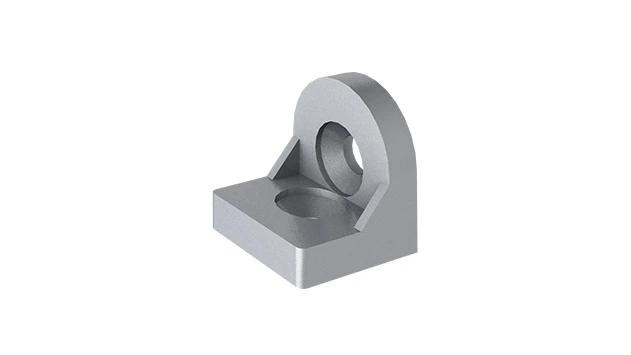
In the world of manufacturing, where every second and every cent counts, the difference between success and stagnation often lies in the smallest details. Lean manufacturing has long been the gold standard for reducing waste, boosting efficiency, and keeping operations agile—but what if the key to unlocking even more potential is hiding in a component so unassuming, it might blend into the background of your factory floor? Enter the reusable turning angle code 3030 —a quiet workhorse that's redefining how teams build, adapt, and thrive in lean environments. Let's dive into why this tiny but mighty part matters, how it fits into broader lean systems , and why pairing it with 3030 national standard profile a aluminum extrusions could be the game-changer your production line has been waiting for.
Lean Manufacturing: More Than a Buzzword—A Culture of Adaptability
Before we zoom in on the turning angle code itself, let's take a step back. Lean manufacturing isn't just about cutting costs or speeding up assembly lines. At its core, it's a mindset: one that prioritizes value and eliminates waste in all its forms—whether that's excess inventory, unnecessary movement, or time spent reworking faulty setups. In today's fast-paced markets, where product designs shift overnight and customer demands evolve by the quarter, rigidity is the enemy. Factories can't afford to build fixed, one-and-done workstations or material racks. They need setups that can pivot, grow, and shrink as needed—without draining budgets or creating mountains of scrap.
This is where modularity becomes critical. Think of your production floor as a set of building blocks: if each block can be rearranged, reused, or repurposed, you're not just saving money—you're future-proofing your operations. And that's exactly where components like the reusable turning angle code 3030 shine. They're not just parts; they're enablers of the lean dream: flexibility without compromise.
The Foundation: Aluminum Profiles and the 3030 National Standard Profile A
To understand the turning angle code's role, we first need to talk about its partner in crime: aluminum profiles. If lean systems are the body, aluminum profiles are the skeleton—strong, lightweight, and infinitely adaptable. Among the most popular options is the 3030 national standard profile a , a workhorse extrusion with a 30mm x 30mm cross-section, designed to balance strength and versatility. Its T-slot design (those grooves running along its length) is what makes it magic: it lets you attach brackets, shelves, panels, and yes—angle codes—without welding, drilling, or permanent modifications.
Why 3030? It's the sweet spot for many applications. Big enough to support tools, materials, and even light machinery, but not so bulky that it limits flexibility. You'll find it in everything from assembly workbenches and material racks to conveyor supports and safety barriers. And because it's a national standard, you never have to worry about compatibility—no matter which supplier you buy from, the slots, dimensions, and mounting points stay consistent. That standardization is the first step toward reducing waste: no more custom-fabricated parts that become obsolete when a design changes.

Meet the Star: What Is a Reusable Turning Angle Code 3030?
Now, let's get up close with the turning angle code 3030. At first glance, it might look like just another metal bracket—and in the hands of a less thoughtful designer, that's all it would be. But the "reusable" part is where the genius lies. Traditional angle codes (think: welded brackets or one-time-use fasteners) lock two profiles together at a fixed angle, often 90 degrees. If you need to adjust that angle later? You're out of luck. You'd have to cut the bracket off, buy a new one, and start over—wasting time, material, and money. Not exactly lean, right?
The reusable turning angle code 3030 flips that script. Made from durable aluminum (matching the 3030 profile's material for consistency), it features a rotating joint and adjustable fasteners that let you secure two 3030 profiles at almost any angle—90 degrees, 45 degrees, even 135 degrees—then loosen, reposition, and retighten as many times as needed. It's like a hinge that never wears out, a connector that grows with your needs. And because it's designed specifically for the 3030 national standard profile a, it slides right into those T-slots with a few simple bolts, no special tools required.
But why does reusability matter so much? Let's break it down. In a typical factory, workstations get redesigned an average of 3–4 times per year as product lines change. With traditional angle codes, each redesign means stripping out old brackets, buying new ones, and paying for labor to install them. Over time, those costs add up—scrap metal piling up in the dumpster, downtime while lines are reconfigured, and the hidden cost of missed opportunities (what could your team accomplish if they weren't waiting for new parts?). The reusable turning angle code eliminates all that. One code, used over and over, across dozens of configurations. That's lean in action.

How It Works: A Quick Guide to Assembly and Adjustment
You might be thinking, "This sounds great, but is it complicated to use?" The short answer: not at all. Let's walk through a simple example. Say you're building a material rack using 3030 national standard profile a. You need to connect two vertical posts to a horizontal beam at a 90-degree angle. With a reusable turning angle code 3030, here's how it goes:
- Slide it in: insert the angle code's T-bolts into the T-slots of your vertical 3030 profile. No drilling—just push them into the slot and slide them to the right height.
- Position the beam: Place the horizontal 3030 profile into the angle code's clamping jaws. The rotating joint lets you tweak the angle until it's perfect—no guesswork, no measuring errors.
- Tighten and secure: Use a hex key to tighten the fasteners. The code grips the profiles firmly, creating a stable connection that can support heavy loads (we're talking hundreds of pounds, depending on the code's design).
- Need to adjust later? Loosen the fasteners, rotate the joint to the new angle, and retighten. Done. No cutting, no welding, no new parts.
It's that simplicity that makes the turning angle code a favorite among floor managers. Even teams with minimal technical training can reconfigure setups in minutes, not hours. Compare that to traditional welded brackets, which require a skilled welder, grinding tools, and paint touch-ups afterward—and you start to see why lean systems are embracing reusable components.
| Feature | Traditional Fixed Angle Codes | Reusable Turning Angle Code 3030 |
|---|---|---|
| Installation Time | 1–2 hours (welding, drilling, finishing) | 5–10 minutes (hand tools only) |
| Material Waste | High (scrap metal from cutting/welding) | None (100% reusable, no cutting) |
| Reusability | Single-use (permanent once installed) | Unlimited (reposition/reattach indefinitely) |
| Cost Over Time | High (replacement parts + labor) | Low (one-time purchase, minimal labor) |
| Flexibility | Fixed angle only (no adjustments) | Adjustable angles (30°–180° typical) |
Beyond the Bench: Real-World Impact of Reusable Angle Codes
Numbers on a table are one thing, but let's talk about real factories, real teams, and real results. Take the example of a mid-sized electronics manufacturer in Guangdong, China, that produces circuit boards for smartphones. A few years back, their assembly line was struggling with frequent product changes—new phone models meant new PCB sizes, which meant reconfiguring their lean pipe workbench setups every 3–4 months. With traditional welded angle codes, each reconfiguration took a full weekend: two workers, a welder, and a pile of scrap metal from cutting old brackets. The downtime cost them roughly $10,000 per line per year in lost production.
Case Study: From Weekend Downtime to 2-Hour Makeovers
After switching to 3030 national standard profile a and reusable turning angle code 3030, their process transformed. Now, when a new PCB size comes in, two technicians use hex keys to loosen the angle codes, adjust the workbench frames, and retighten. Total time? Two hours —no welding, no scrap, no lost weekend shifts. Over a year, they cut reconfiguration costs by 90% and freed up their team to focus on value-adding tasks, like training new hires or optimizing workflows. "It's not just about saving time," their production manager told us. "It's about giving our team the confidence to experiment. If a new layout doesn't work, we can undo it in minutes. That kind of agility is priceless."
Another example: a automotive parts supplier in Michigan that uses material racks built with 3030 profiles and turning angle codes. During peak seasons, they need extra rack space for incoming raw materials; in slow seasons, they shrink the racks to free up floor space for maintenance. With reusable codes, they disassemble and rebuild racks in a fraction of the time it used to take with bolted or welded frames. Even better, when they phased out an old product line, they repurposed 80% of their angle codes and profiles to build new racks for a new product—no need to buy new materials. That's the lean principle of "respect for people" in action: empowering teams to work smarter, not harder.
Why Pair with 3030 National Standard Profile A? The Perfect Match
You might be wondering: "Can't I use these angle codes with other profiles?" The short answer is yes—many reusable angle codes are designed for multiple profile sizes (2020, 4040, etc.). But there's a reason the 3030 national standard profile a is the most popular pairing. For one, its size is versatile enough to handle most light-to-medium applications without overcomplicating things. It's strong enough to support tools and materials, but lightweight enough that even a single worker can maneuver profiles during assembly. Its T-slot design is also standardized, meaning you can mix and match components from different suppliers without compatibility headaches.
But the real magic is in the synergy: the turning angle code's adjustability + the 3030 profile's modularity = a system that grows with your needs. Need to add a shelf to a workbench? Slide in a new angle code. Want to tilt a conveyor slightly for better material flow? Reposition the codes. It's like building with Lego blocks, but for industrial applications. And because both the profile and the angle code are aluminum, they're resistant to rust, easy to clean, and even recyclable at the end of their long life cycle—checking the box for sustainability, another key pillar of modern lean systems.
Choosing the Right Supplier: What to Look For
Not all reusable turning angle codes are created equal. To get the most out of your investment, you'll want to partner with a supplier who understands lean systems inside out. Here are a few tips:
- Material quality: Look for angle codes made from high-grade aluminum alloy (6063-T5 is a good benchmark) to ensure strength and durability. Avoid cheap plastics or low-quality steel—they'll bend or break under load.
- Precision machining: The rotating joint should move smoothly but lock firmly. Loose tolerances mean wobbly connections, which can compromise safety and stability.
- Compatibility guarantees: Make sure the supplier explicitly states that their angle codes work with 3030 national standard profile a. If they offer samples, test one before buying in bulk.
- Technical support: Even the best components need backup. Choose a supplier who provides assembly guides, video tutorials, or responsive customer service—you'll thank them when you're troubleshooting a tricky angle.
The Future of Lean: Small Components, Big Possibilities
As manufacturing continues to evolve—with Industry 4.0, IoT sensors, and AI-driven optimization—one thing remains constant: the need for flexibility. The factories of tomorrow won't just produce goods; they'll adapt to change in real time. Reusable components like the turning angle code 3030 are the building blocks of that future. They're not flashy, but they're foundational. They remind us that lean manufacturing isn't about grand overhauls—it's about the cumulative impact of small, smart choices.
So, the next time you walk your factory floor, take a closer look at those brackets connecting your profiles. Are they holding you back, or propelling you forward? If they're welded, bolted, or one-and-done, maybe it's time to consider the alternative. The reusable turning angle code 3030, paired with 3030 national standard profile a, isn't just a part—it's a statement: that your team values adaptability, hates waste, and is ready to thrive in a world that never stops changing.
Final Thoughts: Lean Isn't About Perfection—It's About Progress
At the end of the day, lean manufacturing is a journey, not a destination. Every component, every process, every tool is a step toward that goal of less waste and more value. The reusable turning angle code 3030 might seem small, but small steps add up. It's the difference between dreading the next product change and embracing it. Between seeing downtime as a cost and seeing adaptability as an advantage. And in today's manufacturing landscape, that advantage could be the one that sets you apart.
So, whether you're building a new lean pipe workbench, revamping a material rack, or just looking for ways to make your team's life easier, remember: sometimes the most powerful innovations are the ones that fit in the palm of your hand. The turning angle code 3030 is here to prove that lean systems aren't just about big ideas—they're about the right details.