- Company Articles
- Products and Technology
- Product knowledge
- Reusing Two Way Lean Pipe Joint Chrome in Production Line Redesigns

Reusing Two Way Lean Pipe Joint Chrome in Production Line Redesigns
Related Product
Two Way Lean Pipe Joint Chrome
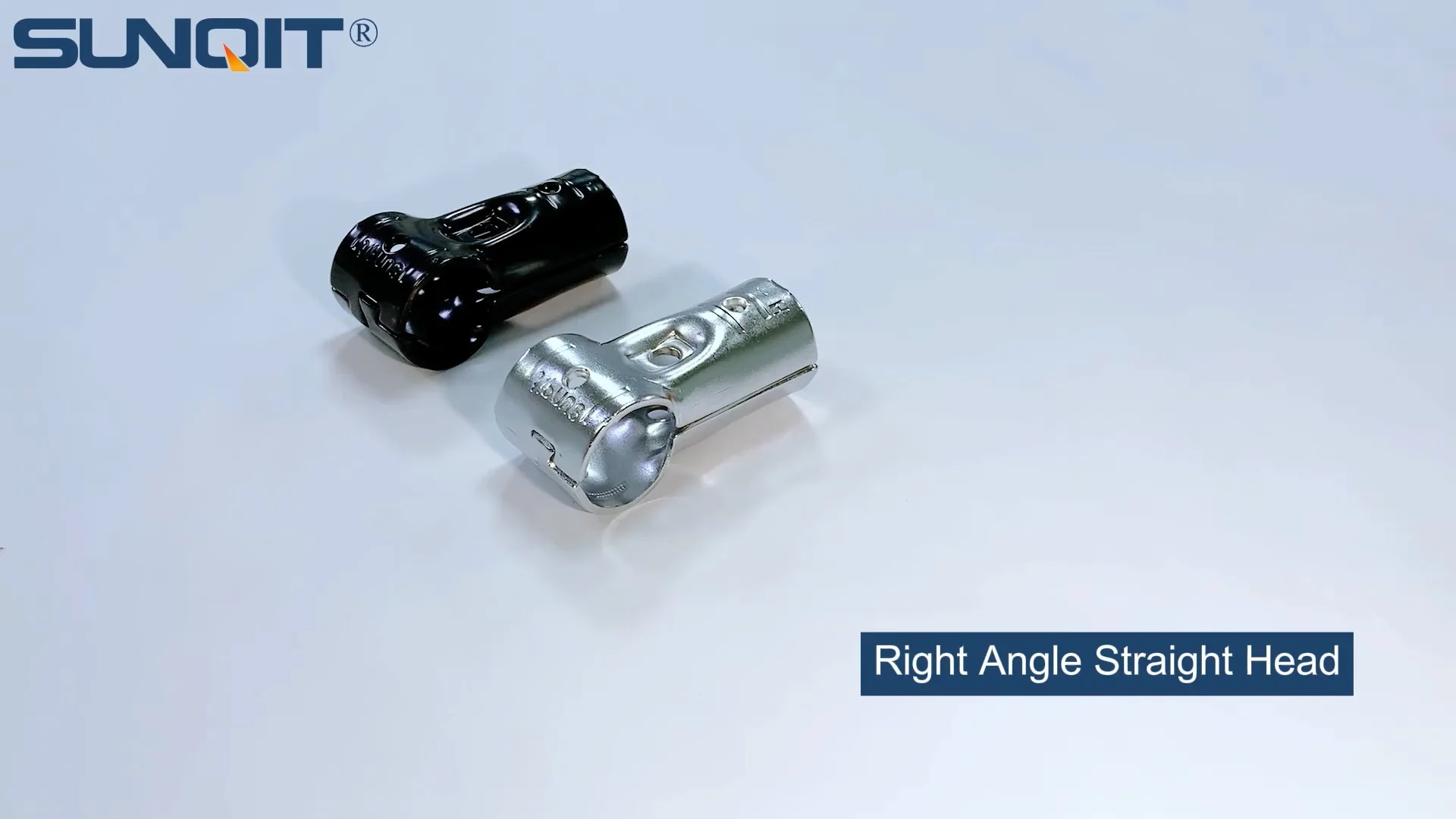
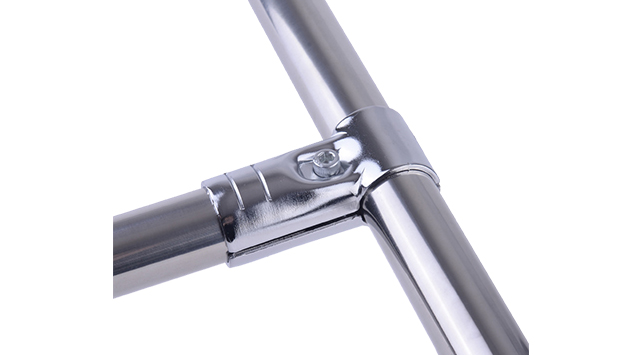
Two way lean pipe joint for 2 pcs 28MM lean pipe connection in straight angle, which used widely in workbench, flow rack, hand trolley frame connection.
Introduction: The Unsung Hero of Flexible Manufacturing
Walk into any manufacturing facility, and your eyes might be drawn to the big machines—the robots with their precise movements, the conveyor belts humming with products, the towering assembly lines that seem to stretch to the ceiling. But if you look closer, you'll notice the smaller components that hold it all together: the joints, the pipes, the connectors that turn a collection of parts into a functional workspace. Among these, one component quietly stands out for its versatility and durability: the Two Way Lean Pipe Joint Chrome.
In the fast-paced world of production, change is the only constant. A line that assembles smartphones today might need to shift to tablets tomorrow; a workstation designed for small parts might suddenly handle bulkier components. Redesigning these setups often feels like a herculean task, filled with expensive new parts, long lead times, and mountains of waste from discarded old equipment. But what if we told you that the key to a more efficient, cost-effective redesign might already be sitting in your storage room?
The Two Way Lean Pipe Joint Chrome—often overlooked after its initial installation—isn't just a one-and-done component. Its chrome-plated steel construction, simple two-way design, and compatibility with lean pipes make it a champion of reuse. In this article, we'll explore how reusing these joints can transform your production line redesigns, cutting costs, reducing waste, and building a setup that adapts as quickly as your business does. We'll dive into real-world applications, from revamping lean pipe workbenches to reconfiguring flow racks, and show you how this small joint can make a big impact.
In the fast-paced world of production, change is the only constant. A line that assembles smartphones today might need to shift to tablets tomorrow; a workstation designed for small parts might suddenly handle bulkier components. Redesigning these setups often feels like a herculean task, filled with expensive new parts, long lead times, and mountains of waste from discarded old equipment. But what if we told you that the key to a more efficient, cost-effective redesign might already be sitting in your storage room?
The Two Way Lean Pipe Joint Chrome—often overlooked after its initial installation—isn't just a one-and-done component. Its chrome-plated steel construction, simple two-way design, and compatibility with lean pipes make it a champion of reuse. In this article, we'll explore how reusing these joints can transform your production line redesigns, cutting costs, reducing waste, and building a setup that adapts as quickly as your business does. We'll dive into real-world applications, from revamping lean pipe workbenches to reconfiguring flow racks, and show you how this small joint can make a big impact.
Understanding the Two Way Lean Pipe Joint Chrome: More Than Just a Connector
Before we jump into reuse strategies, let's take a moment to appreciate what makes the Two Way Lean Pipe Joint Chrome so special. At first glance, it's a small, unassuming piece—typically a chrome-plated steel connector with two threaded ends, designed to join two lean pipes at a fixed angle (usually 90 degrees, though some variants allow for slight adjustments). But its simplicity is its strength.
Unlike specialized connectors that only work with one type of pipe or require complex tools to install, the Two Way Lean Pipe Joint Chrome is intentionally universal. It pairs seamlessly with standard lean pipes (often 28mm in diameter), as well as with aluminum profile and even some roller track components, thanks to its threaded design and sturdy build. The chrome plating isn't just for looks, either—it resists rust and corrosion, even in dusty or humid factory environments, ensuring the joint can withstand years of use.
Traditionally, these joints are used in the initial setup of lean manufacturing systems: building workbenches, material racks, and flow racks that prioritize flexibility. But here's the thing: once a production line is redesigned, these joints are often disassembled and tossed aside, labeled as "old" or "obsolete." That's a mistake. A Two Way Lean Pipe Joint Chrome that's been used for five years is still a Two Way Lean Pipe Joint Chrome—strong, reliable, and ready for a second (or third, or fourth) life.
Unlike specialized connectors that only work with one type of pipe or require complex tools to install, the Two Way Lean Pipe Joint Chrome is intentionally universal. It pairs seamlessly with standard lean pipes (often 28mm in diameter), as well as with aluminum profile and even some roller track components, thanks to its threaded design and sturdy build. The chrome plating isn't just for looks, either—it resists rust and corrosion, even in dusty or humid factory environments, ensuring the joint can withstand years of use.
Traditionally, these joints are used in the initial setup of lean manufacturing systems: building workbenches, material racks, and flow racks that prioritize flexibility. But here's the thing: once a production line is redesigned, these joints are often disassembled and tossed aside, labeled as "old" or "obsolete." That's a mistake. A Two Way Lean Pipe Joint Chrome that's been used for five years is still a Two Way Lean Pipe Joint Chrome—strong, reliable, and ready for a second (or third, or fourth) life.
Why Reuse? The Business Case for Sustainable Redesign
Reusing components isn't just a "nice-to-have" for eco-conscious companies—it's a strategic decision that impacts your bottom line, your team's productivity, and your ability to stay competitive. Let's break down the benefits:
Cost Savings: New manufacturing components aren't cheap. A single aluminum profile connector can cost $5–$15; a set of flow rack joints for a medium-sized setup can run into the hundreds. By reusing Two Way Lean Pipe Joint Chrome, you eliminate the need to purchase new connectors, cutting material costs by 30–50% in many redesign projects. Multiply that across multiple lines, and the savings add up quickly.
Time Efficiency: Ordering new parts means waiting—for quotes, for production, for shipping. In a manufacturing environment where downtime equals lost revenue, every day counts. Reusing joints from your existing inventory slashes lead times from weeks to days (or even hours). Your team can start redesigning immediately, getting the line back up and running faster.
Waste Reduction: The manufacturing industry generates millions of tons of waste annually, much of it from discarded metal components. Reusing joints keeps them out of landfills, aligning with lean principles (think "reduce, reuse, recycle" as the foundation of waste elimination) and sustainability goals that matter to customers, investors, and employees alike.
Flexibility: Lean manufacturing thrives on adaptability, and reused joints excel here. Since they're already compatible with your existing lean pipes, roller track, and even some aluminum profile, you can experiment with layouts without being locked into a rigid, one-size-fits-all design. Need to adjust a workbench height? Swap out a joint. Want to reangle a flow rack? Reposition a few pipes and reuse the same connectors.
Cost Savings: New manufacturing components aren't cheap. A single aluminum profile connector can cost $5–$15; a set of flow rack joints for a medium-sized setup can run into the hundreds. By reusing Two Way Lean Pipe Joint Chrome, you eliminate the need to purchase new connectors, cutting material costs by 30–50% in many redesign projects. Multiply that across multiple lines, and the savings add up quickly.
Time Efficiency: Ordering new parts means waiting—for quotes, for production, for shipping. In a manufacturing environment where downtime equals lost revenue, every day counts. Reusing joints from your existing inventory slashes lead times from weeks to days (or even hours). Your team can start redesigning immediately, getting the line back up and running faster.
Waste Reduction: The manufacturing industry generates millions of tons of waste annually, much of it from discarded metal components. Reusing joints keeps them out of landfills, aligning with lean principles (think "reduce, reuse, recycle" as the foundation of waste elimination) and sustainability goals that matter to customers, investors, and employees alike.
Flexibility: Lean manufacturing thrives on adaptability, and reused joints excel here. Since they're already compatible with your existing lean pipes, roller track, and even some aluminum profile, you can experiment with layouts without being locked into a rigid, one-size-fits-all design. Need to adjust a workbench height? Swap out a joint. Want to reangle a flow rack? Reposition a few pipes and reuse the same connectors.

Practical Applications: From Storage Room to Production Floor
Now, let's get concrete. How exactly can you reuse Two Way Lean Pipe Joint Chrome in real-world redesigns? Here are three common scenarios where these joints shine:
1. Redesigning the Lean Pipe Workbench: From Static to Dynamic
The lean pipe workbench is the workhorse of many production lines—a simple, sturdy surface where assembly, inspection, and packaging happen. But when product sizes change, or new tools are introduced, that "sturdy" bench can suddenly feel restrictive.
Take the example of a small electronics manufacturer we worked with last year. Their original workbenches, built with Two Way Lean Pipe Joints, were designed for assembling smartwatches—compact, with low shelves and minimal clearance. When they landed a contract to assemble fitness trackers (bulkier, with more components), the team initially planned to order all-new workbenches with taller frames and wider surfaces.
Instead, they dug into their storage and pulled out the old Two Way Lean Pipe Joints from their original setup. By reusing these joints, they extended the bench legs (using spare lean pipes) to raise the surface height by 12 inches. They added side shelves by connecting horizontal pipes to the existing vertical supports with the same two-way joints, creating space for tool organizers and component bins. To handle the heavier trackers, they reinforced the bench top with a layer of aluminum profile, secured with—you guessed it—reused joints.
The result? A fully functional, customized workbench that cost 40% less than new, took half the time to build, and kept 24 joints out of the trash. The team even added a small roller track along one edge (connected via the reused joints) to slide completed trackers to the next station, improving workflow.
Take the example of a small electronics manufacturer we worked with last year. Their original workbenches, built with Two Way Lean Pipe Joints, were designed for assembling smartwatches—compact, with low shelves and minimal clearance. When they landed a contract to assemble fitness trackers (bulkier, with more components), the team initially planned to order all-new workbenches with taller frames and wider surfaces.
Instead, they dug into their storage and pulled out the old Two Way Lean Pipe Joints from their original setup. By reusing these joints, they extended the bench legs (using spare lean pipes) to raise the surface height by 12 inches. They added side shelves by connecting horizontal pipes to the existing vertical supports with the same two-way joints, creating space for tool organizers and component bins. To handle the heavier trackers, they reinforced the bench top with a layer of aluminum profile, secured with—you guessed it—reused joints.
The result? A fully functional, customized workbench that cost 40% less than new, took half the time to build, and kept 24 joints out of the trash. The team even added a small roller track along one edge (connected via the reused joints) to slide completed trackers to the next station, improving workflow.
2. Revamping Flow Racks: Adapting to New Part Sizes
Flow racks are essential for just-in-time manufacturing, using gravity to feed parts to workers as they need them. But when part dimensions change, the rack's angle, depth, or number of levels may need adjustment. That's where reused Two Way Lean Pipe Joints come in.
Consider a automotive parts supplier that produced small plastic clips for door panels. Their flow racks had 3 levels, each with narrow roller track sections to guide the clips. When they started producing larger rubber gaskets for engine bays, the existing racks were too shallow—the gaskets kept falling off the edges.
Instead of buying new flow racks, the maintenance team reused Two Way Lean Pipe Joints to widen each level. They attached additional vertical pipes to the rack's frame using the joints, then added horizontal cross-braces (again, with reused joints) to support wider roller track. To adjust the angle of the roller track (gaskets are heavier, so they needed a steeper slope), they used the joints to reposition the track supports, tilting them from 5 degrees to 8 degrees.
The project took two days instead of two weeks, saved over $800 in new parts, and the team even had leftover joints to use in a future redesign. As the maintenance supervisor put it: "We used to see these joints as 'used up.' Now we see them as a toolbox full of possibilities."
Consider a automotive parts supplier that produced small plastic clips for door panels. Their flow racks had 3 levels, each with narrow roller track sections to guide the clips. When they started producing larger rubber gaskets for engine bays, the existing racks were too shallow—the gaskets kept falling off the edges.
Instead of buying new flow racks, the maintenance team reused Two Way Lean Pipe Joints to widen each level. They attached additional vertical pipes to the rack's frame using the joints, then added horizontal cross-braces (again, with reused joints) to support wider roller track. To adjust the angle of the roller track (gaskets are heavier, so they needed a steeper slope), they used the joints to reposition the track supports, tilting them from 5 degrees to 8 degrees.
The project took two days instead of two weeks, saved over $800 in new parts, and the team even had leftover joints to use in a future redesign. As the maintenance supervisor put it: "We used to see these joints as 'used up.' Now we see them as a toolbox full of possibilities."
3. Integrating with Aluminum Profile: The Hybrid Approach
Aluminum profile is prized for its strength and rigidity, making it ideal for heavy-duty applications. But it's also more expensive than lean pipe, and its connectors can be specialized. Here's a pro tip: pair reused Two Way Lean Pipe Joints with aluminum profile to get the best of both worlds—strength where you need it, flexibility where you don't.
A furniture manufacturer we collaborated with wanted to build a hybrid assembly station: a stable base for heavy wood panels (aluminum profile) and flexible shelving for tools (lean pipe). Instead of buying aluminum profile connectors (which cost $8 each), they used reused Two Way Lean Pipe Joints to connect the lean pipe shelving to the aluminum base. They simply drilled small holes in the aluminum profile (using standard tools) and threaded the joints into place, creating a secure, budget-friendly connection.
The result was a station that could support 200+ pounds on the base while allowing the team to adjust the shelving height and layout using—you guessed it—more reused joints. The total cost for connectors? $0. The time saved? Hours, since they didn't have to wait for aluminum-specific parts.
A furniture manufacturer we collaborated with wanted to build a hybrid assembly station: a stable base for heavy wood panels (aluminum profile) and flexible shelving for tools (lean pipe). Instead of buying aluminum profile connectors (which cost $8 each), they used reused Two Way Lean Pipe Joints to connect the lean pipe shelving to the aluminum base. They simply drilled small holes in the aluminum profile (using standard tools) and threaded the joints into place, creating a secure, budget-friendly connection.
The result was a station that could support 200+ pounds on the base while allowing the team to adjust the shelving height and layout using—you guessed it—more reused joints. The total cost for connectors? $0. The time saved? Hours, since they didn't have to wait for aluminum-specific parts.
The Numbers Speak: A Comparison of Traditional vs. Reuse Redesigns
To quantify the impact, let's compare a typical production line redesign using traditional methods (all new parts) versus a reuse-focused approach centered on Two Way Lean Pipe Joint Chrome. We'll use data from a mid-sized electronics manufacturer that redesigned three assembly lines in 2024.
| Aspect | Traditional Redesign (All New Parts) | Reuse Approach (Two Way Joints + Existing Parts) | Improvement |
|---|---|---|---|
| Material Cost | $4,500 (new joints, pipes, connectors) | $1,800 (new lean pipes only; joints reused) | $2,700 saved (60% reduction) |
| Lead Time | 3 weeks (ordering and shipping new parts) | 4 days (using in-stock joints and pipes) | 17 days faster (76% reduction) |
| Waste Generated | 120 lbs (old joints, rusted pipes discarded) | 15 lbs (only damaged pipes recycled) | 105 lbs less waste (87.5% reduction) |
| Worker Productivity During Redesign | 50% downtime (waiting for parts) | 15% downtime (immediate access to materials) | 35% less downtime (70% improvement) |
| Adaptability Score (1–10) | 6 (fixed design with new parts) | 9 (easily reconfigurable with reused joints) | +3 points (50% improvement) |
Overcoming Challenges: Making Reuse Work for You
We won't sugarcoat it: reusing joints isn't always without hurdles. Here are common concerns and how to address them:
Wear and Tear: "Are these old joints still strong enough?" It's a valid question. To ensure safety, inspect joints before reuse: check for rust (chrome plating should be intact), stripped threads (test by screwing in a spare pipe—if it wobbles, discard), and cracks (a quick visual check with a flashlight works). Most joints, if stored properly, will last 5–10 years with regular use.
Compatibility with New Components: "What if I need to connect reused joints to new aluminum profile or roller track?" No problem. Use adapter sleeves (easily sourced from lean pipe suppliers) to bridge size differences, or drill pilot holes in aluminum profile to accept the joint threads. For roller track, many models have pre-drilled holes that align with the joint spacing.
Team Resistance: "We've always bought new parts—this feels like cutting corners." Change is hard, but education helps. Show your team the cost savings and faster timelines from past projects. Involve maintenance and production workers in the reuse process—they'll take ownership and often come up with creative ways to repurpose joints.
Wear and Tear: "Are these old joints still strong enough?" It's a valid question. To ensure safety, inspect joints before reuse: check for rust (chrome plating should be intact), stripped threads (test by screwing in a spare pipe—if it wobbles, discard), and cracks (a quick visual check with a flashlight works). Most joints, if stored properly, will last 5–10 years with regular use.
Compatibility with New Components: "What if I need to connect reused joints to new aluminum profile or roller track?" No problem. Use adapter sleeves (easily sourced from lean pipe suppliers) to bridge size differences, or drill pilot holes in aluminum profile to accept the joint threads. For roller track, many models have pre-drilled holes that align with the joint spacing.
Team Resistance: "We've always bought new parts—this feels like cutting corners." Change is hard, but education helps. Show your team the cost savings and faster timelines from past projects. Involve maintenance and production workers in the reuse process—they'll take ownership and often come up with creative ways to repurpose joints.
Best Practices: Building a Reuse-Focused Culture
Reusing Two Way Lean Pipe Joint Chrome isn't just a one-time project—it's a mindset. Here's how to make it part of your company's DNA:
Inventory Like a Pro: Start by auditing your storage. Create a simple spreadsheet or use a tool like Excel to track joint quantities, conditions (good, fair, poor), and locations. A labeled bin system ("Chrome Joints – 2 Way") makes retrieval easy.
Design for Disassembly: When building new setups, use joints and pipes that are easy to take apart. Avoid welding or permanent adhesives—stick to threaded connections so components can be reused later.
Celebrate Wins: Share success stories with your team. Did a reuse project save $1,000? Acknowledge the team that made it happen. Did a redesign finish a week early? Highlight that in the company newsletter. Positive reinforcement turns reuse from a task into a point of pride.
Inventory Like a Pro: Start by auditing your storage. Create a simple spreadsheet or use a tool like Excel to track joint quantities, conditions (good, fair, poor), and locations. A labeled bin system ("Chrome Joints – 2 Way") makes retrieval easy.
Design for Disassembly: When building new setups, use joints and pipes that are easy to take apart. Avoid welding or permanent adhesives—stick to threaded connections so components can be reused later.
Celebrate Wins: Share success stories with your team. Did a reuse project save $1,000? Acknowledge the team that made it happen. Did a redesign finish a week early? Highlight that in the company newsletter. Positive reinforcement turns reuse from a task into a point of pride.
Conclusion: Small Joints, Big Impact
The Two Way Lean Pipe Joint Chrome may be small, but its impact on production line redesigns is enormous. By reusing these versatile connectors, you're not just saving money—you're building a manufacturing operation that's agile, sustainable, and ready to tackle whatever the future throws its way.
The next time you're planning a redesign, don't overlook the components in your storage room. That bin of old joints isn't waste—it's a toolkit. It's the key to faster turnarounds, happier teams, and a bottom line that's stronger for it. So grab a joint, grab a pipe, and start building. The future of flexible manufacturing isn't in new parts—it's in reimagining the ones you already have.
The next time you're planning a redesign, don't overlook the components in your storage room. That bin of old joints isn't waste—it's a toolkit. It's the key to faster turnarounds, happier teams, and a bottom line that's stronger for it. So grab a joint, grab a pipe, and start building. The future of flexible manufacturing isn't in new parts—it's in reimagining the ones you already have.