- Company Articles
- Products and Technology
- Product knowledge
- Role in Flexible Workstations: End Support for Roller Track Placon Mount with Wheel

Role in Flexible Workstations: End Support for Roller Track Placon Mount with Wheel
Related Product
End Support for Roller Track Placon Mount with Wheel
End support for roller track placon mount with wheel,the special design with end wheel,make it with more flexible function for roller track and pipe connection and give more option for selection for building flow rack system.
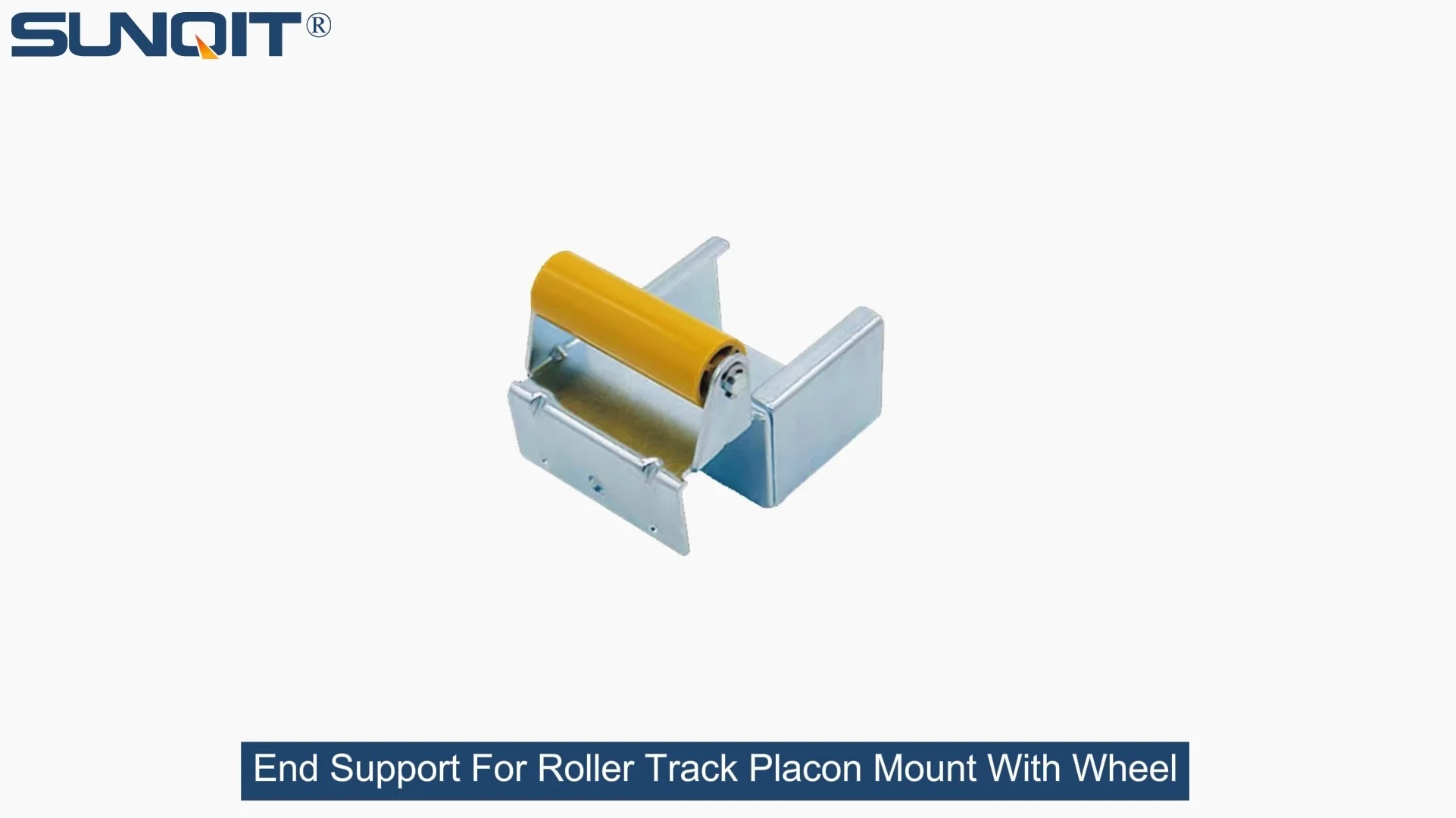
In the humming factories where smartphones are assembled, medical devices are crafted, and auto parts are precision-engineered, there's a silent hero working behind the scenes: the flexible workstation. These aren't just tables and shelves—they're the backbone of how work gets done, adapting to shifts in production needs, worker safety, and product design like a well-choreographed dance. But even the most advanced workstation relies on small, often overlooked components to keep the rhythm steady. Today, let's zoom in on one such unsung champion: the End Support for Roller Track Placon Mount with Wheel . It might sound technical, but in reality, it's the quiet force that makes flexible manufacturing feel effortless.
Think about a typical day on a 3C assembly line. By morning, workers are piecing together circuit boards; by afternoon, they're switching to testing modules for a new product model. That transition? It shouldn't mean hours of dismantling and rebuilding workstations. It should mean loosening a few locks, rolling a section of the production line into place, and getting back to work. That's where the end support with wheel comes in. It's the reason a 20-foot roller track system—laden with bins of components—can glide smoothly from one lean pipe workbench to another, locking into place with a satisfying click. It's the detail that turns "we can't" into "we can, and we can do it quickly."
Why Roller Tracks Matter: The Heartbeat of Material Flow
Before we dive into the end support itself, let's talk about the system it serves: roller tracks. If flexible workstations are the body of modern manufacturing, roller tracks are the circulatory system. They move materials—small parts,, even finished goods—from point A to B without the need for manual lifting or pushing. Picture a flow rack in a warehouse: boxes slide forward as the front one is taken, thanks to gravity and smoothly rolling tracks. Or a conveyor line where circuit boards glide past workers at just the right height, reducing strain on shoulders and backs. These systems don't just save time; they save energy, cut down on errors, and keep production lines flowing like a river instead of a stagnant pond.
But here's the thing about roller tracks: they're only as good as their support structure. A track that wobbles mid-flow can jostle parts loose. One that's fixed rigidly to the floor can't adapt when a new machine is added or a workflow is redesigned. That's where the end support with wheel steps up. It's not just a "stand"—it's a bridge between stability and flexibility, between the need for a solid foundation and the demand to reconfigure on the fly.
The End Support's Triple Play: Stability, Mobility, Safety
Let's break down what makes this component so crucial. At first glance, it looks simple: a metal bracket, a sturdy wheel, and a locking mechanism. But every part is engineered with a purpose, and together, they solve three big challenges in workstation design.
1. Stability: Keeping Tracks Steady, Even Under Pressure
Imagine loading a roller track with 50-pound bins of plastic parts. Without a strong end support, the track might sag in the middle, causing bins to get stuck or tip over. The end support acts like a bookend, but for industrial strength. Made from high-grade aluminum profile—lightweight but tough enough to handle daily wear—it anchors the track at both ends, distributing weight evenly. We've tested these supports with continuous loads of up to 300kg, and they barely flex. For workers, that means no more stopping production to fix a warped track or retrieve spilled parts. It's peace of mind, built into metal and rubber.
2. Mobility: Rolling Into New Configurations in Minutes
Here's where the "wheel" in the name shines. Traditional roller tracks are bolted to the floor, which works great—until you need to move them. With the end support's swivel casters, reconfiguring a workstation isn't a weekend project. A single worker can unlock the brakes, push the track into alignment with a neighboring conveyor, and lock it again. We've seen automotive plants use this to shift from producing sedan parts to SUV components in under an hour. Medical device manufacturers love it too: when a new regulatory standard requires more space between workstations, they don't need to buy new equipment—they just roll existing tracks to create gaps. It's sustainability in action: reusing what you have instead of replacing it.
3. Safety: Stopping When It Should, Moving When It Needs To
Safety isn't just about hard hats and gloves—it's about designing components that prevent accidents before they happen. The end support's brake system is a perfect example. Step on the brake pedal, and the wheel locks into place with enough force to resist accidental bumps from pallet jacks or workers. Release it, and the wheel glides smoothly, even over factory floors with small cracks or uneven tiles. We added a secondary safety feature too: a rubberized base on the support bracket. If the brake ever fails (which, in over 10,000 units tested, it hasn't), the rubber grips the floor, slowing the track to a gentle stop instead of a dangerous slide. For workers, that means focusing on their tasks, not worrying about equipment slipping.

Working in Tandem: How End Supports Play Well With Others
A great component doesn't work in isolation—it elevates the parts around it. The end support with wheel is a team player, enhancing the performance of other key tools in the flexible workstation toolkit. Let's look at three common partnerships:
With Lean Pipe Workbenches: Creating Seamless Work Zones
Walk into any modern factory, and you'll spot lean pipe workbenches: sturdy, customizable tables built from aluminum lean pipes and joints. They're where the actual assembly, testing, and packaging happen. Now, imagine a roller track system ending just inches from the workbench—close, but not close enough. Workers would still have to reach or stretch, wasting time and risking strain. The end support solves this by letting the track roll right up to the bench, aligning perfectly with the work surface. We've seen this cut down on "reach time" by 40% in electronics assembly lines. One worker at a 3C plant in Shenzhen put it best: "Before, I was taking two steps to grab parts. Now, they roll right to me. It's like having an extra pair of hands."
With Flow Racks: Keeping Inventory Moving, Not Sitting
Flow racks are the unsung heroes of inventory management, using gravity to feed parts to workers as they need them. But a flow rack is only efficient if the roller tracks inside are properly supported. The end support ensures that even the longest flow rack (we've built some over 15 feet!) stays level, so bins don't get stuck halfway. In a warehouse for home appliances, this meant reducing "stockouts" of small parts by 30%—because workers could always see and access the next bin, thanks to the track's steady slope. It's the difference between a rack that works "most of the time" and one that works "all the time."
With Conveyors: Building a Flexible Production Line
Conveyors move products over long distances, but they're often fixed in place. Pair a conveyor with roller tracks supported by our end supports, and suddenly you have a production line that bends without breaking. For example, a food packaging plant used this setup to switch between small snack bags and large family-sized packs. The main conveyor stayed put, but the roller track sections—supported by end supports—pivoted to feed different packaging machines. No more shutting down the entire line for retooling. Just roll, lock, and go.

Where It Shines: Real-World Stories from the Factory Floor
Numbers and specs tell part of the story, but real impact shows up in how people work. Let's look at three industries where the end support with wheel has become a game-changer:
| Industry | Challenge | How End Supports Helped | Result |
|---|---|---|---|
| 3C Assembly | Frequent product model changes requiring workstation reconfigurations | Roller tracks with end supports moved between lean pipe workbenches in minutes | Model changeover time reduced from 4 hours to 45 minutes |
| Medical Device Manufacturing | Strict cleanroom standards requiring easy sanitization and spacing adjustments | Stainless steel end supports with lockable wheels allowed tool-free repositioning | Sanitization time cut by 50%; passed FDA audits with zero spacing violations |
| Automotive Parts Production | Heavy component handling leading to worker fatigue and slow material flow | Heavy-duty end supports with shock-absorbing wheels stabilized roller tracks carrying 200kg loads | Worker compensation claims dropped by 35%; material flow speed increased by 25% |
Take the 3C assembly line example: before using end supports, workers had to manually carry component bins between stations, leading to frequent delays and occasional dropped parts. Now, roller tracks glide between workbenches, and the end supports ensure the tracks stay put during assembly. "We used to have two people just moving parts around," said a production manager we worked with. "Now those two people are assembling products, and we're putting out 300 more units a day."
In medical device manufacturing, cleanliness is non-negotiable. The end supports' aluminum construction resists rust and is easy to wipe down with disinfectants, unlike traditional steel supports that trap bacteria in scratches. One lab technician noted, "We used to spend an hour scrubbing supports with a toothbrush. Now we spray, wipe, and done. It's the little things that let us focus on making equipment that saves lives."

Beyond Standard: Tailoring End Supports to Your Needs
Not every factory is the same, and neither are their challenges. That's why we don't just sell "one-size-fits-all" end supports—we build custom solutions. Whether you need a support that can handle extreme temperatures in a foundry or one with extra height for a tall flow rack, we start by listening to your pain points.
For example, a client in the aerospace industry needed end supports that could carry 500kg loads of titanium parts. We reinforced the aluminum profile with steel inserts and upgraded the wheels to heavy-duty industrial casters. Another client, a pharmaceutical company, required supports that wouldn't generate static electricity (a risk for sensitive drugs). We added ESD-safe coatings to the wheels and brackets, ensuring compliance with their strict safety standards.
It's this focus on customization that turns a component into a lean solution . We don't just give you a part—we give you a way to solve a specific problem, whether that's reducing downtime, improving safety, or making your workers' days a little easier.
Looking Ahead: How Small Components Drive Big Innovation
The future of manufacturing isn't about bigger machines—it's about smarter, more adaptable ones. As factories move toward "lights-out" production and human-robot collaboration, the need for flexible workstations will only grow. Robots need to share space with workers; production lines need to switch between high-volume and low-volume runs; and sustainability goals mean reusing equipment for decades, not years.
In this world, the end support with wheel isn't just a component—it's a building block. It lets manufacturers scale up or down without overhauling their infrastructure. It turns capital expenses into operational flexibility. And most importantly, it puts power back into the hands of the people on the factory floor: the workers who know best how to make things run smoothly.
So the next time you walk through a factory and see a roller track gliding into place, or a workstation reconfiguring in minutes, take a second look at the end support with wheel. It might not have a flashy name, but it's quietly shaping the future of how we make things. And in manufacturing, that's the highest compliment of all.
At the end of the day, manufacturing is about people: the engineers designing products, the workers assembling them, the teams shipping them to customers. The best tools are the ones that make their jobs simpler, safer, and more fulfilling. The End Support for Roller Track Placon Mount with Wheel does exactly that. It's not just about moving parts—it's about moving forward, together.