- Company Articles
- Products and Technology
- Product knowledge
- Role of Multi-Angle Fixed Aluminum Joints in Flexible Production Systems

Role of Multi-Angle Fixed Aluminum Joints in Flexible Production Systems
Related Product
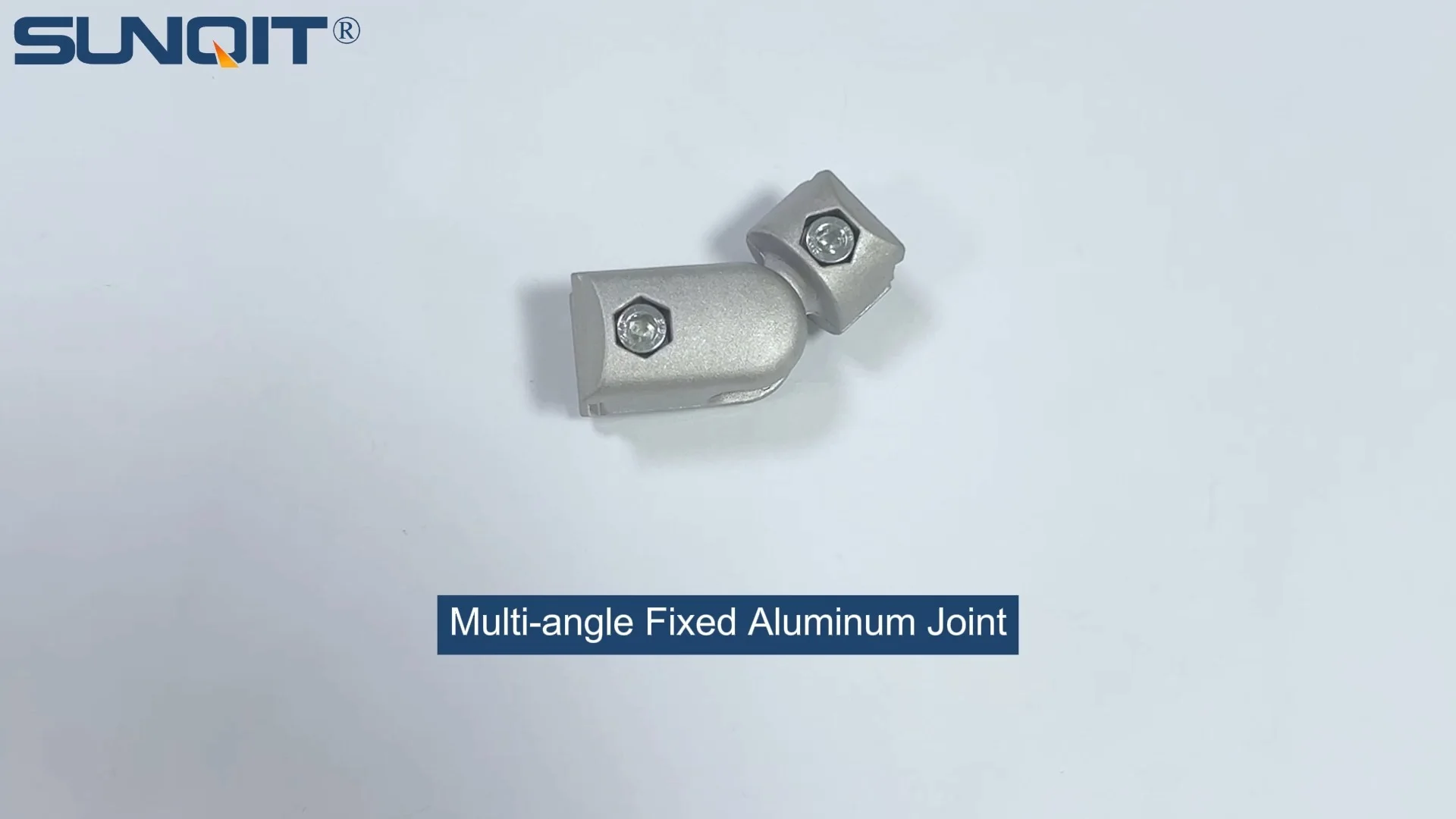
Multi-angle Fixed Aluminum Joint
Aluminum joint pipe connection for two pipe connection and work in mutiple angle.
In the heart of every thriving manufacturing facility, there's a silent hero: adaptability. Today's market demands aren't just about producing goods—they're about producing the right goods, quickly, and often with custom twists that keep customers coming back. This reality has pushed flexible production systems from a "nice-to-have" to an absolute necessity. At the core of these systems lies a component so yet so critical that its impact ripples through every assembly line, warehouse, and workstation: the multi-angle fixed aluminum joint. These small, unassuming connectors are the glue that holds modern modular manufacturing together, enabling businesses to pivot, scale, and innovate without grinding operations to a halt. Let's dive into how these joints are reshaping the future of production.
The Rise of Flexible Production: Why Rigidity No Longer Works
Gone are the days of "set it and forget it" production lines. A decade ago, a manufacturer might design a facility around a single product, churning out thousands of identical units for years. Today, that's a recipe for obsolescence. Consumers want personalized products—think custom phone cases, tailored automotive parts, or small-batch electronics—and competitors are racing to deliver. This shift has turned "flexibility" from a buzzword into a bottom-line imperative.
Flexible production systems are designed to adapt. They let manufacturers reconfigure workspaces, adjust assembly flows, and scale operations up or down with minimal downtime. But here's the catch: flexibility doesn't just happen. It requires components that can keep up—modular, durable, and easy to rework. Traditional rigid systems, built with welded steel or custom-machined parts, fail here. Rewelding a steel frame to accommodate a new product line can take days (or weeks), costing thousands in labor and lost production. Custom parts tie businesses to long lead times and high costs, making quick pivots impossible.
Enter modular components: the building blocks of flexible production. These include aluminum profiles, lightweight tubes, and—most importantly—the joints that connect them. Among these, multi-angle fixed aluminum joints stand out for their ability to turn static structures into dynamic, adaptable systems. They're not just connectors; they're enablers of change.
What Are Multi-Angle Fixed Aluminum Joints, Anyway?
Let's start with the basics. A multi-angle fixed aluminum joint is exactly what it sounds like: a connector made from aluminum (known for its strength-to-weight ratio and corrosion resistance) designed to join two or more components at various angles—think 30°, 45°, 90°, 135°, or even custom angles—while maintaining a secure, stable hold. Unlike one-size-fits-all joints that lock into a single position, these are built for versatility. They're the Swiss Army knives of production hardware.
At first glance, they might seem simple: a small block with holes, slots, or notches that align with aluminum profiles or tubes. But their design is deceptively clever. Most feature threaded holes or clamping mechanisms that allow quick assembly with basic tools (or even tool-free adjustments, in some cases). They're lightweight enough for a single worker to handle, yet strong enough to support heavy loads—think shelves stacked with parts, or workbenches holding power tools. And because they're made from aluminum, they resist rust and wear, even in busy factories where oil, dust, and humidity are constants.
But their real magic? Compatibility. Multi-angle fixed aluminum joints are engineered to work seamlessly with a range of modular components: aluminum lean pipe, aluminum extrusion profiles (like the popular 2020, 3030, or 4040 EU standard profiles), roller tracks, and even accessories like casters or shelves. This compatibility turns a pile of parts into a toolkit for innovation. Need a new workbench for a new assembly step? Grab some aluminum profiles, a few joints, and you're building in hours, not weeks.

Core Features: Why These Joints Outshine the Rest
Not all joints are created equal. What makes multi-angle fixed aluminum joints so indispensable? Let's break down their key features:
1. Multi-Angle Versatility: One Joint, Endless Configurations
The "multi-angle" part isn't just a gimmick. These joints are designed to lock into precise angles, giving manufacturers the freedom to build structures that fit their unique needs. Need a flow rack with a 15° incline to let parts glide smoothly to workers? A 90° corner for a tight workspace? A 135° joint to create a zigzag assembly line around a pillar? These joints handle it all. This flexibility eliminates the need for custom-made angle brackets, which are expensive and slow to replace.
2. Tool-Free (or Minimal Tool) Assembly: Speed Matters
In a busy factory, every minute counts. Multi-angle fixed aluminum joints are built for speed. Most use simple bolts, levers, or clamping mechanisms that can be tightened or loosened with a basic wrench or even by hand. Compare that to welded joints, which require a skilled welder and hours of work. With these joints, a team can disassemble a workbench, reconfigure the angles, and have it back in operation before lunch.
3. Lightweight but Strong: Durability Without the Bulk
Aluminum is the secret here. It's about one-third the weight of steel, making joints easy to handle during reconfiguration. A single worker can carry a handful of joints and profiles across the shop floor—no need for forklifts or heavy machinery. But don't let the light weight fool you: aluminum alloys (like the ones used in these joints) are surprisingly strong. They can support hundreds of pounds, whether it's a shelf full of components or a roller track loaded with products.
4. Corrosion Resistance: Built to Last in Tough Environments
Factories are harsh places. Oil, coolant, humidity, and even chemicals can eat away at metal over time. Aluminum naturally forms a protective oxide layer, resisting rust and corrosion. Unlike steel joints, which need regular painting or coating to survive, aluminum joints stand up to the elements with minimal maintenance. This longevity means fewer replacements, lower costs, and less downtime over the years.
5. Compatibility: Play Well With Others
A joint is only as useful as the components it connects. Multi-angle fixed aluminum joints are designed to work with standard modular parts, from aluminum profiles (with T-slots for easy accessory attachment) to aluminum lean pipe, roller tracks, and even casters. This compatibility means manufacturers aren't locked into a single brand or system. Mix and match parts from different suppliers, and the joints will still hold everything together.

Integration in Action: Building Flexible Systems
Let's move from theory to practice. How do these joints actually work in a real factory? Let's walk through a common scenario: a small electronics manufacturer adding a new product line and needing to reconfigure their assembly area.
Step 1: The Old Setup
Before the new product, the factory has a linear assembly line: workers stand at fixed workbenches , with parts delivered via a single roller track along the front. The workbenches are made of welded steel, and the roller track is bolted to the floor at a fixed 5° incline. It works for the current product, but the new product is bulkier, requiring wider workspaces and a steeper incline on the roller track to move parts efficiently.
Step 2: Reconfiguring with Multi-Angle Joints
First, the team disassembles the old workbenches. Since they're built with aluminum profiles and multi-angle joints, this takes an hour: loosen the bolts on the joints, take apart the frame, and set the profiles aside. Next, they adjust the width: using 90° joints, they extend the bench legs and add crossbars for stability. For the roller track, they need a steeper 10° incline. They swap out the old fixed-angle brackets for multi-angle joints, set the new angle, and secure the track. Finally, they add a side shelf using 45° joints to hold extra tools. Total time? Four hours. With welded steel, this would have taken two days and cost three times as much.
Step 3: Scaling Further
A month later, demand for the new product spikes. The manufacturer needs to double production. Again, the joints shine: they duplicate the new workbench setup using spare profiles and joints, add another roller track (this time at a 12° angle to speed up flow), and rearrange the layout to create a parallel assembly line. All done in a day, with no disruption to existing operations.

Beyond the Basics: Real-World Applications Across Industries
Multi-angle fixed aluminum joints aren't limited to electronics factories. They're transforming production across sectors:
Automotive Manufacturing: Adapting to New Models
Car makers release new models yearly, each with unique parts and assembly steps. Flexible workstations, built with aluminum profiles and multi-angle joints, let them reconfigure tool holders, part racks, and conveyor paths in days. For example, a workstation used to assemble door panels for a sedan can be quickly adjusted to fit an SUV's larger panels using 30° and 60° joints to angle the holders differently.
Warehousing: Optimizing Space and Flow
Warehouses are all about moving goods efficiently. Flow racks —which use gravity to slide products from storage to picking stations—rely on precise angles to control speed. Multi-angle joints let warehouses adjust these angles based on product weight: steeper for light items, shallower for heavy ones. During peak seasons, they can add extra rack levels using 135° joints to maximize vertical space, then disassemble them when demand drops.
Medical Device Production: Clean and Custom
Medical devices require sterile, precise workspaces. Aluminum's corrosion resistance makes it ideal here—joints won't rust or harbor bacteria, even with daily cleaning. When a lab needs a custom workstation for a new device, they use multi-angle joints to build a frame that fits under a laminar flow hood, with adjustable shelves at 30° and 60° angles to hold microscopes and tools.
How Do They Compare to Other Joints?
To truly appreciate multi-angle fixed aluminum joints, let's see how they stack up against common alternatives:
| Joint Type | Flexibility | Assembly Time | Durability | Cost (Long-Term) |
|---|---|---|---|---|
| Multi-Angle Fixed Aluminum | High (adjustable angles) | Low (hours) | High (corrosion-resistant aluminum) | Low (reusable, no custom parts) |
| Welded Steel | None (permanent) | Very High (days) | High (but heavy/rust-prone) | Very High (rework requires cutting/welding) |
| Plastic Snap-Fit | Medium (limited angles) | Low (minutes) | Low (breaks under heavy loads) | Medium (needs frequent replacement) |
| Single-Angle Steel Brackets | Low (fixed angle) | Medium (hours, but limited reconfig) | High (but heavy) | High (need new brackets for new angles) |
The table tells the story: multi-angle aluminum joints offer the best balance of flexibility, speed, durability, and cost. They're not the cheapest upfront, but their reusability and adaptability make them a long-term investment that pays off.
Maintenance: Keeping Joints Working for Years
Like any tool, multi-angle fixed aluminum joints need a little care to last. Here's how to keep them in top shape:
1. Regular Inspections: Tighten Before They Loosen
Vibration from machinery or heavy use can loosen bolts over time. A quick monthly check—tightening any loose bolts with a wrench—prevents wobbly structures and extends joint life.
2. Cleanliness: Keep Debris at Bay
Dust, oil, and grime can gum up the works, making joints hard to adjust. Wipe them down with a damp cloth during routine cleaning. For stubborn buildup, use a mild detergent—avoid harsh chemicals that can damage the aluminum finish.
3. replace When Needed: Don't Wait for Failure
Aluminum is durable, but joints can wear out, especially if they're used in high-stress areas. If a joint cracks, bends, or loses its grip, replace it immediately. Most suppliers offer affordable replacement joints, and keeping spares on hand minimizes downtime.
Looking Ahead: The Future of Flexible Production
As manufacturing continues to evolve, multi-angle fixed aluminum joints will only grow more important. Here's what's next:
Smart Joints: Sensors for Predictive Maintenance
Imagine joints with built-in sensors that detect loosening bolts or wear and send alerts to a factory management system. This "predictive maintenance" would prevent failures before they happen, keeping lines running smoother than ever.
Sustainability: Recyclable and Energy-Efficient
Aluminum is 100% recyclable, and recycling it uses 95% less energy than producing new aluminum. As green manufacturing becomes a priority, these joints will align with sustainability goals, reducing waste and carbon footprints.
Integration with Automation
Cobots (collaborative robots) are already working alongside humans on factory floors. Multi-angle joints will help build robot workstations that can be reconfigured as tasks change—adjusting the height or angle of a cobot's arm with the turn of a bolt.
Conclusion: The Unsung Heroes of Modern Manufacturing
Multi-angle fixed aluminum joints may not grab headlines, but they're the backbone of flexible production. They turn static factories into dynamic ecosystems, where change is not a disruption but a routine part of doing business. For manufacturers facing pressure to deliver faster, customize more, and scale smarter, these joints aren't just components—they're a competitive advantage. As we look to the future, one thing is clear: the factories that thrive will be the ones built on flexibility. And at the heart of that flexibility? The humble, hardworking multi-angle fixed aluminum joint.