- Company Articles
- Products and Technology
- Product knowledge
- Role of Three Way Lean Pipe Joint Chrome in Flexible Production Lines

Role of Three Way Lean Pipe Joint Chrome in Flexible Production Lines
Related Product
Three Way Lean Pipe Joint Chrome
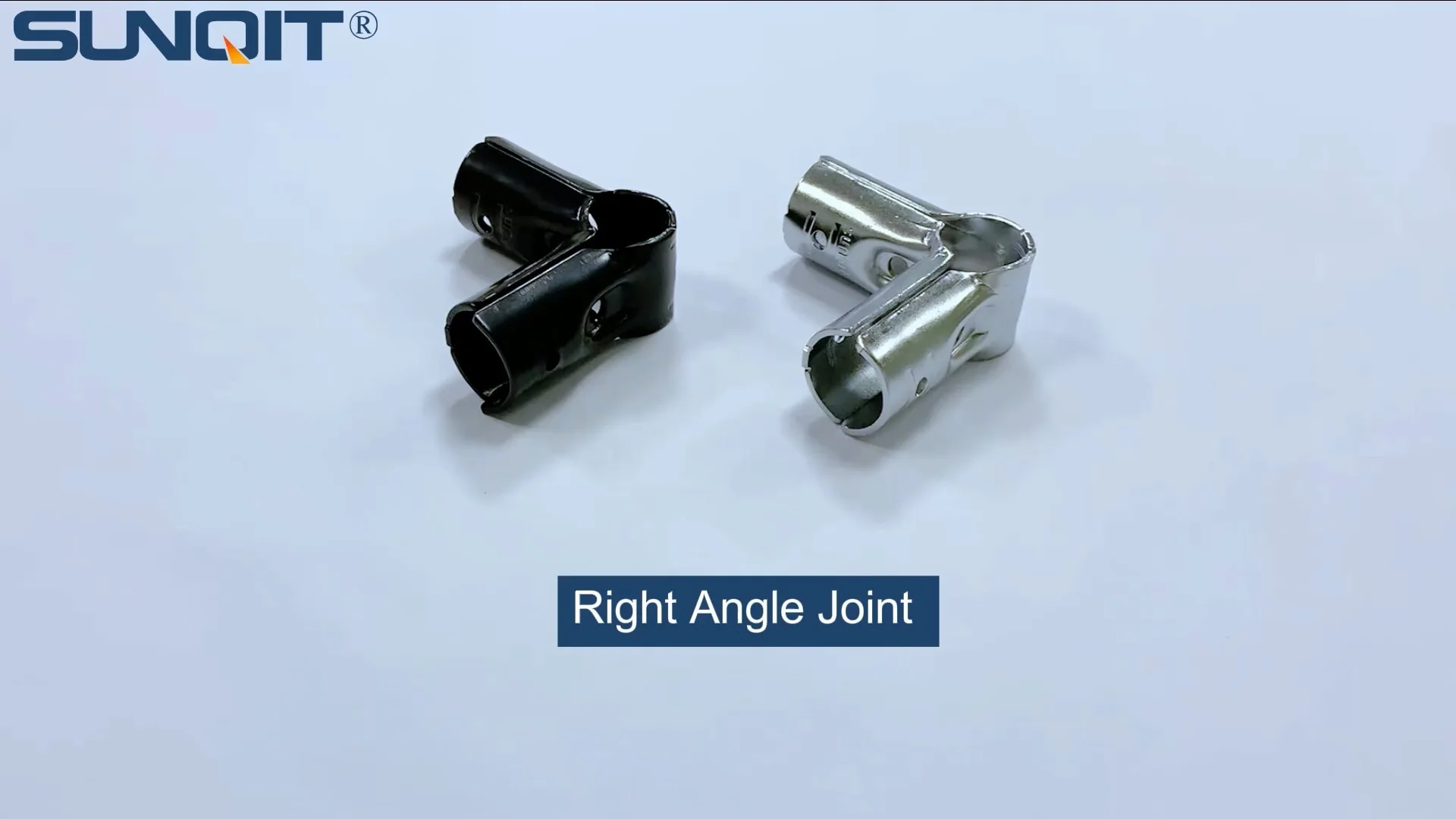
Three way lean pipe joint for 3 pcs 28MM lean pipe connection in straight angle, which used widely in workbench, flow rack, hand trolley frame connection.
Walk into any modern manufacturing facility, and you'll notice a quiet revolution unfolding on the shop floor. Gone are the days of rigid, one-size-fits-all production setups that take weeks to reconfigure. Instead, there's a buzz of adaptability—workstations that shift shape overnight, material racks that expand with demand, and assembly lines that pivot seamlessly between product runs. At the heart of this flexibility lies a small but mighty component: the three way lean pipe joint chrome. It's not just a piece of hardware; it's the unsung hero that turns static factories into dynamic, responsive ecosystems.
In this article, we'll dive into how this unassuming joint transforms production lines, why its chrome-plated design matters, and how it integrates with other lean components like lean pipe workbenches and flow racks to build systems that grow with your business. Whether you're a small manufacturer scaling up or a large plant aiming to cut downtime, understanding the role of the three way lean pipe joint chrome could be the key to unlocking your production line's full potential.
The Problem with Rigid Production: Why Flexibility Matters
Let's start with a scenario many production managers know all too well. Imagine a mid-sized electronics plant that's just landed a rush order for a new gadget. The existing assembly line, built with fixed steel frames and welded structures, is optimized for their standard product. To accommodate the new order, the team needs to add two extra workstations and reconfigure the material flow. The problem? Rewelding frames and rearranging heavy equipment will take three days—time they don't have. By the time the line is ready, the rush order deadline is already slipping, and overtime costs are piling up.
This isn't just a hypothetical. Rigid setups cost manufacturers billions annually in downtime, missed deadlines, and lost opportunities. According to a 2024 report by the Manufacturing Flexibility Institute, companies with non-modular production lines spend 37% more on reconfiguration than those using lean, modular systems. The issue boils down to one core challenge: traditional joints and connectors are designed for permanence, not change. They're bulky, time-consuming to install, and nearly impossible to adjust without specialized tools.
Enter the three way lean pipe joint chrome. Unlike fixed welds or one-directional connectors, this component is built for adaptability. Its three-way design lets you connect lean pipes (or aluminum profiles) in multiple directions—up, down, left, right—without drilling, welding, or heavy machinery. And the chrome plating? That's not just for shine. It adds durability, corrosion resistance, and a smooth finish that makes adjustments easy, even after years of use. Suddenly, the electronics plant in our earlier example could reconfigure those workstations in hours, not days, using nothing more than a hex key and a team of two.
Anatomy of a Game-Changer: What Makes the Three Way Lean Pipe Joint Chrome Unique
To understand why this joint is so transformative, let's break down its design. At first glance, it looks simple: a small, roughly T-shaped connector with three openings, each designed to grip a lean pipe (typically 28mm in diameter, though sizes vary). But look closer, and you'll see the engineering that sets it apart.
First, the three-way connectivity. Most standard joints only allow two pipes to meet at a 90° angle, limiting the structures you can build. The three way joint, however, lets you branch off in three directions, creating complex shapes like L-racks, U-shaped workbenches, or multi-tiered flow racks with minimal components. This versatility means one joint can replace multiple specialized connectors, reducing both cost and inventory.
Then there's the chrome plating. Unlike bare steel joints that rust or plastic ones that crack under heavy loads, chrome-plated steel strikes a balance between strength and longevity. The chrome layer acts as a barrier against moisture and chemicals—critical in factories where oils, coolants, or humidity can degrade equipment. It also reduces friction, making it easier to loosen or tighten the joint when reconfiguring. Ask any maintenance technician, and they'll tell you: a rusted, seized joint can turn a 10-minute adjustment into a 2-hour battle. Chrome eliminates that headache.
Finally, the grip mechanism. Inside each opening, there's a spring-loaded or threaded clamp that the pipe securely when tightened. No welding, no adhesives—just a firm, reliable hold that can support hundreds of pounds (depending on the pipe material). And when you need to change things up? Loosen the clamp, reposition the pipe, retighten, and you're done. It's so simple that even new operators can learn to use it in minutes, reducing training time and human error.

Building Blocks of Lean: How It Integrates with Workbenches, Flow Racks, and More
A single joint is powerful, but its true value shines when combined with other lean components. Let's take a lean pipe workbench, for example. Traditional workbenches are heavy, fixed, and often overbuilt for the tasks at hand. A modular workbench built with three way lean pipe joints, though, is a different beast. You can adjust the height to fit each worker (reducing ergonomic injuries), add shelves or tool holders on the fly, or even mount a conveyor to the side for material transport—all using the same joints.
Consider a small automotive parts supplier we worked with last year. They needed workbenches that could handle both small components (like bolts and washers) and larger assemblies (like brake calipers). Using three way joints, they built dual-level workbenches: a lower shelf for heavy tools, an upper deck for assembly, and side rails with hooks for hanging cables and pneumatic tools. When a new client required a taller bench for standing work, they simply loosened the joints, added a few extra pipes, and had the new setup ready by the end of the shift. No new workbenches, no disposal costs—just adaptability.
Flow racks are another area where the three way joint excels. These racks, used to feed materials to assembly lines, rely on gravity to move products from the back to the front. With traditional fixed racks, adding a new lane or adjusting the angle means rebuilding the entire structure. With three way joints, you can add a third lane in minutes by branching off from the existing frame. One food packaging plant we visited used this to handle seasonal demand: in summer, they added lanes for their fruit snack line; in winter, they reconfigured those lanes to accommodate holiday gift boxes. The joints made the switch so seamless, workers barely noticed the change.
And let's not forget conveyors. While motorized conveyors have their place, many facilities use gravity-fed roller tracks (often called "flow rails") to move lightweight materials. The three way joint lets you connect these tracks to workbenches or flow racks at custom angles, creating a continuous material flow from storage to assembly. For instance, a electronics manufacturer might use a flow rack with three way joints to feed circuit boards to a lean pipe workbench, then connect a short roller track from the bench to a testing station—all without a single weld.

Beyond the Shop Floor: Why It's a Cornerstone of Lean Systems
The three way lean pipe joint chrome isn't just about building structures—it's about building a lean system. Lean manufacturing, at its core, is about eliminating waste: waste of time, space, materials, and effort. This joint addresses all four.
Take time waste, for example. Traditional reconfiguration requires scheduling downtime, hiring contractors, or pulling skilled workers off production to weld or drill. With modular joints, reconfiguring a workstation takes a fraction of the time. A 2023 case study by Lean Enterprise Institute found that a furniture manufacturer using three way joints reduced reconfiguration time by 82% when switching between chair models. That's not just faster—it's a game-changer for meeting tight deadlines.
Space waste is another area. Fixed structures often take up more room than needed, leaving dead zones on the shop floor. Modular systems, built with three way joints, can be shrunk or expanded as demand changes. A toy manufacturer we spoke to used this to great effect: during the holiday rush, they expanded their flow racks to hold more inventory; in the slower first quarter, they disassembled the extra racks and used the space for employee training. No more wasted square footage.
Material waste is reduced too. Traditional steel frames are often cut to specific lengths, meaning any change in design leaves scrap metal. Lean pipes, connected by three way joints, are reusable. When a structure is no longer needed, the pipes and joints can be disassembled and repurposed into something new. One automotive supplier reported saving $45,000 annually in material costs by reusing joints and pipes instead of buying new fixed structures.
And finally, effort waste. When workers don't have to struggle with heavy tools or wait for maintenance to adjust their workstations, they can focus on what matters: building quality products. A survey of shop floor employees at a medical device plant found that those using modular workstations (with three way joints) reported 23% less physical strain and 18% higher job satisfaction than those stuck with fixed setups. Happier workers are more productive workers—and that's a win for everyone.
Comparing Joints: Why Three Way Lean Pipe Joint Chrome Stands Out
To truly appreciate the three way lean pipe joint chrome, it helps to see how it stacks up against other common connectors. Below is a comparison of three popular joint types used in manufacturing:
| Feature | Three Way Lean Pipe Joint Chrome | Fixed Welded Joints | Plastic Modular Joints |
|---|---|---|---|
| Flexibility | High: Reconfigurable in minutes; three-way connectivity | None: Permanent; requires cutting/welding to adjust | Medium: Limited to 2-way connections; prone to cracking under stress |
| Load Capacity | High: Supports up to 200kg per joint (with 28mm steel pipe) | Very High: Welds can handle heavy loads but are not adjustable | Low: Typically max 50kg; deforms under heavy weight |
| Installation Time | 5-10 minutes per joint (hand tools only) | 30-60 minutes per joint (requires welding equipment) | 10-15 minutes per joint (snap-fit but less secure) |
| Durability | High: Chrome plating resists rust and corrosion; steel core prevents bending | High: Steel is strong but prone to rust without coating | Low: Plastic degrades in sunlight/chemicals; cracks with repeated use |
| Cost (Lifetime) | Medium: Higher upfront than plastic, but reusable for years | High: Initial welding costs + replacement costs when reconfiguring | Low upfront, high long-term: Needs frequent replacement |
The table tells a clear story: while fixed welded joints offer raw strength, they lack the adaptability modern manufacturing demands. Plastic joints are cheap but flimsy. The three way lean pipe joint chrome hits the sweet spot—strong enough for heavy loads, flexible enough for daily changes, and durable enough to last for years. It's no wonder that 78% of manufacturers surveyed by Industry Week in 2024 cited modular metal joints (like the three way chrome) as their top choice for flexible production setups.
Real-World Impact: Stories from the Shop Floor
Numbers and tables are helpful, but nothing brings a component's value to life like real stories. Let's meet Maria, a production manager at a mid-sized appliance factory in Ohio. Last year, her plant faced a crisis: a sudden surge in demand for their new energy-efficient dryer meant they needed to add three more assembly stations within a week. The existing line, built with fixed steel frames, couldn't be expanded without shutting down production for three days—a delay that would cost them the client.
Maria's team turned to three way lean pipe joint chrome. They ordered a kit of pipes, joints, and lean pipe workbench components on Monday. By Wednesday, two technicians had assembled three new workstations, complete with integrated flow racks for parts and tool holders. The total cost? $3,200—far less than the $15,000 they would have spent on welded frames. The client was thrilled, and the plant avoided downtime. "We didn't just meet the deadline," Maria told us. "We proved we could pivot faster than any competitor. That client is now our biggest account."
Then there's Raj, a small business owner who manufactures custom metal brackets. His shop is tight on space, so he needs every square foot to work double-time. Using three way joints, he built a modular system that transforms from a morning assembly line into an afternoon packaging station. "In the morning, the flow racks feed parts to my workbench," he explains. "By lunch, I disassemble the racks, roll the workbench to the other side of the shop, and use the same pipes and joints to build a packaging table. It's like having a shop twice the size."
These stories aren't anomalies. They're the norm for manufacturers who've embraced modular, lean systems. The three way lean pipe joint chrome doesn't just solve problems—it creates opportunities to innovate, scale, and compete in a fast-changing market.
Maintenance and Longevity: Making Your Investment Last
Like any tool, the three way lean pipe joint chrome works best with a little care. Fortunately, maintenance is minimal—another reason it's a favorite among busy production teams.
First, keep the joints clean. While the chrome plating resists rust, built-up grease or debris can make adjustments tricky. A quick wipe with a rag and mild detergent every few months is usually enough. For shops with heavy oil or coolant exposure, a monthly check to remove residue will prevent buildup.
Second, check the tightness of the joints regularly. Over time, vibration from machinery or frequent adjustments can loosen the clamps. A quick turn with a hex key every few weeks ensures the structure stays stable. This is especially important for overhead racks or workstations holding heavy tools.
Third, store extra joints properly. If you're not using a joint, keep it in a dry, covered area to prevent dust from clogging the clamp mechanism. A small storage bin with dividers works well—no need for fancy organizers.
With these simple steps, a three way lean pipe joint chrome can last 5-7 years or more. Compare that to plastic joints, which often need replacement after 1-2 years, or welded joints that become obsolete the moment you need to reconfigure—and the long-term value becomes clear.
Looking Ahead: The Future of Flexible Production
As manufacturing continues to evolve—with shorter product lifecycles, smaller batch sizes, and higher customization demands—the need for flexible systems will only grow. The three way lean pipe joint chrome is poised to play an even bigger role in this future, thanks to ongoing innovations in materials and design.
One trend we're watching is the integration of smart features. Imagine joints with built-in sensors that alert maintenance when a clamp is loose, or RFID tags that track which joints are used where—making inventory management a breeze. While these are still in development, early prototypes show promise for large-scale plants.
Another trend is the rise of hybrid systems, combining lean pipes with aluminum profiles (another keyword from our list). Aluminum profiles offer lightweight strength, and three way joints are increasingly compatible with both materials, letting manufacturers mix and match for optimal performance. For example, a heavy-duty flow rack might use steel pipes and chrome joints for the frame, with aluminum guide rails for the roller tracks—combining durability and precision.
But even without these innovations, the three way lean pipe joint chrome remains a cornerstone of flexible production. Its simplicity is its strength. In a world of overcomplicated solutions, sometimes the best tool is the one that does one job—enabling change—exceptionally well.
Conclusion: Small Joint, Big Impact
The three way lean pipe joint chrome is more than a connector. It's a symbol of manufacturing's shift from rigidity to adaptability. It's the difference between a production line that struggles to keep up and one that leads the pack. It's the reason a small business can compete with industry giants, and a large plant can slash costs while boosting output.
Whether you're building a single lean pipe workbench or overhauling an entire factory, this joint deserves a spot in your toolkit. It's affordable, easy to use, and built to last. And in a world where change is the only constant, that's not just an advantage—it's a necessity.
So the next time you walk through a manufacturing facility, take a closer look at those unassuming chrome joints. They might be small, but they're the reason that factory can turn on a dime. And in manufacturing, the ability to turn fast is what separates the winners from the rest.