- Company Articles
- Products and Technology
- Solution
- Roller Track Placon Mount Brackets & Modular Production Lines: Scalability Advantages

Roller Track Placon Mount Brackets & Modular Production Lines: Scalability Advantages
Related Product
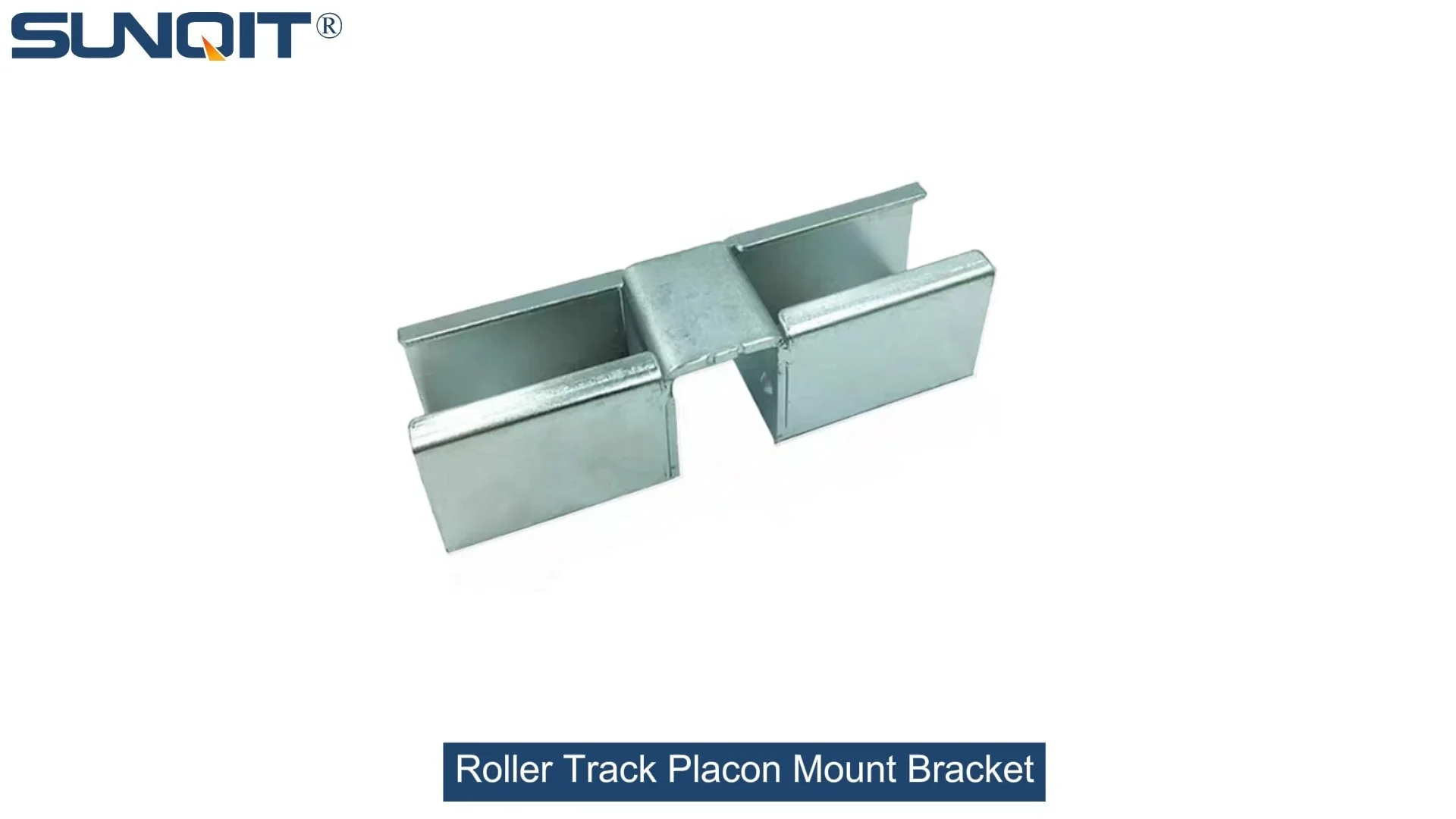
Roller Track Placon Mount Bracket
Roller track placon mount work as a connector for roller track and pipe or aluminum profile in rack syetem, it is a necessary parts in rack system which widely used in industrial plant and logistic,warehouse storage.
Roller Track Placon Mount Brackets & Modular Production Lines: Scalability Advantages
In today's fast-paced manufacturing world, where consumer demands shift overnight and production volumes fluctuate like tides, the ability to adapt isn't just a luxury—it's survival. Picture a factory floor where a sudden surge in orders for a new smartphone model hits, or a medical device manufacturer needs to pivot quickly to meet urgent healthcare needs. In these moments, rigid, one-size-fits-all production lines become bottlenecks, dragging down efficiency and eating into profits. This is where modular production systems, paired with precision-engineered components like roller track placon mount brackets , shine. They're not just tools; they're the backbone of a manufacturing setup that grows, evolves, and thrives alongside your business.
At the heart of this flexibility lies a simple yet powerful idea: lean solution principles—where every part serves a purpose, waste is minimized, and adaptability is built into the design. Let's dive into how roller track placon mount brackets and modular lines work together to transform scalability from a buzzword into a daily reality.
What Are Roller Track Placon Mount Brackets, Anyway?
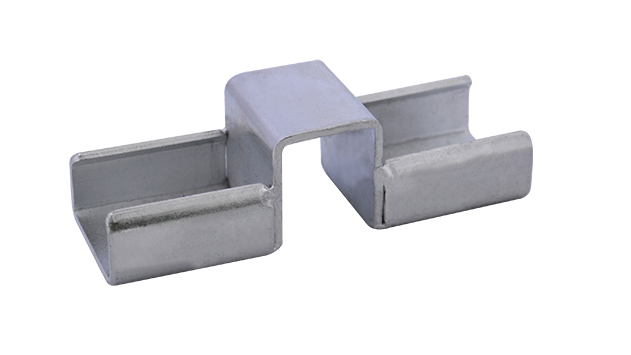
If modular production lines are the body, roller track placon mount brackets are the joints that let it move. These unassuming components might not grab headlines, but they're critical for connecting roller tracks to aluminum profiles—the building blocks of modern workstations, flow racks, and conveyors. Think of them as the "glue" that holds your material handling system together, but with a twist: they're designed to be taken apart, reconfigured, and reused without breaking a sweat.
Take, for example, the roller track placon mount for aluminum profile flat or the roller track placon mount center support bracket . These brackets are engineered with precision slots and holes that align perfectly with standard aluminum profiles (like 4040 or 3030 series), allowing for tool-free adjustments in minutes. Made from high-grade aluminum, they're lightweight yet tough enough to handle the daily grind of heavy loads—whether it's circuit boards sliding down a flow rack or car parts gliding along a conveyor.
But their real magic? Versatility. Need to angle a roller track upward to accommodate a new workstation layout? Swap in an end support for roller track placon mount with stop . Want to extend a conveyor line to reach a new assembly station? Just add a roller track placon mount connector and a few extra track sections. No welding, no custom fabrication, no waiting weeks for parts. It's manufacturing on your terms.
Modular Lines: The Scalability Powerhouse
Modular production lines aren't just about swapping brackets, though. They're a complete ecosystem built on the idea that every component—from the lean pipe workbench to the conveyor, from the flow rack to the workstation—works together as a flexible unit. Let's break down their scalability superpowers:
1. Grow (or Shrink) Without Starting Over
Traditional production lines are like concrete—once poured, they're hard to change. Expanding capacity might mean tearing out sections, hiring contractors, and halting production for weeks. With modular lines, scaling up is as straightforward as adding a few more flow rack units or extending a conveyor with extra roller track sections and placon mount brackets. During slow seasons, you can just as easily disassemble unused parts and store them, freeing up floor space for other tasks. It's like having a production line that deflates and inflates with your needs—no mess, no downtime.
2. Reuse, Reconfigure, Reduce Waste
The lean solution ethos of "reusable and sustainable improvement" isn't just good for the planet—it's great for your bottom line. Roller track placon mount brackets, aluminum profiles, and lean pipe components are designed to be reused across projects. A bracket that once held a roller track for a lean pipe workbench in an automotive plant can tomorrow support a flow rack in a 3C assembly line. This cuts down on material costs and reduces the environmental footprint—win-win.
3. Adapt to New Products in Days, Not Months
In industries like consumer electronics, where new models launch every few months, product lifecycles are shorter than ever. A modular line lets you reconfigure workstations and material flow paths in days. For instance, when a smartphone manufacturer shifts from assembling a 6-inch model to a 6.7-inch one, the lean pipe workbench can be adjusted with new brackets and accessories to fit the larger components. Roller tracks can be repositioned to route parts to different stations, and flow racks can be rearranged to store new tooling. No more waiting for custom workbenches or tearing out old conveyor systems—your line evolves with your product.

Real-World Impact: Scalability in Action
Let's look at how this plays out in three key industries:
3C Assembly: Keeping Up with Tech's Fast Lane
A leading 3C manufacturer in Shenzhen was struggling with frequent product launches. Their old production line, with fixed steel workbenches and welded conveyors, took 4-6 weeks to reconfigure for new models. After switching to a modular system with lean pipe workbench E units, aluminum flow racks, and roller track placon mount brackets, they cut reconfiguration time to just 3 days. How? By pre-building modular sections that could be swapped in: adding a few extra roller track brackets here, adjusting a conveyor's angle there, and reusing 80% of existing components. The result? They launched two new tablet models ahead of schedule, capturing a bigger market share.
Medical Device Manufacturing: Precision Meets Urgency
During the height of the pandemic, a medical equipment maker needed to ramp up ventilator production by 300% in a month. Their challenge? The delicate components required ESD-safe workstations (to prevent static damage) and strict cleanliness standards. Using ESD workbench units with aluminum profiles and roller track placon mount brackets (which resist corrosion and are easy to sanitize), they quickly expanded their assembly area. Extra flow racks with anti-static roller tracks were added to handle component storage, and conveyors were extended using pre-tested bracket-and-track kits. They met the surge in demand without compromising on quality—a lifeline for hospitals and patients alike.
Automotive Parts: Handling Fluctuating Volumes
An auto parts supplier faced seasonal spikes—demand for brake components soared in Q4, then dropped sharply in Q1. With a modular line, they solved this by designing "expandable" sections: during peak seasons, they added 40-series steel roller tracks (using 40 roller track placon mount flat brackets) to their conveyors, doubling material flow capacity. In slow seasons, those tracks were disassembled and stored, freeing up 30% of floor space for maintenance and training. Labor costs dropped too, as workers could easily adjust stations themselves instead of waiting for maintenance crews.

Why Roller Track Placon Mount Brackets Are Non-Negotiable for Scalability
You might be thinking: "Can't I just use generic brackets or homemade solutions?" Sure—but you'll lose the very scalability you're after. Here's why purpose-built placon mount brackets make all the difference:
| Feature | Generic Brackets | Roller Track Placon Mount Brackets |
|---|---|---|
| Compatibility | Hit-or-miss with standard aluminum profiles; often require drilling custom holes. | Engineered to fit common profile sizes (4040, 3030, etc.) with pre-aligned slots for quick assembly. |
| Load Capacity | Unreliable; may bend or break under heavy loads (e.g., car parts, large electronics). | Tested to handle weights up to 200kg per bracket (varies by model), ensuring safety even with bulky items. |
| Adjustability | Fixed angles; repositioning means replacing the bracket entirely. | Multi-angle designs (e.g., roller track placon mount for rail connection ) allow tilting, rotating, or height adjustments in seconds. |
| Durability | Cheap materials (e.g., low-grade steel) rust or wear quickly in factory environments. | Anodized aluminum resists corrosion, scratches, and chemical exposure—built to last 5+ years with minimal maintenance. |
In short, generic brackets turn scalability into a headache. Placon mount brackets turn it into a competitive advantage.
Beyond Brackets: The Full Modular Ecosystem
Roller track placon mount brackets don't work alone. They're part of a larger family of components that make modular lines tick:
Aluminum Profiles: The Skeleton
Lightweight, strong, and infinitely configurable, aluminum profiles (like 4080 or 2020 series) form the frames of workbenches, flow racks, and conveyor supports. Their T-slot design lets brackets, shelves, and accessories snap into place without welding.
Flow Racks: The Material Movers
When paired with roller tracks and placon mount brackets, flow rack systems turn static storage into dynamic material delivery. Parts glide from storage to assembly stations via gravity, reducing walking time for workers and cutting down on errors.
Conveyors: The Lifelines
From small 40 steel roller track sections for light components to heavy-duty 85 staggered roller track for automotive parts, conveyors keep materials moving smoothly. Placon mount brackets ensure these tracks stay aligned and stable, even at high speeds.
Lean Pipe Workbenches: The Workhorses
A lean pipe workbench isn't just a table—it's a command center. With adjustable heights, built-in tool storage, and ESD-safe surfaces, it adapts to different tasks, from intricate 3C assembly to rugged mechanical work. And when needs change? Add a roller track bracket, and suddenly it's feeding parts to a nearby conveyor.
Scalability = Profitability: The Bottom-Line Impact
At the end of the day, scalability isn't just about flexibility—it's about the numbers. Let's crunch some hypothetical (but realistic) figures:
A mid-sized electronics manufacturer switches from a fixed line to a modular system with roller track placon mount brackets. Here's what happens in the first year:
- Reduced downtime: Reconfiguring for new products drops from 4 weeks to 3 days → 37 extra production days → ~$185,000 in additional revenue (based on $5,000/day output).
- Lower labor costs: Workers adjust lines themselves instead of hiring contractors → $30,000 saved on installation fees.
- Reused components: 80% of brackets and profiles repurposed for new lines → $25,000 saved on new materials.
- Increased capacity: Quick scaling for peak seasons adds 10% more output → $120,000 in extra sales.
Total first-year gain? Over $360,000. And as the business grows, these savings compound—because the modular system keeps up without constant reinvestment.
Future-Proofing Your Factory: What's Next?
As manufacturing marches toward Industry 4.0, with IoT sensors, AI-driven demand forecasting, and automated guided vehicles (AGVs), modular systems will only become more critical. Imagine a line that automatically adjusts its roller track angles based on real-time production data, or brackets with built-in RFID tags that track component usage for predictive maintenance. These aren't sci-fi—they're the next steps in the evolution of scalable manufacturing.
But even today, the message is clear: rigid lines belong in the past. Roller track placon mount brackets and modular production systems aren't just upgrades—they're investments in a future where your factory doesn't just keep up with change… it leads it.
So, what's holding your production line back? Is it time to trade in the concrete for flexibility, the one-time builds for endless possibilities? The scalability advantage is waiting—all it takes is the right components, and the vision to see where they can take you.