- Company Articles
- Products and Technology
- Application Cases
- Roller Track Placon Mount Brackets in 3C Assembly Lines: Enhancing Production Efficiency

Roller Track Placon Mount Brackets in 3C Assembly Lines: Enhancing Production Efficiency
Related Product
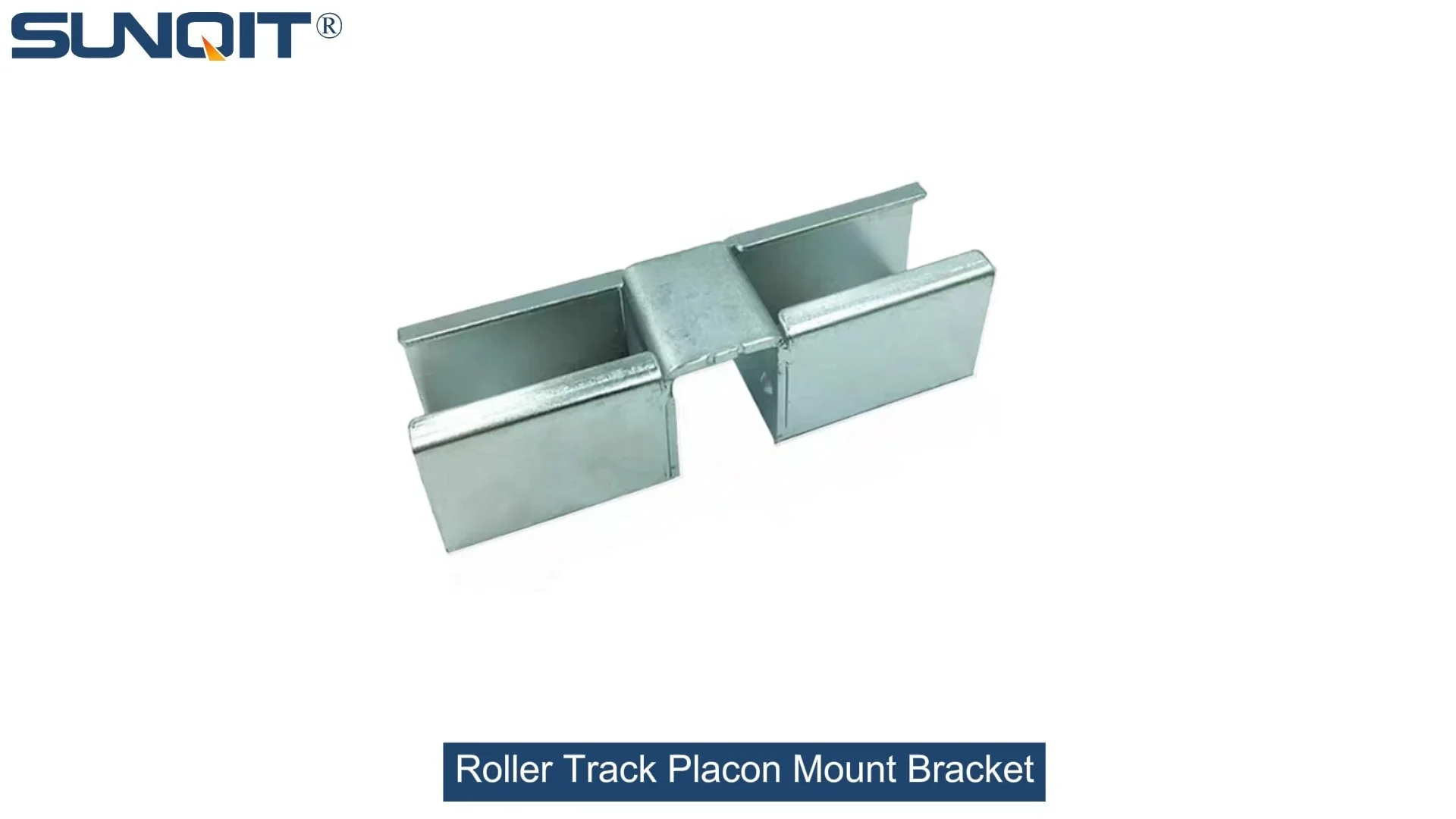
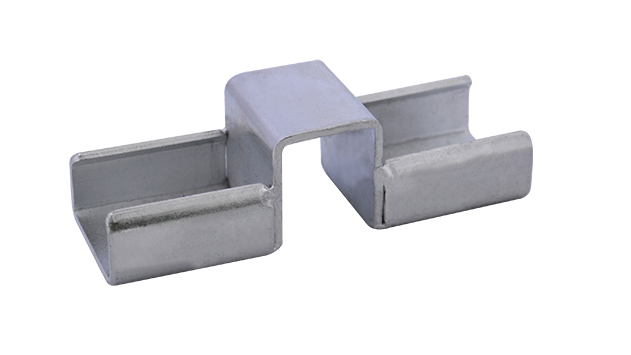
Roller Track Placon Mount Bracket
Roller track placon mount work as a connector for roller track and pipe or aluminum profile in rack syetem, it is a necessary parts in rack system which widely used in industrial plant and logistic,warehouse storage.
In the fast-paced world of 3C manufacturing—where smartphones, laptops, and electronic components are born—every second counts. Assembly lines hum with precision, workers move with synchronized speed, and materials flow like a well-choreographed dance. But here's the thing: even the most advanced production floor can stumble over one tiny hiccup in material handling. A stuck component, a misaligned track, or a wobbly connection can throw off timing, delay output, and chip away at that all-important bottom line. That's where yet crucial components like roller track placon mount brackets step in—quietly but powerfully transforming how 3C assembly lines operate.
Today, we're diving into how these unassuming brackets, paired with thoughtful design and (lean) principles, are becoming the unsung heroes of modern 3C production. From smoothing material flow to enabling flexible line reconfigurations, they're not just parts—they're the backbone of efficiency in an industry that never stops evolving.
The Unique Hurdles of 3C Assembly Lines
3C products—computers, communications, and consumer electronics—are marvels of miniaturization and complexity. A single smartphone, for example, might require hundreds of components, each smaller than a fingernail, to be assembled with micron-level precision. But this complexity brings unique challenges for production lines:
- High Mix, Low Volume Demands: With new models launching every few months, lines must switch between products quickly. Rigid, fixed tracks and brackets can't keep up, leading to downtime during retooling.
- Fragile Components: Delicate circuit boards, screens, and chips are prone to damage from jostling or static electricity. Material handling systems must be gentle yet reliable.
- Tight Space Constraints: 3C factories often operate in compact areas, requiring systems that maximize vertical and horizontal space without sacrificing accessibility.
- Speed vs. Accuracy: Lines run at breakneck speeds—sometimes hundreds of units per hour—but even a minor misalignment can cause defects that cost time and money to fix.
For years, many manufacturers relied on generic conveyor parts or custom-welded structures to tackle these issues. But generic parts often lacked precision, and custom builds were expensive to modify. Enter roller track placon mount brackets: designed to address these pain points head-on, they're redefining what's possible in 3C assembly.
What Are Roller Track Placon Mount Brackets, Anyway?
Let's start with the basics. Roller track placon mount brackets are the connecting pieces that hold roller tracks in place on assembly lines. Think of them as the "joints" that link the rollers to the frame, whether that frame is an aluminum profile workstation, a conveyor side rail, or a mobile cart. But what makes them special?
Unlike traditional fixed brackets, these components are engineered for flexibility and durability. Most are made from high-grade aluminum or steel, chosen for their strength-to-weight ratio—critical in tight 3C workspaces. Their design focuses on three key features:
Modular Mounting
With slotted holes and standardized connections, they attach to aluminum profiles (like 4040 or 3030 series) in seconds. No welding, no drilling—just a few bolts, and you're ready to go. This means lines can be reconfigured in hours, not days.
Adjustable Angles
Many brackets allow (fine-tuning) of roller track angles—from slight inclines for gravity-fed flow to flat mounts for powered conveyors. This adaptability ensures materials move at the optimal speed for each component type.
Shock Absorption
Soft-grip pads or spring-loaded designs reduce vibration, protecting delicate 3C parts as they glide along the track. In ESD-sensitive areas, conductive materials in the brackets even help dissipate static, pairing seamlessly with ESD workstations.
But their real magic lies in how they work with other lean system components. Pair them with aluminum lean pipes, ESD workbenches, and flexible roller tracks, and you get a system that's greater than the sum of its parts—a truly integrated solution for 3C's toughest challenges.
Case Study: How a 3C Manufacturer Cut Downtime by 35% with Placon Mount Brackets
To see these brackets in action, let's look at a real-world example. A leading smartphone manufacturer in Shenzhen was struggling with frequent line stoppages. Their old setup used custom steel brackets to mount roller tracks, but when switching between phone models, workers had to spend 4-6 hours removing and rewelding brackets to adjust track heights and angles. Worse, the rigid design caused occasional jams, leading to scratched screens and delayed shipments.
In 2024, they switched to a lean system centered on roller track placon mount brackets and aluminum profiles. Here's what happened next:
| Metric | Before | After | Improvement |
|---|---|---|---|
| Changeover Time | 4-6 hours | 45 minutes | -87.5% |
| Jam-Related Downtime | 12 hours/week | 2 hours/week | -83.3% |
| Scrap Rate (Screen Damage) | 1.2% | 0.3% | -75% |
| Worker Satisfaction | 6/10 (survey) | 9/10 (survey) | +50% |
"The difference was night and day," said the plant manager. "Before, my team dreaded model changes—now, they can adjust the tracks during lunch break. And the brackets hold the rollers so steady, we haven't had a single screen scratch from jams in months."
What drove these results? The modular brackets allowed the team to quickly swap roller track sections, adjust angles for different component sizes, and even add new tracks to accommodate larger batteries or camera modules. The aluminum profiles kept the system lightweight, so workers could move mobile workstations without heavy equipment. And because everything was pre-engineered to fit together, there was no guesswork—just consistent, reliable performance.

Beyond Brackets: Building a Complete Lean Ecosystem
Roller track placon mount brackets are powerful on their own, but their true potential shines when integrated with other lean components. In 3C assembly, this ecosystem often includes:
Aluminum Profiles: The Foundation
Aluminum profiles are the "bones" of modern workstations and conveyors. Lightweight yet strong, they're easy to cut, drill, and connect—perfect for 3C's need for flexibility. Placon mount brackets attach directly to these profiles, creating a grid-like structure that can be expanded or modified at will. For example, a line assembling smartwatches might use 2020 profiles for compact workstations, while a laptop line could scale up to 4080 profiles for heavier components.
ESD Workstations: Protecting Sensitive Electronics
Static electricity is a silent killer in 3C manufacturing. A single electrostatic discharge (ESD) can fry a microchip, rendering an entire device useless. That's why ESD workstations—equipped with grounded surfaces, wrist straps, and ionizers—are non-negotiable. Roller track systems with ESD-safe brackets and conductive rollers ensure that materials stay grounded as they move from station to station, eliminating static buildup. It's a seamless loop: parts start on an ESD bench, travel via ESD-protected rollers, and end at an ESD packing station—all without risk of damage.
Flow Racks and Turnover Trolleys: Keeping Materials at Hand
In 3C lines, time wasted searching for parts is time lost. Flow racks, built with roller tracks and placon mount brackets, let materials slide forward as they're used, keeping the next component always within reach. Pair these with turnover trolleys—also fitted with the same brackets for consistency—and workers can transport batches of parts between stations without lifting heavy bins. It's a small change that adds up: one study found that flow racks reduced "walk time" by 25% in a smartphone assembly line, letting workers focus on assembly, not fetching parts.
Custom Lean Solutions: Tailored to Your Needs
Every 3C product is unique, so every line should be too. Lean solution providers take a consultative approach, analyzing your specific workflow, component sizes, and production goals to design a system that fits. For example, a manufacturer of wireless earbuds might need a spiral conveyor with placon mount brackets to save vertical space, while a tablet producer could benefit from a zig-zag roller track to slow parts down for manual inspection. These custom setups leverage the flexibility of placon mount brackets to create something that's not just "good enough," but optimized for your exact process.

Measuring the Impact: How Lean Systems Boost the Bottom Line
At the end of the day, efficiency is about results—and in manufacturing, results mean cost savings, faster time-to-market, and happier customers. So, what kind of ROI can 3C manufacturers expect from investing in roller track placon mount brackets and lean systems?
Let's crunch the numbers. A mid-sized 3C factory producing 50,000 smartphones per month might face the following costs with a traditional setup:
- Downtime during model changes: $15,000/change (2 changes/month = $30,000)
- Scrap due to material handling errors: 1.5% of production = $22,500/month (based on $300/unit)
- Labor costs for reconfiguring lines: 20 worker-hours/change = $2,000/change = $4,000/month
After switching to a lean system with placon mount brackets, the same factory might see:
- Downtime reduced to 1 hour/change = $1,250/change = $2,500/month (savings: $27,500)
- Scrap rate cut to 0.3% = $4,500/month (savings: $18,000)
- Labor for reconfiguration: 2 worker-hours/change = $200/change = $400/month (savings: $3,600)
Total monthly savings: $49,100. Over a year, that's nearly $600,000—more than enough to justify the initial investment in brackets and profiles. And those are just the tangible costs; intangibles like improved worker morale and faster time-to-market for new products add even more value.
Looking Ahead: The Future of 3C Assembly
As 3C products grow more complex—think foldable screens, AI-powered devices, and IoT sensors—assembly lines will need to become even more agile. Roller track placon mount brackets are poised to evolve alongside these trends, with innovations like:
- Smart Brackets with Sensors: Embedded sensors could monitor roller speed, temperature, and vibration, alerting maintenance teams to issues before they cause downtime.
- 3D-Printed Custom Brackets: For ultra-specific applications, 3D printing could create one-of-a-kind brackets in hours, reducing lead times for new product launches.
- Eco-Friendly Materials: Recycled aluminum and biodegradable plastics might become standard, aligning with 3C brands' sustainability goals.
But no matter how technology advances, the core principle will remain the same: putting flexibility, reliability, and people at the center of production. Roller track placon mount brackets aren't just tools—they're enablers, giving manufacturers the freedom to adapt, innovate, and stay ahead in a competitive industry.
Final Thoughts: Small Parts, Big Impact
In the grand scheme of 3C manufacturing, roller track placon mount brackets might seem like small fry. They don't have the flash of a new robot arm or the excitement of a cutting-edge AI system. But as any seasoned production manager will tell you, it's the small parts that often make the biggest difference.
These brackets represent something bigger: a shift from rigid, one-size-fits-all production to lean, human-centered systems that can keep up with the pace of innovation. They're a reminder that efficiency isn't about working harder—it's about working smarter, with tools designed to adapt, protect, and empower.
So, the next time you pick up a smartphone or tablet, take a moment to appreciate the invisible network of brackets, rollers, and profiles that helped bring it to life. In the world of 3C assembly, the unsung heroes are the ones that keep things moving—one smooth roll at a time.