- Company Articles
- Products and Technology
- Product knowledge
- Roller Track Placon Mount Center Support Bracket: Enabling Flexible Production in Electronics Factories

Roller Track Placon Mount Center Support Bracket: Enabling Flexible Production in Electronics Factories
Related Product
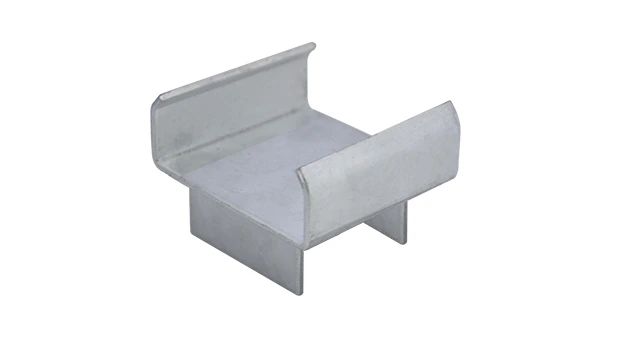
Roller Track Placon Mount Center Support Bracket
Roller track placon mount work as a connector for roller track and pipe or aluminum profile in rack syetem, it is a necessary parts in rack system which widely used in industrial plant and logistic,warehouse storage.
How a small but mighty component is transforming assembly lines from rigid to responsive
The Hidden Hero of Modern Electronics Manufacturing
Walk into any electronics factory today, and you'll see a world of constant motion: circuit boards gliding along conveyors, components being sorted into bins, workers assembling devices with pinpoint precision. But behind this seamless flow lies a challenge that keeps plant managers up at night: change . Consumer electronics evolve faster than ever—new phone models, slimmer laptops, smarter wearables—and your production line needs to keep up. A line that assembles 10,000 smartphones this month might need to switch to tablets next month, or add a new sensor module the month after.
Here's the problem: Traditional production setups are like concrete—sturdy, but impossible to rearrange without breaking everything. Conveyors bolted to the floor, fixed workbenches, rigid shelving—they work for one product, but when the design changes, you're stuck. You either spend weeks (and thousands) rebuilding, or fall behind competitors who can adapt in days.
That's where flexible production systems come in. And at the heart of these systems, there's a small but critical component you might not have noticed: the Roller Track Placon Mount Center Support Bracket . It sounds technical, but think of it as the backbone that holds your flexible production line together—strong enough to carry heavy loads, yet flexible enough to let you reconfigure your entire setup in hours, not weeks.
What Even IS a Roller Track Placon Mount Center Support Bracket?
Let's break it down. You know those roller tracks you see in warehouses or assembly lines—long, metal rails with wheels that let products slide smoothly from one station to the next? Those are roller tracks , and they're everywhere in electronics manufacturing, from moving PCBs to transporting finished devices. But to make those tracks work in a flexible system, you need more than just the rails and wheels. You need something to hold them up, keep them stable, and let you adjust their height or position when needed.
That's exactly what the center support bracket does. It's a metal (usually aluminum) bracket designed to mount directly onto aluminum profiles or lean pipes, providing a stable base for roller tracks. But here's what makes it special:
- Adjustable by design : Unlike fixed brackets, it uses T-slot connections (you've seen those grooves on aluminum profiles, right?) that let you slide it into any position, lock it with a simple bolt, and move it again later if you need to.
- Built for weight : Electronics components might seem light, but when you're moving 500 circuit boards an hour along a 10-meter track, you need something that won't bend or wobble. These brackets are engineered to handle loads up to 200kg per meter—enough for even the heaviest batches.
- Works with everything : Whether you're using plastic roller tracks for lightweight parts, steel wheel tracks for ESD-sensitive components (those anti-static ones that protect circuit boards from static damage), or even all-direction roller balls for 360° movement, this bracket plays well with them all. It's the ultimate team player.
Think of it like the joints in your hand. Your fingers can bend, twist, and grip because of small, strong joints that connect bones. Similarly, a roller track with a center support bracket can "bend" to your production needs—change height, angle, or position—while still supporting the weight of your operation.

Why Electronics Factories Can't Live Without It (Anymore)
Let's get practical. Why should you care about a bracket? Because in electronics manufacturing, time is money—and flexibility saves both. Let's look at three real-world scenarios where this bracket becomes a game-changer.
Scenario 1: The Last-Minute Product Change
Imagine you're running a 3C assembly line (that's computers, communications, and consumer electronics—think smartphones, tablets, smartwatches). Your client, a major phone brand, just announced a new model with a larger battery. Overnight, your production line needs to accommodate a battery that's 15% thicker.
With a traditional fixed roller track system, here's what happens: You'd have to shut down the line, unbolt the old tracks, drill new holes in the floor to reposition supports, and hope the new alignment is perfect. That's 48 hours of downtime, minimum.
With a Roller Track Placon Mount Center Support Bracket ? You loosen the T-slot bolts, slide the brackets up by 2cm (to make space for the thicker battery), re-tighten, and restart the line. Total time? 2 hours . No drilling, no welding, no lost production.
Scenario 2: Space Constraints in High-Density Factories
Electronics factories in places like Shenzhen or Shanghai don't have the luxury of endless space. You need to squeeze maximum productivity into every square meter. Fixed conveyor systems take up permanent floor space, even when they're not in use. But with a flexible roller track setup using center support brackets, you can do something radical: dismantle and rebuild as needed.
For example, during peak season (like before the holidays), you might need a second conveyor line to handle extra orders. Instead of building a new fixed line, you can use lean pipes, aluminum profiles, and these center support brackets to assemble a temporary roller track in a week. When peak season ends, take it apart, store the components, and free up space for other tasks. The brackets are lightweight enough to be carried by two workers, and since they're made of aluminum, they won't rust or degrade in storage.
Scenario 3: ESD Safety for Sensitive Components
Static electricity is the silent killer of electronics manufacturing. A single static discharge can fry a microchip, turning a $50 component into scrap. That's why ESD (electrostatic discharge) workbenches and roller tracks are non-negotiable. But ESD systems need to be both safe and flexible—and that's where the center support bracket shines.
Many brackets are designed with ESD-friendly materials (like conductive aluminum) and grounding points, so they integrate seamlessly with ESD workstations and roller tracks. When you reposition the bracket, the grounding connection stays intact, ensuring your sensitive components are protected no matter how you rearrange the line. No more worrying about static buildup during a quick reconfiguration—this bracket has your back.

How It Fits Into Your Lean System (Yes, It's a Team Player)
A roller track bracket might seem like a solo star, but it's actually part of a bigger team: your lean system . Lean manufacturing is all about eliminating waste—waste of time, space, materials—and this bracket checks every box. Let's see how it works with other key components in your line:
| Component | What It Does | How the Center Support Bracket Helps |
|---|---|---|
| Flow Rack | Slides components from the back to the front (first-in, first-out) for easy access. | Supports the roller tracks in the flow rack, ensuring smooth sliding even when fully loaded. Adjust height to match worker ergonomics (no more bending or reaching). |
| Conveyor | Moves products between workstations (e.g., from soldering to testing). | Keeps conveyor tracks level and stable, preventing jams. Lets you angle tracks for downhill flow (saving energy) or adjust height to connect with different workbenches. |
| Lean Pipe Workbench | Modular workstations built with aluminum pipes and joints. | Mount roller tracks directly to the workbench using the bracket, creating an integrated "pick-and-place" station. Reconfigure the tracks when the workbench's purpose changes. |
| Aluminum Profiles | The "building blocks" of flexible systems (think industrial Legos). | Attaches securely to T-slot profiles, turning basic frames into functional roller track systems. No drilling into profiles—preserve their reusability. |
Here's a real example of how it all comes together: A medical device manufacturer was struggling with their assembly line for insulin pumps. The line used fixed conveyors and workbenches, and changing between pump models took 3 days. They switched to a lean system with aluminum profiles, flow racks, and roller tracks supported by these center brackets. Now, when they need to switch models, they:
- Loosen the brackets holding the roller tracks on the flow racks.
- Reposition the tracks to match the new pump's size.
- Adjust the height of the tracks to align with the lean pipe workbenches.
- Tighten the brackets and restart the line.
Total time? 4 hours . That's a 94% reduction in changeover time. And because all components (brackets, tracks, profiles) are reusable, they've cut down on waste from building new fixtures—saving $20,000 a year in materials alone.
What to Look for in a Quality Bracket (Don't Settle for Cheap Imitations)
Not all roller track center support brackets are created equal. A cheap bracket might save you $10 today, but cost you $10,000 tomorrow when it bends under load, causing a line jam and scrapping 500 units. So when you're shopping for brackets, keep these key features in mind:
Material: Aluminum is the Gold Standard
Aluminum is lightweight (easy to install and move), corrosion-resistant (great for factories with humidity or cleaning chemicals), and strong enough for most electronics applications. Avoid steel brackets unless you need extreme weight capacity—they're heavier and harder to reconfigure. Also, check if the aluminum is anodized (a special coating) to prevent scratches and wear.
T-Slot Compatibility: It Should Fit Your Profiles
Most lean systems use standard aluminum profiles (like 2020, 3030, or 4040 series). Make sure the bracket's T-slot bolts match your profile's groove size. A bracket that fits 4040 profiles won't work with 3030, and forcing it will strip the threads or damage the profile. Reputable suppliers will list compatible profiles in the product specs—don't skip this check!
Load Capacity: Don't Guess—Calculate
Every bracket has a maximum load rating (e.g., 150kg/m). To find the right one, calculate the weight of your products plus the roller track itself, then add 30% for safety (you never know when you'll have a heavier batch). For example, if your track carries 100kg/m, get a bracket rated for at least 130kg/m.
Ease of Installation: Time is Money
Look for brackets with quick-lock bolts or lever nuts instead of traditional hex bolts. These let you tighten/loosen the bracket in seconds with a wrench, instead of minutes with a screwdriver. Some brackets even have built-in level indicators to ensure your track is straight—no more using a bubble level and guessing.
"We once tried a cheap steel bracket from a no-name supplier to save costs. Three weeks in, it bent under a batch of heavy power supplies, causing the roller track to tilt. We lost 8 hours of production and had to replace 30 damaged units. Lesson learned: Paying extra for a quality aluminum bracket from a trusted supplier is the cheapest insurance you can buy." — Li Wei, Production Manager at a Shenzhen-based 3C manufacturer
Final Thought: Flexibility Isn't a Trend—It's Survival
In the electronics industry, standing still means falling behind. Your competitors are already using flexible systems to launch products faster, adapt to market changes, and cut costs. The Roller Track Placon Mount Center Support Bracket might be a small component, but it's a symbol of that flexibility—a tool that turns your production line from a rigid machine into a responsive, agile partner.
So the next time you walk through your factory, take a closer look at those roller tracks. The brackets holding them up might not look like much, but they're working hard to keep your line moving, adapting, and thriving. And when you're ready to upgrade your system, remember: it's not just about buying parts—it's about investing in a lean, flexible future.
Ready to make your production line as adaptable as your products? Start with the backbone—find a bracket that fits your needs, pair it with quality roller tracks and lean pipes, and watch your changeover times drop, your waste shrink, and your team's productivity soar. After all, in manufacturing, the best innovations aren't always the flashy ones—sometimes, they're the ones quietly holding everything together.