- Company Articles
- Products and Technology
- Application Cases
- Roller Track Placon Mount Connector Applications in Warehouse Logistics

Roller Track Placon Mount Connector Applications in Warehouse Logistics
Related Product
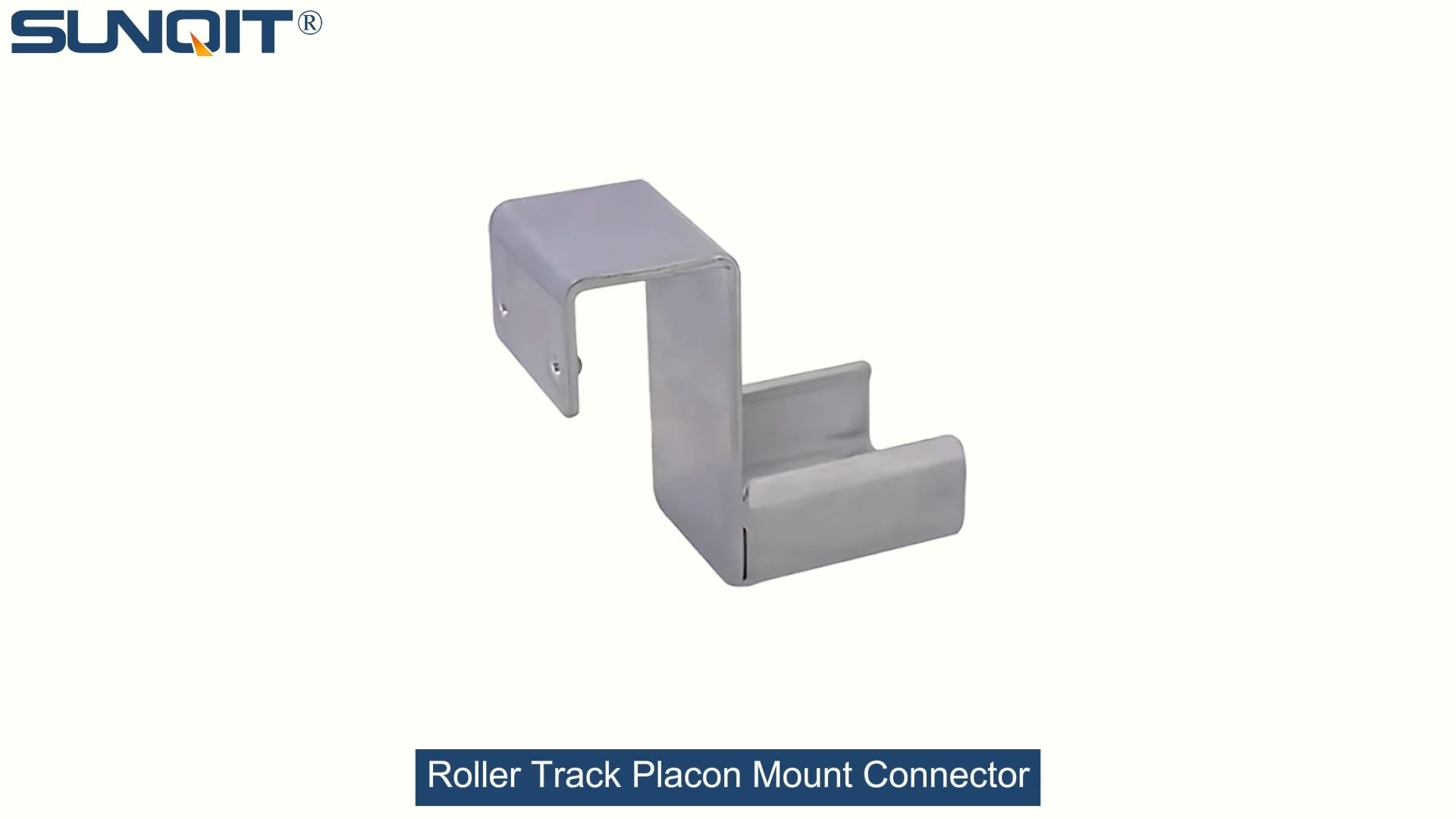
Roller Track Placon Mount Connector
Roller track placon mount work as a connector for roller track and pipe or aluminum profile in rack syetem, it is a necessary parts in rack system which widely used in industrial plant and logistic,warehouse storage.
The Unsung Hero Behind Smoother, Faster, and Smarter Material Flow
In the world of warehouse logistics, efficiency isn't just a buzzword—it's the heartbeat of operations. Picture this: a busy distribution center during peak season. Forklifts zip between aisles, pickers rush with scanning guns, and conveyor belts hum with packages. Every delay, every jam, every misalignment can ripple into missed deadlines, frustrated customers, and shrinking profits. But here's the thing: most of these issues trace back to tiny, often overlooked components. Today, we're shining a spotlight on one such component that quietly keeps the wheels turning (literally): the Roller Track Placon Mount Connector .
You might not have noticed it before, but this unassuming piece of hardware is the glue that holds modern roller track systems together. Whether it's connecting roller tracks to aluminum profiles, securing guide rails in place, or ensuring smooth transitions between conveyor sections, its role is critical. Let's dive into how this small but mighty connector is transforming warehouse logistics—one seamless workflow at a time.
Why Roller Track Placon Mount Connectors Matter in Modern Warehouses
Warehouses today face more pressure than ever. E-commerce boom has upped customer expectations for fast shipping, while labor shortages mean teams need to do more with less. In this context, flow rack systems and conveyor lines aren't just nice-to-haves—they're essential. And at the core of these systems? Reliable connections.
Traditional connectors often fall short. Welded joints are rigid and hard to adjust; cheap plastic connectors crack under heavy loads; misaligned tracks cause jams that halt entire workflows. But the Roller Track Placon Mount Connector is designed to solve these pain points. Let's break down its key roles:
- Stability Under Pressure : Warehouses deal with varying load weights—from lightweight electronics to heavy automotive parts. These connectors are engineered to lock roller tracks firmly in place, preventing shifting even under constant vibration.
- Flexibility for Change : Seasonal demand spikes, new product lines, or layout optimizations—your warehouse needs to adapt fast. Unlike fixed connections, these connectors allow quick disassembly and reconfiguration, so you can rearrange flow racks or extend conveyor lines without downtime.
- Precision Alignment : A fraction of an inch misalignment in roller tracks can cause packages to get stuck. These connectors feature adjustable mounting points, ensuring tracks stay perfectly aligned for smooth product flow.
- Durability That Lasts : Made from high-grade aluminum or steel, they resist corrosion, wear, and tear—even in humid or dusty warehouse environments. This means fewer replacements and lower maintenance costs over time.
Think of it this way: if your roller track system is the highway for your products, the Placon Mount Connector is the lane marker that keeps everything moving in the right direction—safely and efficiently.
Real-World Applications: Where These Connectors Shine
Enough theory—let's look at how Roller Track Placon Mount Connectors are making a difference in actual warehouse setups. From flow racks to conveyor systems, their versatility makes them indispensable across multiple logistics scenarios.
1. Flow Rack Systems: The Backbone of Picking Efficiency
Flow racks are a staple in order picking zones, using gravity to move products from the back (replenishment side) to the front (picking side). This "first-in, first-out" (FIFO) setup reduces picking time and minimizes errors. But without reliable connectors, the entire system risks collapse.
Take a typical e-commerce fulfillment center handling hundreds of SKUs daily. Each flow rack bay holds different products, and during peak seasons like Black Friday, the racks are restocked constantly. The Roller Track Placon Mount Connector ensures that even as workers slide heavy cartons onto the tracks, the system stays stable. Plus, when the off-season comes and you need to consolidate SKUs, you can easily remove sections of the rack and reconnect tracks elsewhere—no need for new equipment.
One logistics manager we spoke to shared: "Before switching to these connectors, we spent hours fixing jammed flow racks every week. Now, our picking error rate is down by 30%, and we've cut maintenance time in half."
2. Conveyor Systems: Seamless Transitions, Uninterrupted Flow
Conveyors are the arteries of warehouse logistics, moving goods between receiving, storage, picking, and shipping. But connecting different conveyor sections—like merging a belt conveyor with a roller track, or transitioning from a decline to an incline—requires precision. This is where Placon Mount Connectors truly excel.
Consider a 3PL (Third-Party Logistics) warehouse handling returns processing. Returns come in all shapes and sizes, and conveyor lines need to route them to inspection, repackaging, or disposal areas. The connectors allow for custom conveyor configurations—curved tracks, split lanes, or height adjustments—ensuring every item reaches its destination without manual handling.
Another example: cold storage warehouses. Here, metal components can become brittle in low temperatures, but these connectors (especially stainless steel variants) maintain their strength and flexibility, keeping conveyor lines running smoothly even at sub-zero temps.
3. Custom Lean Solutions: Tailored to Your Unique Needs
Every warehouse is different. A medical device warehouse has strict cleanliness standards, while an automotive parts facility deals with bulky, heavy items. That's where lean solutions come in—and these connectors are a cornerstone of custom-designed systems.
For instance, a medical supply company needed a flow rack system that could be easily sanitized to meet FDA requirements. The solution? Roller tracks mounted on aluminum profiles using Placon Mount Connectors. The smooth, crevice-free design prevents dust buildup, and the connectors allow quick disassembly for deep cleaning—all while supporting the weight of sterile equipment packages.
Or take a small electronics manufacturer with limited floor space. They needed a compact conveyor system that could fit between workstations. Using these connectors, engineers designed a modular roller track setup that snakes around existing equipment, connecting assembly lines to packing stations—maximizing space without sacrificing efficiency.

Comparing the Options: Why Placon Mount Connectors Stand Out
Not all roller track connectors are created equal. To help you see the difference, we've compared the Roller Track Placon Mount Connector with common alternatives in the market:
| Feature | Traditional Welded Joints | Standard Plastic Connectors | Roller Track Placon Mount Connector |
|---|---|---|---|
| Installation Time | Hours (requires welding equipment) | 30-60 mins (hand tools, but fragile) | 10-15 mins (tool-free or simple hand tools) |
| Load Capacity | High, but fixed | Low to Medium (prone to cracking) | Medium to High (adjustable for different weights) |
| Reconfigurability | Not possible (permanent) | Possible, but connectors often break during disassembly | Easy (reusable, no damage to components) |
| Durability | High, but corrosion risk if not treated | Low (fades, cracks in harsh environments) | High (resistant to corrosion, wear, and temperature extremes) |
| Maintenance Cost | High (requires grinding/welding for repairs) | High (frequent replacements) | Low (minimal upkeep, replaceable parts if needed) |
Table 1: A side-by-side comparison of roller track connection options

Success Stories: How Businesses Are Winning with These Connectors
Numbers and specs tell part of the story, but real-world results speak louder. Let's look at how three different industries have benefited from integrating Roller Track Placon Mount Connectors into their logistics systems.
Case Study 1: 3C Assembly Warehouse (Consumer Electronics)
A leading smartphone manufacturer operates a high-speed assembly plant where components (screens, batteries, circuit boards) need to move quickly between workstations. Their challenge? Frequent line reconfigurations for new phone models, which used to take 8 hours with traditional bolted connections. After switching to Placon Mount Connectors, reconfiguration time dropped to just 2 hours. This flexibility allowed them to launch new models 30% faster, boosting annual production by 15%.
Case Study 2: Medical Device Distribution
A distributor of surgical instruments needed to comply with strict while increasing order fulfillment speed. Their old flow racks had crevices where dust accumulated, requiring weekly deep cleaning. By installing roller tracks with Placon Mount Connectors (paired with smooth aluminum profiles), they eliminated dust traps. Now, cleaning time is reduced by 60%, and they've maintained a 100% compliance record with regulatory audits.
Case Study 3: Automotive Parts Warehouse
An auto parts supplier handles heavy components like engine blocks and transmissions. Their conveyor system suffered frequent jams due to misaligned roller tracks, leading to 5-10 hours of downtime monthly. After upgrading to Placon Mount Connectors with adjustable alignment, jams decreased by 90%. The warehouse now saves over 400 labor hours annually, translating to $50,000 in cost savings.

Beyond the Warehouse: The Ripple Effect of Better Connections
It's easy to think of these connectors as "just parts," but their impact goes beyond the warehouse walls. When workflows are smoother, employees are less stressed—no more rushing to fix jams or manually lifting stuck packages. When reconfigurations are fast, businesses can adapt to market changes quicker, staying ahead of competitors. When maintenance costs drop, companies can invest those savings into employee training or new technology.
And let's not forget sustainability. In an era where businesses are under pressure to reduce waste, the reusability of these connectors aligns with lean principles. Instead of scrapping entire roller track systems when you need a new layout, you can reuse the connectors and tracks—cutting down on material waste and carbon footprint.
Choosing the Right Roller Track Placon Mount Connector for Your Needs
Not all connectors are the same, and selecting the right one depends on your specific warehouse environment. Here's a quick guide to help you decide:
- Material Matters : For general warehouses, aluminum connectors are lightweight and cost-effective. For heavy loads or corrosive environments (like cold storage or chemical warehouses), opt for stainless steel. For ESD-sensitive areas (electronics manufacturing), choose ESD-safe variants to prevent static damage.
- Load Capacity : Check the connector's weight rating—most range from 50kg to 500kg per linear meter. Match this to your typical product weights to avoid overloading.
- Mounting Type : Placon mounts come in different styles—flat, drop-high, or profile-specific (like for 4040 or 8080 aluminum profiles). Ensure the connector fits your existing or planned aluminum profiles.
- Accessories : Some connectors work with additional accessories like end stops (to prevent products from sliding off tracks) or wheel guides (for curved tracks). Consider these extras based on your workflow needs.
When in doubt, partnering with a lean system supplier who specializes in warehouse logistics can help. They can assess your current setup, identify pain points, and recommend the right connector type (and roller tracks, flow racks, or conveyors) to optimize your operations.
The Future of Warehouse Logistics: Small Components, Big Impact
As warehouses embrace automation, IoT, and AI-driven analytics, the demand for reliable, flexible infrastructure will only grow. Roller Track Placon Mount Connectors are poised to play an even bigger role in this future. Imagine smart roller tracks with sensors that monitor connector tightness, alerting maintenance teams before a loose connection causes a jam. Or modular systems that can be reconfigured via app, with connectors that auto-lock into place—no manual tools needed.
But even as technology advances, the core principle remains the same: great logistics rely on great connections. And the Roller Track Placon Mount Connector is proving to be one of the most reliable connections in modern warehouses.
Final Thoughts: It's the Little Things That Make the Big Difference
In the grand scheme of warehouse logistics, the Roller Track Placon Mount Connector might not grab headlines. But for the workers who rely on smooth workflows, for the managers who track efficiency metrics, and for the businesses that compete on speed and reliability, it's a game-changer.
So the next time you walk through a warehouse, take a moment to look at the roller tracks. Notice how products glide seamlessly from one point to another. Behind that smooth flow is a network of connections—small, strong, and designed to keep your business moving forward. And that's the power of the Roller Track Placon Mount Connector.