- Company Articles
- Products and Technology
- Product knowledge
- Roller Track Placon Mount Connector for Consumer Electronics Manufacturing

Roller Track Placon Mount Connector for Consumer Electronics Manufacturing
Related Product
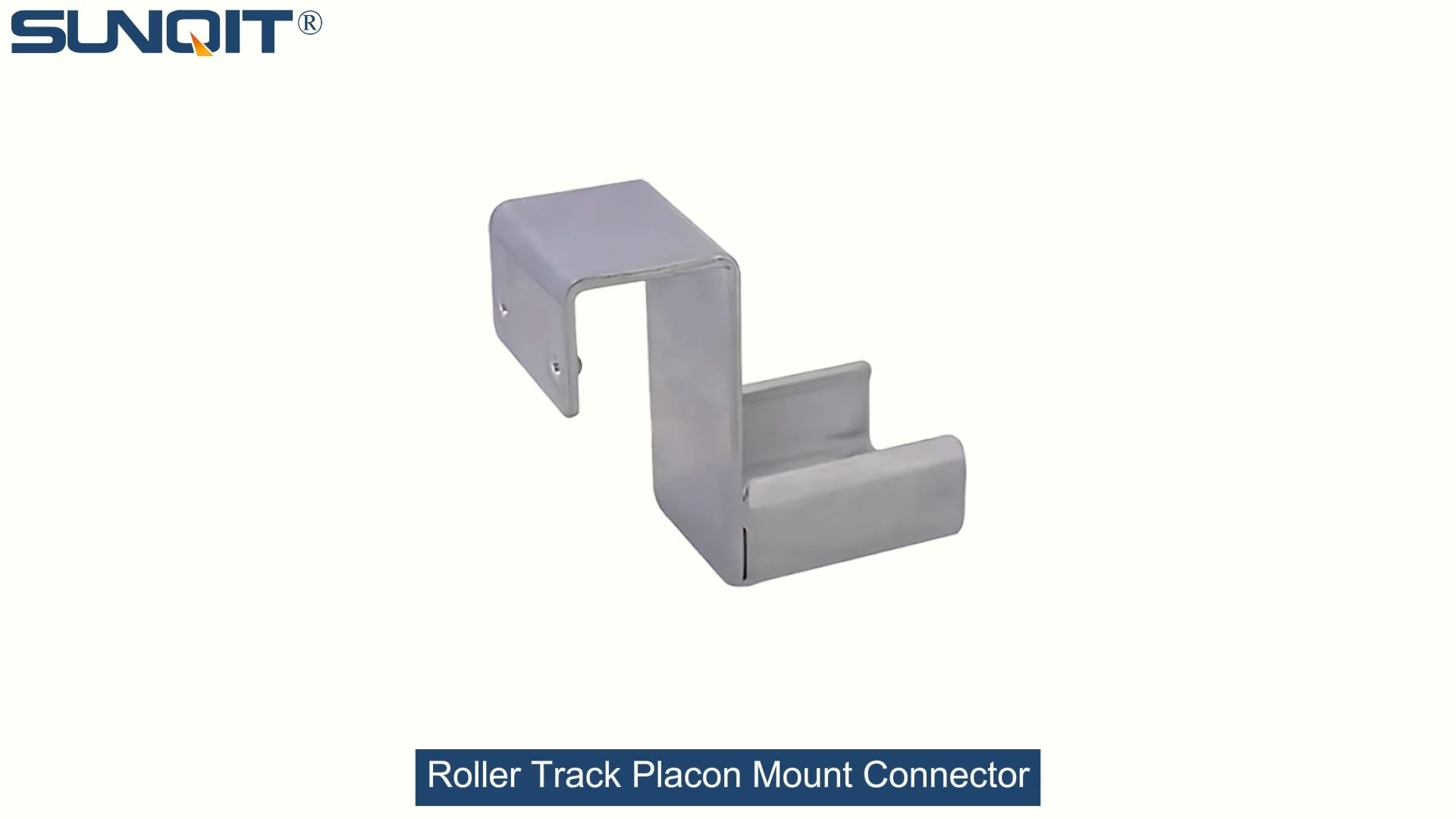
Roller Track Placon Mount Connector
Roller track placon mount work as a connector for roller track and pipe or aluminum profile in rack syetem, it is a necessary parts in rack system which widely used in industrial plant and logistic,warehouse storage.
Enhancing Efficiency and Flexibility in Modern Production Lines
Step into a modern consumer electronics manufacturing plant, and you'll notice a symphony of precision: circuit boards gliding along conveyors, components snapping into place on assembly lines, and workers collaborating around streamlined workstations. In this fast-paced world, where brands race to launch the next smartphone or smartwatch, every second counts. The difference between meeting production targets and falling behind often lies in the small, unsung heroes of the factory floor—components that keep materials flowing, workstations stable, and processes agile. One such hero? The Roller Track Placon Mount Connector .
Designed to solve the unique challenges of consumer electronics manufacturing—where precision, speed, and adaptability are non-negotiable—this unassuming yet critical component plays a pivotal role in creating lean, efficient production environments. Let's dive into how this connector works, why it matters, and how it integrates with broader lean solutions to transform manufacturing floors from chaotic workspaces into well-oiled machines.
What Is a Roller Track Placon Mount Connector?
At first glance, the Roller Track Placon Mount Connector might seem like just another piece of hardware. But in reality, it's the backbone of flexible material handling systems, specifically designed to link sections of roller tracks (or flow racks) in a way that's both sturdy and adaptable. Made from high-grade aluminum—chosen for its lightweight strength and resistance to corrosion—this connector acts as the "glue" that holds together the modular tracks used to transport components, PCBs, and finished products across the factory floor.
Think of it as a universal joint for your production line. Whether you're building a small flow rack for incoming components or a sprawling conveyor system that spans multiple assembly stations, these connectors ensure that each section of roller track aligns perfectly, creating a seamless path for materials to flow. Unlike rigid, welded connections of the past, the placon mount design allows for quick adjustments—so if your production needs change (and in consumer electronics, they always do), you can reconfigure the tracks without dismantling the entire system.
But what makes this connector truly stand out is its attention to detail. It features precision-machined slots and locking mechanisms that secure the tracks in place, even under the constant vibration of a busy factory. And for environments where static electricity poses a risk—like when handling sensitive microchips—it can be paired with ESD workstation components to dissipate static, protecting delicate electronics from damage.
Why Consumer Electronics Manufacturing Can't Afford to Ignore It
Consumer electronics manufacturing is a world of extremes. On one hand, products are getting smaller and more complex—think of the tiny sensors in a smartwatch or the densely packed PCBs in a tablet. On the other hand, production demands are skyrocketing: brands need to churn out new models faster than ever to stay competitive, often switching between product lines weekly (if not daily). This combination of complexity and volatility creates three big challenges:
- Material Flow Bottlenecks: Delays in getting components from storage to the assembly line can bring production to a halt. In a industry where seconds translate to lost revenue, even minor bottlenecks add up.
- Rigid Infrastructure: Traditional fixed conveyor systems can't keep up with frequent product changes. Reconfiguring them takes time and money—two resources manufacturers can't waste.
- Precision Requirements: A misaligned roller track might cause a PCB to jostle, leading to soldering defects or component damage. In consumer electronics, where quality control is zero-tolerance, this isn't just a nuisance—it's a disaster.
The Roller Track Placon Mount Connector addresses all three. By enabling modular, tool-free assembly, it eliminates the need for permanent, one-size-fits-all material handling systems. Need to add a new branch to your flow rack to accommodate a new component? Swap out a few connectors. Want to reposition a track to feed into a new lean pipe workbench ? Loosen a few locks, adjust, and you're back in business. And because the connectors ensure precise alignment, materials glide smoothly, reducing the risk of jams or damage.
Real-World Impact: A leading smartphone manufacturer in Shenzhen recently upgraded its SMT (Surface Mount Technology) line with roller tracks using placon mount connectors. Previously, reconfiguring their flow racks for new PCB sizes took 8 hours and required a team of engineers. Now? The same reconfiguration takes 45 minutes—done by the line operators themselves. That's a 90% reduction in downtime, translating to an extra 500 units produced per day.

Applications in Consumer Electronics: Where It Shines
The versatility of the Roller Track Placon Mount Connector makes it indispensable across nearly every stage of consumer electronics manufacturing. Let's break down its most impactful applications:
1. SMT and PCB Assembly Lines
In SMT workshops, where tiny resistors, capacitors, and ICs are placed onto PCBs, timing is everything. A delay in feeding components to the pick-and-place machine can throw off the entire production schedule. Here, roller tracks connected by placon mount connectors create a "buffer zone" between the component storage area and the SMT machine. Trays of components slide down the tracks, stopping precisely at the machine's feeder—ensuring a constant supply without manual intervention. The connectors' adjustability is key here: as PCB sizes change (from a 5-inch smartwatch PCB to a 10-inch tablet PCB), the tracks can be widened or narrowed to fit, keeping the line running without costly retooling.
2. Final Assembly Workstations
Walk up to any lean pipe workbench on a smartphone assembly line, and you'll likely see roller tracks feeding directly into it—all linked by placon mount connectors. These tracks deliver partially assembled units (like a phone chassis with a battery installed) to the operator, who then adds the screen or camera module. Once done, the unit slides down another track to the next station. The beauty? The height and angle of the tracks can be (fine-tuned) using the connectors, ensuring the operator doesn't have to bend or stretch—reducing fatigue and errors. And because the connectors are compatible with aluminum lean pipes, the entire workstation can be customized to fit the operator's body, not the other way around.
3. Quality Control and Testing Zones
After assembly, products move to testing—where they're checked for functionality, defects, and compliance. Here, precision is critical. Roller tracks with placon mount connectors ensure that each unit arrives at the testing station in exactly the right position. For example, in a headphone testing line, the tracks can be angled to hold the headphones at a 45-degree angle, making it easy for testers to plug them into audio equipment. And if a new model with a different shape comes in? The connectors allow the tracks to be reshaped in minutes, avoiding the need for custom fixtures.
4. Warehouse-to-Line Material Transport
Consumer electronics factories often struggle with the "last meter" problem: getting components from the warehouse to the production line quickly. Traditional methods—like using forklifts or manual carts—are slow and error-prone. But with a network of roller tracks connected by placon mount connectors, materials can flow directly from storage racks to the line. For instance, boxes of charging ports can be loaded onto a flow rack in the warehouse, then gravity-fed through a series of connected tracks to the conveyor system, which carries them to the assembly workbench. It's like having a highway for parts, with the connectors acting as the interchanges that keep traffic moving smoothly.

The Advantages: Why It's a Game-Changer for Lean Manufacturing
So, what makes the Roller Track Placon Mount Connector more than just a replaceable part? Let's break down its core advantages, and why they matter in the context of consumer electronics' relentless demand for improvement:
1. Unmatched Flexibility
Consumer electronics manufacturing is defined by rapid change. One month, you're producing 10,000 units of a budget smartphone; the next, you're shifting to a premium model with entirely different components. Fixed material handling systems can't keep up, but modular systems using placon mount connectors can. Because each connector is a standalone unit, you can add, remove, or reposition track sections without cutting or welding. It's like building with Lego bricks—you're only limited by your imagination (and the size of your factory).
2. Durability That Stands Up to the Factory Floor
Factory floors are tough environments: constant foot traffic, spills, temperature fluctuations, and heavy loads. The Roller Track Placon Mount Connector is built to withstand it all. Made from 6063 aluminum alloy—known for its high tensile strength and resistance to wear—it can handle loads up to 150kg per linear meter without bending or warping. And unlike plastic connectors, which degrade over time, aluminum connectors won't crack under stress, ensuring your material handling system stays reliable for years.
3. Seamless Integration with Lean Systems
A lean system is only as strong as its weakest link. The placon mount connector isn't just a standalone product—it's designed to work in harmony with other lean tools. Pair it with lean pipe workbench units, and you create a workstation where materials arrive exactly where they're needed. Combine it with ESD-safe components, and you protect sensitive electronics from static damage. Even better, it's compatible with standard aluminum profiles and extrusion accessories, so you can mix and match with existing systems without starting from scratch.
4. Reduced Downtime, Increased Output
Every minute your production line is down costs money. Traditional track connections often require specialized tools and skilled technicians to install or adjust. With placon mount connectors, adjustments are tool-free—any operator can loosen a few knobs, reposition the track, and lock it back in place. This cuts reconfiguration time from hours to minutes, letting you respond faster to changes and keep your line running longer. One electronics manufacturer in Dongguan reported a 35% increase in machine uptime after switching to these connectors—simply because they spent less time adjusting material flow and more time producing.
5. Sustainability That Aligns with Modern Values
Today's manufacturers aren't just focused on profit—they're also under pressure to reduce waste and carbon footprints. The Roller Track Placon Mount Connector supports these goals by being 100% reusable. When a production line is retired, the connectors can be disassembled, cleaned, and reused in new systems, reducing the need for new materials. And because aluminum is infinitely recyclable, even end-of-life connectors can be melted down and repurposed—no landfill waste required. It's lean manufacturing with a green twist.

Beyond the Connector: Building a Complete Lean Solution
While the Roller Track Placon Mount Connector is a star player, it's most effective when part of a broader lean ecosystem. Let's explore how it integrates with other key components to create a fully optimized production environment:
1. Lean Pipe Workbenches: The Heart of the Workstation
At the center of every assembly station is the lean pipe workbench —a modular workstation built from aluminum pipes and joints that can be customized to fit any task. When paired with roller tracks connected by placon mount connectors, the workbench becomes a hub where materials arrive exactly when and where they're needed. For example, a workbench used for laptop assembly might have a flow rack attached via roller tracks on one side (feeding in screens and keyboards) and a conveyor on the other (carrying away finished units). The connectors ensure the flow rack aligns perfectly with the workbench height, so operators can grab components without leaning or reaching.
2. Conveyors: Extending the Flow Beyond the Line
For larger factories, roller tracks alone might not be enough to move materials across long distances. That's where conveyor systems come in. Placon mount connectors can link roller tracks to belt or chain conveyors, creating a continuous material flow from warehouse to line to shipping. For instance, in a smart speaker factory, a conveyor might carry partially assembled units from the PCB station to the testing area, with roller tracks (connected by placon mount connectors) branching off to feed components into the conveyor at key points. This seamless integration eliminates manual handoffs, reducing errors and speeding up production.
3. ESD Workstations: Protecting Sensitive Electronics
Static electricity is the silent enemy of consumer electronics. A single static discharge can fry a microchip, rendering an entire device useless. ESD workstation components—like anti-static mats, wrist straps, and conductive roller tracks—prevent this by grounding static charges. The placon mount connector fits right into this system: when made with conductive aluminum and paired with ESD-safe tracks, it ensures that static is dissipated along the entire length of the material flow path, protecting even the most sensitive components (like 5G chipsets or OLED displays).
4. Custom Solutions: Tailored to Your Unique Needs
No two consumer electronics factories are the same. That's why the best lean systems are custom-designed to fit your specific products, processes, and space constraints. A reputable supplier can work with you to design a material handling system that uses placon mount connectors in innovative ways—whether you need a compact flow rack for a startup's small workshop or a sprawling, multi-line conveyor system for a Fortune 500 manufacturer. They'll consider factors like product weight, production volume, and future growth to create a system that not only solves today's problems but can adapt to tomorrow's challenges.
Traditional vs. Modern: A Comparison of Track Connection Systems
Still not convinced that placon mount connectors are worth the switch? Let's compare them to traditional track connection methods to see the difference in real-world performance:
| Feature | Traditional Welded Connections | Bolted Metal Brackets | Roller Track Placon Mount Connectors |
|---|---|---|---|
| Installation Time | 4-6 hours per 10m track (requires welding equipment) | 2-3 hours per 10m track (requires drills and wrenches) | 30 minutes per 10m track (tool-free assembly) |
| Adjustability | None—permanent once welded | Limited—requires drilling new holes to reposition | Unlimited—easily reconfigured with no tools |
| Weight Capacity | High (but rigid, prone to cracking under stress) | Medium (bolts can loosen over time) | High (150kg/m, with flexible mounting to absorb shock) |
| Durability | High, but corrosion-prone if not painted | Medium—bolts rust; brackets bend under heavy loads | Very high—aluminum resists corrosion; locking mechanism stays tight |
| Cost Over Time | High (requires replacement if reconfiguration is needed) | Medium (high labor costs for adjustments) | Low (reusable, minimal labor for changes) |
| ESD Compatibility | Possible with conductive paint (but wears off) | Difficult (bolts create gaps in grounding) | Excellent (conductive aluminum integrates with ESD systems) |
As the table shows, placon mount connectors outperform traditional methods in nearly every category—saving time, reducing costs, and offering the flexibility that consumer electronics manufacturers need to stay competitive.
Choosing the Right Supplier: What to Look For
Not all Roller Track Placon Mount Connectors are created equal. To get the most value from your investment, it's critical to partner with a supplier who understands both the technical specifications of the product and the unique needs of consumer electronics manufacturing. Here's what to look for:
1. Expertise in Lean Manufacturing
A good supplier doesn't just sell parts—they sell solutions. Look for a team that can assess your current production (processes), identify bottlenecks, and design a material handling system that integrates placon mount connectors with lean pipe workbench units, conveyors, and ESD components. They should speak your language, using terms like "5S" and "kaizen" and understanding the importance of continuous improvement.
2. Quality Materials and Testing
Aluminum quality varies widely, and a low-grade connector will bend or fail under stress. Ask about the aluminum alloy used (6063 is ideal), and whether the connectors undergo load testing, corrosion resistance testing, and static dissipation testing (for ESD applications). A reputable supplier will be happy to share test reports and certifications.
3. Customization Capabilities
Off-the-shelf connectors might not fit your unique track sizes or production needs. The best suppliers offer custom machining—adjusting the connector's length, hole positions, or locking mechanism to match your specific requirements. For example, if you need a connector to fit extra-wide tracks for large TV panels, they should be able to modify the design without charging exorbitant fees.
4. Global Support and Inventory
Consumer electronics manufacturing is a global industry, and your supplier should be able to support you wherever you operate. Look for a partner with warehouses in key regions (like China, Southeast Asia, and Europe) to ensure fast delivery, and a responsive customer service team that can help with installation questions or replacement parts—24/7 if possible.
The Future of Consumer Electronics Manufacturing: Lean, Flexible, and Connected
As consumer electronics continue to evolve—with foldable screens, AI-powered devices, and IoT integration becoming the norm—manufacturing processes will only grow more complex. The factories of tomorrow won't just be places of production; they'll be smart ecosystems where machines, materials, and people communicate in real time. In this future, the Roller Track Placon Mount Connector will play an even bigger role.
Imagine a production line where sensors embedded in the connectors monitor track alignment and material flow, alerting managers to potential jams before they happen. Or where AI algorithms analyze production data and automatically adjust track configurations to optimize flow—all made possible by the connector's flexible design. Already, forward-thinking manufacturers are experimenting with "digital twins" of their production lines, using 3D models to test new configurations before physically reconfiguring the tracks. With placon mount connectors, turning those digital designs into reality is as simple as clicking "print" (metaphorically speaking).
But even as technology advances, the core principles of lean manufacturing remain the same: eliminate waste, empower workers, and continuous improvement (pursue continuous improvement). The Roller Track Placon Mount Connector embodies these principles, proving that sometimes the most impactful innovations aren't the flashy robots or cutting-edge software—but the humble components that make the entire system work better, faster, and smarter.
Final Thoughts: Your Production Line Deserves the Best
At the end of the day, consumer electronics manufacturing is a high-stakes game. Every second of downtime, every defective unit, and every missed deadline eats into your profit margin and erodes your competitive edge. The Roller Track Placon Mount Connector might not be the most glamorous part of your production line, but it's one of the most critical.
By investing in this small but powerful component—paired with a comprehensive lean solution that includes lean pipe workbench systems, conveyors, and ESD protection—you're not just buying hardware. You're buying peace of mind. You're buying the ability to adapt to change. And you're buying the freedom to focus on what really matters: creating innovative products that delight your customers.
So the next time you walk through your factory floor, take a closer look at your material handling system. Are your tracks held together by rigid, outdated connections? Or are they built on a foundation of flexibility, strength, and adaptability? The answer could be the difference between keeping up with the competition and leading the pack.
The future of manufacturing is lean. And the future starts with the right connectors.