- Company Articles
- Products and Technology
- Application Cases
- Roller Track Placon Mount Connector in 3C Product Assembly: Efficiency Boost

Roller Track Placon Mount Connector in 3C Product Assembly: Efficiency Boost
Related Product
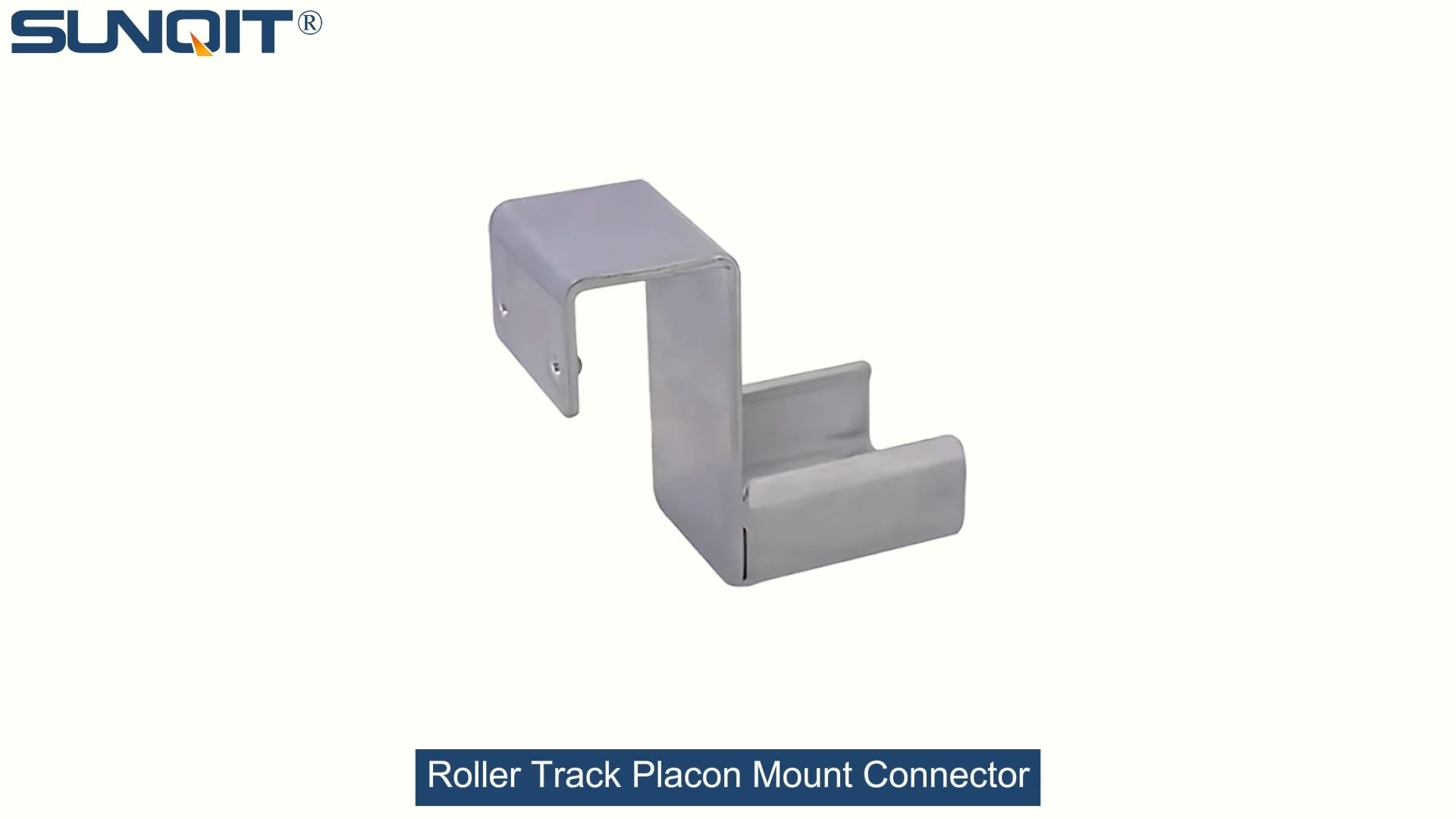
Roller Track Placon Mount Connector
Roller track placon mount work as a connector for roller track and pipe or aluminum profile in rack syetem, it is a necessary parts in rack system which widely used in industrial plant and logistic,warehouse storage.
Walk into any modern 3C assembly plant—where smartphones, laptops, and wearables come to life—and you'll quickly spot the hidden battle being fought every day. It's not just about assembling parts; it's about keeping up with the industry's relentless pace: new models launching monthly, production lines shifting between high-volume runs and custom batches, and floor space that never seems quite big enough. In this chaos, even small inefficiencies add up—delays in, rigid workstations that resist quick reconfigurations, and equipment that can't keep up with evolving product designs. This is where the right tools make all the difference, and today, we're diving into a component that's quietly revolutionizing how 3C lines operate: the roller track placon mount connector . More than just a "part," it's the unsung hero that turns disjointed work areas into a seamless, adaptable ecosystem—one that grows with your production needs, not against them.
The 3C Assembly Challenge: Why Flexibility Isn't Optional Anymore
Let's talk about what makes 3C assembly unique. Unlike automotive or appliance manufacturing, where products stay consistent for years, 3C products evolve overnight. A smartphone model might have a 6-month lifecycle; a laptop's internal components could change mid-production to meet new tech standards. This means your assembly line can't be a fixed, concrete structure—it needs to be as agile as your design team. Yet, many plants still rely on traditional setups: welded steel workbenches that take hours to modify, static that can't adjust to new part sizes, and roller tracks that require tools and technicians to reposition. The result? Downtime during line changes, wasted space from underused equipment, and workers struggling to keep pace with shifting workflows.
Here's the truth: In 3C manufacturing, "good enough" equipment costs you more than just money. It costs you the ability to pivot quickly, to test new production methods, and to stay ahead of competitors who've already embraced flexibility. That's where lean manufacturing principles step in—not as a buzzword, but as a practical approach to building systems that work with you . At its core, lean is about eliminating waste: waste of time, waste of space, waste of resources. And when it comes to creating that lean ecosystem, every component matters—especially the ones that hold it all together.
Meet the Roller Track Placon Mount Connector: Your Line's "Flexibility Backbone"
If you've ever assembled furniture with those easy-connect brackets, you get the idea—but imagine that bracket designed for industrial strength. The roller track placon mount connector is exactly that: a heavy-duty, precision-engineered component that links roller tracks, aluminum profiles, and workbenches into a unified system. What makes it special? It's built for two things: stability and speed . Made from high-grade aluminum (matching the durability of the aluminum profile frames it connects), it can handle the daily grind of 3C production—think heavy circuit boards sliding down roller tracks, constant vibrations from nearby machinery, and the occasional bump from a forklift. But here's the kicker: it doesn't require bolts, welds, or specialized tools to adjust. A simple twist, a quick reposition, and your roller track is rerouted to meet the day's needs.
Let's break down its role in the assembly line. Roller tracks are the highways of your plant—they move parts from kitting areas to workstations, from testing to packaging. But without a reliable connector, those highways are just disconnected roads. The placon mount connector turns them into a network. Need to redirect a track to feed parts to a new ESD workstation? Swap the connector's position. Want to angle a section upward to reduce manual lifting? Adjust the connector's mount. It's the difference between a line that fights change and one that embraces it. And when paired with other lean components—like flow racks for organized and conveyors for long-distance transport—it becomes the glue that holds your entire lean system together.

Beyond the Connector: Building a Complete Lean Solution
A great connector is nothing without great partners. To truly transform your 3C line, the roller track placon mount connector needs to work in harmony with other lean components. Let's walk through how these pieces come together to create a system that solves real-world problems.
Aluminum Profiles: The Strong, Lightweight Foundation
Every lean system starts with a frame, and aluminum profiles are the gold standard here. Unlike heavy steel, aluminum is lightweight enough to reposition without cranes, yet strong enough to support ESD workbenches loaded with testing equipment. The placon mount connector locks securely into these profiles, creating a modular base that can be extended, shortened, or reconfigured as needed. For example, a 3C plant assembling smartwatches might start with a compact line using 2020 aluminum profiles. When they scale up to fitness trackers, they can add longer profiles and more connectors to widen the workspace—no need to replace the entire frame.
Flow Racks: Keeping Parts Moving, No Bottlenecks Allowed
is the enemy of efficiency. A pile of unprocessed circuit boards at a workstation doesn't just take up space—it slows down the entire line. Flow racks , paired with roller tracks connected by placon mount connectors, solve this by using gravity to feed parts directly to workers. Imagine a flow rack near your assembly station: bins of screws, screens, and batteries slide down roller tracks (held steady by those connectors) right to where they're needed. No more walking to a distant shelf, no more searching for the right part. And because the connectors let you adjust track angles, you can control the flow speed—faster for high-volume parts, slower for delicate components like camera lenses.
Conveyors: Bridging the Gaps in Your Line
For larger 3C plants, moving parts between stations isn't just about short distances—it's about connecting entire zones. Conveyors handle the heavy lifting here, and the placon mount connector ensures they integrate smoothly with your roller tracks and workbenches. Need to link a flow rack in the kitting area to an ESD workstation 50 feet away? A belt conveyor with roller track transitions (connected via placon mounts) keeps parts moving without manual intervention. And when production shifts to a new product with different part sizes? Adjust the conveyor's height or angle using the same connectors—no need for a custom-built replacement.
ESD Workstations: Protecting Sensitive Electronics
3C parts—especially microchips and circuit boards—are sensitive to static electricity. An ESD workstation isn't just a table; it's a controlled environment that prevents costly damage. The placon mount connector plays a role here too, securing ESD-safe roller tracks to the workstation's aluminum frame. This means parts can slide directly onto the work surface without being handled, reducing the risk of static discharge. Plus, since the connector is non-conductive, it won't interfere with the workstation's ESD protection—keeping both your parts and your team safe.

Real Results: How One 3C Plant Boosted Efficiency by 35%
Numbers tell the story best. Let's look at a case study: a mid-sized 3C manufacturer in Shenzhen producing wireless earbuds. Before adopting a lean system with roller track placon mount connectors, their line struggled with two major issues: long changeover times (up to 8 hours when switching between earbud models) and poor space utilization (static racks took up 40% of their floor space but were only 60% full). They decided to invest in a custom lean solution, including aluminum profiles, flow racks, conveyors, and—of course—placon mount connectors.
| Metric | Before Lean System | After Lean System | Improvement |
|---|---|---|---|
| Changeover Time (Model Switch) | 8 hours | 1.5 hours | 81% reduction |
| Space Utilization | 60% | 92% | 32% increase |
| Daily Production Output | 1,200 units | 1,620 units | 35% increase |
| Worker Fatigue (Reported) | High (frequent complaints) | Low (90% positive feedback) | Significant reduction |
The key? The placon mount connectors let the team reconfigure roller tracks and flow racks in minutes, not hours. They could angle tracks to feed parts directly to workers, adjust shelf heights to fit new earbud cases, and even disassemble unused sections to free up space. As one production manager put it: "We used to dread model changes—now we look forward to them. The system adapts so quickly, we can test new designs without disrupting the entire line."

Why Customization Matters: Your Line Isn't "One Size Fits All"
3C assembly isn't generic, so your lean system shouldn't be either. A one-size-fits-all solution might work for a factory making the same product for years, but in 3C, you need a partner who can design around your unique challenges. Maybe you need ESD protection for semiconductor components, or extra-wide roller tracks for laptop casings, or corrosion-resistant aluminum profiles for cleanroom environments. The best lean suppliers don't just sell parts—they collaborate with you to build a system that grows with your business.
Take, for example, a medical device manufacturer branching into 3C-like electronics (think smart health monitors). They needed a line that could handle both metal housings (heavy, rigid) and delicate sensors (light, static-sensitive). A custom solution here might include: stainless steel roller tracks for durability, ESD-safe placon mount connectors to protect sensors, and adjustable aluminum profiles that can raise or lower workstations to fit both standing and seated operators. It's this level of detail that turns a good system into a great one.
Choosing the Right Partner: What to Look for in a Lean Solution Supplier
You've decided to invest in lean—now how do you choose a supplier? It's not just about price; it's about reliability, expertise, and a commitment to your success. Here are the key qualities to prioritize:
- Deep Industry Knowledge: They should understand 3C's unique pain points, from ESD requirements to rapid changeovers. Ask for case studies specific to your sector.
- Quality Materials: Aluminum profiles should be anodized for corrosion resistance; connectors should use high-strength alloys that won't loosen over time.
- End-to-End Support: Look for suppliers who offer design help, installation guidance, and after-sales service. A lean system is an investment—you need a partner who sticks around.
- Scalability: Can they grow with you? If you expand to a second plant or add new product lines, will they have the capacity to support you?
The Future of 3C Assembly: Lean, Flexible, and Ready for What's Next
As 3C technology continues to evolve—think foldable screens, AI-powered devices, and smaller, more complex components—one thing is clear: rigid production lines will be left behind. The future belongs to plants that can adapt, innovate, and turn challenges into opportunities. The roller track placon mount connector might seem like a small part of that future, but small parts often make the biggest difference. It's the connector that turns "we can't" into "we can," that turns downtime into uptime, and that turns a factory floor into a space where innovation thrives.
In the end, lean manufacturing isn't just about tools—it's about mindset. It's about seeing every inefficiency as a chance to improve, every challenge as an opportunity to grow. And with the right components—like the roller track placon mount connector, aluminum profiles, flow racks, and conveyors—you're not just building a better assembly line. You're building a better future for your business.