- Company Articles
- Products and Technology
- Application Cases
- Roller Track Placon Mount Connector in Automotive Parts Assembly: Case Study

Roller Track Placon Mount Connector in Automotive Parts Assembly: Case Study
Related Product
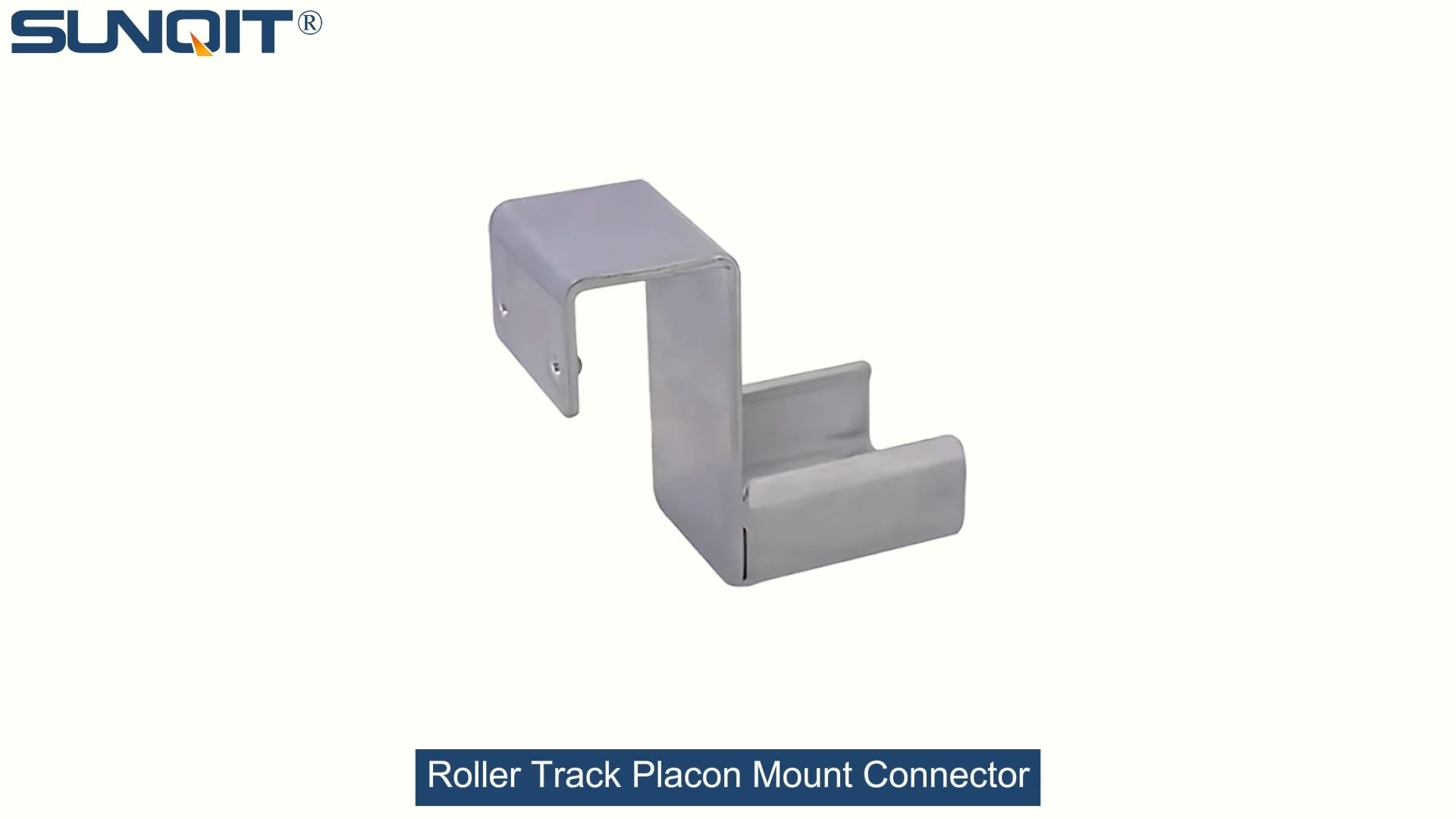
Roller Track Placon Mount Connector
Roller track placon mount work as a connector for roller track and pipe or aluminum profile in rack syetem, it is a necessary parts in rack system which widely used in industrial plant and logistic,warehouse storage.
In the fast-paced world of automotive manufacturing, where precision and efficiency directly impact bottom lines, the assembly of parts—from tiny screws to bulky engine components—poses unique challenges. For one leading automotive parts manufacturer based in Guangdong, these challenges had become a bottleneck: slow material flow, rigid production lines that couldn't adapt to frequent model changes, and rising labor fatigue from manual handling. That's when they turned to Sunqit, a trusted lean system supplier specializing in flexible production solutions. This case study dives into how Sunqit's roller track placon mount connector —paired with lean pipe structures and aluminum profile accessories —transformed their assembly line into a model of agility and productivity.
The Challenge: Stagnation in a Dynamic Industry
The manufacturer's assembly (workshop) was stuck in a cycle of inefficiency. Their existing production line relied on fixed steel conveyors and static workbenches, which worked for mass-produced parts but failed miserably when handling the 20+ part variants needed for new electric vehicle models. Workers spent 15% of their shift manually lifting and moving parts between stations, leading to fatigue and occasional errors. Material carts often got stuck in narrow aisles, causing delays. Worse, reconfiguring the line for a new part model took 3 days and required welding—disrupting production and increasing costs.
"We needed a system that could keep up with our engineers' innovations," said the plant manager. "Our old setup felt like trying to fit a square peg into a round hole every time we launched a new part. We wanted flexibility without sacrificing stability."
The Solution: A Lean Ecosystem Built on Flexibility
After a site audit, Sunqit's team proposed a holistic solution centered on three core products: the roller track placon mount connector , flow rack systems, and lean pipe workbench units. The goal? To create a lean system where material flow was seamless, lines could be reconfigured in hours (not days), and workers could focus on assembly—not lifting.
1. Roller Track Placon Mount Connector: The "Flexible Spine" of the Line
At the heart of the solution was Sunqit's roller track placon mount connector—a small but mighty component designed to link roller track sections with precision. Unlike traditional fixed connectors, these aluminum alloy accessories feature adjustable joints that allow workers to tweak track height, angle, and spacing using just a hex key. For the automotive plant, this meant their roller track could adapt to parts of varying sizes: from 10cm-long sensors to 2m-wide door panels.
"The connectors turned our static track into a living system," noted a production supervisor. "Last month, we needed to angle the track 15 degrees to reduce friction for plastic parts—our team did it in 20 minutes during a break. No welding, no downtime."
2. Flow Racks & Conveyors: From "Hunt and Fetch" to "Just-in-Time"
Sunqit paired the roller track with flow rack units positioned at each workstation. These racks, built with lean pipe and aluminum profiles, use gravity to feed parts forward—ensuring the oldest stock is used first (FIFO principle) and eliminating the need for workers to walk to a central warehouse. A small conveyor belt, connected via the same placon mount connectors, then transported assembled sub-parts to the next station automatically.
"Before, I'd spend 20 minutes per hour walking to get bolts or washers," said an assembly line worker. "Now the parts come to me. I can focus on torquing screws correctly instead of rushing to fetch materials."
3. Lean Pipe Workbenches: Ergonomics Meets Adaptability
To reduce fatigue, Sunqit replaced rigid steel workbenches with height-adjustable lean pipe workbench units. Using aluminum profile accessories like adjustable feet and modular tool holders, each bench could be tailored to the worker's height and task—whether assembling delicate electronics or heavy metal brackets. ESD (Electrostatic Discharge) mats were integrated to protect sensitive components, a critical feature for EV battery parts.

Implementation: From Blueprint to Reality in 2 Weeks
Sunqit's approach prioritized minimal disruption. Their team started with a 3D scan of the existing to design a layout that maximized space. The roller track and lean pipe components were pre-assembled offsite, then installed during the plant's weekend shutdown. By Monday morning, the first section of the new line was operational. A 2-day training session followed, where workers learned to adjust connectors, reconfigure racks, and troubleshoot minor issues—empowering them to own the system.
"We expected chaos, but Sunqit's team made it smooth," the plant manager recalled. "By Tuesday, even the most senior workers were suggesting tweaks—like adding a side rail to the roller track to prevent small parts from slipping off. That's the beauty of this system: it's built for humans, not just machines."

Results: Efficiency That Speaks for Itself
Three months post-implementation, the results were undeniable. The table below compares key metrics before and after Sunqit's solution:
| Metric | Before Implementation | After Implementation | Improvement |
|---|---|---|---|
| Assembly Time per Part | 4.2 minutes | 2.9 minutes | 31% faster |
| Material Handling Labor | 15% of shift time | 4% of shift time | 73% reduction |
| Line Reconfiguration Time | 72 hours | 4 hours | 94% faster |
| Defect Rate (ESD-related) | 2.1% | 0.3% | 86% decrease |
Beyond numbers, the cultural shift was equally impactful. Workers reported higher job satisfaction, and the plant has since expanded Sunqit's lean system to two more assembly lines. "We're no longer reacting to changes—we're anticipating them," the plant manager said. "That's the power of true flexibility."

Why Sunqit? The Lean Philosophy in Action
What set Sunqit apart wasn't just the quality of their roller track or aluminum profile accessories —it was their commitment to the lean principle of "sustainable improvement." Every component, from the placon mount connector to the lean pipe , is designed to be reused and reconfigured. When the manufacturer needed to add a new workstation last month, they simply repurposed parts from the old line—no new steel or welding required.
"Sunqit doesn't sell products; they sell solutions that grow with you," the plant manager concluded. "In automotive, where change is the only constant, that's priceless."
Conclusion: The Future of Flexible Assembly
This case study highlights a critical truth: in modern manufacturing, rigidity is a death sentence. Sunqit's roller track placon mount connector and lean system didn't just fix one assembly line—they gave a manufacturer the tools to thrive in an industry where adaptability equals competitiveness. As automotive plants worldwide shift to electric and hybrid models, solutions like these will no longer be "nice-to-haves" but necessities.
*Names of the manufacturer have been anonymized at their request. Sunqit provides custom solutions for automotive, 3C, medical, and logistics industries. Learn more about their lean pipe and roller track products at www.szsunqit.com.*