- Company Articles
- Products and Technology
- Installation And Maintenance
- Roller Track Placon Mount Connector Troubleshooting: Expert Techniques

Roller Track Placon Mount Connector Troubleshooting: Expert Techniques
Related Product
Roller Track Placon Mount Connector
Roller track placon mount work as a connector for roller track and pipe or aluminum profile in rack syetem, it is a necessary parts in rack system which widely used in industrial plant and logistic,warehouse storage.
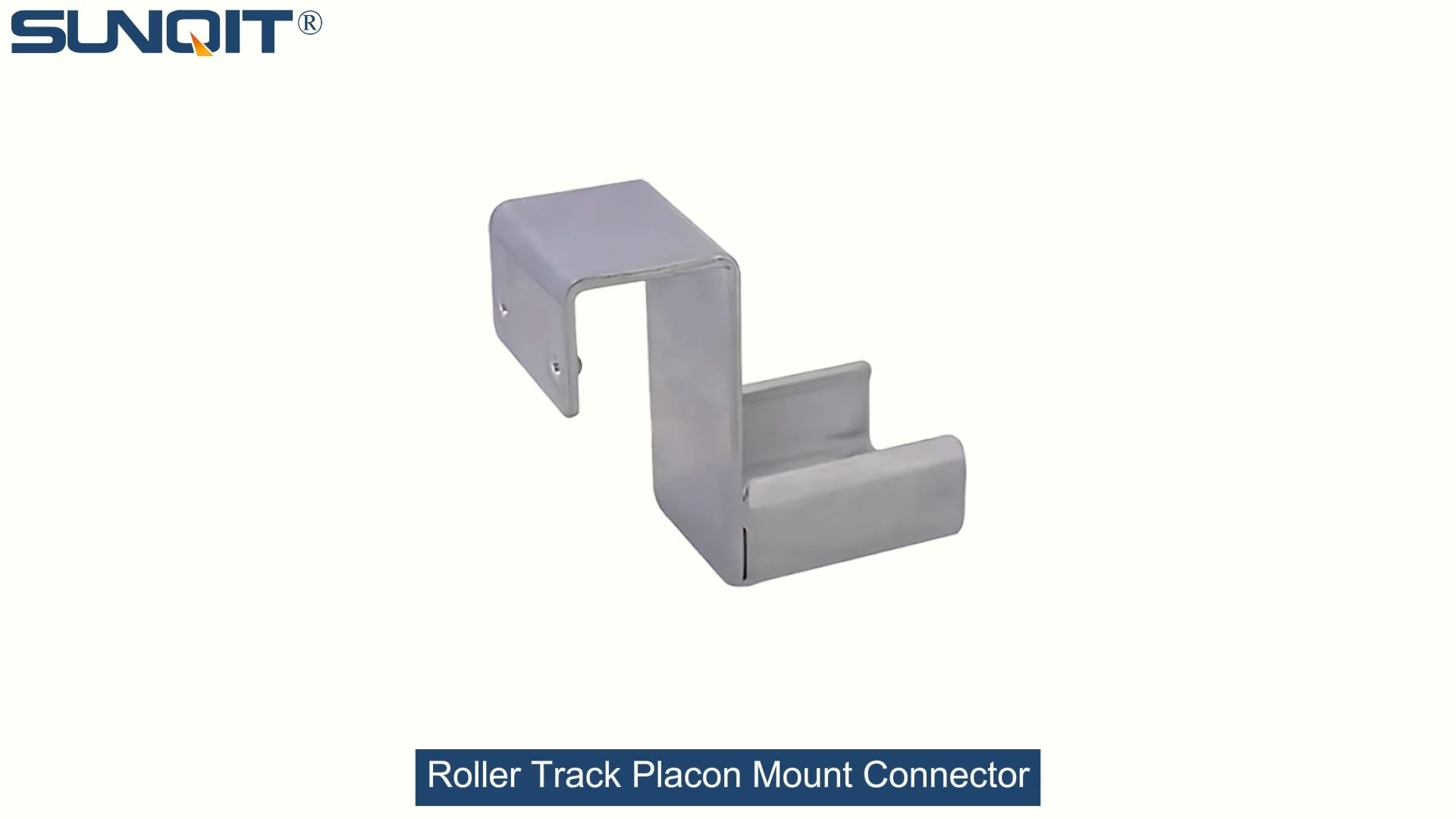
In the fast-paced world of manufacturing and logistics, every component in your production line plays a critical role in keeping operations running smoothly. One such unsung hero? The Roller Track Placon Mount Connector . These small but mighty brackets are the glue that holds your roller tracks securely to aluminum profiles, ensuring seamless material flow in lean systems—from 3C assembly lines to medical device warehouses. When they fail, the consequences can range from minor delays to costly production halts. In this guide, we'll walk through common issues, step-by-step troubleshooting, and pro tips to keep your connectors (and your workflow) in top shape.
Understanding the Role of Roller Track Placon Mount Connectors
Before diving into troubleshooting, let's clarify why these connectors matter. Think of your roller track system as a highway for materials: roller tracks are the roads, and placon mount connectors are the bolts securing those roads to the infrastructure (aluminum profiles). Without reliable connectors, even the sturdiest roller track becomes unstable. This is especially true in high-demand environments like automotive parts manufacturing or electronics assembly, where precision and speed are non-negotiable.
These connectors come in various designs—flat mounts, high mounts, center supports—to fit different aluminum profile types (think 4040, 3030, or 2020 series) and track configurations. Whether you're using a basic aluminum tube setup or a complex all-direction roller track, the placon mount connector's job is simple: maintain alignment, absorb vibration, and withstand constant stress .
Common Failure Types: What to Watch For
Like any hardworking component, roller track placon mount connectors face wear and tear over time. Here are the most frequent issues technicians encounter, along with how to spot them early.
1. Loose Connections
Loosening is the most common problem, and it often starts subtly. In a busy warehouse, you might first notice it as a faint rattling sound when pallets glide over the track. As it worsens, materials may shift unexpectedly, or the track itself might wiggle when touched. Left unchecked, loose connectors can lead to misalignment, track sagging, or even complete detachment.
Root Causes: Vibration from heavy loads, improper initial tightening, thermal expansion/contraction in temperature-fluctuating environments, or using mismatched fasteners (e.g., too short screws for thick aluminum profiles).
2. Excessive Wear
Worn connectors are easy to miss until they fail. Look for signs like cracked plastic components, stripped threads, or metal brackets that feel "soft" when pressed. In ESD-sensitive workbenches (common in electronics manufacturing), worn connectors might also compromise grounding—a hidden risk for static damage to sensitive parts.
Root Causes: Overloading (exceeding the connector's weight rating), abrasive materials sliding over the track, or chemical exposure (e.g., cleaning agents in medical device facilities).
3. Misalignment
Misaligned connectors throw off the entire roller track system. Symptoms include materials jamming, uneven wear on roller wheels, or tracks that "creak" as they bend under load. In severe cases, products might tip or fall, risking damage to both goods and equipment.
Root Causes: Installation errors (e.g., mounting tracks at an angle), aluminum profile warping due to heat, or accidental impacts from forklifts or pallet jacks.
4. Corrosion or Rust
In humid environments (like food processing or outdoor warehouses), metal connectors can rust, while plastic parts may degrade. Look for orange/brown spots on steel components or brittle, cracked plastic mounts. Corrosion weakens the connector's grip, making failure almost inevitable.
Root Causes: Moisture exposure, lack of protective coatings, or using uncoated steel connectors in corrosive settings (opt for stainless steel or aluminum variants instead).
Step-by-Step Troubleshooting Guide
When a connector issue arises, systematic diagnosis beats guesswork. Below is a breakdown of how to identify, diagnose, and fix each problem.
Troubleshooting Loose Connections
Step 1: Confirm the Looseness
Start by visually inspecting the connector. Gently wiggle the roller track—if there's movement at the mount point, the connector is loose. For hard-to-reach areas, use a flashlight to check for gaps between the connector and aluminum profile.
Step 2: Tighten with Care
Use a torque wrench (not a regular screwdriver!) to retighten the fasteners. Refer to the manufacturer's specs—over-tightening can strip threads, while under-tightening won't fix the issue. For most aluminum profile setups, 8-10 Nm is standard, but check your connector's manual.
Step 3: Address Underlying Causes
If the connector loosens again quickly, vibration is likely the culprit. Add thread-locking fluid (blue Loctite works well) to the screws, or install vibration-dampening washers between the connector and profile.
Fixing Excessive Wear
Step 1: Assess Wear Severity
Measure the connector's critical points: Are the mounting holes elongated? Is the plastic bracket cracked more than 10% of its length? If yes, replacement is safer than repair.
Step 2: replace Strategically
Always replace worn connectors with the same model (e.g., "roller track placon mount for aluminum profile flat" vs. "high mount"). Mismatched parts may fit temporarily but will fail faster. Pro tip: Keep spares in your maintenance kit—wholesale suppliers often offer bulk discounts on common sizes.
Step 3: Upgrade if Needed
If wear happens frequently, switch to heavy-duty variants. For example, swap plastic brackets for aluminum ones in high-load areas, or opt for stainless steel connectors in harsh environments.
Pro Tip:
When replacing connectors, inspect the mating aluminum profile too! A dented or bent profile can.Use a straightedge to check for warping—if found, replace the profile section first.
Correcting Misalignment
Step 1: Identify the Offset
Use a laser level or string line along the roller track to spot misalignment. Connectors causing the track to dip or rise more than 2mm over 1 meter need adjustment.
Step 2: Realign the Connector
Loosen the connector, adjust the track to the correct position, then retighten. For stubborn cases, use shims (thin metal or plastic strips) between the connector and profile to fine-tune alignment.
Step 3: Reinforce Weak Points
If misalignment recurs, add secondary supports like angle brackets or cross-braces. This is common in long roller track runs (over 5 meters) where sagging is more likely.
Combatting Corrosion
Step 1: Clean and Inspect
Remove rust with a wire brush and apply a rust converter (e.g., phosphoric acid-based solutions). For plastic connectors, wipe away mold or mildew with a mild detergent.
Step 2: Protect or replace
Paint metal connectors with anti-corrosion spray, or switch to stainless steel or anodized aluminum versions. In wet areas, consider sealed plastic connectors designed for moisture resistance.
Troubleshooting Checklist: Quick Reference Table
| Failure Type | Key Symptoms | Tools Needed | Fix in 3 Steps |
|---|---|---|---|
| Loose Connection | Rattling, track movement, gaps | Torque wrench, thread-locking fluid |
1. Inspect for gaps
2. Retighten to specs 3. Add thread locker |
| Excessive Wear | Cracks, stripped threads, soft brackets | Screwdriver, replacement connectors |
1. Measure wear
2. replace with matching part 3. Upgrade to heavy-duty if needed |
| Misalignment | Jamming, uneven wheel wear, creaking | Laser level, shims, straightedge |
1. Check alignment with level
2. Loosen and realign 3. Add supports for long runs |
| Corrosion | Rust, brittle plastic, mold | Wire brush, anti-corrosion spray |
1. Clean affected area
2. Apply protectant 3. Switch to stainless steel/plastic |
Preventive Maintenance: Avoiding Issues Before They Start
The best troubleshooting is prevention. Here's how to keep your connectors reliable long-term:
Monthly Inspection Routine:
Quarterly Deep Dive:
Industry-Specific Tip:
In ESD workbench setups (common in electronics manufacturing), corrosion or loose connectors can break the static-dissipative path. Add "check ESD continuity" to your maintenance list—use a multimeter to ensure the connector still conducts static safely to ground.
Choosing the Right Connector for Your System
Not all connectors are created equal. Using the wrong type is a recipe for failure. Here's how to select the best fit:
Match to Aluminum Profile Size: A 40mm-wide profile needs a 40-series connector—using a 30-series mount will leave gaps. Check the profile's groove size (T-slot dimensions) to ensure a snug fit.
Consider Load Capacity: Standard connectors handle 50-100kg per track section, but heavy-duty versions (like "roller track placon mount high") can manage 200kg+. When in doubt, overspecify—better safe than sorry.
Environment Matters: For cleanrooms (medical, pharmaceutical), choose smooth, crevice-free connectors that won't trap dust. For outdoor use, stainless steel or UV-resistant plastic is a must.
The Bottom Line: Connectors as Part of Your Lean System
At the end of the day, roller track placon mount connectors are more than just hardware—they're a cornerstone of lean manufacturing. A well-maintained connector system reduces waste (no more halted lines!), improves safety (fewer dropped materials), and supports the "sustainable improvement" ethos of lean pipe systems. By mastering these troubleshooting techniques, you're not just fixing brackets—you're keeping your entire operation aligned with the efficiency goals that make lean systems so powerful.
So, the next time you walk your production floor, take a moment to appreciate these small but critical components. A little attention now can save hours of downtime later. And if you ever need help sourcing replacement parts or upgrading your system, lean on trusted suppliers who specialize in lean pipe and accessories—they'll ensure you get the right connector for the job.
Here's to smooth tracks, tight connections, and uninterrupted workflow—because in manufacturing, every detail counts.