- Company Articles
- Products and Technology
- Product knowledge
- Roller Track Placon Mount for Rail Connection: Enhancing Material Flow in Production Lines

Roller Track Placon Mount for Rail Connection: Enhancing Material Flow in Production Lines
Related Product
Roller Track Placon Mount for Rail Connection
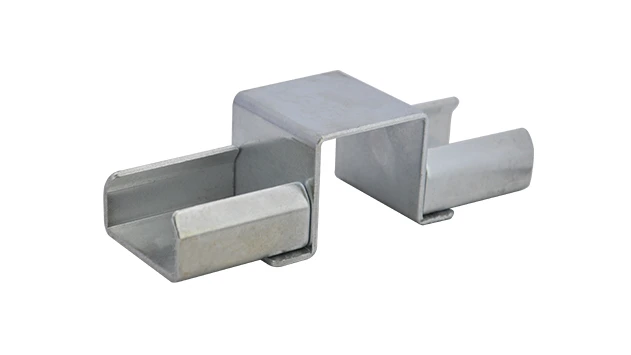
For mounting roller rails, hook-in brackets are slid around the aluminum profile. The hook-in bracket is then clamped around the roller track.Depending on the solution you are looking for, there are various hook-in brackets that can be applied.
Walk into any manufacturing plant—whether it's a bustling 3C assembly line churning out smartphones or a precision-focused medical device workshop—and you'll notice a silent but critical player in the background: the material flow system. Every time a component glides from one workstation to the next, every time a bin of parts arrives exactly when a worker needs it, there's a network of tracks, rollers, and connectors making it happen. But what happens when that network stumbles? A slight misalignment in the rail connection, a wobbly joint that causes jams, or a rigid setup that can't keep up with shifting production needs. These small hiccups add up—delaying deadlines, increasing labor fatigue, and chipping away at the efficiency manufacturers strive for. This is where the Roller Track Placon Mount for Rail Connection steps in: not just as a hardware component, but as a problem-solver designed to turn clunky, unreliable material flow into a smooth, adaptable process that keeps production lines moving forward.
What Is a Roller Track Placon Mount for Rail Connection, Anyway?
Let's start with the basics. Imagine a production line where different sections of roller tracks need to connect—maybe a straight section feeding into a curve, or a (flow rack) a conveyor. The connection point here is make-or-break. If it's loose, parts might get stuck. If it's too rigid, you can't reconfigure the line when your product design changes. A Roller Track Placon Mount is the unsung hero that bridges these gaps. It's a specialized connector, typically made from durable aluminum (hello, aluminum pipe accessories !), designed to lock rail sections together securely while still allowing for flexibility. Think of it as the "hinge" that keeps your material flow system both stable and adaptable.
But it's not just a simple bracket. Modern placon mounts are engineered with (lean production) principles in mind. They're lightweight, so they don't add unnecessary bulk to the track. They're modular, meaning you can mix and match them with different rail types—whether you're using 40mm steel roller tracks, 38mm aluminum tracks, or even mini tracks for small components. And they're easy to install: no need for complex tools or hours of setup. A few bolts, a quick adjustment, and your tracks are aligned perfectly, ready to handle everything from tiny circuit boards to heavier automotive parts.
Why Does It Matter? The Pain Points It Solves
To really get why this component is a game-changer, let's talk about the problems manufacturers face without it. We've worked with clients in industries from 3C to medical, and time and again, we hear the same frustrations:
- "Our tracks keep misaligning, and we spend hours fixing jams." Without a secure connection, even a small vibration from the conveyor can throw tracks out of sync. One electronics manufacturer we worked with was losing 2 hours a day just unjamming components at track joints. After installing placon mounts, those jams dropped to zero.
- "We can't keep up with product changes—reconfiguring the line takes forever." In fast-paced industries like 3C assembly, product cycles are measured in months, not years. If your rail connections require welding or specialized tools to adjust, you're stuck with a "fixed" line that can't evolve. Placon mounts, being tool-free and modular, let you break down and rebuild track sections in minutes, not days.
- "Our old connectors rusted, and now we're replacing them constantly." Manufacturing environments can be tough—oils, dust, even humidity. Cheap steel connectors corrode quickly, leading to frequent replacements. Aluminum placon mounts, though, are corrosion-resistant, so they last longer. One automotive parts plant reported cutting their connector replacement costs by 60% after switching to aluminum-based mounts.

The Key Benefits: More Than Just a "Stable Connection"
So, what makes these placon mounts stand out from generic connectors? Let's break down the benefits that matter most to manufacturers like you:
1. Stability Without Sacrificing Flexibility
The number one job of a placon mount is to keep tracks aligned. But here's the twist: it does this without locking you into a permanent setup. Most models use a combination of bolts and adjustable slots, so you can tighten them down for a rock-solid connection during production, then loosen them when you need to reposition a rail section. It's like having a wrench that can both "lock" and "unlock" your material flow system—exactly what you need for a lean solution that adapts to change.
2. Built to Last (Even in Tough Environments)
Manufacturing floors aren't gentle. Between heavy parts sliding over the tracks, occasional bumps from forklifts, and exposure to coolants or cleaning agents, your rail connectors take a beating. That's why quality placon mounts are made from high-grade aluminum alloy. Aluminum is naturally resistant to rust, and when anodized, it can stand up to oils and chemicals common in automotive or machinery shops. Some even come with ESD (electrostatic discharge) coatings, making them safe for sensitive electronics assembly—perfect for ESD workbenches and stations.
3. Easy to Install and Maintain (Because Time Is Money)
Let's be real: your maintenance team doesn't have time to fumble with complicated tools. A good placon mount is designed for quick setup. Many models use standard hex bolts that can be tightened with a simple wrench, and they often come pre-drilled to match common rail sizes (like 40mm or 85mm tracks). Even better, they're easy to inspect—no need to disassemble the entire track to check for wear. A quick visual check of the bolts and the mount's structure is usually enough, saving your team hours of downtime.
4. Compatible with Almost Everything in Your Material Flow Toolkit
Your production line isn't made of one type of rail. You might have a steel roller track for heavy parts, an aluminum track for lighter components, and a flow rack for storing bins of small parts. A versatile placon mount plays well with all of them. Whether you're connecting a roller track to a conveyor, a flow rack to a workstation, or even two different rail widths, the right placon mount can bridge the gap. This compatibility is a lifesaver when you're scaling up or reconfiguring your line—no need to buy entirely new tracks; just swap out the connectors.

Real-World Impact: How Roller Track Placon Mounts Transform Production Lines
Enough theory—let's talk about results. We've seen placon mounts make a tangible difference in industries across the board. Here are a few examples that hit close to home:
Case 1: 3C Assembly Lines (Think Smartphones and Laptops)
The 3C industry is all about speed. New phone models launch every few months, and production lines need to pivot fast. One client, a major electronics manufacturer, was struggling with their old rail connections. Every time they introduced a new phone model, they had to shut down the line for 8 hours to reconfigure the tracks—costing them thousands in lost production. After switching to adjustable placon mounts, they cut reconfiguration time to just 2 hours. Why? Because the mounts let them loosen, reposition, and retighten tracks without removing the entire system. Plus, the aluminum construction kept the tracks lightweight, so workers could move sections by hand instead of using forklifts. The result? A 30% boost in line uptime during product launches.
Case 2: Medical Device Manufacturing (Where Precision Matters Most)
Medical device production is all about cleanliness and precision. One medical equipment maker we worked with was using generic steel brackets to connect their roller tracks. Over time, these brackets started to rust (even in their cleanroom!), leaving tiny metal particles that could contaminate sterile parts. They switched to aluminum placon mounts with ESD coatings, and the difference was night and day. No more rust, no more contamination risks, and the ESD protection ensured sensitive electronic components in their devices weren't damaged by static. Plus, the mounts' smooth design made cleaning easier—no crevices for dust to hide in. Their QA team reported a 50% drop in part rejects related to contamination after the switch.
Case 3: Automotive Parts (Heavy-Duty, High-Volume Flow)
Automotive plants move big, heavy parts—think engine blocks or transmission components. A loose rail connection here isn't just a jam; it's a safety hazard. A car parts supplier came to us with a problem: their steel roller tracks kept separating at the joints under the weight of these parts, leading to near-misses with workers. We recommended heavy-duty placon mounts with reinforced bolts and wider contact surfaces. These mounts distributed the weight of the parts evenly across the connection, preventing separation. After installation, they went six months without a single track failure. Their safety manager called it "the simplest fix we never knew we needed."
How to Choose the Right Roller Track Placon Mount for Your Line
Not all placon mounts are created equal. To find the one that fits your needs, ask yourself these questions:
- What's the maximum weight of the parts moving over the track? Heavier parts need reinforced mounts with thicker aluminum or steel components.
- Do you need ESD protection? If you're working with electronics, look for mounts with ESD coatings to prevent static damage.
- How often will you reconfigure the line? If you're in a fast-changing industry (like 3C), prioritize mounts with tool-free adjustment or quick-release bolts.
- What type of tracks are you connecting? Make sure the mount is compatible with your rail size (40mm, 85mm, etc.) and material (steel, aluminum).
- What's your environment like? Wet or chemical-heavy environments need corrosion-resistant materials like anodized aluminum.
When in doubt, partner with a supplier who offers lean solution consulting. They can assess your line, recommend the right mounts, and even help you test them under real-world conditions. After all, the best placon mount is the one that works seamlessly with your unique production flow.
The Bottom Line: It's About More Than Connectors—it's About Lean Production
At the end of the day, a Roller Track Placon Mount for Rail Connection might seem like a small part of your production line. But small parts have a big impact. When your material flow is smooth, your workers are happier (no more frustrating jams!), your uptime increases, and you can adapt faster to market changes. That's the essence of lean production: eliminating waste, maximizing efficiency, and building a system that grows with your business.
So the next time you walk through your plant and watch parts glide from station to station, take a second to appreciate the quiet connectors holding it all together. They might not get the glory, but they're the reason your line keeps moving—one smooth, steady glide at a time.
| Industry | Common Material Flow Pain Points | How Roller Track Placon Mounts Help | Reported Efficiency Gains |
| 3C Assembly | Frequent line reconfigurations, small part jams | Tool-free adjustment, lightweight aluminum design | 30% faster reconfiguration time |
| Medical Devices | Contamination risks, ESD sensitivity | ESD coatings, rust-resistant aluminum | 50% drop in contamination-related rejects |
| Automotive | Heavy part handling, safety hazards from loose tracks | Reinforced bolts, weight distribution design | Zero track failures in 6+ months |
In the world of manufacturing, success is in the details. And when it comes to material flow, the Roller Track Placon Mount for Rail Connection is one detail that delivers big results. It's not just about connecting tracks—it's about connecting your production line to the efficiency, flexibility, and safety your team deserves. Ready to see the difference it can make? Start by upgrading your rail connections today.