- Company Articles
- Products and Technology
- Application Cases
- Roller Track Placon Mount Joint Applications in Warehouse Logistics Systems

Roller Track Placon Mount Joint Applications in Warehouse Logistics Systems
Related Product
Roller Track Placon Mount Joint
Roller track placon mount work as a connector for roller track and pipe or aluminum profile in rack syetem, it is a necessary parts in rack system which widely used in industrial plant and logistic,warehouse storage.
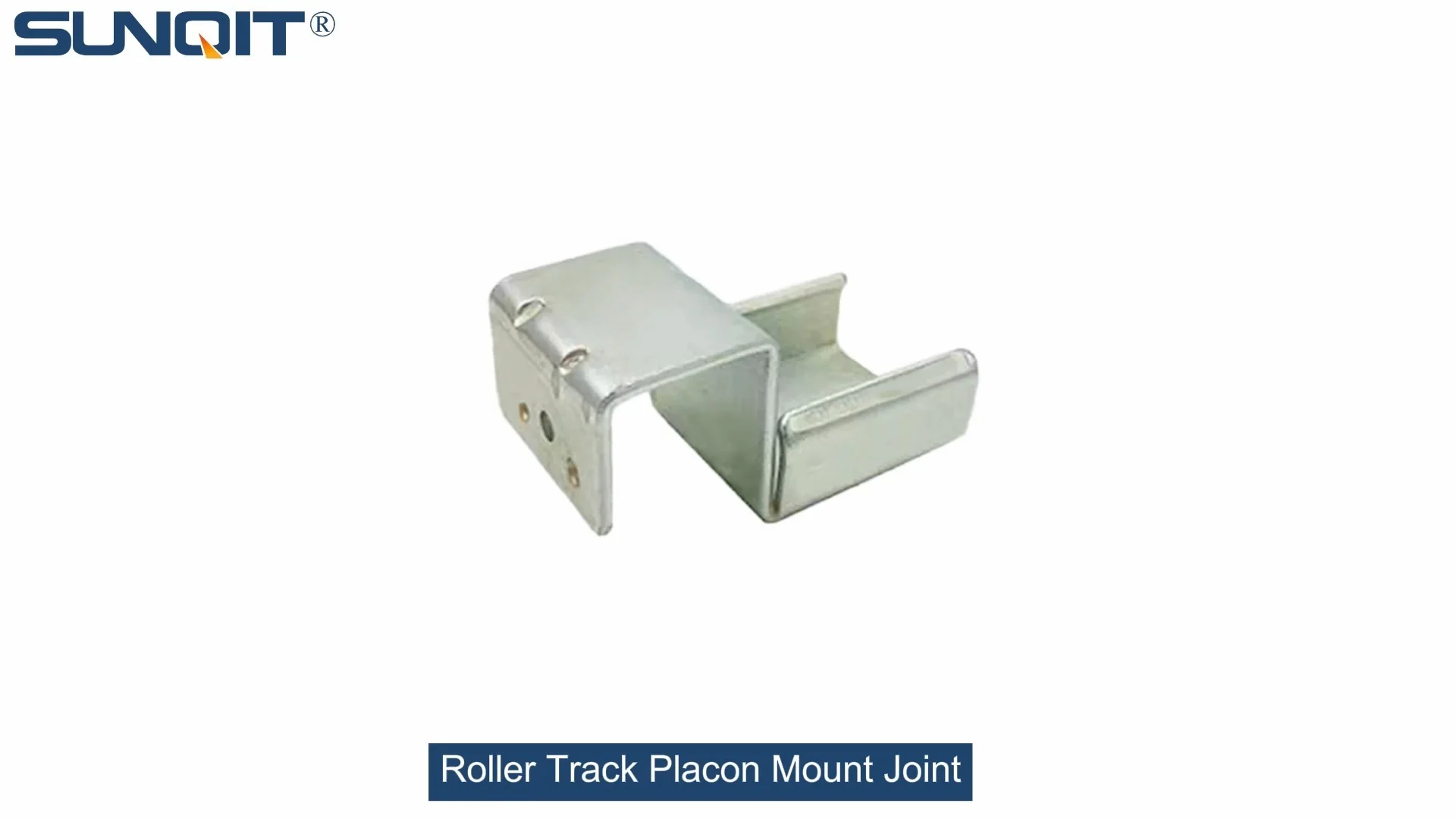
In the bustling heart of modern warehouse logistics, where every second counts and efficiency is the backbone of operations, there's an unsung hero working quietly behind the scenes. Imagine a busy e-commerce fulfillment center during peak season: pallets of goods need to glide from receiving to storage, cartons must zip through sorting lines, and fragile items require gentle yet swift movement to packing stations. None of this happens seamlessly without a well-designed material handling system—and at the core of that system, connecting rollers, tracks, and frames into a cohesive unit, are the small but mighty components known as roller track placon mount joints .
These unassuming parts might not grab headlines, but ask any warehouse manager, and they'll tell you: a faulty joint can bring an entire line to a halt, costing time, money, and even employee morale. On the flip side, the right placon mount joints turn a disjointed set of tracks into a symphony of smooth motion, making daily tasks easier, faster, and safer for everyone involved. In this article, we'll dive into how these critical components transform warehouse logistics, exploring their design, real-world applications, and the tangible difference they make in lean operations—because in the world of material handling, the smallest details often drive the biggest results.
What Makes Roller Track Placon Mount Joints Indispensable?
Before we jump into their applications, let's take a moment to understand what sets these joints apart. Unlike generic connectors, roller track placon mount joints are engineered with precision to address the unique demands of warehouse environments. They're the "glue" that holds roller track systems together, but not just any glue—think of them as the flexible, durable, and adaptable glue that can handle constant movement, heavy loads, and the occasional bump or jolt that comes with daily operations.
Key Features That Matter in the Warehouse
- Robust Construction: Made from high-grade aluminum or steel, these joints are built to withstand the wear and tear of continuous use. Whether it's supporting boxes of electronics or heavy automotive parts, they don't bend or loosen easily—meaning less downtime for repairs.
- Precision Fit: Ever tried connecting two pieces of furniture with a wobbly screw? Frustrating, right? Now imagine that on an industrial scale. Placon mount joints are designed for a snug, secure fit, ensuring roller tracks align perfectly. This precision translates to smoother material flow and fewer jams.
- Flexibility in Design: Warehouses aren't one-size-fits-all. A small local distributor might need a compact system, while a large manufacturer requires long, winding conveyor lines. These joints come in various types—like the roller track placon mount connector for straight sections, center support bracket for extra stability, or end support with stop to prevent items from sliding off the track—so you can customize the system to your space.
- Easy Installation & Adjustment: Warehouse managers don't have time for complicated setups. Most placon mount joints are designed for tool-free or quick assembly, letting teams install or reconfigure tracks in hours, not days. Need to rearrange your workflow? Simply loosen a few joints, adjust the track layout, and tighten them back up—no need to call in a specialist.
These features might sound technical, but their impact is deeply practical. For workers on the floor, it means less time wrestling with stuck rollers and more time focusing on tasks that add value. For managers, it means predictable performance and lower maintenance costs. And for businesses, it means a logistics system that can keep up with changing demands—whether that's a sudden spike in orders or a shift in product lines.
Roller Track Placon Mount Joints in Action: Real-World Applications
Now, let's put theory into practice. Where exactly do these joints shine in warehouse logistics systems? The answer is: almost everywhere roller tracks are used. From the moment goods arrive at the loading dock to when they're shipped out, placon mount joints play a role in keeping things moving. Let's break down the most common (and impactful) applications.
1. Flow Racks: Making Picking and Sorting a Breeze
Flow racks—those inclined racks where products slide forward as items are picked—are a staple in warehouses, especially for order fulfillment. They're designed to save space and speed up access to goods, but their efficiency hinges on how smoothly products glide from the back to the front. Enter roller track placon mount joints.
Consider a typical flow rack in a 3C electronics warehouse, storing smartphone components. Each shelf is lined with roller tracks, and as pickers take items from the front, the remaining boxes slide forward automatically. For this to work without snags, the rollers must be perfectly aligned, and the tracks must stay stable under the weight of multiple boxes. Placon mount connectors ensure the tracks are securely fastened to the rack frames, while center support brackets prevent sagging in the middle—even when loaded with heavy components like circuit boards or batteries.
One warehouse manager we spoke to shared that after upgrading to a flow rack system with high-quality placon mount joints, their picking errors dropped by 22% and pickers reported less fatigue, since they no longer had to reach or pull heavy items from the back of the shelf. "It's the little things," he said. "When the rollers don't get stuck, the whole day goes smoother."
2. Conveyor Systems: Keeping the Line Moving
Conveyors are the arteries of large-scale warehouses, moving goods over long distances—from receiving to storage, or from sorting to shipping. They come in all shapes: straight lines, curves, inclines, and declines. But connecting these different sections without creating bottlenecks is tricky. That's where placon mount joints step in, acting as the flexible joints that let conveyors navigate turns and adjust to different heights.
Take a distribution center handling apparel. Boxes of clothing need to move from the unloading area to a multi-level sorting facility. The conveyor system here might have a steep incline, a 90-degree turn, and then a gentle decline. Using roller track placon mount joint s designed for angular adjustments, the conveyor can smoothly transition between these sections without jostling the boxes—critical for preventing damage to delicate fabrics. End support brackets with wheels allow the track to glide along the frame, reducing friction and wear on both the conveyor and the joints themselves.
Another example is in automotive parts logistics, where conveyors often carry heavy engine components. Here, placon mount joints with reinforced steel construction ensure the tracks stay aligned even under extreme weight, preventing dangerous shifts that could lead to accidents or damaged parts.
3. Workbench Integration: Bridging the Gap Between Tracks and Tasks
Warehouses aren't just about moving goods—they're also about working on them. Workbenches are where items are inspected, assembled, or repackaged, and often, they need to connect seamlessly to roller tracks so materials can flow directly to the workstation. Placon mount joints make this integration possible, turning standalone workbenches into part of a continuous workflow.
Imagine a medical device assembly station. Technicians need sterile components to arrive at their workbench exactly when they need them, without leaving their seats. A short roller track, connected to the main conveyor via a placon mount connector, feeds parts directly to the bench. The joint allows the track to be adjusted to the perfect height—matching the workbench surface—so components slide gently into place, reducing the need for manual lifting. For ESD (electrostatic discharge) workbenches, which are critical for sensitive electronics, joints made from conductive materials even help dissipate static, protecting components from damage.
In a busy warehouse, every second counts. By linking workbenches to roller tracks with reliable joints, workers spend less time fetching materials and more time on value-added tasks—like quality checks or assembly—boosting overall productivity.

A Closer Look: Types of Roller Track Placon Mount Joints and Their Uses
Not all joints are created equal. Different warehouse setups demand different features. To help you understand which joint fits which scenario, here's a breakdown of common types and their ideal applications:
| Joint Type | Key Features | Ideal For |
|---|---|---|
| Placon Mount Connector | Compact design, easy to install, secure lock mechanism | Connecting straight roller track sections in flow racks or conveyors |
| Center Support Bracket | Reinforced base, prevents track sagging, compatible with heavy loads | Long roller tracks in conveyor systems or high-capacity flow racks |
| End Support with Stop | Integrated stopper to halt item movement, anti-slip design | Ends of flow racks or workstation roller tracks (prevents items from sliding off) |
| End Support with Wheel | Rolling wheel for smooth track adjustment, flexible height positioning | Conveyor inclines/declines or movable roller track sections |
| Angled Connector | Adjustable angle (30°, 45°, 90°), tight pivot mechanism | Curved conveyor sections or corner connections in flow racks |
This variety ensures that no matter the layout or load, there's a placon mount joint designed to fit. And because they're standardized, swapping out a damaged joint or upgrading a section is quick and cost-effective—no need to replace the entire system.

Beyond the Joint: How Placon Mounts Support Lean Logistics
At the end of the day, warehouse efficiency isn't just about individual components—it's about embracing lean solution s that eliminate waste, improve flow, and adapt to change. Roller track placon mount joints embody this philosophy in three key ways:
1. Reducing Waste Through Durability
Lean principles hate waste, and nothing's more wasteful than frequent replacements. Placon mount joints' robust design means they last for years, even in high-traffic environments. This durability reduces the need for constant repairs or part swaps, cutting down on material waste and the labor hours spent fixing things.
2. Enabling Continuous Improvement
Warehouse needs change—seasonal demand spikes, new product lines, or shifts in customer preferences can all require layout adjustments. Placon mount joints make reconfiguration easy. Want to expand a flow rack to accommodate more SKUs? Just add a few extra track sections and connectors. Need to reroute a conveyor to speed up shipping? Loosen the joints, adjust the path, and tighten them back up. This flexibility lets businesses adapt without overhauling their entire logistics system, supporting the "sustainable improvement" core of lean thinking.
3. Optimizing Labor Efficiency
Perhaps the most impactful lean benefit is how these joints reduce manual labor. When roller tracks glide smoothly and reliably, workers spend less time pushing, pulling, or lifting heavy items. This not only speeds up operations but also lowers the risk of workplace injuries—a win for both productivity and employee well-being. As one operations supervisor put it: "Our team used to complain about sore backs from moving boxes. Now, with the roller tracks connected properly, they can focus on checking orders instead of wrestling with materials. Morale's up, and so is our output."

Choosing the Right Joints: Tips for Warehouse Managers
With so many options, how do you pick the right roller track placon mount joints for your warehouse? Here are a few practical tips to guide your decision:
- Start with Your Load: How heavy are the items moving on your tracks? A warehouse handling small electronics can use lightweight aluminum joints, while one moving automotive parts might need steel-reinforced brackets.
- Map Your Workflow: Are your tracks straight, curved, or inclined? Angled connectors are a must for corners, while end supports with stops are critical if items need to halt at specific points (like workstations).
- Think About Future Growth: Choose joints that are compatible with a range of track sizes and types. This way, you can expand or modify your system later without replacing all your connectors.
- Don't Skimp on Quality: It might be tempting to go for cheaper, generic joints, but the cost of downtime or repairs will quickly eat into those savings. Invest in joints from a reliable supplier who understands warehouse logistics—they'll stand behind their products and offer support when you need it.
The Unsung Hero of Smoother, Faster, Leaner Warehouses
Roller track placon mount joints might not be the first thing you notice when walking through a warehouse, but they're the silent force that keeps everything moving. They turn disjointed tracks into cohesive systems, reduce friction (both literal and figurative), and empower teams to work smarter, not harder. In a world where warehouse efficiency can make or break a business, these small but mighty components are more than just parts—they're partners in progress.
Whether you're setting up a new flow rack, upgrading a conveyor system, or integrating roller tracks into workstations, choosing the right placon mount joints is key. They're the foundation of a lean logistics system that adapts to change, reduces waste, and puts people first. And in the end, isn't that what great warehouse management is all about? Keeping goods moving, teams thriving, and businesses growing—one joint at a time.