- Company Articles
- Products and Technology
- Application Cases
- Roller Track Placon Mount Joints for Computer Peripheral Assembly: Case Study

Roller Track Placon Mount Joints for Computer Peripheral Assembly: Case Study
Related Product
Roller Track Placon Mount Joint
Roller track placon mount work as a connector for roller track and pipe or aluminum profile in rack syetem, it is a necessary parts in rack system which widely used in industrial plant and logistic,warehouse storage.
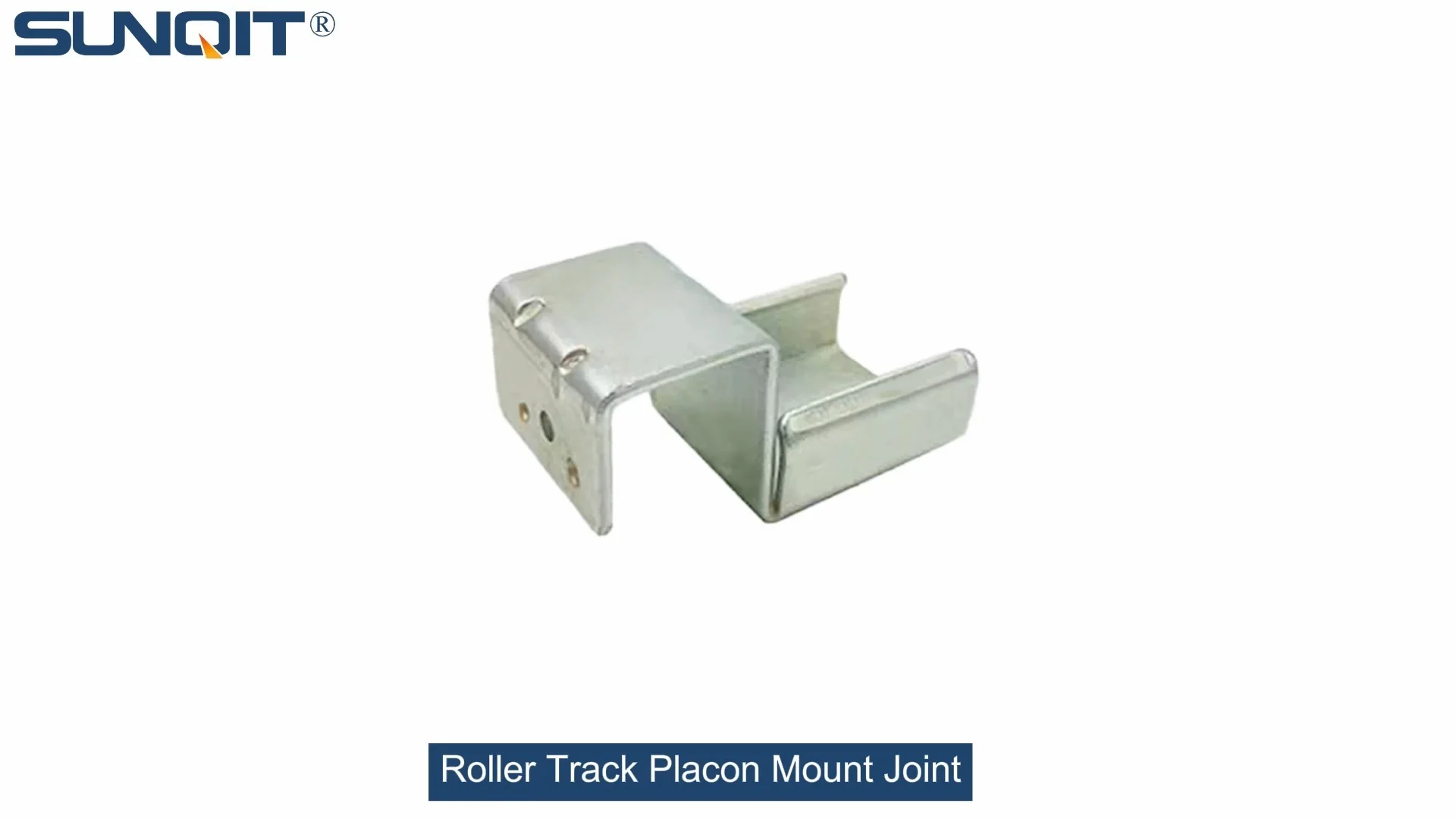
In the fast-paced world of computer peripheral manufacturing, where product cycles shrink by the month and customer demands shift overnight, assembly lines can't afford to stay static. Last year, a leading manufacturer of wireless keyboards and mice in Guangdong Province faced this exact challenge head-on. Their production floor was bogged down by rigid, bolted-down roller tracks that took hours to reconfigure when switching between product models—costing them valuable time and missing tight delivery deadlines. That's when they turned to a lean solution centered on one but game-changing component: roller track placon mount joints . This is the story of how those small, versatile joints, paired with custom lean pipe workbenches and flexible conveyors, transformed their assembly process from a bottleneck to a competitive advantage.
The Challenge: Rigidity in a World of Flexibility
Let's set the scene: this manufacturer produces over 500,000 wireless keyboards and 300,000 mice annually, with 12 different models ranging from budget-friendly to high-end gaming designs. Each model has unique components—different keycap sizes, wireless modules, and battery compartments—requiring slight adjustments to the assembly line. But their existing setup? Roller tracks fixed to the floor with welding and heavy bolts. When switching from a standard keyboard to a gaming model with extra macro keys, the team had to: 1) Shut down the line for 4+ hours, 2) Bring in maintenance crews with power tools to detach the old tracks, 3) Reinstall new tracks at a different angle to accommodate the wider assembly tray, and 4) Test for stability—often finding misalignments that caused jams during the first production run.
"It was like trying to rearrange a bookshelf with superglued shelves," laughed the plant manager during our initial consultation. "We were losing 2-3 production shifts monthly just on reconfigurations, and our defect rate spiked to 3.2% after each change because the tracks never aligned perfectly. Our biggest client was threatening to take their business elsewhere if we couldn't hit their 2-week lead time for a new mouse model."
The problem wasn't just the tracks, either. Their workstations were equally inflexible. The fixed-height tables meant operators of different heights struggled with ergonomics, leading to fatigue and slower assembly times. And the material handling carts? Bulky and one-size-fits-all, they often blocked the conveyor paths, creating bottlenecks between the soldering and testing stations.
The Solution: Building a Lean Ecosystem with Roller Track Placon Mount Joints
After a week of on-site assessments, our team proposed a holistic lean solution focused on three pillars: adaptability, ergonomics, and continuous flow. At the heart of it all was the roller track placon mount joint —a small but mighty component that would turn their rigid tracks into a flexible network. Here's how it all came together:
1. Roller Track Placon Mount Joints: The "Swiss Army Knife" of Track Connections
These joints are engineered to solve one core problem: quick, tool-free connection between roller tracks and aluminum profiles. Made from high-strength aluminum alloy with precision-machined grooves, they clip onto standard 40mm aluminum profiles (the backbone of lean systems) and lock into roller tracks with a simple twist-lock mechanism. No welding, no bolts, no 4-hour shutdowns. For this manufacturer, we recommended two types of placon mount joints based on their needs:
- Placon Mount for Aluminum Profile Flat : Used for straight sections of the track, allowing smooth material flow from the injection molding station to the assembly line.
- Placon Mount Center Support Bracket : Added under longer track sections to prevent sagging—critical for the 1.8m spans between workstations.
"The first time we tested adjusting the tracks with these joints, my maintenance supervisor thought I was joking," the plant manager recalled. "He handed a new guy a rubber mallet and said, 'Go ahead—knock it into place.' Ten minutes later, the track was reconfigured, and we ran a test batch with zero jams. The team cheered—literally cheered."
2. Lean Pipe Workbenches: Ergonomics Meets Customization
Next, we replaced their fixed workstations with custom lean pipe workbenches —specifically the Workbench E model, modified with adjustable height legs and ESD (electrostatic discharge) surfaces to protect sensitive electronic components. The key here was flexibility: each bench could be raised or lowered by 15cm using a hand crank, letting operators set their ideal working height. We also added modular accessories—tool hooks, bin holders, and cable management trays—all attached via quick-connect lean pipe joints, so each station could be tailored to the task (e.g., soldering vs. quality inspection).
One operator, a 5'2" woman who'd been struggling with a too-tall bench for years, summed it up best: "I used to stand on a small stool to reach the keyboard PCBs. Now I just crank the bench down, and my back pain is gone. I can assemble 10 more keyboards an hour without rushing."
3. Conveyors: Bridging the Gaps with Smart Flow
To connect the workbenches and roller tracks, we integrated a compact roller conveyor system with variable speed controls. Unlike their old, noisy belt conveyors, these roller conveyors used the same placon mount joints for easy alignment with the tracks. We installed them between the soldering station and the testing bench, where the delicate circuit boards needed gentle handling. The variable speed meant they could slow down for intricate tasks (like attaching tiny LED indicators) and speed up for bulk material transport—reducing wait times by 40%.

The Results: From Struggle to Success in 90 Days
The transformation didn't happen overnight, but within three months, the results were undeniable. Let's break it down with hard data and real operator feedback:
| Metric | Before Implementation | After Implementation | Improvement |
|---|---|---|---|
| Production Line Reconfiguration Time | 4-5 hours per changeover | 30-45 minutes per changeover | 90% reduction |
| Monthly Production Shifts Lost to Changeovers | 8-10 shifts | 1-2 shifts | 87.5% reduction |
| Defect Rate Post-Changeover | 3.2% | 0.8% | 75% reduction |
| Operator Assembly Rate (per hour) | 18-22 units | 28-32 units | 40% increase |
| Lead Time for New Product Models | 3-4 weeks | 10-12 days | 58% reduction |
Perhaps the most telling metric? Employee satisfaction. In a follow-up survey, 92% of operators reported lower fatigue, and 88% said they felt more in control of their workstations. "It's not just the machines that got more flexible—it's us," one long-time assembler noted. "We can tweak our bench setup if a new component comes in, or adjust the track angle if we notice a jam starting. It makes us feel like problem-solvers, not just button-pushers."
And the client who threatened to leave? They've since increased their order volume by 30%, citing the manufacturer's "newfound agility" as a key reason. "We're now their go-to for rush orders," the sales director proudly shared. "Last month, they asked for a custom gaming mouse with RGB lighting, and we delivered the first batch in 11 days—something we never could've done before."

Why This Worked: The Lean Philosophy in Action
At its core, this success story isn't just about parts—it's about lean solution thinking: eliminating waste, empowering people, and building systems that grow with your needs. The roller track placon mount joints are a perfect example of lean design: they're reusable (the manufacturer has already repurposed them for three new product lines), easy to maintain (no special tools needed), and designed to prevent over-engineering (no more over-built, immovable tracks).
The lean pipe workbenches and conveyors fit this philosophy too. By focusing on modularity, we avoided the "one-size-fits-all" trap that plagues many manufacturing setups. Instead of replacing entire workstations when a new model launches, they just swap out a bin holder or adjust the bench height. And because all components are aluminum, they're lightweight enough to rearrange without heavy machinery but strong enough to handle daily use—proving that sustainability and durability can go hand in hand.

The Takeaway: Small Components, Big Impact
As the plant manager put it: "I used to think lean manufacturing was about big machines and expensive software. But this project taught me it's the small, smart components that make the difference—the joints that let you pivot, the benches that adapt, the conveyors that flow with your work instead of against it."
For computer peripheral manufacturers (and really, any manufacturer dealing with frequent product changes), the lesson is clear: rigidity is the enemy of progress. By investing in flexible tools like roller track placon mount joints, lean pipe workbenches, and adaptable conveyors, you're not just buying equipment—you're building a production line that can keep up with the pace of innovation. And in today's market, that's not just an advantage—it's survival.
So, what's your assembly line's "rigid shelf" problem? Maybe it's time to take a closer look at the small components holding it all together. They just might be the key to unlocking your next level of efficiency.