- Company Articles
- Products and Technology
- Application Cases
- Roller Track Placon Mount Joints in 3C Product Assembly: Precision and Speed

Roller Track Placon Mount Joints in 3C Product Assembly: Precision and Speed
Related Product
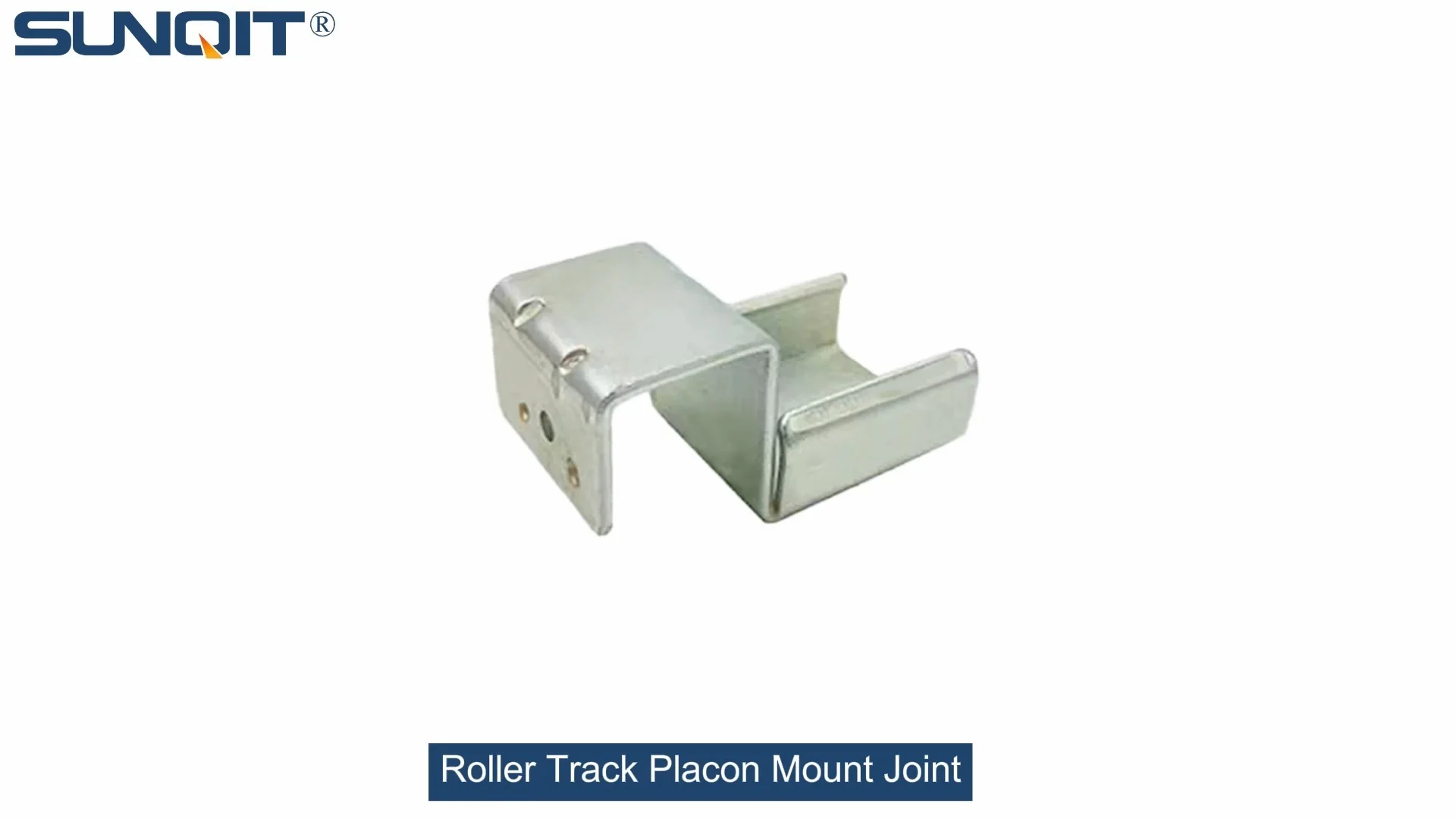
Roller Track Placon Mount Joint
Roller track placon mount work as a connector for roller track and pipe or aluminum profile in rack syetem, it is a necessary parts in rack system which widely used in industrial plant and logistic,warehouse storage.
Walk into a modern 3C assembly plant—where smartphones, laptops, and smartwatches take shape—and you'll feel the pulse of a high-stakes dance. Every second counts. A single misaligned component can delay a production run. A rigid assembly line can't keep up with the next-gen model's tighter tolerances. And in an industry where product cycles shrink from 12 months to 6, flexibility isn't just a nice-to-have; it's the difference between leading the market and playing catch-up. This is where the unsung heroes of lean manufacturing step in: roller track placon mount joints , working in harmony with lean pipe structures, workbench setups, and holistic lean solutions to turn chaos into precision, and precision into speed.
The 3C Assembly Challenge: Why "Good Enough" Never Is
Let's start with the reality of 3C manufacturing. These aren't just products—they're miniaturized marvels. A smartphone motherboard, for example, packs over 1,000 components into a space smaller than a credit card. When assembling such delicate parts, even a 0.2mm misalignment can ruin a circuit. Add to that the pressure of volume: top manufacturers produce millions of units monthly. And if that's not enough, throw in frequent design changes—new camera modules, slimmer frames, faster chips—each requiring tweaks to the assembly line.
Traditional conveyor systems? They struggle here. Welded metal tracks can't adjust to new layouts without days of rework. Rigid joints lock in angles, making it impossible to reroute materials when a new production step is added. And let's not forget maintenance: a single stuck roller can bring an entire line to a halt, costing thousands in downtime. For 3C plants, this rigid approach isn't just inefficient—it's a death sentence in a market that waits for no one.
Roller Track Placon Mount Joints: The "Swiss Army Knife" of Lean Assembly
Enter roller track placon mount joints —the connectors that redefine what's possible in 3C assembly. These aren't your average hardware store parts. They're engineered with one goal: to make your assembly line as agile as the products it builds. Let's break down why they matter.
1. Precision That Keeps Up With 3C's Demands
These joints aren't just about holding roller tracks together—they're about
aligning
them. With built-in calibration markers and micro-adjustable knobs, they ensure roller tracks sit perfectly parallel, with margin for error as tiny as ±0.1mm. For 3C components that weigh mere grams, this level of precision means materials glide smoothly, no jams, no misfeeds, and no costly scrap.
2. Flexibility to Adapt (Before Your Competitors Do)
Remember those frequent design changes? Placon mount joints laugh at them. Unlike welded or bolted systems, they twist, rotate, and reposition in minutes. Need to angle a roller track 15° to accommodate a new robotic arm? Loosen a few levers, adjust, and lock it in. No welding torches, no downtime, no waiting for the maintenance crew. It's like having a assembly line that can "learn" new tricks on the fly.
3. Durability That Outlasts the Harshest Floors
3C plants are tough environments: constant vibration, occasional spills, metal shavings, and 12-hour production runs. Placon mount joints are built to take it. Made from high-grade aluminum alloys with corrosion-resistant coatings, they stand up to daily wear and tear, ensuring your roller track system stays reliable for 8–10 years—double the lifespan of traditional steel joints.

Working in Tandem: Placon Mount Joints + Lean Pipe + Workbench
Great tools don't work in isolation. Placon mount joints truly shine when paired with other lean staples, creating a ecosystem of efficiency. Take lean pipe , for example—the lightweight, modular aluminum tubes that form the backbone of workstations and material flow systems. Placon mount joints connect roller tracks directly to these pipes, turning a basic frame into a dynamic conveyor network. Need to extend a track by 2 meters? Just add more lean pipe sections and placon joints—no custom fabrication required.
Then there's the workbench —the heart of any assembly station. Imagine a smartphone assembly line where each workbench is paired with a roller track fed by placon-mounted joints. Components slide directly from the track to the bench, where workers assemble them, then send finished subassemblies back via another track. No more walking to fetch parts, no more lifting heavy bins, no more wasted motion. It's a seamless loop that cuts cycle times by up to 30%.
| Assembly Line Element | Traditional Setup | Lean System with Placon Mount Joints |
|---|---|---|
| Track Alignment | Manual measurement, ±0.5mm error | Tool-free calibration, ±0.1mm precision |
| Layout Changes | 2–3 days (welding, cutting, rebolting) | 2–3 hours (adjust joints, reposition tracks) |
| Worker Movement | 5–10 steps per component retrieval | 0–2 steps (materials delivered to bench) |
| Maintenance Downtime | 8–12 hours/year (joint replacements) | 1–2 hours/year (lubrication, minor tweaks) |

Case Study: How a Top 3C Manufacturer Cut Changeover Time by 70%
The Challenge: From "One Line, One Product" to "One Line, Five Products"
A leading global smartphone maker faced a familiar problem: their assembly lines were built for one model at a time. When they wanted to add a new mid-range phone to their lineup, they'd need to shut down the line for a week to reconfigure tracks, workbenches, and conveyor systems. With five new models launching in a year, this approach was costing them millions in lost production.
Their solution? A lean solution centered on roller track placon mount joints, lean pipe frames, and modular workbenches. Here's what happened:
- Day 1: Install placon mount joints on existing roller tracks, replacing welded connections. Workers were trained to adjust joints in 15 minutes flat.
- Week 2: Launch first new model. Instead of shutting down, the team repositioned tracks using the joints, reconfiguring 30 meters of conveyor in 2.5 hours.
- Month 3: Add a third model. Changeover time dropped to 1.5 hours. Defect rates fell by 18% due to better track alignment.
- Year 1: Five models running on the same line. Total changeover time for the year? Just 12 hours—down from 40+ days with the old system.
"It's not just about speed," said the plant manager. "It's about confidence. We can now promise retailers faster delivery on new models because we know our line can adapt without breaking a sweat. The placon joints turned our biggest bottleneck into our biggest competitive advantage."

Sustainability: Lean Isn't Just About Efficiency—It's About the Future
In today's manufacturing world, "lean" isn't just about cutting costs—it's about building for the long haul. 3C plants generate tons of waste annually, from scrapped tools to outdated equipment. Placon mount joints fight this by design. Made from 100% recyclable aluminum, they're built to be reused, not replaced. When a line is retired, the joints can be stripped, cleaned, and reinstalled on a new system. Over a decade, this reduces material waste by up to 60% compared to disposable steel connectors.
Then there's energy efficiency. Traditional conveyor systems rely on heavy motors to move materials. Placon-mounted roller tracks, paired with gravity-fed designs, often require no power at all—components glide smoothly using just the force of gravity, slashing energy bills by thousands yearly. It's lean manufacturing that's easy on the planet and the bottom line.
Why a Custom Lean Solution Matters More Than "Off-the-Shelf"
3C assembly isn't one-size-fits-all. A laptop line has different needs than a smartwatch line. A contract manufacturer serving 10 brands needs more flexibility than an in-house plant. That's where partnering with a provider that specializes in lean solutions makes all the difference. These aren't just suppliers—they're problem-solvers who start by listening: What's your biggest pain point? What's your next product launch? How do you measure success?
A custom solution might combine placon mount joints with ESD-safe workbenches (critical for protecting sensitive electronics), or integrate roller tracks with automated guided vehicles (AGVs) for 24/7 material flow. It might even include predictive maintenance—sensors in the joints that alert teams when a part needs lubrication, preventing breakdowns before they happen. The result? A system that grows with you, adapts with you, and evolves as your products do.
Final Thought: Precision Powers Speed, But People Power Success
At the end of the day, lean manufacturing is about more than tools and systems—it's about empowering the people who build the products we rely on. When workers don't have to fight with misaligned tracks or waste time fetching parts, they can focus on what they do best: creating quality. Roller track placon mount joints, lean pipe, workbenches—these are the tools that turn frustration into focus, and focus into results. In 3C assembly, where every second and every millimeter counts, that's not just efficiency. That's excellence.