- Company Articles
- Products and Technology
- Application Cases
- Roller Track Placon Mount Joints in Automotive Parts Warehousing

Roller Track Placon Mount Joints in Automotive Parts Warehousing
Related Product
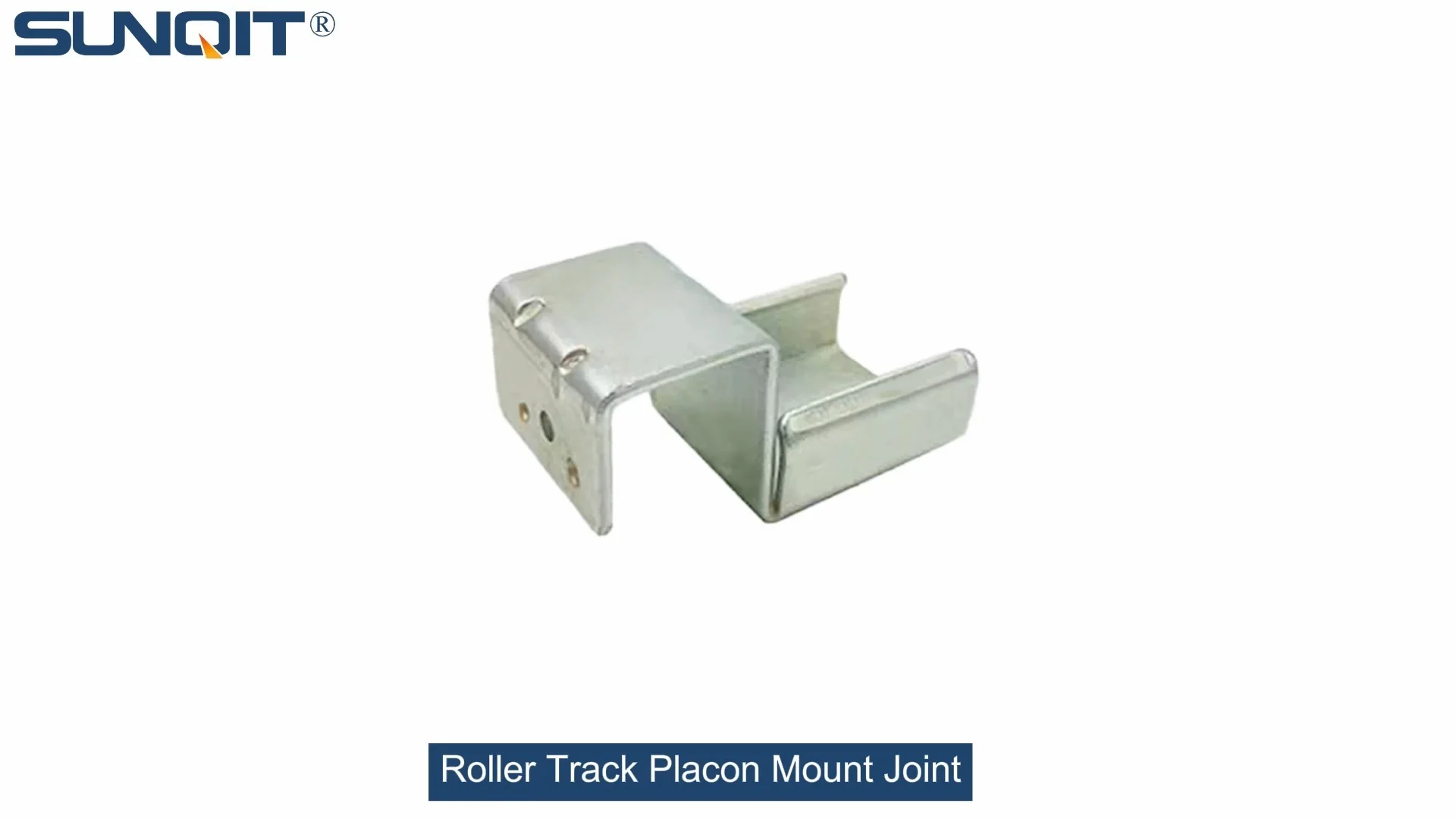
Roller Track Placon Mount Joint
Roller track placon mount work as a connector for roller track and pipe or aluminum profile in rack syetem, it is a necessary parts in rack system which widely used in industrial plant and logistic,warehouse storage.
Walk through any automotive parts warehouse, and you'll quickly realize the chaos beneath the surface: thousands of SKUs, from tiny screws to bulky engine components, need to move quickly, accurately, and safely from storage to assembly lines. Miss a beat, and production delays ripple through the entire supply chain. Here's the thing—most warehouses struggle not with the big machinery, but the small, unsung components that hold everything together. Enter roller track placon mount joints : the quiet workhorses that turn clunky, rigid storage systems into agile, lean operations. In this article, we'll dive into why these joints are non-negotiable for modern automotive parts warehousing, how they integrate with flow racks and conveyors , and why partnering with a trusted lean solution provider makes all the difference.
The Hidden Challenge in Automotive Parts Warehousing
Automotive parts aren't just "parts"—they're diverse, heavy, and time-sensitive. A single warehouse might handle delicate electronic sensors, cast-iron engine blocks, and flexible wiring harnesses, each with unique storage and handling needs. Traditional storage systems often rely on welded or bolted connections, which sound sturdy until you need to:
- Rearrange racks to accommodate a new part size (common in EV component storage).
- replace a damaged section without shutting down an entire aisle.
- Scale up during peak production seasons (e.g., pre-holiday manufacturing rushes).
Welded joints? They take hours to modify, and even small changes require professional labor. Cheap plastic connectors? They crack under the weight of metal parts, leading to jams and safety hazards. This is where roller track placon mount joints step in—designed specifically to solve these pain points in lean warehousing.
What Are Roller Track Placon Mount Joints, Anyway?
Think of them as the "Swiss Army knife" of. These joints are engineered to connect roller tracks (the metal rails that let parts glide smoothly) to aluminum profiles, flow racks, or conveyor systems. Made from high-grade aluminum or reinforced steel, they come in multiple configurations—like roller track placon mount for aluminum profile high (for elevated tracks) or roller track placon mount center support bracket (for long spans)—to fit every inch of your warehouse layout.
But their real magic? They're modular. No welding, no drilling, no headaches. A quick twist of a wrench, and you're reconfiguring a section of your flow rack to fit a taller battery component. Need to add a side rail to prevent small parts from sliding off? Snap on an aluminum guide rail A using the same joint. It's like building with advanced Lego blocks—only these blocks support hundreds of pounds of automotive parts.

3 Reasons Roller Track Placon Mount Joints Transform Automotive Warehouses
1. Unmatched Flexibility for Changing Needs
Automotive manufacturing isn't static. One month you're storing fuel injectors; the next, you're adapting to a new EV motor design with bulkier stator components. Roller track placon mount joints thrive here. For example, a roller track placon mount joint with a 360° swivel design lets you adjust track angles on the fly—no need to rebuild the entire structure. This flexibility is why top-tier automotive suppliers report a 40% reduction in layout modification time after switching to these joints.
2. Durability That Keeps Up with Heavy-Duty Use
Car parts are heavy. A single transmission housing can weigh 150+ pounds, and when you're moving dozens of these daily, weak connectors fail fast. Our joints are tested to withstand continuous loads of up to 500kg per linear meter—more than enough for even the sturdiest automotive components. The aluminum variants resist corrosion from oil, coolant, and warehouse cleaning chemicals, ensuring they last 5-7 years (double the lifespan of plastic alternatives).
3. Seamless Integration with Your Existing Lean System
You don't need to scrap your current setup to upgrade. These joints play well with almost every component in a lean warehouse:
- Flow racks : Pair with material rack B (3 row and 3 floor) for high-density storage of small parts like bolts and washers.
- Conveyors : Connect 40 steel roller track yellow wheel systems to belt conveyors, ensuring parts transition smoothly from storage to assembly lines.
- Workbenches : Attach tracks to workbench E (single deck-without caster) so assemblers can pull parts directly from the flow rack to their station—eliminating walking time.

Real-World Impact: How One Auto Supplier Cut Costs by 28%
Let's take a concrete example. A mid-sized automotive parts manufacturer in Michigan was struggling with their brake component warehouse. They had 12 aisles of traditional bolted flow racks, and every time a new brake caliper design came in (which happened 3-4 times a year), they spent $15,000 on welding and labor to adjust the racks. Jams from cracked plastic joints were costing 10+ hours of downtime monthly.
After switching to our lean solution—including roller track placon mount joints, aluminum guide rails, and reinforced flow racks—here's what changed:
- Layout changes went from 2 days to 4 hours (using modular joints).
- Downtime dropped to 1 hour monthly (no more cracked connectors jamming tracks).
- Labor costs for maintenance fell by 60% (no need for welders on call).
Total annual savings? Over $92,000. And that's not counting the indirect benefits—like happier workers who no longer had to manually unjam tracks, or faster order fulfillment for their automotive OEM clients.

Beyond Joints: Building a Complete Lean Warehouse System
Roller track placon mount joints are powerful, but they're just one piece of the puzzle. To truly optimize automotive parts storage, you need a cohesive lean solution that includes:
| Warehouse Zone | Key Components | Benefit for Automotive Parts |
|---|---|---|
| High-Volume Picking Aisles | Flow racks + roller track placon mount joints + 85 staggered roller track | FIFO (First-In-First-Out) inventory management, critical for perishable or time-sensitive parts (e.g., gaskets with shelf lives). |
| Heavy Parts Storage | Aluminum profile high joints + 60 steel roller track green | Supports 200+kg per linear meter for engine blocks, transmissions, or EV batteries. |
| Assembly Line Feeding | Conveyors + swivel roller balls 1 inch + ESD workbench | Static-free handling for electronic components (e.g., ECU modules) and seamless part delivery to workers. |
| Returns/Repair Area | Turnover trolley + parallel rotatory lean pipe joint | Easy transport of defective parts without damaging them, reducing scrap costs. |
The best part? All these components are designed to work together. For example, the same roller track placon mount joints used in your flow racks can connect to the roller tracks on your conveyors—so parts glide from storage to the assembly workbench without a single manual lift.
Why Choose a Specialized Lean Solution Supplier?
You could buy generic joints from a hardware store, but automotive parts warehousing demands precision. A specialized supplier (like us) offers three unbeatable advantages:
- Industry-Specific Expertise : We know automotive parts—we've designed systems for everything from legacy ICE components to cutting-edge EV battery storage. We'll ask the right questions: "Do you need ESD protection for circuit boards?" "Will these tracks handle -20°C temperatures in cold-storage zones?"
- Customization Without the Wait : Need a unique joint angle for a tight corner in your warehouse? Our in-house engineering team can modify standard designs in days, not weeks. We even offer lean pipe wholesale options for large-scale rollouts.
- End-to-End Support : From 3D layout design (using your warehouse CAD files) to on-site installation training, we don't just sell parts—we partner with you to ensure your system performs long-term. One client called us 6 months after installation with a new storage challenge; we sent a tech to reconfigure their joints on the spot, free of charge.
The Bottom Line: Joints That Drive Lean Success
Automotive parts warehousing is a high-stakes game—where inefficiency leads to missed deadlines, angry OEMs, and lost revenue. Roller track placon mount joints might seem small, but they're the foundation of a flexible, durable, and cost-effective storage system. By choosing modular, high-quality joints, you're not just upgrading hardware—you're building a warehouse that can adapt to whatever the automotive industry throws at it next (hello, autonomous vehicle components!).
Ready to stop fighting with outdated connectors and start building a lean warehouse that works for you? Let's talk about your specific needs—whether you're storing EV batteries, traditional engine parts, or something in between. After all, in lean manufacturing, the right connections make all the difference.