- Company Articles
- Products and Technology
- Application Cases
- Roller Track Placon Mount Joints in Communication Device Packaging Lines

Roller Track Placon Mount Joints in Communication Device Packaging Lines
Related Product
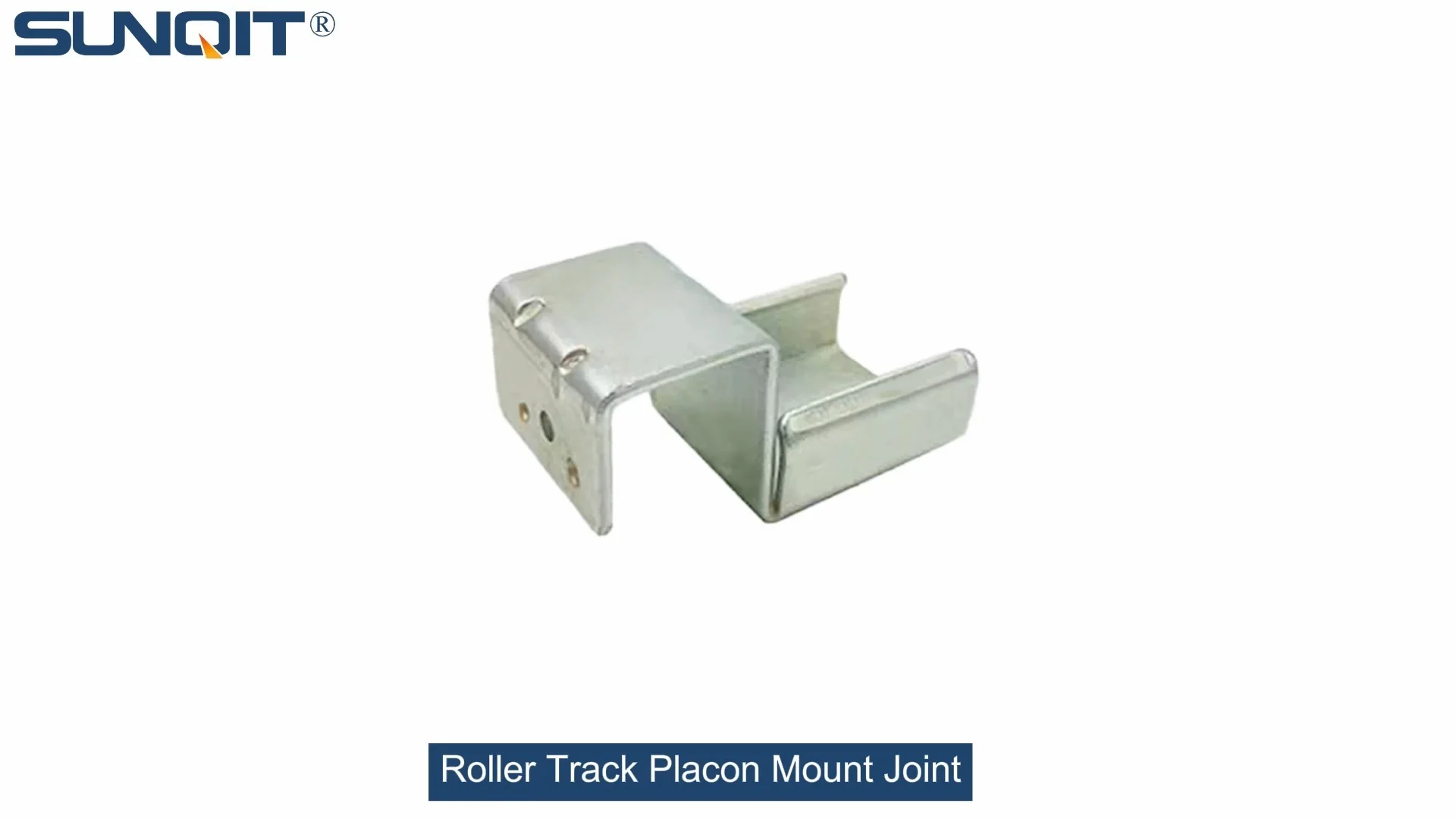
Roller Track Placon Mount Joint
Roller track placon mount work as a connector for roller track and pipe or aluminum profile in rack syetem, it is a necessary parts in rack system which widely used in industrial plant and logistic,warehouse storage.
The Unsung Heroes of Smooth Communication Device Packaging
In the bustling world of communication device manufacturing, where smartphones, routers, and fiber-optic equipment fly off production lines at lightning speed, the packaging line is often the final checkpoint before products reach customers. Yet behind the scenes, there's a silent workhorse ensuring every step—from delicate circuit board handling to boxed—happens without a hitch: the roller track placon mount joint. These unassuming components might not grab headlines, but they're the backbone of efficiency, reliability, and adaptability in modern packaging lines.
Communication devices, by nature, demand precision. A single misalignment during packaging could scratch a device's surface, loosen a connector, or even damage internal components—costing manufacturers time, money, and customer trust. Traditional packaging lines, reliant on rigid metal brackets or one-size-fits-all conveyor parts, often struggle to keep up with the industry's twin demands: speed (to meet tight delivery deadlines) and flexibility (to adapt to frequent product upgrades, from slimline smartphones to bulkier 5G routers).
This is where roller track placon mount joints step in. Designed to connect, support, and guide roller tracks with pinpoint accuracy, these joints turn ordinary conveyor systems into dynamic, customizable tools that grow with your production needs. Let's dive into how they transform communication device packaging lines—and why they've become indispensable for manufacturers aiming to stay ahead in a hyper-competitive market.
What Makes Roller Track Placon Mount Joints Essential?
At first glance, a roller track placon mount joint might look like a simple metal piece. But its design is a masterclass in industrial engineering, tailored to solve three critical challenges in communication device packaging:
- Stability in High-Speed Environments : Communication device packaging lines often run 24/7, with products moving at speeds of 1-3 meters per second. A loose joint or wobbly track can lead to jams, product drops, or uneven wear. Placon mount joints, with their precision-machined interfaces and secure locking mechanisms, ensure tracks stay aligned even under constant vibration.
- Adaptability to Diverse Product Sizes : One day, a line might package 5-inch smartphones; the next, 12-inch enterprise routers. Placon mount joints allow quick adjustments—sliding tracks wider, lowering heights, or adding curves—without requiring heavy tools or production downtime. This flexibility is a game-changer for manufacturers handling multiple product lines.
- Durability Against Wear and Tear : Packaging lines see a lot of action—abrasion from constant product movement, exposure to dust, and occasional impacts from tool carts or operators. Made from high-grade aluminum or reinforced plastic, these joints resist corrosion, withstand repeated adjustments, and outlast traditional steel brackets by 3-5 years on average.
But their value goes beyond solving problems—they create opportunities. By reducing unplanned downtime (a common issue with outdated joints), manufacturers can boost line uptime by 15-20%. By enabling quick reconfigurations, they cut changeover time between product runs from hours to minutes. And by minimizing product damage, they reduce scrap rates, which for high-end communication devices (think $500+ smartphones) translates to significant cost savings.

Key Features of Roller Track Placon Mount Joints for Communication Packaging
Not all roller track joints are created equal. When it comes to communication device packaging, where precision and reliability are non-negotiable, the best placon mount joints stand out with these design features:
| Feature | Benefit for Communication Device Packaging |
|---|---|
| Modular Design | Components like end supports with stops or wheeled brackets can be mixed and matched to create custom track layouts—ideal for packaging lines that handle both small components (e.g., SIM card trays) and large devices (e.g.,). |
| ESD-Safe Materials | Many joints are made with static-dissipative plastic or aluminum, critical for preventing electrostatic discharge that could damage sensitive communication chips during packaging. |
| Tool-Free Adjustments | Quick-release levers or snap-on connectors allow operators to reposition tracks in seconds, perfect for last-minute changes in packaging workflows. |
| Low-Profile Construction | Slim designs reduce dead space between tracks, maximizing floor space in crowded production facilities—a common concern in urban manufacturing hubs. |
| Compatibility with Lean Systems | Works seamlessly with lean pipes, aluminum profiles, and flow racks, enabling integration into existing lean manufacturing setups for end-to-end efficiency. |
Take, for example, the roller track placon mount center support bracket . This component reinforces long track sections, preventing sagging when heavy devices (like 5G modems) pass through. Or the end support with stop , which gently halts products at packaging stations, eliminating the need for manual braking and reducing the risk of scratches. Each joint is designed with a specific task in mind, yet they all share a common goal: making the packaging line smarter, faster, and more resilient.

Real-World Applications: How Joints Transform Communication Packaging Lines
Let's walk through a typical communication device packaging workflow to see placon mount joints in action. Imagine a mid-sized manufacturer producing smart home routers—here's how these joints add value at every stage:
1. Component Infeed: Protecting Delicate Parts
Before final assembly, router circuit boards (PCBs) arrive at the packaging line in trays. These PCBs are sensitive to static and physical shock. A roller track system with nylon swivel roller balls (paired with placon mount connectors) ensures smooth, low-friction movement. The joints here are ESD-safe, grounding any static buildup, while their adjustable angles allow trays to glide onto workbenches at a gentle 5° incline—no more jostling or dropped PCBs.
2. Assembly Station: Flexibility for Custom Kits
At the packaging workbench, operators add power cords, user manuals, and warranty cards to router boxes. The workbench itself is built with lean pipes and aluminum profiles, connected via placon mount joints. When the manufacturer launches a "premium kit" with extra cables, the joints allow quick reconfiguration: adding a side shelf for new accessories, extending the roller track to accommodate larger boxes, or adjusting the height to reduce operator fatigue. What would've taken 2 hours with traditional bolts now takes 15 minutes.
3. Conveyor Integration: Seamless Transfer to Boxing
Once kitted, router boxes move to the boxing station via a powered conveyor. Here, roller track placon mount drop high brackets bridge the gap between the workbench and conveyor, ensuring boxes transition smoothly without tipping. The joints' adjustable height compensates for slight floor unevenness—a common issue in older factories—keeping the line running without manual intervention.
4. Quality Check: Precision Alignment for Inspection
After boxing, routers pass through a quality check station where cameras verify label placement and seal integrity. Placon mount joints here secure the inspection track at a precise 90° angle to the camera, ensuring consistent imaging. If the camera position needs (e.g., for a new box design), the joints allow micro-adjustments down to 1mm increments—critical for avoiding false rejects.
5. Palletizing: Heavy-Duty Support for Bulk Handling
Finally, boxes are stacked onto pallets for shipping. The roller track leading to the palletizer uses heavy-duty placon mount fixed plates to support stacks of 20+ boxes (up to 150kg total). These joints distribute weight evenly, preventing track collapse and ensuring stable movement even with unevenly loaded pallets.
In this scenario, the manufacturer reported a 22% reduction in packaging errors, a 30% drop in changeover time, and a 15% increase in daily output—all attributed to upgrading their roller track system with placon mount joints. It's a testament to how small components can drive big results.

Beyond Joints: Building a Complete Lean Packaging Solution
While roller track placon mount joints are stars in their own right, their true potential shines when integrated into a holistic lean system. Communication device manufacturers rarely need standalone components—they need end-to-end solutions that align with their lean goals: eliminating waste, improving flow, and empowering teams to continuously improve.
A complete lean packaging solution might include:
- Lean Pipes and Aluminum Profiles : Lightweight yet strong, these form the "skeleton" of tracks, workbenches, and flow racks. Placon mount joints connect these elements, creating modular structures that can be reconfigured as production needs evolve.
- Flow Racks : For storing packaging materials (boxes, bubble wrap, labels), flow racks use gravity to feed supplies to operators, reducing walking time. Placon mount joints ensure rack tracks are angled optimally for smooth material flow, even with varying box weights.
- Conveyors : From belt conveyors for small parts to roller conveyors for heavy boxes, placon mount joints ensure seamless connections between conveyor segments, eliminating gaps that cause jams.
- Custom Workstations : Ergonomically designed with adjustable heights, integrated tool holders, and ESD protection, these workstations rely on joints to adapt to operator needs and product changes.
The beauty of this approach is its scalability. A startup producing niche communication devices might start with a single roller track and a few joints; as it grows, it can add more tracks, flow racks, and conveyors—all using the same compatible components. This "build-as-you-grow" model reduces upfront investment and ensures the packaging line evolves with the business.
Why Choose a Specialized Lean Solution Provider?
Not all roller track joints are created equal, and not all suppliers understand the unique demands of communication device packaging. Partnering with a provider that specializes in lean systems and has deep experience in the industry offers three key advantages:
- Customization Expertise : Every communication device is different—some are lightweight and fragile (e.g., smartwatches), others are bulky and heavy (e.g., satellite modems). A specialized provider can design joint configurations, track layouts, and material combinations tailored to your specific products, ensuring optimal performance.
- Technical Support Beyond the Sale : From installation guidance to troubleshooting during peak production seasons, a dedicated support team ensures your packaging line stays operational. Many providers also offer training for operators on adjusting joints and maintaining tracks, empowering your team to handle minor issues independently.
- Sustainability Focus : The best lean solution providers prioritize eco-friendly materials (like recyclable aluminum) and designs that minimize waste. For example, joints that can be reused when reconfiguring the line reduce landfill waste, aligning with the growing trend of sustainable manufacturing in the tech industry.
When evaluating suppliers, look for those with case studies in communication device manufacturing, certifications for ESD safety (critical for electronics), and a track record of delivering on-time, even for urgent orders. A partner that understands your deadlines, your products, and your lean goals isn't just a vendor—they're an extension of your team.
The Future of Communication Packaging: Smarter Joints for Smarter Devices
As communication devices become smaller, more powerful, and more connected, their packaging lines will face new challenges: tighter tolerances, faster speeds, and the need for real-time data on line performance. Roller track placon mount joints are evolving to meet these needs, with innovations like:
- IoT-Enabled Sensors : Joints with built-in vibration or temperature sensors can alert maintenance teams to potential issues (e.g., a loose bracket) before they cause downtime. Data from these sensors also helps optimize track layouts for maximum efficiency.
- 3D-Printed Custom Joints : For ultra-specialized packaging needs (e.g., odd-shaped satellite components), 3D printing allows quick prototyping and production of one-of-a-kind joints, reducing lead times from weeks to days.
- Self-Lubricating Materials : New polymer blends reduce friction between joints and tracks, extending lifespan and reducing the need for manual lubrication—critical for cleanroom packaging environments (e.g., for medical-grade communication devices).
But even with these advancements, the core value of roller track placon mount joints remains the same: they're the quiet enablers of progress. In a world where communication devices connect people, businesses, and societies, the packaging line is the final link in that chain. And behind every smooth, efficient packaging line is a set of joints working tirelessly to ensure products arrive safely, on time, and ready to connect the world.
Conclusion: Invest in the Joints, Transform Your Line
Roller track placon mount joints may not be the most glamorous part of communication device manufacturing, but they're undeniably essential. They turn chaotic packaging lines into models of efficiency, rigid systems into flexible assets, and potential failures into opportunities for growth. For manufacturers looking to stay competitive in a fast-paced industry, upgrading these small but mighty components isn't just an expense—it's an investment in reliability, adaptability, and long-term success.
Whether you're packaging the latest 5G smartphone or a cutting-edge fiber router, remember: the strength of your packaging line lies in its connections. Choose joints that keep up with your ambition, support your lean journey, and help you deliver products that connect the world—one stable, smooth track at a time.