- Company Articles
- Products and Technology
- Application Cases
- Roller Track Placon Mount Joints in Consumer Electronics Warehousing: Space Optimization

Roller Track Placon Mount Joints in Consumer Electronics Warehousing: Space Optimization
Related Product
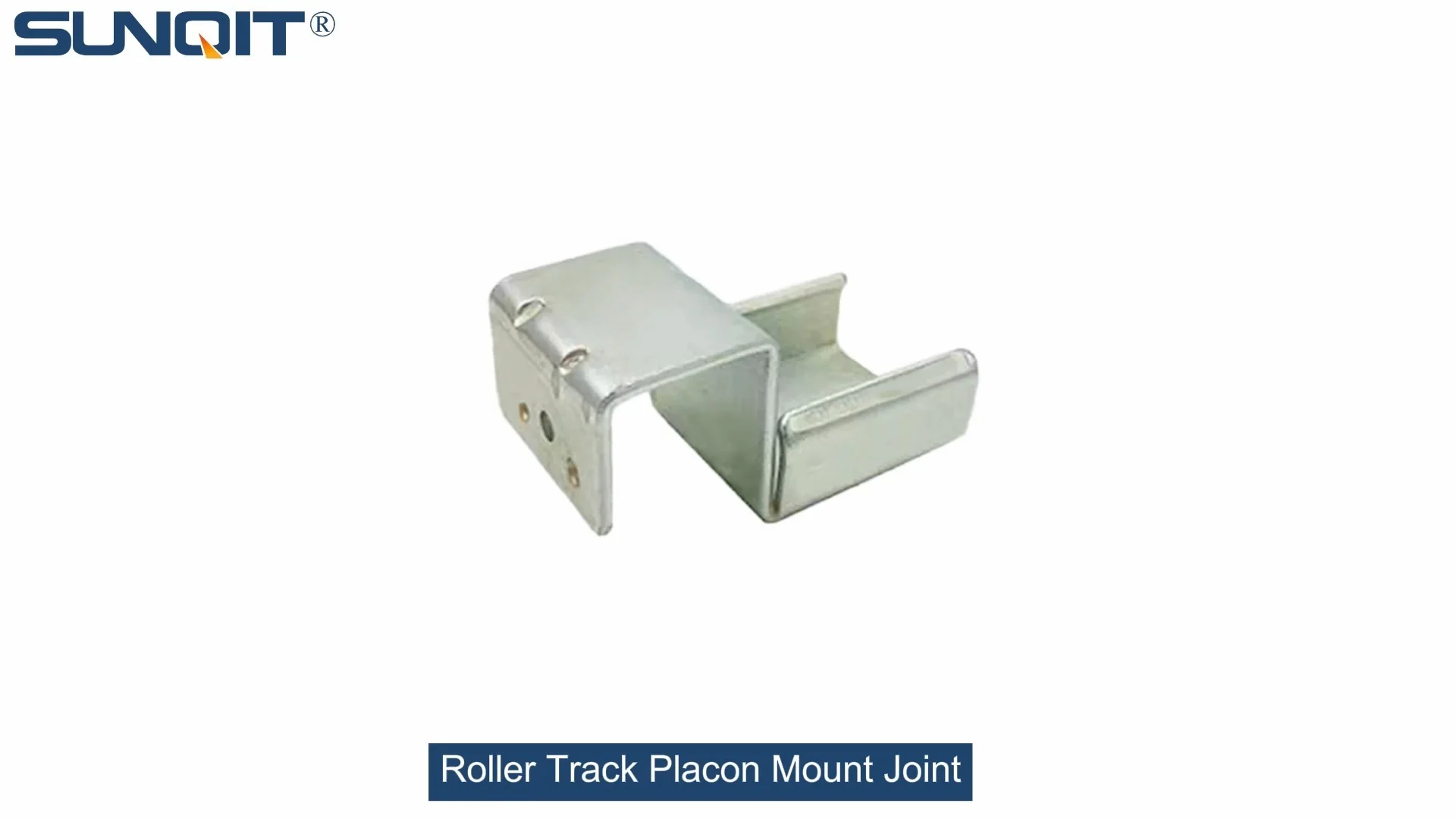
Roller Track Placon Mount Joint
Roller track placon mount work as a connector for roller track and pipe or aluminum profile in rack syetem, it is a necessary parts in rack system which widely used in industrial plant and logistic,warehouse storage.
The Tight Squeeze: Why Consumer Electronics Warehouses Need Smart Space Solutions
Walk into any consumer electronics warehouse, and you'll quickly notice the same challenge: space . Not just any space—space that's constantly being pulled in a dozen directions. There are tiny components like microchips and connectors, bulky items like display screens and batteries, and everything in between. Add in the pressure to meet tight production deadlines, adapt to frequent product launches, and keep inventory turning over fast, and it's no wonder warehouse managers often feel like they're solving a never-ending puzzle.
Consumer electronics isn't like other industries. Products evolve overnight—last year's smartphone model is obsolete by the next launch, and components change with every upgrade. Warehouses can't afford to be static. A shelf that works for a 5-inch phone part might be useless for a new 6.7-inch model. And with e-commerce booming, the demand for faster order fulfillment means (materials) can't sit idle; they need to flow—smoothly, quickly, and without taking up more room than necessary.
This is where roller track placon mount joints step in. These unassuming but powerful components are quietly revolutionizing how consumer electronics warehouses use space. They're not just parts of a conveyor system—they're the connective tissue that turns a rigid, cramped warehouse into a flexible, efficient hub. Let's dive into how they work, why they matter, and how they're becoming a game-changer for businesses in 3C assembly, (warehousing logistics), and beyond.
What Are Roller Track Placon Mount Joints, Anyway?
If you're not deep into material handling equipment, the term "roller track placon mount joints" might sound like technical jargon. Let's break it down simply: These are specialized connectors designed to link roller tracks—those grooved rails that let bins, trays, and components glide from one workstation to another—in a way that's both strong and flexible. Think of them as the "knees" of your warehouse's material flow system: they hold things together but also let them move and adjust when needed.
What makes them unique? Unlike rigid, welded connections or basic plastic clips, roller track placon mount joints are engineered for adaptability . Most are made from high-grade aluminum (a material we'll circle back to) and feature precision-machined slots, bolts, and swivel points. This means they can attach roller tracks to aluminum profiles, workbenches, or flow racks at almost any angle—horizontal, vertical, or even diagonal. And when your warehouse layout needs to change? You don't need to tear everything down. Just loosen a few bolts, reposition the joint, and you're ready for the next product line.
Key Design Features of Roller Track Placon Mount Joints:
- Aluminum Construction: Lightweight but strong, resistant to corrosion (critical for electronics that hate moisture), and easy to handle during installations or reconfigurations.
- Multi-Angle Connectivity: From 90° right angles for straight tracks to 45° bends for corner transitions, these joints eliminate the need for custom-cut rails.
- Compatibility: Designed to work with standard roller tracks (like 40mm steel roller tracks or 38mm aluminum roller tracks) and aluminum profiles (think 4040 or 2020 series), making them easy to integrate into existing systems.
- Load-Bearing Strength: Don't let the lightweight aluminum fool you—these joints can handle the weight of loaded trays, even with heavy components like lithium-ion batteries.

Space Optimization in Action: How Roller Track Placon Mount Joints Transform Warehouses
Space optimization isn't just about cramming more stuff into a smaller area. It's about making every square foot work harder—reducing wasted space, improving workflow, and letting your warehouse adapt as needs change. Roller track placon mount joints excel here, and we'll break down exactly how.
1. Vertical Space: Stop Wasting the Air Above Your Head
Most warehouses focus on horizontal space—how many shelves fit along the floor, how wide the aisles are. But the vertical space? It's often an afterthought. Roller track placon mount joints change that. Because they're lightweight and easy to mount, they let you build multi-level roller track systems that use the height of your warehouse without sacrificing stability.
For example, in a 3C assembly line, you might have a lower track for heavy battery packs (using 85 steel roller tracks with placon mount joints for extra support) and an upper track for lightweight circuit boards (using 38 aluminum roller tracks with mini placon mount joints). The joints connect these tracks to vertical aluminum profiles, turning empty air into usable space. Suddenly, you're not just using the floor—you're using the walls and even overhead areas, doubling or tripling your storage capacity without expanding the warehouse footprint.
2. Dynamic Layouts: From "Set It and Forget It" to "Change on Demand"
Consumer electronics warehouses can't afford to be stuck in one layout. A new product launch might require shifting an entire production line, or a seasonal spike (like back-to-school or holiday seasons) could mean reconfiguring storage for fast-moving items. Traditional fixed shelving or welded conveyor systems make this a nightmare—you're looking at days of downtime, expensive contractors, and wasted materials.
Roller track placon mount joints turn reconfiguration into a DIY project . Since they're bolted (not welded) and designed for quick disassembly, a small team can adjust a roller track system in hours, not days. Need to add a new branch to your flow rack for a new component? Swap out a straight joint for a 3-way placon mount joint. Want to shorten a track to make room for a new workstation? Remove a section, reattach the joints, and you're done. This flexibility means your warehouse can evolve with your products, not against them.
3. Eliminating "Dead Zones": Making Every Inch Count
Dead zones are the bane of any warehouse—those awkward corners, narrow gaps between shelves, or unused spaces around machinery where nothing fits. Roller track placon mount joints are like the "space fillers" of the material handling world, thanks to their ability to connect tracks at odd angles and fit into tight spots.
Take a typical warehouse corner, where two walls meet at 90°. Traditional conveyor systems might require a wide, clunky turn, eating up valuable floor space. With a 90° roller track placon mount joint, you can create a sharp, smooth turn that hugs the corner, freeing up several feet of aisle space. Or consider the area under a workbench—instead of letting it collect dust, use a low-profile placon mount joint to install a mini roller track for tool trays, turning wasted space into a functional storage area.
| Metric | Traditional Fixed Warehousing | With Roller Track Placon Mount Joints |
|---|---|---|
| Space Utilization | ~60-70% (wasted vertical/dead zones) | ~85-90% (vertical+horizontal optimization) |
| Reconfiguration Time | 3-5 days (requires contractors/welding) | 2-4 hours (in-house team with basic tools) |
| Material Turnover Speed | Slower (aisle congestion, static paths) | Faster (smooth, direct track paths) |
| Adaptability to Product Changes | Low (fixed shelves/tracks can't adjust) | High (easily reposition tracks/joints for new components) |
| Maintenance Costs | Higher (welded parts rust, hard to replace) | Lower (aluminum resists rust, joints replaceable individually) |
4. Streamlined Workflows: When Space and Speed Go Hand in Hand
Space optimization isn't just about storage—it's about making it easier for workers to do their jobs. When roller tracks are connected with placon mount joints, materials flow directly from storage to workstations, eliminating the need for workers to walk back and forth with carts. For example, in a 3C assembly line, a roller track system with placon mount joints can carry circuit boards from the flow rack (stocked with components) right to the ESD workbench, where an assembler is waiting. No more wasted steps, no more congestion in aisles, and no more delays caused by misplaced materials.
This streamlined flow also reduces the risk of damage to sensitive electronics. When components glide along a smooth roller track (secured by sturdy placon mount joints), there's less jostling than if they're carried in bins. For fragile items like OLED screens or microchips, that's a game-changer for reducing scrap and rework costs.

Beyond Space: Why Aluminum Matters for Consumer Electronics
We've mentioned aluminum a few times, and for good reason. Roller track placon mount joints are almost always made from aluminum, and it's not just a coincidence. Consumer electronics warehouses have unique needs—cleanliness, static control, and durability—and aluminum checks all the boxes.
First, static control . Electronics hate static electricity; a single static discharge can fry a microchip. Aluminum is conductive, which means it can be grounded to prevent static buildup. Many roller track placon mount joints are even designed to work with ESD (Electrostatic Discharge) workbenches and ESD roller tracks (like 40 steel roller tracks with black ESD wheels), creating a fully grounded system that protects sensitive components.
Second, cleanliness . Unlike steel, aluminum doesn't rust or flake. In warehouses where dust and debris can ruin delicate parts, this is critical. A quick wipe with a cloth is all it takes to keep aluminum joints clean, reducing the risk of contamination in products like medical devices or high-end audio equipment.
Third, weight vs. strength . Aluminum is about 30% lighter than steel, which makes installing and reconfiguring roller track systems easier. Workers don't need heavy machinery to move sections of track connected by aluminum joints, and the reduced weight puts less strain on ceiling mounts or vertical supports—another win for space optimization, as lighter systems can be installed in more areas of the warehouse.

Real-World Impact: How a 3C Manufacturer Cut Costs with Roller Track Placon Mount Joints
Let's put this all into context with a real example. A mid-sized 3C manufacturer in Shenzhen was struggling with a 2,000 sq.m. warehouse that felt perpetually cramped. They produced smartphone charging accessories, and with 12 new product lines launching annually, their fixed shelving and basic conveyor system couldn't keep up. Material handlers were spending 25% of their time just moving parts between shelves and workstations, and space constraints meant they often had to store slow-moving inventory off-site, adding to logistics costs.
After switching to a system built around roller track placon mount joints, here's what changed:
- Space Utilization: By adding vertical roller tracks (using 40 steel roller track placon mount drop high joints to connect upper and lower levels), they increased storage capacity by 40% without expanding the warehouse.
- Workflow Time: Material movement time dropped by 35%—components now flow directly from flow racks (equipped with 38 aluminum roller tracks and placon mount center support brackets) to ESD workstations, cutting down on worker steps.
- Reconfiguration Speed: When launching a new wireless charger line, they reconfigured 20% of their roller track system in a single day (vs. the 3 days it used to take with fixed shelving).
- Cost Savings: Off-site storage costs eliminated, scrap rates down by 18% (thanks to smoother material flow), and labor costs reduced by 12%—all within 6 months of installation.
This isn't an isolated case. From medical device warehouses to automotive electronics facilities, roller track placon mount joints are proving that smart space solutions don't just save space—they save time, money, and headaches.
The Lean Advantage: Aligning with "Reusable, Sustainable Improvement"
At the heart of many modern manufacturing and warehousing strategies is the lean (lean philosophy) —the idea of eliminating waste, improving efficiency, and creating systems that can evolve over time. Roller track placon mount joints embody this philosophy perfectly.
First, they're reusable . Unlike welded steel connections or custom plastic parts that get thrown away when you reconfigure, aluminum joints can be unbolted, moved, and reused in new layouts. A placon mount joint from a 2021 smartphone line can just as easily be part of a 2024 tablet production system. This reduces waste and cuts down on the need to buy new components every time your warehouse changes.
Second, they support sustainable improvement . Lean isn't a one-time project; it's a continuous process of tweaking and optimizing. With roller track placon mount joints, you can test new layouts quickly, gather data on what works, and adjust again—all without major disruptions. Maybe you move a track 6 inches to the left and see a 10% faster material flow, or add a 135° joint to create a shortcut between two workstations. These small, sustainable improvements add up to big gains over time.
For businesses focused on lean solutions—whether in 3C assembly, (medical industry), or (warehousing logistics)—roller track placon mount joints aren't just tools; they're partners in the journey toward efficiency.
Choosing the Right Roller Track Placon Mount Joints for Your Warehouse
Not all roller track placon mount joints are created equal. To get the most out of your space optimization efforts, you'll need to consider a few key factors:
- Load Requirements: How heavy are your materials? For small components, mini aluminum joints might suffice; for heavy batteries or machinery parts, opt for heavy-duty steel-reinforced aluminum joints.
- Track Type: Are you using steel roller tracks, aluminum roller tracks, or a mix? Ensure the joints are compatible with your track's width and mounting style (e.g., placon mount for aluminum profiles vs. flat mount for shelves).
- Environmental Needs: Do you need ESD protection? Look for joints designed to work with ESD tracks and workbenches. In humid areas, check for corrosion-resistant coatings (though aluminum is already rust-resistant).
- Future Flexibility: Plan for growth. Choose joints that can be easily combined (e.g., 3-way joints that let you add branches later) and that work with standard aluminum profiles (so you can expand your system with off-the-shelf parts).
And don't forget to partner with a supplier who understands both the technical side and your industry's unique challenges. A good supplier won't just sell you joints—they'll help you design a system that fits your space, your workflow, and your goals for growth.
Final Thoughts: Space Optimization as a Competitive Edge
In consumer electronics, where margins are tight and competition is fierce, every advantage counts. Roller track placon mount joints might seem like small components, but they're part of a bigger picture: turning your warehouse from a cost center into a strategic asset. By optimizing space, streamlining workflows, and enabling continuous improvement, they help you get products to market faster, reduce costs, and adapt to change with confidence.
So the next time you walk through your warehouse and feel that familiar squeeze of space constraints, remember: the solution might be simpler than you think. It could be in the joints that connect your tracks, the aluminum that holds it all together, and the flexibility to make every square foot work harder—for today's products and tomorrow's innovations.