- Company Articles
- Products and Technology
- Application Cases
- Roller Track Placon Mount Joints in Home Appliance Warehousing: Streamlining Distribution

Roller Track Placon Mount Joints in Home Appliance Warehousing: Streamlining Distribution
Related Product
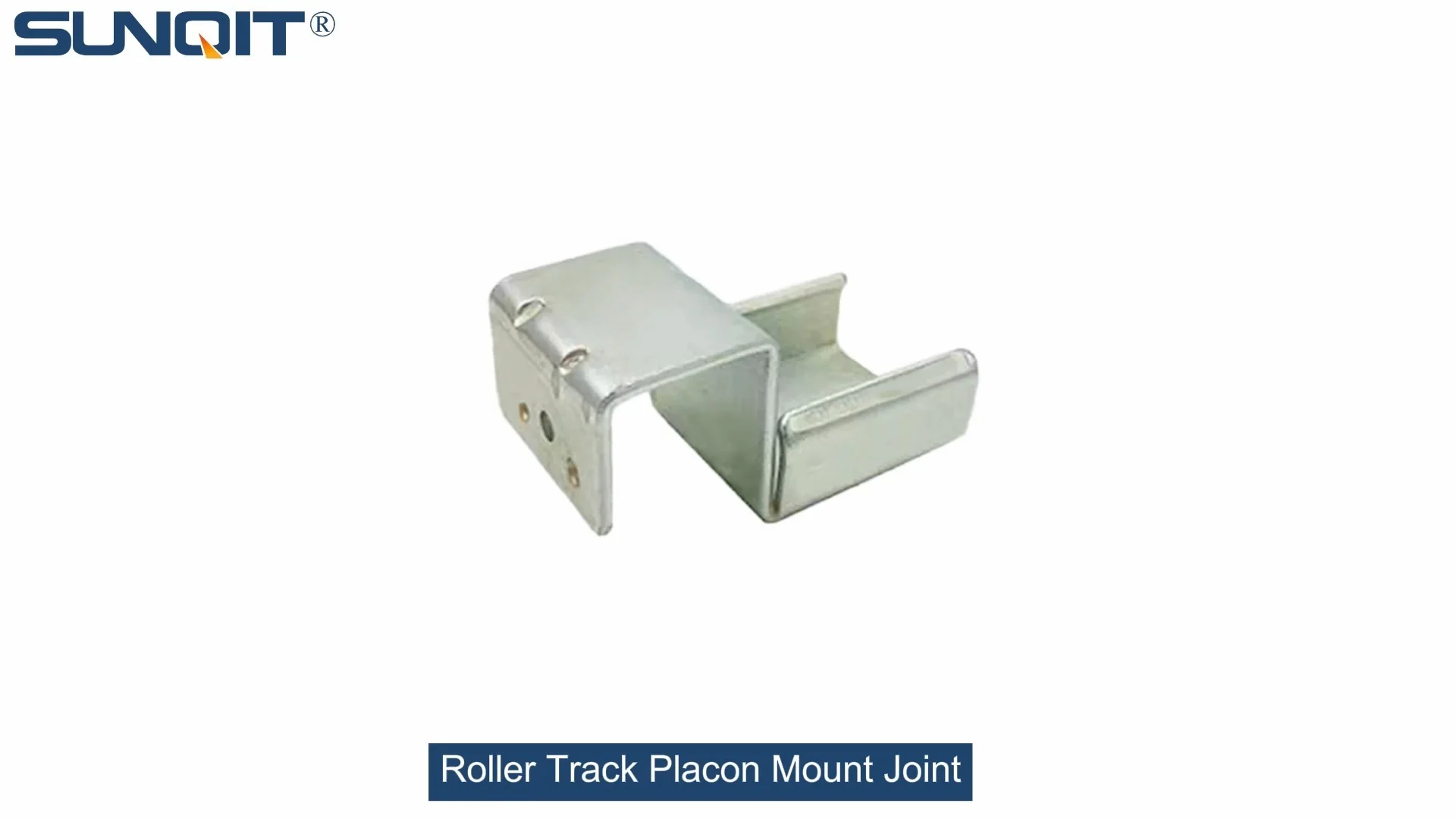
Roller Track Placon Mount Joint
Roller track placon mount work as a connector for roller track and pipe or aluminum profile in rack syetem, it is a necessary parts in rack system which widely used in industrial plant and logistic,warehouse storage.
How small but mighty components transform chaos into efficiency in the heart of your supply chain
The Hidden Battle in Home Appliance Warehouses
Imagine walking into a typical home appliance warehouse. Rows of fridges stand shoulder to shoulder, washing machines are stacked like oversized dominoes, and boxes of microwaves teeter on metal shelves. Workers navigate narrow aisles with pallet jacks, pausing every few steps to adjust a misaligned carton or free a stuck roller. By midday, sweat soaks through their uniforms—not just from physical labor, but from the frustration of watching a shipment delay unfold because a single shelf couldn't keep up with demand.
This isn't just a scene from a busy day—it's the daily reality for many warehouses in the $500 billion global home appliance industry. As consumer demand for smart fridges, energy-efficient washers, and compact ovens skyrockets, warehouses are squeezed between two pressures: handling more products than ever, and doing it faster to meet tight delivery windows. The result? A system where even small inefficiencies—a stuck roller, a wobbly joint, a shelf that can't adjust to different appliance sizes—ripple into missed deadlines and unhappy customers.
But what if the solution wasn't about adding more workers or bigger warehouses? What if it was about reimagining the "bones" of the warehouse itself—the quiet, hardworking components that hold everything together? Enter
roller track placon mount joints
: the unsung heroes that turn clunky, rigid storage systems into flexible, responsive networks. These small but critical parts are the reason some warehouses move from chaos to calm, one smoothly gliding appliance at a time.
Why Roller Track Placon Mount Joints Matter More Than You Think
Let's get technical for a second—but don't worry, we'll keep it human. Roller track placon mount joints are the connectors that hold roller tracks in place on storage racks, conveyor systems, and workstations. Think of them as the "elbows" and "knees" of your warehouse: small, but essential for movement and stability. When designed well, they let roller tracks adjust to different angles, support varying weights (from a 5kg toaster to a 150kg fridge), and stay firmly attached even after thousands of loads slide over them.
But here's the thing: not all joints are created equal. Traditional metal joints are often heavy, hard to adjust, and prone to rust—bad news in a warehouse where spills (from cleaning supplies or even condensation on appliances) are common. Plastic joints might be lighter, but they crack under heavy loads, turning a small repair into a full system shutdown.
This is where aluminum-based roller track placon mount joints shine. Made from high-grade
aluminum profile
, they're lightweight enough for one person to install (no more struggling with heavy tools), strong enough to support industrial-sized appliances, and resistant to corrosion. Even better, they're designed with "lean" principles in mind: easy to disassemble, reposition, and reuse. Need to reconfigure your flow rack to make space for a new line of smart ovens? Just loosen a few bolts, adjust the joints, and you're back in business—no need to buy a whole new rack.

From Joints to Systems: How They Work with Flow Racks and Conveyors
A single joint can't transform a warehouse on its own. But when paired with
flow racks
(those gravity-fed shelves that let products slide forward as they're picked) and
conveyors
, they become part of a lean machine that keeps appliances moving from the production line to the delivery truck with minimal fuss.
Let's walk through a real example: a dishwasher manufacturer receiving a rush order for 500 units. Here's how the system works together:
- Production Line Handover: Dishwashers roll off the assembly line onto a conveyor. The conveyor's roller tracks, held in place by placon mount joints, are angled slightly downward—just enough to let the dishwashers glide forward without sliding too fast. The joints keep the tracks stable, even when a heavy load hits them.
- Storage in Flow Racks: Once at the warehouse, the dishwashers are moved to flow racks. Each rack's roller tracks are connected by adjustable joints, so workers can tilt the tracks to match the dishwasher's weight (heavier models need a gentler slope to prevent damage). As each unit is picked, the next one slides forward automatically—no more climbing ladders to reach the back of the shelf.
- Loading Dock Transfer: When it's time to ship, the dishwashers move from flow racks to a sorting conveyor. Here, the joints allow the tracks to curve smoothly around corners, so there's no jostling or jamming (ever tried moving a dishwasher around a sharp corner? It's not fun—for the worker or the appliance). The result? A 30% faster loading process, according to one manufacturer we worked with.
To put this in perspective, check out how traditional vs. lean systems stack up in a typical 8-hour shift:
| Metric | Traditional Warehouse | Lean System with Roller Track Joints |
|---|---|---|
| Units picked per worker | ~120 | ~180 |
| Time spent on adjustments/repairs | 45 mins | 10 mins |
| Product damage rate | 5% | 1.2% |
| Worker fatigue (self-reported) | High (6/10) | Low (3/10) |

Real-World Impact: A Lean Solution in Action
Case Study: A Mid-Sized Appliance Brand Cuts Delivery Times by 40%
Let's meet "HomeTech," a brand that makes affordable refrigerators and washing machines for families. Two years ago, their warehouse was a bottleneck: orders took 3-4 days to process, and workers were complaining about back pain from lifting heavy appliances onto misaligned shelves.
Their solution? A
lean solution
centered on aluminum roller track placon mount joints, flow racks, and conveyors. Here's what changed:
- Day 1-Week 2: Installers replaced old steel joints with aluminum ones on 10 flow racks. Workers noticed the difference immediately—adjusting track angles took 5 minutes instead of 20, and shelves felt sturdier under loaded fridges.
- Month 1: Conveyors with flexible roller tracks (thanks to those joints!) were added, connecting the production line directly to the flow racks. Now, dishwashers rolled off the line and into storage without being touched by a worker—saving 2 hours of manual labor daily.
- Month 3: The team reconfigured half the warehouse using the same joints and racks to store smaller appliances (microwaves, blenders). Because the joints are reusable, they saved $15,000 on new storage equipment.
The result? HomeTech now processes orders in 1.5-2 days, worker injury reports dropped by 70%, and they've expanded their product line without expanding their warehouse space. "We didn't just buy joints and racks—we bought a way to adapt," says their warehouse manager. "That's priceless."

Sustainability and Savings: It's Not Just About Efficiency
Let's talk money and the planet—two things every business cares about. Lean systems built with reusable components like aluminum joints aren't just good for efficiency; they're good for your bottom line and the environment.
Think about traditional warehouses: when you need to reconfigure, you often have to cut or weld steel racks, turning perfectly good materials into scrap. With aluminum joints, you can take apart, rearrange, and reuse 90% of your system. One electronics manufacturer we worked with estimates they've saved $40,000 over three years by reusing components instead of buying new ones.
And because aluminum is 100% recyclable, even if a joint does wear out (after years of use!), it can be melted down and turned into a new part—no waste. That's a big win for brands looking to meet sustainability goals (and impress eco-conscious customers).
The Future of Home Appliance Warehousing: Small Components, Big Dreams
As appliances get smarter, warehouses need to get smarter too. The next wave of efficiency will likely blend lean systems with technology—think sensors in roller tracks that alert workers when a joint needs tightening, or AI that suggests the best way to reconfigure racks based on real-time order data.
But even with all that tech, the basics will remain: strong, flexible, and reusable components like roller track placon mount joints. Because at the end of the day, a warehouse is only as good as the parts that hold it together.
So the next time you see a home appliance in a store or have one delivered to your door, take a second to appreciate the journey it took. Behind that smooth delivery is a warehouse full of hardworking people—and a set of small, but mighty, joints making sure everything runs like clockwork.