- Company Articles
- Products and Technology
- Product knowledge
- Rubber vs. Metal Base Adjustable Leveling Feet: Which Grip Better on Concrete Floors?

Rubber vs. Metal Base Adjustable Leveling Feet: Which Grip Better on Concrete Floors?
Related Product
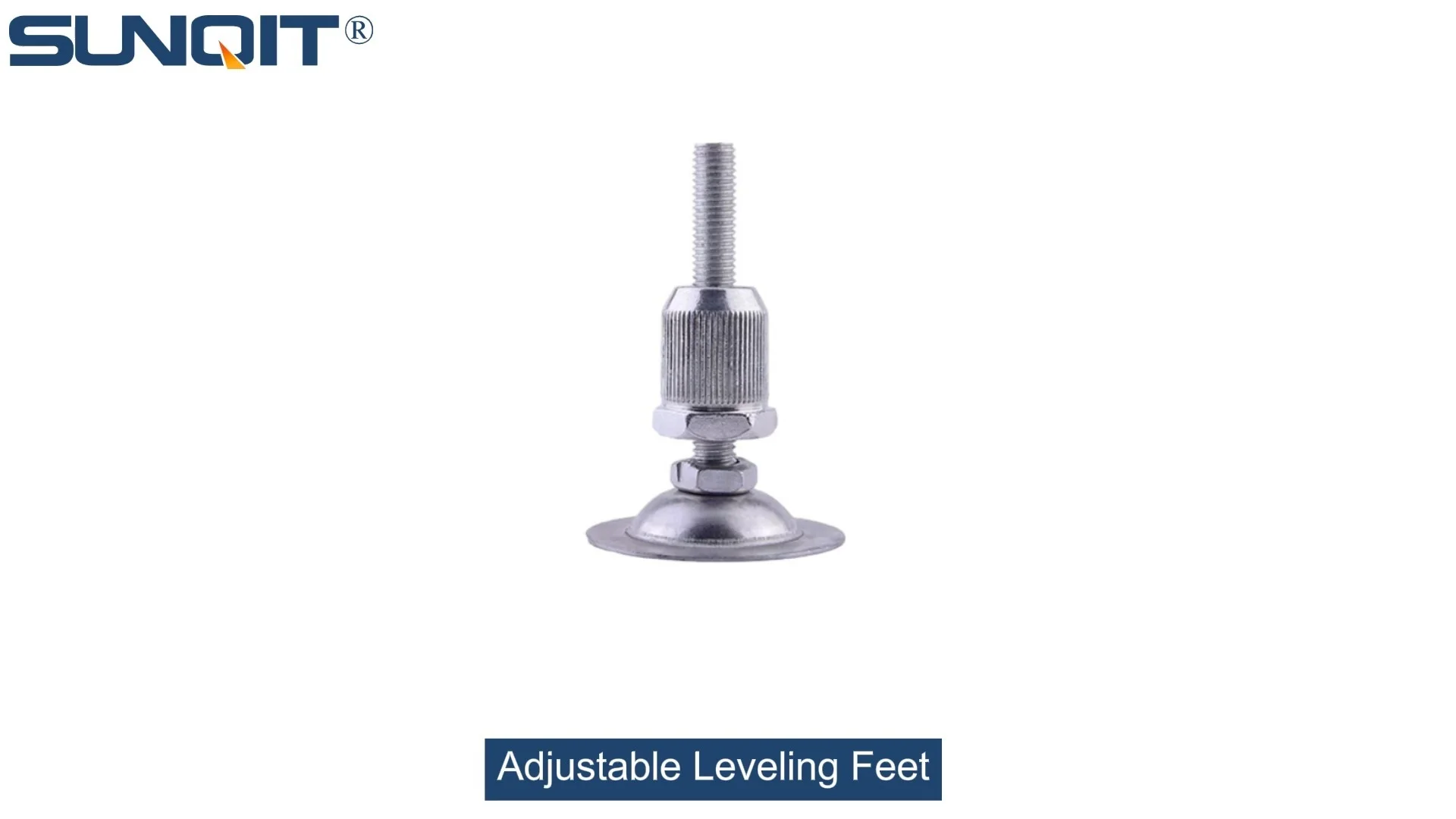
Adjustable Leveling Feet
Adjustable leveling feet are designed to keep machines level when placed on uneven or sloped ground. Otherwise known as adjustable equipment feet, they are available to order in a wide variety of size and load capacity combinations.
Maria had been a production supervisor at PrecisionTech Electronics for five years, but this week, she'd hit a frustrating wall. The new assembly line workbenches, meant to streamline smartphone component installation, kept wobbling. Not violently—just enough that when operators used precision tools, their hands would shake slightly, leading to tiny misalignments in the circuit boards. "It's like trying to write a letter on a boat," one technician grumbled. The culprit? The concrete floor, which, despite being polished, had subtle unevenness from years of heavy equipment traffic. And the adjustable leveling feet on the workbenches? They weren't gripping well enough to stabilize the surfaces.
If you've ever managed a warehouse, run a factory, or even set up a home workshop, you know the feeling. Concrete floors are durable, affordable, and everywhere—but they're rarely perfect. Cracks, dips, and even just the natural texture of cured concrete can turn sturdy equipment into wobbly nuisances. That's where adjustable leveling feet come in. These unassuming components, often overlooked, are the unsung heroes of stable workspaces. But not all leveling feet are created equal. The base material—rubber or metal—can make all the difference in how well they grip concrete. Let's dive into the showdown: rubber vs. metal base adjustable leveling feet. Which one truly keeps your equipment steady when it matters most?
What Are Adjustable Leveling Feet, Anyway?
Before we pick sides, let's get clear on what adjustable leveling feet are and why they matter. At their core, these are simple devices: a threaded stem (usually metal) topped with a rotating base. You screw the stem into the bottom of a piece of equipment—say, a workbench, a turnover trolley, or a material rack—and twist the base to raise or lower that corner, compensating for uneven floors. The goal? To keep the equipment level, stable, and secure.
But "stable" isn't just about balance. It's about grip. If the base of the leveling foot slides on the concrete, all that careful adjustment goes out the window. A workbench that shifts mid-assembly, a turnover trolley that drifts when loaded, or a material rack that creaks and sways—these aren't just annoyances. They're safety hazards. Loose equipment can lead to spills, damaged products, or even operator injuries. And in precision settings, like Maria's electronics line, instability can cost thousands in defective parts.
So, the base of the leveling foot—the part that actually touches the floor—is critical. Rubber and metal are the two most common materials here, each with its own strengths and weaknesses. Let's break them down.
Rubber Bases: The Flexible Grip Masters
How Rubber Gets a Grip
Rubber leveling feet are like the yoga instructors of the industrial world—they bend, conform, and adapt. Most rubber bases are made from either natural rubber or synthetic blends like neoprene or nitrile. Natural rubber is prized for its elasticity; it can stretch and compress without losing shape, which helps it mold to tiny imperfections in concrete. Synthetic rubbers, on the other hand, are often engineered for specific traits: neoprene resists oil and heat, while nitrile stands up to chemicals. But regardless of the type, rubber's secret weapon is friction—specifically, its ability to create high friction against concrete.
Concrete, even when polished, has a rough surface at the microscopic level. Think of it like a tiny mountain range of sand and gravel particles. Rubber bases, being soft and flexible, don't just sit on top of these peaks and valleys—they sink into them, like a tire tread gripping a dirt road. The more the rubber conforms to the concrete's texture, the more contact area there is between the two surfaces. And more contact means more friction, which equals better grip.
Take anti-slip adjustable leveling feet, for example. These are rubber-based feet designed with extra grip in mind. Some have textured bases (small bumps or ridges) to increase surface area. Others use softer rubber compounds that "stick" more to the floor. In Maria's case, when her team swapped out the original feet for anti-slip rubber ones, the difference was night and day. "The workbenches felt glued down," she said. "No more shaking—just solid, steady surfaces."
The Perks of Rubber: More Than Just Grip
Grip is king, but rubber bases bring other benefits to the table. For one, they're quiet. If you've ever moved a metal-based workbench across concrete, you know the (shrill) sound of metal scraping. Rubber dampens that noise, which is a big deal in busy factories where constant clanging can raise stress levels. "Our shop floor used to sound like a construction site," Maria noted. "With the rubber feet, it's noticeably calmer. People aren't shouting over the noise anymore."
Rubber also acts as a shock absorber. Equipment like turnover trolleys—used to haul heavy parts across warehouses—take a beating when rolled over concrete. Rubber feet cushion the impact, reducing vibration that can loosen bolts or damage sensitive components. And unlike metal, rubber won't scratch or chip the concrete itself. That's a big plus if you're renting space or want to keep floors looking presentable for audits.
The Downsides: When Rubber Isn't Right
Rubber isn't perfect, though. For starters, it can wear down over time. In high-traffic areas where equipment is moved frequently (think: a busy warehouse with turnover trolleys being pushed back and forth), the rubber base can develop flat spots or even tear. Chemicals are another enemy. Oil, solvents, or harsh cleaning agents can degrade rubber, making it brittle or sticky. And in extreme temperatures—like a sweltering summer factory or a freezing cold storage unit—rubber can harden (losing flexibility) or soften (losing grip).
Load capacity is another consideration. While rubber feet can handle heavy weights (some industrial-grade models support 1,000+ pounds per foot), they have limits. Under extreme pressure, the rubber can compress too much, reducing stability. If you're dealing with ultra-heavy equipment—say, a metalworking press weighing several tons—rubber might not be the best choice.

Metal Bases: The Tough Guys of Stability
How Metal Grips (or Doesn't) on Concrete
Metal bases are the opposite of rubber: rigid, unyielding, and built for brute strength. Most are made from steel, stainless steel, or aluminum—materials chosen for their durability and high load capacity. Unlike rubber, metal doesn't conform to the floor. Instead, it relies on two things to grip: texture and weight.
Many metal bases have serrated or knurled surfaces—tiny, sharp edges that dig into the concrete like mini anchors. On rough, unpolished concrete, these serrations can bite into the surface, creating friction. On smooth concrete, though, they're less effective. Without texture to catch on, metal bases can slide, especially if the floor is damp or dusty. "We tried metal feet first on the workbenches," Maria recalled. "On the polished areas near the assembly line, they'd slip a little every time someone leaned on the bench. It was like standing on ice with dress shoes."
Weight helps, too. Heavier equipment presses the metal base more firmly into the concrete, increasing friction. But here's the catch: if the floor is uneven, that weight can work against you. A metal base that's only touching the floor at a single point (because of a dip) has minimal contact area, so even heavy equipment can wobble. Rubber, with its flexibility, would conform to that dip and spread the weight over a larger area.
The Perks of Metal: Built to Last
Where metal shines is in durability. Steel or stainless steel bases laugh off wear and tear. They don't degrade in extreme temperatures, resist most chemicals, and can handle absurdly heavy loads. A stainless steel leveling foot, for example, might support 5,000 pounds or more—far beyond what rubber can manage. That's why you'll find metal bases on industrial ovens, heavy machinery, and outdoor equipment that's exposed to the elements.
Metal is also low-maintenance. Rubber feet need occasional cleaning to remove dirt that can reduce grip; metal feet can be hosed off or wiped down with a rag, and they'll keep performing. In environments with lots of debris—like a woodworking shop with sawdust or a foundry with metal shavings—metal bases won't get clogged or torn. They're also a good choice if you need to adjust leveling feet frequently; the rigid base won't wear down from repeated twisting.
The Downsides: More Than Just Slipping
The biggest issue with metal bases is, of course, grip—especially on smooth concrete. Without serrations or texture, they're prone to sliding. Even with serrations, they can scratch the floor, which is a problem if you're working with finished concrete or in a space where aesthetics matter. And unlike rubber, metal doesn't absorb shock. Every bump or jolt from moving equipment is transferred directly to the floor and the equipment itself, which can loosen parts over time.
Noise is another drawback. Metal on concrete is loud, and that noise adds up. In a small workshop, it might be manageable, but in a large factory with dozens of metal-based machines, it can reach ear-splitting levels. OSHA guidelines recommend keeping workplace noise below 85 decibels; a metal trolley rolling on concrete can hit 90+ decibels easily.

Rubber vs. Metal: The Concrete Showdown (A Comparison Table)
| Factor | Rubber Bases | Metal Bases |
|---|---|---|
| Grip on Smooth Concrete | Excellent (flexible, conforms to texture; friction coefficient ~0.6-0.8) | Fair to Good (depends on texture; friction coefficient ~0.3-0.5 without serrations) |
| Grip on Rough/Uneven Concrete | Excellent (conforms to dips/bumps) | Good (serrations dig in, but rigid base may wobble on dips) |
| Durability | Moderate (wears over time; vulnerable to chemicals/temp extremes) | Excellent (resists wear, chemicals, and extreme temps) |
| Load Capacity | High (up to ~1,500 lbs per foot for industrial models) | Very High (up to ~5,000+ lbs per foot for steel/stainless steel) |
| Noise Level | Low (dampens sound) | High (metal-on-concrete scraping) |
| Floor Protection | Excellent (won't scratch or chip concrete) | Poor (can scratch; serrations may damage floors) |
| Best For | Precision workbenches, turnover trolleys, noise-sensitive areas, smooth/finished concrete | Heavy machinery, outdoor equipment, chemical/extreme temp environments, rough concrete |

Real-World Test: Workbenches and Turnover Trolleys
To see how these differences play out in practice, let's look at two common pieces of equipment: workbenches and turnover trolleys—both staples in factories and warehouses, and both heavily reliant on leveling feet.
Workbenches: Precision Demands Rubber
Workbenches are all about stability. Whether you're assembling circuit boards, packing delicate electronics, or doing detailed woodworking, even a tiny wobble can ruin your work. That's why many industrial workbenches now come standard with anti-slip adjustable leveling feet. Take the "Workbench E (single deck-without caster)" model, a popular choice in electronics factories. Its rubber feet are designed to grip polished concrete, keeping the surface steady for precision tasks. "We switched to these workbenches last year," says Raj, a quality control manager at a semiconductor plant. "Before, we had metal feet, and operators were rejecting 5% more parts due to alignment errors. Now? Rejects are down to 1%. The rubber feet made that happen."
Turnover Trolleys: It Depends on the Load
Turnover trolleys—used to transport parts between workstations—straddle the line. Light to medium loads (up to 500 lbs) often do well with rubber feet. They're quieter, protect floors, and grip well when the trolley is stationary. But for heavy loads (1,000+ lbs), metal feet may be necessary. "We have two types of trolleys," Maria explains. "The ones that carry small components? Rubber feet. They're easy to push, and they don't slide when we stop. The ones that carry steel frames? Metal feet. They can handle the weight, and since they're only moved a few times a day, the noise isn't a big issue."
Choosing the Right Base: 5 Questions to Ask
So, how do you decide between rubber and metal? It boils down to your specific needs. Ask yourself these questions:
- What's the load capacity? If you're supporting more than 1,500 lbs per foot, metal is likely better.
- How smooth is your concrete? Polished, smooth floors favor rubber; rough, unpolished floors can work with metal (if serrated).
- What's the environment like? Extreme temps, chemicals, or heavy debris? Go metal. Noise-sensitive or precision-focused? Rubber.
- How often is the equipment moved? Frequently moved items (like turnover trolleys) benefit from rubber's quiet, floor-friendly grip. Stationary heavy equipment may prefer metal.
- What's your budget? Rubber feet are often cheaper upfront, but metal may last longer, saving money in the long run.
The Verdict: It's a Tie—But Here's Who Wins When
Rubber and metal base adjustable leveling feet both have their place. Rubber is the champion of grip on smooth concrete, precision, and everyday use. It's the go-to for workbenches, light-to-medium trolleys, and any space where stability, noise, or floor protection matters. Metal, on the other hand, is the heavyweight champion—built for durability, extreme loads, and harsh environments. It's ideal for machinery that never moves, outdoor equipment, or spaces where chemicals and temperature swings are common.
For Maria and her team at PrecisionTech, the answer was rubber. The workbenches are now stable, the noise is down, and production errors have dropped. "I wish we'd switched sooner," she laughs. "Who knew something as small as a leveling foot could make such a big difference?"
So, the next time you're setting up a workspace, don't overlook the feet. Whether you choose rubber or metal, make sure they're the right fit for your concrete floor. After all, a stable foundation isn't just about equipment—it's about the people who use it, day in and day out. And they deserve to work on something steady.