- Company Articles
- Products and Technology
- Product knowledge
- Saddle Pipe Clamp Cost-Effectiveness: Long-Term Savings for Small-Batch Production

Saddle Pipe Clamp Cost-Effectiveness: Long-Term Savings for Small-Batch Production
Related Product
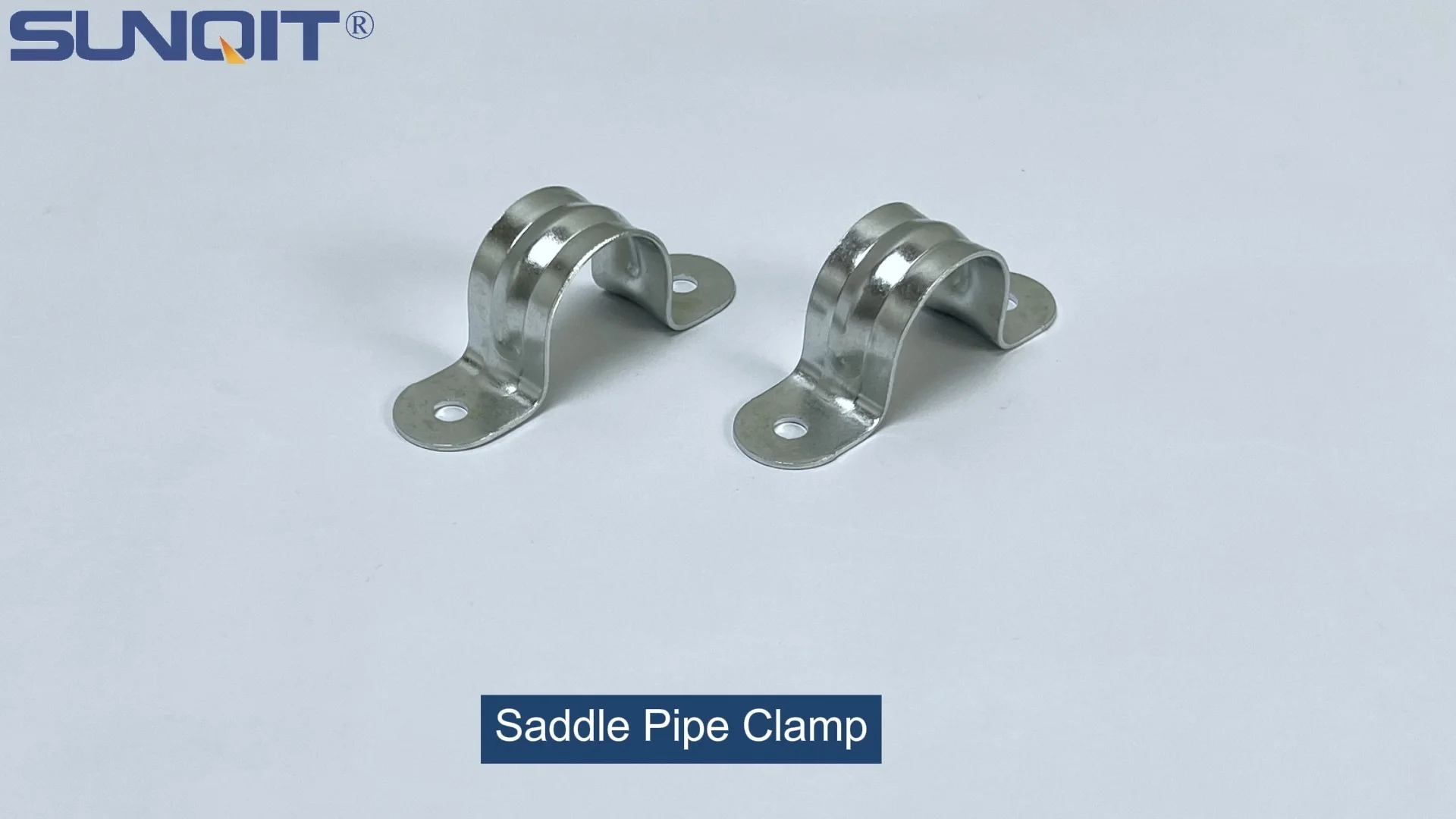
Saddle Pipe Clamp
Saddle pipe clamp, used for board connect with pipe, usually for table top installation.
Small-batch production is often hailed as the heartbeat of innovation—nimble, creative, and able to pivot quickly to meet niche market demands. But let's be real: it's also a constant juggling act. You're balancing tight budgets, ever-changing product lines, and the need to scale up (or down) at a moment's notice. And if you're still relying on rigid, one-size-fits-nothing workbenches or welded steel structures, you're probably leaving money on the table—money that could be invested in growing your business instead of fixing outdated equipment.
Enter the unsung hero of lean manufacturing: the saddle pipe clamp. It might not sound glamorous, but this humble component is quietly revolutionizing how small-batch producers manage costs, flexibility, and long-term sustainability. In this article, we'll dive into why saddle pipe clamps deserve a spot in your production toolkit, how they integrate seamlessly with lean systems and workbenches, and why they're not just a purchase—but an investment that pays dividends for years.
First Things First: What Even Is a Saddle Pipe Clamp?
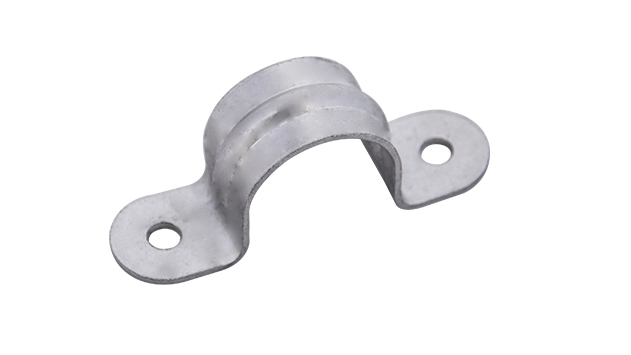
Let's start with the basics. Imagine (oops, scratch that—let's just describe ) a simple, sturdy clamp designed to connect pipes, tubes, or profiles together. Saddle pipe clamps are shaped like a "U" or "saddle" (hence the name), with a mechanism—usually a bolt or screw—that tightens around the pipe, securing it firmly to another component. They're made from durable materials like steel or stainless steel (think stainless steel pipe series for extra longevity) and come in various sizes to fit different pipe diameters, from tiny 0.5-inch tubes to beefier 2-inch ones.
But here's the kicker: unlike welded joints or permanent fasteners, saddle pipe clamps are removable and reusable . Need to reconfigure your workbench? Loosen the clamp, adjust the pipe, and retighten. No welding torches, no power tools, no calling in a contractor. It's like building with giant, industrial Legos—and that flexibility is where the cost savings start to add up.
The Small-Batch Paradox: Why Traditional Setups Fail
Small-batch producers face a unique problem: you need to act like a big manufacturer (efficient, consistent, scalable) but with the budget and space of a startup. Traditional production setups—think fixed workbenches bolted to the floor, custom-welded material racks, or conveyor systems that only work for one product—are terrible at solving this. Here's why:
1. Upfront Costs That Bite Hard
A custom welded workbench might seem like a good idea—until you realize it costs $1,500 and can't be modified. If your product line changes (and in small-batch production, it will ), that workbench becomes a very expensive paperweight. Suddenly, you're shelling out another $1,500 for a new one, and the cycle repeats.
2. Downtime = Lost Revenue
Let's say you run a small electronics workshop making Bluetooth speakers one month and smartwatches the next. With a fixed setup, switching between these lines means taking apart the old workbench, waiting for a welder to build a new one, and losing days (or weeks) of production. For a small business, downtime isn't just inconvenient—it's revenue walking out the door.
3. Storage Nightmares
When you can't reconfigure equipment, you end up hoarding old workbenches, racks, and conveyors "just in case." That extra storage space? It could be used for inventory, new machinery, or expanding your team. Instead, it's filled with obsolete metal that's costing you rent.
Saddle Pipe Clamps: The Cost-Effectiveness Breakdown
Now, let's get to the good stuff: how saddle pipe clamps save you money long-term . It's not just about the price tag on the clamp itself (though they're surprisingly affordable—usually $5 to $20 each, depending on size and material). It's about how they transform your entire production system into a lean, cost-efficient machine.
Initial Investment: Pay Less to Get More
Let's compare apples to apples. A traditional fixed workbench might cost $1,500. A lean system workbench built with lean pipe , saddle pipe clamps, and a basic aluminum top? Maybe $800. Why the difference? Because you're not paying for custom welding or proprietary designs—you're using standardized components that a lean pipe supplier can ship quickly and affordably.
But here's the real win: that $800 workbench isn't a one-trick pony. Need to add a shelf? Grab a few more lean pipes and saddle clamps ($20 total) and bolt them on. Want to make it mobile? Swap out the fixed feet for caster wheels (another $50). In the end, you've got a customized setup for less than the cost of a single fixed workbench.
Durability: Built to Outlast Your Business (Okay, Almost)
Saddle pipe clamps might look simple, but they're built tough. Most are made from galvanized steel or stainless steel (hello, stainless steel pipe series ), which resists rust, corrosion, and the daily wear and tear of a busy workshop. Unlike plastic clamps that crack or welded joints that weaken over time, a good saddle clamp will last for decades. We're talking 10+ years of tightening, loosening, and reconfiguring without breaking a sweat.
Think about it: if you replace a fixed workbench every 3 years (because your needs change), that's $1,500 x 4 = $6,000 over 12 years. A lean pipe workbench with saddle clamps? $800 upfront, plus $200 in replacements (maybe a few worn caster wheels or a bent pipe) over 12 years. Total: $1,000. That's a $5,000 savings—just from durability alone.
Flexibility = Zero Downtime (and Zero Panic Attacks)
Remember that electronics workshop switching between speakers and smartwatches? With saddle pipe clamps, reconfiguring the workbench takes hours , not days. Loosen the clamps holding the material rack, adjust the height to fit smartwatch components, add a new shelf for smaller parts using extra lean pipe, and you're back to production by lunch. No downtime, no lost revenue, no stress-induced coffee runs.
Even better: when you launch a new product line, you don't need to buy new equipment. You can repurpose existing lean pipes, clamps, and workbenches. A material rack for speakers becomes a parts trolley for smartwatches with a few quick adjustments. It's like having a production line that adapts to your business, not the other way around.
Compatibility: Play Nice With Everything
Saddle pipe clamps aren't divas—they work with just about any pipe or profile you throw at them. Lean pipe, aluminum pipe, stainless steel pipe, even wooden dowels (though we don't recommend that for heavy-duty use). This means you can mix and match components from different suppliers, or repurpose old pipes and racks you already have lying around. No need to buy an entire "system" from one brand—just grab the clamps and start building.
For example, if you already have a set of aluminum profiles from an old project, saddle clamps can connect them to new lean pipes, turning scrap into a functional workbench. It's the ultimate in sustainability—and cost savings.

Real-World Savings: A Small Manufacturer's Success Story
Let's put this all into perspective with a hypothetical (but totally realistic) example. Meet Maria, who runs a small workshop making custom wooden furniture—think dining chairs, coffee tables, and the occasional bookshelf. Three years ago, her production setup was a mess: two fixed workbenches (welded steel, $1,200 each), a static material rack ($800), and a rickety cart she'd found at a garage sale ($50).
The problem? Every time a customer ordered a new chair design, Maria had to rearrange her workshop. The fixed workbenches were too tall for assembling chair legs, so she'd prop up planks on sawhorses (unsafe and inefficient). The material rack only held 4x4 lumber, so she stacked smaller boards on the floor, where they got damaged. Worst of all, when she landed a big order for 50 chairs, she couldn't scale up—her setup just wasn't flexible enough.
Then, Maria switched to a lean system built with lean pipe, saddle pipe clamps, and caster wheels. Here's what happened:
- Initial cost: $1,500 (lean pipe, saddle clamps, a customizable workbench, a mobile material rack, and caster wheels).
- First reconfiguration: 2 hours to lower the workbench height for chair legs. Cost: $0 (just her time).
- Scaling for the big order: Added two more workbench stations using extra lean pipe and clamps ($100 in parts). Total setup time: 1 day.
- Three years later: Maria has reconfigured her setup 12 times (new chair designs, tables, even a line of wooden toys). She's never bought a new workbench—just adjusted the existing one. Her material rack now holds everything from 1x1 trim to 6x6 beams, thanks to adjustable shelves secured with saddle clamps.
Total savings over three years? Maria estimates she's saved $4,000+ by avoiding new workbenches, reducing material damage (no more floor-stacked boards), and increasing productivity (no more time wasted on unsafe setups). And she's now taking on bigger orders because her lean system scales with her business.

Traditional vs. Saddle Pipe Clamp Setups: The Numbers Don't Lie
| Aspect | Traditional Fixed Setup | Saddle Pipe Clamp & Lean System | Long-Term Savings (10 Years) |
|---|---|---|---|
| Initial Investment | $1,500 (fixed workbench) | $800 (lean pipe + clamps + basic workbench) | -$700 (already ahead!) |
| Reconfiguration Cost | $1,500 per reconfiguration (new workbench) | $20 per reconfiguration (extra pipes/clamps) | -$14,800 (assuming 10 reconfigurations) |
| Durability/Replacement | $1,500 every 3 years (new workbench) | $200 total (replacement parts: caster wheels, pipes) | -$4,300 |
| Productivity Gains (Estimated) | 5% downtime during reconfigurations | 0.5% downtime during reconfigurations | +$10,000 (based on $200/day revenue, 20 reconfigurations) |
| Total 10-Year Savings | -$17,500 (costs) | -$1,000 (costs) | +$29,000 |
Note: Estimates based on a small workshop with 10 reconfigurations over 10 years, $200/day revenue, and average costs for materials/labor.
Debunking the Myths: "Saddle Clamps Are Flimsy," and Other Lies
We get it—you might be skeptical. "If they're so great, why isn't everyone using them?" Let's tackle the most common myths:
Myth #1: "They're not strong enough for heavy work."
False. A well-made saddle pipe clamp can hold hundreds of pounds. When paired with sturdy lean pipe (think 1.5mm thick steel), they can support everything from engine parts to slabs of wood. Maria's material rack holds 500+ pounds of lumber with no issues.
Myth #2: "They're only for big factories, not small workshops."
Nope. In fact, small workshops benefit most from saddle clamps. Big factories have budgets for custom setups—small producers don't. Saddle clamps level the playing field by giving you big-factory flexibility at a small-factory price.
Myth #3: "It's cheaper to just build something myself with scrap wood."
Maybe upfront, but wood warps, splinters, and rots. You'll replace that wooden workbench in a year, and spend hours sanding and repairing it in the meantime. Saddle clamps and lean pipe? Set it and forget it (until you need to reconfigure it).
Final Thoughts: Saddle Pipe Clamps Are More Than Tools—They're Investments
At the end of the day, small-batch production isn't just about making products—it's about building a sustainable, adaptable business. Saddle pipe clamps might seem like a tiny component in the grand scheme of things, but they're a gateway to leaner, more cost-effective operations. They let you spend less on equipment and more on what matters: growing your business, innovating new products, and keeping your customers happy.
So, if you're tired of sinking money into fixed setups that can't keep up with your creativity, consider this: the next time you walk into your workshop, look around. What could be better? A more flexible workbench? A mobile material rack? A setup that grows with you? Chances are, saddle pipe clamps and a lean system are the answer.
Your future self (and your bank account) will thank you.