- Company Articles
- Products and Technology
- Product knowledge
- Saddle Pipe Clamps for Flexible Production Lines: Modular Design Advantages

Saddle Pipe Clamps for Flexible Production Lines: Modular Design Advantages
Related Product
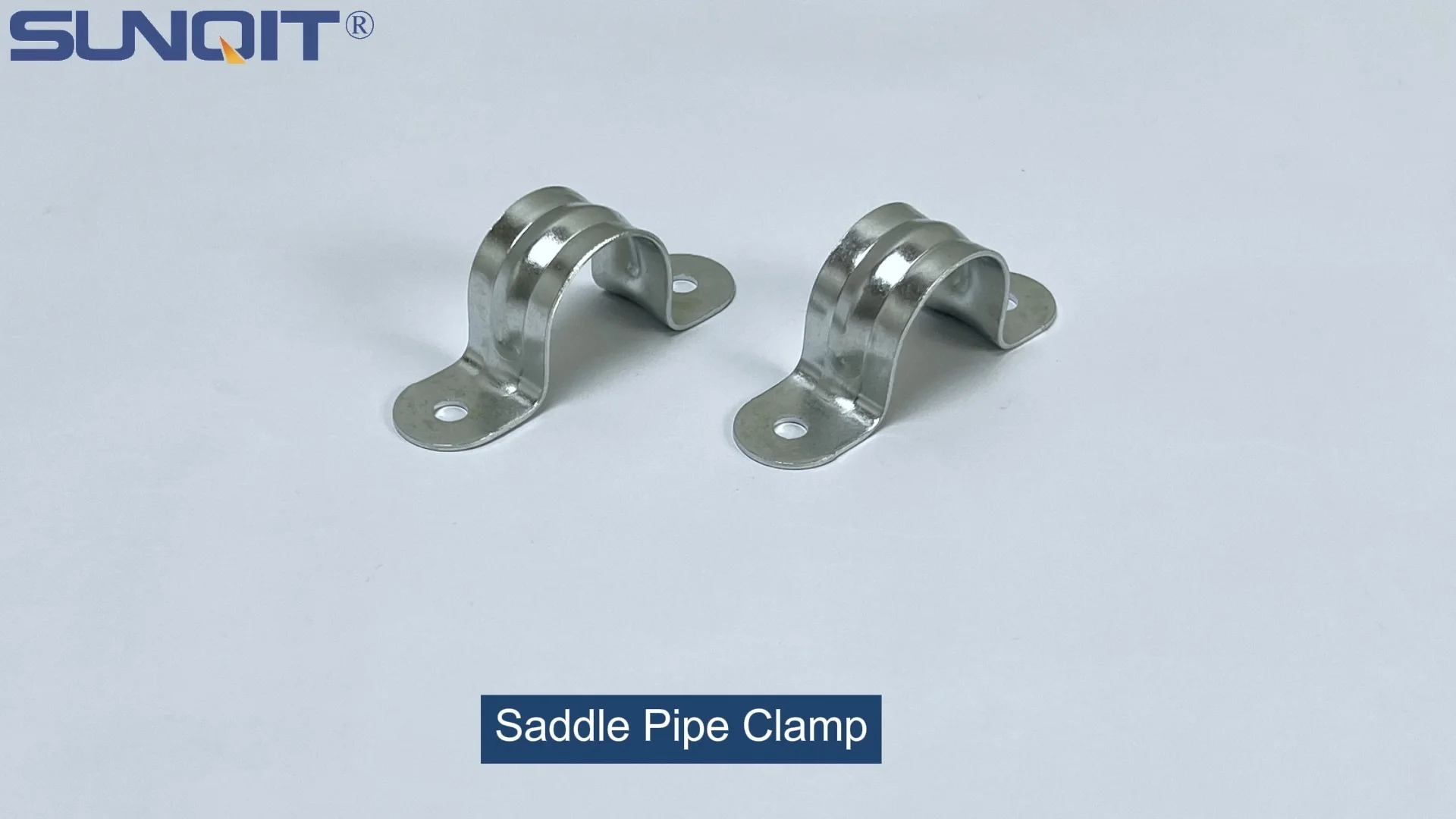
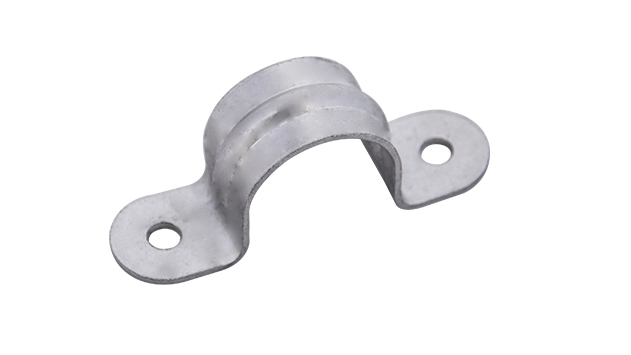
Saddle Pipe Clamp
Saddle pipe clamp, used for board connect with pipe, usually for table top installation.
Walk into any modern manufacturing facility, and you'll notice a quiet revolution underway. Gone are the days of fixed, immovable production lines that take weeks to reconfigure. Instead, there's a fluidity—workbenches that adjust in hours, material racks that adapt to new parts overnight, and conveyors that reroute with minimal fuss. At the heart of this transformation? A humble yet powerful component: the saddle pipe clamp. This unassuming piece of hardware, often overlooked, is the linchpin of modular production systems, enabling businesses to build, adapt, and grow without the constraints of traditional rigid setups. In this article, we'll explore how saddle pipe clamps are redefining flexibility in manufacturing, their role in lean systems, and why they've become indispensable for companies aiming to stay agile in an ever-changing market.
The Evolution of Production Lines: From Rigidity to Flexibility
For much of the 20th century, manufacturing thrived on mass production. Factories were designed around large, specialized machines bolted to the floor, with assembly lines that moved at a single, unchanging pace. This model worked well for standardized products—think Henry Ford's Model T—but it came with a steep cost: inflexibility. When consumer demands shifted or product designs evolved, retooling the line meant halting production for days or even weeks. Workers would spend hours cutting, welding, and rebuilding structures, while managers watched budgets balloon and deadlines slip.
Then came the rise of lean manufacturing in the late 20th century, a philosophy centered on eliminating waste, streamlining processes, and responding quickly to customer needs. Suddenly, rigidity became a liability. Manufacturers needed setups that could pivot—whether to accommodate a new product variant, scale up production, or even downsize for seasonal demand. This is where modular systems entered the picture. Built from interchangeable components like lean pipe, aluminum profile, and yes, saddle pipe clamps, these systems promised a future where production lines could be reconfigured as easily as rearranging furniture.
Today, the pressure to stay flexible is greater than ever. E-commerce has shortened product lifecycles, customization is the norm, and global supply chains demand adaptability. A factory that can't adjust to a new order size or a design tweak within days risks falling behind. Saddle pipe clamps, by enabling quick, tool-free adjustments, have become critical to meeting this demand. They're not just parts—they're enablers of a manufacturing model where change is no longer a disruption, but a routine part of doing business.
What Are Saddle Pipe Clamps? The Unsung Heroes of Modular Assembly
At first glance, a saddle pipe clamp might seem unremarkable. It's a simple device, typically made of metal or high-strength plastic, designed to connect two or more pipes or profiles at various angles. But its simplicity is its strength. Unlike welded joints or permanent fasteners, saddle pipe clamps create a secure yet removable bond, allowing components to be taken apart, repositioned, and reassembled with minimal effort.
Most saddle pipe clamps consist of two main parts: a "saddle" that wraps around the outer diameter of a pipe (like lean pipe or aluminum profile) and a clamping mechanism—often a bolt or lever—that tightens the saddle to hold the connection in place. Some designs include swivel joints, allowing pipes to rotate or pivot, while others are fixed for stability. Materials vary too: stainless steel clamps for corrosion resistance in wet environments, aluminum for lightweight applications, and plastic for non-conductive or ESD-sensitive areas (think electronics manufacturing).
But what truly sets saddle pipe clamps apart is their versatility. They're not limited to one type of pipe or profile. A single clamp can often connect lean pipe to aluminum profile, or even join different diameters of the same material. This compatibility is key to modular design—it means manufacturers aren't locked into a single supplier or product line. They can mix and match components, using lean pipe for the frame of a workbench and aluminum profile for the shelving, all held together by saddle pipe clamps.
Consider a typical scenario: a small electronics manufacturer needs to build a temporary assembly station for a rush order. Using lean pipe, aluminum profile, and saddle pipe clamps, workers can construct a basic workbench in under an hour. The clamps secure the lean pipe frame, while aluminum profile shelves—cut to size on-site—are attached using the same clamps. When the order is done, the entire setup is disassembled, and the components are stored or repurposed for the next project. No welding, no specialized tools, no waste. That's the power of saddle pipe clamps in action.
The Core of Modularity: How Saddle Pipe Clamps Enable Flexible Production
Tool-Free Adjustments and Quick Reconfiguration
In traditional manufacturing, changing a production line meant calling in maintenance teams with welding torches, drills, and cutting tools. A simple adjustment—like raising a workbench by six inches—could take half a day. With saddle pipe clamps, that same task takes minutes. Most clamps can be loosened or tightened by hand or with a basic wrench, allowing workers to reposition pipes, add shelves, or adjust heights without specialized training. This not only cuts downtime but also empowers frontline employees to make on-the-fly improvements—a cornerstone of lean systems, where those closest to the work often have the best ideas for optimization.
Take a real-world example: a automotive parts supplier recently shifted from producing components for gas-powered cars to electric vehicles (EVs). Their old assembly line, with fixed steel frames and welded conveyors, couldn't accommodate the larger batteries and different part sizes of EVs. By switching to a modular system using lean pipe, aluminum profile, and saddle pipe clamps, they reconfigured 70% of their line in just three days. Workers adjusted the height of workbenches, added wider material racks, and rerouted roller tracks—all by loosening and repositioning clamps. The result? Zero production downtime during the transition, and a line that's now ready to adapt to future EV model changes.
Compatibility with Lean Pipes and Aluminum Profiles
Saddle pipe clamps don't work in isolation—they're part of a larger ecosystem of modular components, with lean pipe and aluminum profile as their most common partners. Lean pipe, also known as "ez pipe" or "flex pipe," is a lightweight, cost-effective material often coated in plastic to prevent scratches and reduce noise. Aluminum profile, on the other hand, is stronger and more rigid, making it ideal for heavy-duty applications like workbench surfaces or conveyor frames. Together, they form a versatile toolkit—and saddle pipe clamps are the glue that holds them together.
The beauty of this compatibility lies in balance. Lean pipe offers flexibility and low cost, while aluminum profile adds strength and precision. For instance, a material rack built with lean pipe and saddle pipe clamps can be easily expanded by adding more pipes and clamps, but if the rack needs to support heavier loads, aluminum profile crossbars can be integrated using the same clamps. This mix-and-match approach lets manufacturers tailor their setups to specific needs without overspending on unnecessary materials.
Another advantage is standardization. Most saddle pipe clamps are designed to fit industry-standard pipe diameters (like 28mm for lean pipe or 40mm for aluminum profile), meaning components from different suppliers can work together seamlessly. This reduces reliance on single-source vendors and gives manufacturers the freedom to choose the best materials for each job—whether that's corrosion-resistant stainless steel pipe for a food processing line or ESD-safe lean pipe for electronics assembly.
Cost Efficiency Through Reusability and Scalability
Manufacturing is a capital-intensive industry, and every dollar spent on equipment counts. Traditional rigid systems often become sunk costs—once they're no longer needed, they're either scrapped or stored indefinitely, taking up valuable space. Saddle pipe clamps, by contrast, turn components into reusable assets. When a production line is retired, the clamps, lean pipe, and aluminum profile are disassembled and stored compactly. Later, they can be reassembled into something entirely new: a workbench becomes a material rack, a conveyor becomes a turnover trolley. This reusability slashes long-term costs, as companies avoid buying new equipment for every project.
Scalability is another cost-saving benefit. Modular systems built with saddle pipe clamps grow with your business. Need to add a third shift? Expand your existing workbench line by adding more lean pipe sections and clamps. Launching a new product? Repurpose old material racks into custom assembly stations. This "pay-as-you-grow" model is especially valuable for small and medium-sized enterprises (SMEs) with limited budgets. Instead of investing in a full-scale, fixed line upfront, they can start small and expand incrementally as demand increases.
Consider the numbers: A traditional welded steel workbench might cost $500 and take 8 hours to build. If it's no longer needed in a year, it's sold for scrap at $50. A modular workbench built with lean pipe, aluminum profile, and saddle pipe clamps costs roughly the same upfront but can be disassembled and reused. If repurposed into a material rack, it retains 100% of its value. Over five years, that's thousands of dollars saved in equipment costs alone—not to mention the savings from reduced downtime and faster reconfigurations.
Enhanced Safety and Ergonomics in Workbench Design
Safety and ergonomics are top priorities in modern manufacturing, and saddle pipe clamps play a quiet but vital role here too. Traditional fixed workbenches often force workers into awkward postures—bending, reaching, or stooping—leading to fatigue and injuries over time. With modular systems, workbenches can be adjusted to fit each employee's height and reach, reducing strain and boosting productivity.
Saddle pipe clamps make these adjustments possible. For example, a workbench built with lean pipe and aluminum profile can have its height fine-tuned by loosening the clamps holding the legs, raising or lowering the frame, and retightening. Shelves and tool holders can be positioned at eye level or waist height, minimizing unnecessary movement. In one case study, a medical device manufacturer reported a 30% reduction in worker complaints of back pain after switching to adjustable modular workbenches with saddle pipe clamps. The clamps allowed each operator to customize their station, leading to happier, healthier employees and fewer missed workdays.
Safety is also improved through better material handling. Modular roller tracks, built with lean pipe, roller track, and saddle pipe clamps, can be angled to allow parts to flow smoothly from one workstation to the next, reducing the need for manual lifting. Similarly, turnover trolleys—assembled with clamps, lean pipe, and caster wheels—are lightweight and easy to maneuver, lowering the risk of strains from pushing heavy loads. And because these systems are built with standardized components, there's less risk of structural failure compared to homemade or ad-hoc solutions.
Seamless Integration with Lean Systems
At their core, lean systems are about creating value with minimal waste—and saddle pipe clamps align perfectly with this philosophy. By enabling quick reconfigurations, they reduce the waste of time and resources tied to rigid setups. By promoting reusability, they cut down on material waste. And by empowering workers to adapt their environment, they foster a culture of continuous improvement, where every inefficiency is an opportunity to optimize.
One of the key principles of lean manufacturing is "just-in-time" (JIT) production, which requires materials and tools to be available exactly when and where they're needed. Modular systems with saddle pipe clamps make JIT easier to implement. For example, a assembly line producing smartphones might need different tools for different models. With a modular tool rack built using lean pipe and saddle pipe clamps, workers can quickly swap out tool holders, ensuring only the necessary tools are at the station—reducing clutter and saving time. When a new model is introduced, the rack is reconfigured in minutes, not days.
Another lean principle is "5S," a methodology for organizing workspaces (Sort, Set in Order, Shine, Standardize, Sustain). Saddle pipe clamps support 5S by making it easy to "Set in Order" tools and materials. Custom shadow boards, built with aluminum profile and clamps, ensure every tool has a designated spot. Color-coded lean pipe racks—using yellow or grey plastic roller track guide rails—keep materials sorted by type or priority. And because these setups are adjustable, they can evolve with the 5S process, adapting as workers find better ways to organize their space.

Real-World Applications: Saddle Pipe Clamps in Action
Workbenches: The Foundation of Flexible Assembly
Workbenches are the workhorses of manufacturing, and modular workbenches built with saddle pipe clamps are changing how teams collaborate and produce. Unlike fixed wooden or steel benches, these modular versions can be customized for every task. Need an ESD-safe surface for electronics assembly? Add an aluminum profile top with an ESD coating, secured to a lean pipe frame with saddle pipe clamps. Require extra storage? Attach aluminum profile shelves or hanging tool holders using the same clamps. Even accessories like task lights, power strips, or monitor arms can be mounted by clamping them to the frame.
A furniture manufacturer in Europe recently adopted modular workbenches with saddle pipe clamps for their custom cabinet assembly line. Each bench is now tailored to a specific task: cutting, sanding, or painting. When a new cabinet design requires a larger workspace, workers simply add extension sections using lean pipe and clamps. The benches are also mobile—fitted with caster wheels (another modular component)—so they can be rearranged into U-shapes for team assembly or lines for linear production. The result? A 40% increase in throughput and a 25% reduction in the time spent moving between workstations.
Material Racks and Flow Racks: Streamlining Inventory Management
Material storage is another area where saddle pipe clamps shine. Traditional static racks take up valuable floor space and make it hard to access items at the back. Modular flow racks, built with lean pipe, roller track, and saddle pipe clamps, solve this by using gravity to feed materials forward. Pipes are angled slightly, and roller track—held in place by clamps—allows boxes or bins to slide to the front as items are removed. This "first in, first out" (FIFO) system reduces waste from expired or obsolete inventory and makes picking faster and more accurate.
A logistics company specializing in e-commerce fulfillment recently replaced their fixed steel racks with modular flow racks using saddle pipe clamps. The racks, built with lean pipe and yellow plastic roller track guide rails, are now adjustable to fit different box sizes—from small electronics to large apparel. During peak seasons, they add extra levels by clamping on more lean pipe and roller track; during slower months, they disassemble the excess and store the components. This flexibility has cut their storage costs by 20% and reduced order picking errors by 15%.
Conveyors and Roller Tracks: Moving Materials with Precision
Conveyors are the arteries of production lines, and modular conveyors built with saddle pipe clamps offer unmatched adaptability. Unlike fixed belt or chain conveyors, these systems can be built to any length, angle, or height, and reconfigured as needed. For example, a small bakery uses a modular roller track conveyor—assembled with lean pipe, roller track, and saddle pipe clamps—to move dough trays from the mixing station to the oven. When they introduce a new, larger tray size, they simply adjust the width of the conveyor by repositioning the clamps holding the roller track. No need to buy a whole new conveyor; the existing components are reused.
In the automotive industry, where part sizes vary widely, modular conveyors are a game-changer. A tier-one supplier uses a combination of lean pipe, aluminum profile, and saddle pipe clamps to build custom conveyors for each client. For one automaker, they needed a conveyor that could handle heavy engine blocks; for another, lightweight plastic trim pieces. By swapping out roller track (steel for heavy loads, aluminum for light ones) and adjusting the frame with clamps, they serve both clients with the same core components. This has reduced their conveyor manufacturing lead time from 6 weeks to 3 days.

Comparing Traditional vs. Modular: A Closer Look at Performance Metrics
| Aspect | Traditional Rigid Systems | Modular Systems with Saddle Pipe Clamps |
|---|---|---|
| Setup Time | 2–4 weeks (requires welding, cutting, and specialized labor) | 1–3 days (tool-free assembly with basic hand tools) |
| Reconfiguration Cost | High (often requires new materials and labor; old components are scrapped) | Low (components are reused; only minor labor costs for adjustment) |
| Adaptability to Product Changes | Limited (fixed dimensions and layouts; major overhauls needed for new products) | High (easily adjusted for size, weight, or workflow changes) |
| Worker Ergonomics | Poor (one-size-fits-all design leads to awkward postures) | Excellent (height, shelf, and tool positions can be customized per worker) |
| Material Waste | High (scrapped components when lines are retired) | Low (components are reused or repurposed indefinitely) |
| Initial Investment | Medium to high (steel, welding equipment, specialized labor) | Medium (lean pipe, aluminum profile, clamps; lower labor costs) |
| Long-Term ROI | Low (fixed systems depreciate quickly and have limited lifespan) | High (reusable components and adaptability extend value over years) |
Choosing the Right Saddle Pipe Clamps: Key Considerations for Manufacturers
With so many saddle pipe clamps on the market, selecting the right ones for your needs can feel overwhelming. Here are the key factors to keep in mind:
Material Compatibility
First, consider the pipes or profiles you'll be using. Saddle pipe clamps are designed to fit specific diameters—common sizes include 28mm (lean pipe), 30mm, and 40mm (aluminum profile). Using a clamp that's too small or large will result in a loose, unstable connection. Also, think about the material of the clamp itself. For outdoor or wet environments, stainless steel clamps resist rust. For cleanrooms or food processing, plastic clamps avoid contamination. For heavy loads, look for reinforced steel or aluminum clamps with high tensile strength.
Load Capacity
Every clamp has a maximum load it can safely support, both vertically and horizontally. A clamp used to hold a lightweight tool holder will have a lower capacity than one securing a heavy roller track. Check the manufacturer's specifications for load ratings, and always err on the side of caution—overloading a clamp can lead to structural failure and injuries. If you're unsure, test the clamp with a sample load before full deployment.
Environmental Factors
Where will the clamp be used? In electronics manufacturing, ESD (electrostatic discharge) protection is critical, so look for clamps made of conductive materials that dissipate static. In chemical plants, corrosion resistance is key—stainless steel or coated clamps are better than bare metal. For high-temperature environments (like near ovens or furnaces), heat-resistant plastics or metals are a must.
Supplier Reliability
Finally, choose a reputable lean pipe supplier or modular component manufacturer. Look for suppliers with a track record of quality and consistency—poorly made clamps with uneven threading or weak materials can compromise your entire system. Ask for samples, check customer reviews, and ensure they offer a warranty. A good supplier will also provide technical support, helping you select the right clamps for your specific application.
The Future of Flexible Manufacturing: Saddle Pipe Clamps and Beyond
As manufacturing continues to evolve, modular systems built with saddle pipe clamps will only grow in importance. Industry 4.0—with its focus on smart factories, IoT, and automation—demands production lines that can connect with sensors, robots, and data analytics platforms. Saddle pipe clamps make it easy to integrate these technologies: adding a sensor to monitor material flow? Clamp it to a lean pipe frame. Mounting a collaborative robot (cobot) alongside a workbench? Use aluminum profile and clamps to create a stable platform. The flexibility of modular systems ensures that as new technologies emerge, they can be seamlessly added without rebuilding from scratch.
Sustainability is another trend driving modular adoption. Manufacturers are under increasing pressure to reduce their carbon footprint, and reusing components is a powerful way to do this. Saddle pipe clamps extend the lifespan of lean pipe, aluminum profile, and other materials, keeping them out of landfills. Some manufacturers are even designing clamps from recycled materials, further lowering environmental impact. In the future, we may see clamps with built-in QR codes or RFID tags, making it easier to track and reuse components across facilities.
Perhaps most exciting is the potential for democratizing manufacturing. Smaller businesses and startups, once locked out of advanced production setups by high costs, can now build professional-grade lines using affordable modular components. A startup making custom 3D-printed jewelry, for example, can assemble a modular workbench, material rack, and packaging station for a fraction of the cost of traditional equipment—all thanks to saddle pipe clamps and modular design. This opens the door to innovation, as more entrepreneurs can bring their ideas to life without massive upfront investments.
Conclusion: The Small Component Driving Big Change
Saddle pipe clamps may not grab headlines, but they're quietly revolutionizing manufacturing. By enabling flexible, modular production lines, they're helping companies adapt to changing markets, reduce waste, and empower their workers. From the factory floor to the boardroom, their impact is clear: shorter lead times, lower costs, happier employees, and a more sustainable future.
As we've explored, the advantages of saddle pipe clamps are undeniable: tool-free adjustments, compatibility with lean pipe and aluminum profile, cost efficiency through reusability, and seamless integration with lean systems. They're not just a component—they're a mindset shift, a rejection of the "set it and forget it" approach to manufacturing in favor of one that embraces change as an opportunity.
So the next time you walk through a factory, take a closer look at the workbenches, racks, and conveyors. Chances are, you'll spot saddle pipe clamps holding them together—small, unassuming, but hard at work. They're proof that sometimes, the biggest innovations come in the smallest packages. And in a world where flexibility is everything, they're the key to staying ahead.