- Company Articles
- Products and Technology
- Application Cases
- Saddle Pipe Clamps in Renewable Energy Manufacturing: Securing Pipes in Solar Panel Lines

Saddle Pipe Clamps in Renewable Energy Manufacturing: Securing Pipes in Solar Panel Lines
Related Product
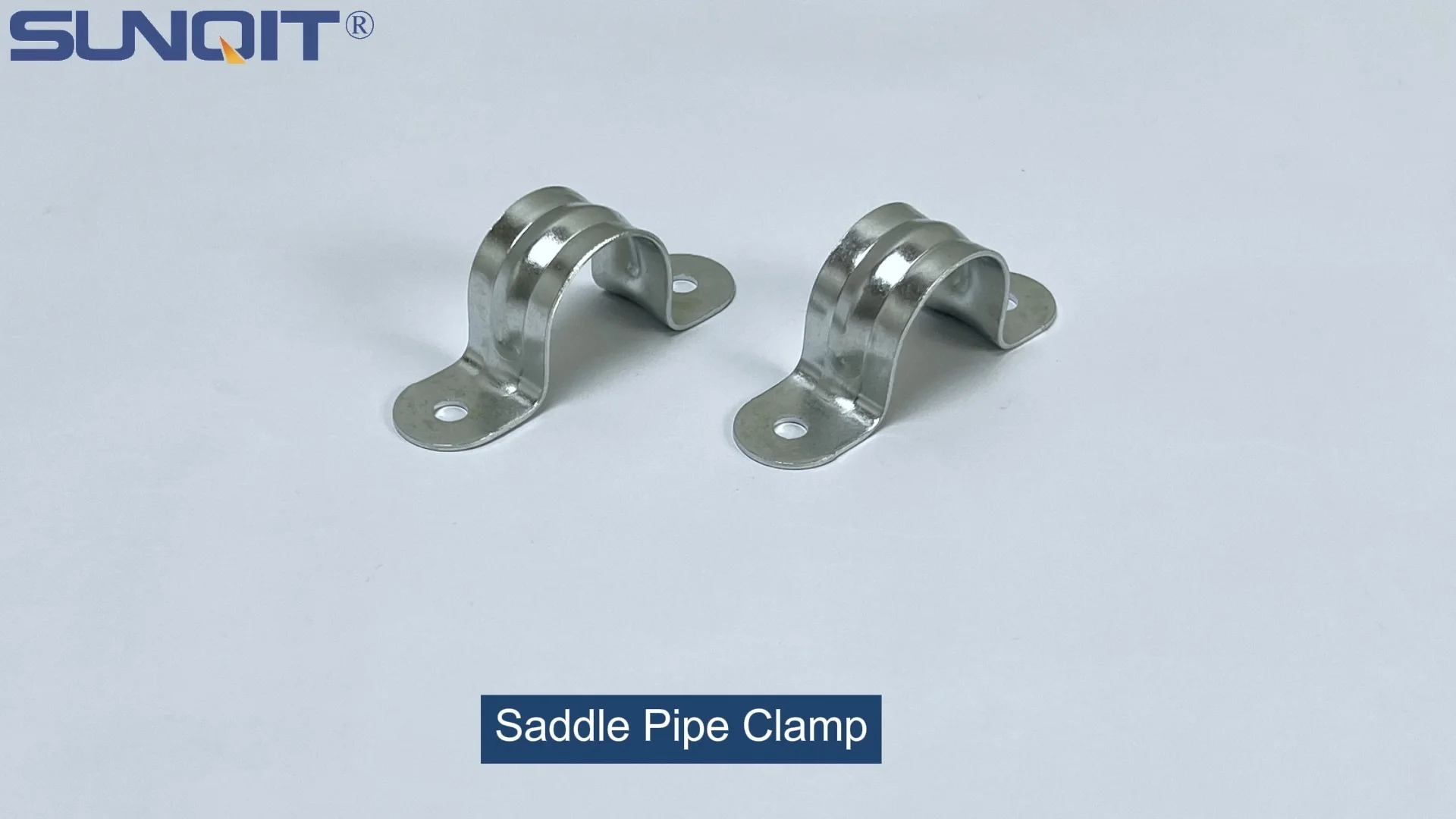
Saddle Pipe Clamp
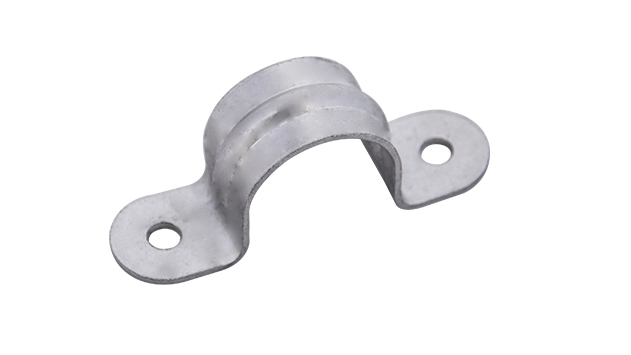
Saddle pipe clamp, used for board connect with pipe, usually for table top installation.
The global shift toward renewable energy has placed solar power at the forefront of sustainable innovation. As solar panel production scales to meet growing demand, manufacturers are under increasing pressure to deliver efficiency, precision, and reliability. Behind the scenes of every high-performing solar manufacturing facility lies a network of unsung components that keep operations running smoothly—none more critical than the pipe systems that transport fluids, guide materials, and support automated processes. And holding these systems together, often unnoticed but indispensable, are saddle pipe clamps. In this article, we'll explore why these small but mighty tools are vital to solar panel lines, how they integrate with lean system principles, and why choosing the right clamps can make or break manufacturing success.
The Backbone of Solar Manufacturing: Pipe Systems and Their Critical Role
Solar panel manufacturing is a symphony of precision. From slicing silicon wafers to assembling cells into modules, every step relies on seamless coordination between machinery, materials, and human operators. At the heart of this coordination are pipe systems—quiet workhorses that perform a range of essential functions:
First, fluid transport: Coolants circulate through pipes to regulate temperatures in high-heat processes like cell soldering. Hydraulic fluids power robotic arms that place components with micron-level accuracy. Even compressed air, used to clean delicate solar cells or actuate pneumatic tools, flows through an intricate network of pipes.
Then there's material handling. In automated lines, pipes often form part of conveyor systems, guiding panels or subassemblies along production paths. They may also support roller track setups, where gravity or motorized rollers move materials between workstations. In some cases, pipes even serve as structural supports for lightweight equipment or storage racks.
But these pipe systems face unique challenges in solar environments. Manufacturing floors are dynamic spaces: Conveyor belts hum, robotic arms pivot, and heavy machinery vibrates. Over time, this motion can loosen pipes, misalign connections, or even cause leaks—disruptions that grind production to a halt and compromise product quality. Add to this the need for corrosion resistance (many solar facilities use deionized water or chemicals that can eat away at metal), and the demand for durable, secure pipe management solutions becomes clear.
Enter Saddle Pipe Clamps: Unsung Heroes of Secure Pipe Management
Saddle pipe clamps are exactly what their name suggests: Clamps designed with a curved "saddle" shape that conforms to the outer diameter of a pipe, holding it firmly in place. Unlike rigid pipe brackets or basic U-bolts, saddle clamps distribute pressure evenly around the pipe, reducing stress points and minimizing the risk of damage. Their design typically includes a base plate for mounting to surfaces (like aluminum profile frames or workbench legs) and a clamping mechanism—often a bolt or screw—that tightens the saddle around the pipe.
What makes saddle clamps stand out is their versatility. They're available in various sizes to fit different pipe diameters, from small 0.5-inch tubes carrying compressed air to larger 2-inch pipes for coolant systems. Materials matter too: Stainless steel clamps offer unmatched corrosion resistance for chemical-heavy areas, while aluminum versions are lightweight and ideal for applications where weight is a concern—like mobile workbenches or temporary setups. Some even come with rubber or plastic liners to dampen vibration or insulate against electrical discharge, a critical feature in environments where electrostatic discharge (ESD) could damage sensitive solar components.
Why Saddle Pipe Clamps Matter in Solar Panel Lines
Stability in a World of Motion
Solar manufacturing lines are far from static. Conveyor systems move panels at steady speeds, automated guided vehicles (AGVs) zip between stations, and high-speed machinery vibrates with every operation. All this motion sends shockwaves through pipe systems. Without proper securing, pipes can rattle loose, leading to misaligned connections or leaks. Saddle pipe clamps counteract this by gripping pipes tightly, anchoring them to stable structures like aluminum profile frames or workbench legs. Their curved design ensures that even under vibration, the pipe stays centered and secure—no more "walking" pipes or unexpected disconnections.
Precision Alignment for Flawless Flow
In solar production, precision isn't optional—it's everything. A coolant pipe misaligned by just a few millimeters can disrupt temperature control, leading to warped cells or uneven soldering. Similarly, a misaligned pipe in a conveyor system might cause panels to jam, damaging fragile components. Saddle clamps excel here: Their design allows for (fine adjustment) during installation, ensuring pipes stay perfectly aligned over time. Unlike rigid brackets that lock pipes into fixed positions, many saddle clamps can be loosened, repositioned, and retightened—making them ideal for iterative manufacturing setups where processes are constantly optimized.
Durability That Stands Up to Solar Environments
Solar manufacturing facilities are harsh places for metal components. Humidity, chemicals, and even UV exposure (in facilities with natural lighting) can corrode unprotected materials. Saddle pipe clamps, however, are built to last. Stainless steel models resist rust and chemical degradation, making them perfect for coolant or chemical transport lines. For less demanding environments, aluminum clamps offer a lightweight, cost-effective alternative—especially when paired with aluminum profile frames, creating a cohesive, corrosion-resistant system. Even the hardware matters: Many clamps use galvanized or coated bolts to prevent seizing, ensuring they can be adjusted or removed without stripping threads, a boon for maintenance crews.
Safety First: Preventing Accidents and Compliance
A loose pipe isn't just a production headache—it's a safety hazard. Leaking hydraulic fluid can create slippery floors, increasing fall risks. Compressed air leaks pose explosion dangers, while chemical spills threaten operator health. Saddle pipe clamps mitigate these risks by keeping pipes securely fastened, reducing the chance of catastrophic failures. They also help facilities meet strict safety standards, from OSHA regulations in the U.S. to CE marking in the EU, by ensuring pipe systems are installed and maintained to code.

Integrating Saddle Pipe Clamps with Lean Systems: A Match Made for Efficiency
In today's competitive solar market, efficiency is the name of the game. Manufacturers rely on lean system principles—eliminating waste, streamlining workflows, and maximizing value—to stay ahead. Saddle pipe clamps might seem like minor components, but they play a surprisingly large role in supporting lean goals.
Take waste reduction, for example. Traditional pipe brackets are often custom-fabricated for specific setups, meaning they're useless if the production line is reconfigured. Saddle clamps, by contrast, are modular and reusable. They can be quickly removed from one aluminum profile frame and reinstalled on another, adapting to new layouts without the need for new parts. This flexibility cuts down on material waste and reduces the time and cost of retooling.
Then there's continuous flow—a cornerstone of lean manufacturing. When pipes are secure and aligned, processes run without interruptions. No more stopping to fix leaks or realign misbehaving conveyor components. Saddle clamps also support 5S principles (Sort, Set in Order, Shine, Standardize, Sustain) by keeping pipes organized and out of walkways, reducing clutter and making it easier for operators to maintain a clean, efficient workspace.
Perhaps most importantly, saddle clamps enable "just-in-time" adjustments. In lean systems, production lines are often tweaked to address bottlenecks or introduce new products. With saddle clamps, adding a new coolant line or rerouting a compressed air pipe takes minutes, not hours. This agility allows manufacturers to respond quickly to changing demands—whether scaling up production for a large order or pivoting to a new panel design.

Material Matters: Choosing the Right Saddle Pipe Clamps for Solar Environments
Not all saddle pipe clamps are created equal. To maximize performance in solar manufacturing, it's critical to choose the right material for the job. Here's a breakdown of the most common options and when to use them:
Stainless Steel Saddle Clamps: The gold standard for corrosion resistance. Stainless steel (often 304 or 316 grade) stands up to chemicals, moisture, and high humidity—ideal for coolant lines, chemical transport, or outdoor solar panel testing areas. They're also incredibly strong, making them suitable for heavy pipes or high-vibration zones.
Aluminum Saddle Clamps: Lightweight and cost-effective, aluminum clamps are perfect for indoor, low-corrosion environments. They pair exceptionally well with aluminum profile frames, creating a unified, lightweight structure that's easy to move or reconfigure. Aluminum is also non-magnetic, a plus in areas with sensitive electronic equipment.
Coated Clamps: For added protection, some clamps come with plastic or rubber coatings. These liners insulate pipes from metal-to-metal contact, reducing noise and vibration. They also prevent galvanic corrosion (a common issue when dissimilar metals like steel and aluminum touch) and can provide ESD protection—vital for handling solar cells, which are sensitive to static electricity.
When selecting clamps, it's also important to consider the mounting surface. Many solar facilities use aluminum profile workbenches or frames, which feature T-slots for easy accessory attachment. Look for saddle clamps with compatible mounting hardware—like bolts or brackets designed to slide into these T-slots—to simplify installation and ensure a secure fit.
Real-World Application: Saddle Pipe Clamps on the Solar Manufacturing Floor
To understand the impact of saddle pipe clamps, let's walk through a typical solar panel assembly line. Imagine a workbench where operators solder busbars onto solar cells. Above the bench, a compressed air pipe feeds tools that clean debris from cells before soldering. Below the bench, a coolant pipe circulates chilled water to keep the soldering iron at the perfect temperature.
Without saddle clamps, these pipes might hang loosely or be secured with basic zip ties—solutions that fail quickly under the bench's vibration as operators move tools or adjust workpieces. Over time, the compressed air pipe could sag, kinking the line and reducing airflow. The coolant pipe might rub against the bench leg, wearing through the insulation and causing condensation, which risks shorting out nearby electronics.
With saddle clamps, though, the scenario changes. The compressed air pipe is clamped to the back of the aluminum profile workbench, its position fixed but adjustable if the tool layout changes. The coolant pipe is secured to the bench's lower frame with rubber-lined clamps, dampening vibration and preventing chafing. Even better, if the workbench needs to be repositioned on casters to accommodate a new conveyor layout, the clamps keep the pipes stable during movement—no disassembly required.
Now, zoom out to the conveyor system that moves partially assembled panels between workstations. Here, pipes form the rails along which panels glide. Saddle clamps attach these rails to the conveyor frame, ensuring they stay parallel and level. If a panel jams (a rare occurrence, thanks to the clamps' precision), maintenance crews can quickly loosen the clamps, adjust the rails, and retighten—minimizing downtime.
Comparing Saddle Pipe Clamps to Other Pipe Fastening Solutions
| Feature | Saddle Pipe Clamps | U-Bolts | Rigid Brackets | Zip Ties |
|---|---|---|---|---|
| Stability & Vibration Resistance | Excellent: Even pressure distribution prevents pipe movement | Good: Tightens around pipes but may loosen over time | Poor: Rigid design doesn't absorb vibration; pipes can rattle | Poor: Weak; stretch or break under vibration |
| Installation/Adjustment Ease | Easy: Can be loosened, repositioned, and retightened quickly | Moderate: Requires nuts and washers; harder to realign | Difficult: Often welded or bolted permanently; not adjustable | Very easy: Quick to install but not reusable |
| Material Compatibility | High: Available in stainless steel, aluminum, or coated options | Moderate: Mostly steel; risk of corrosion with non-coated pipes | Low: Typically steel; may cause galvanic corrosion with aluminum pipes | Low: Plastic degrades in UV light or high heat |
| Cost-Effectiveness (Long-Term) | High: Reusable, durable, and reduces maintenance costs | Moderate: Inexpensive upfront but may need frequent replacement | Low: High initial cost; no flexibility for reconfiguration | Very low upfront, but needs constant replacement |
| Best For | Solar manufacturing lines, lean systems, adjustable setups | Static, low-vibration pipes (e.g., fixed coolant lines) | Permanent, heavy-duty structural pipes | Temporary, lightweight, non-critical applications |
Installation Best Practices: Ensuring Optimal Clamp Performance
Even the best saddle pipe clamps will underperform if installed incorrectly. Follow these tips to maximize their effectiveness in solar manufacturing:
1. Choose the right size: A clamp that's too small will pinch the pipe, damaging it or restricting flow. One that's too large won't grip properly, allowing movement. Always match the clamp's saddle diameter to the pipe's outer diameter.
2. Space clamps appropriately: As a rule of thumb, clamp pipes every 3–4 feet for horizontal runs and every 2–3 feet for vertical runs. In high-vibration areas (near conveyors or machinery), reduce spacing to 2 feet to prevent "pendulum" motion.
3. Tighten evenly: Over-tightening can crush pipes or strip threads; under-tightening leaves them loose. Use a torque wrench to apply consistent pressure, following the manufacturer's specifications.
4. Consider thermal expansion: Pipes carrying hot fluids will expand and contract. Leave a small gap between the clamp and pipe (or use slotted mounting holes) to allow for movement without stressing the system.
5. Inspect regularly: Add clamp checks to your preventive maintenance schedule. Look for signs of corrosion, loose bolts, or worn coatings—especially in high-stress areas like near conveyor motors or workbench corners.
Future Trends: Saddle Pipe Clamps in the Next Generation of Solar Manufacturing
As solar technology evolves, so too will the demands on manufacturing equipment. Here's how saddle pipe clamps are likely to adapt:
Smart Clamps: Imagine clamps embedded with sensors that monitor temperature, vibration, or pipe strain. These "smart" clamps could alert maintenance teams to issues before they cause failures, reducing downtime and improving predictive maintenance.
Lightweight Composites: Advanced materials like carbon fiber-reinforced polymers may offer the strength of steel with the weight of aluminum, making clamps even more versatile for mobile or lightweight systems.
Modular Designs: With lean system adoption growing, clamps will become even more modular, featuring quick-connect brackets or tool-free adjustment to speed up reconfiguration.
No matter the innovations, one thing remains clear: Saddle pipe clamps will continue to be a cornerstone of solar manufacturing. As the industry pushes for higher efficiency, lower costs, and greater sustainability, these small but critical components will play an outsized role in keeping production lines secure, stable, and ready to power the world with clean energy.
Conclusion: The Quiet Force Behind Solar Success
In the grand scheme of solar panel manufacturing, saddle pipe clamps may not grab headlines like cutting-edge solar cell technology or automated assembly robots. But without them, the intricate pipe systems that power, cool, and transport materials through production lines would fail. They are the glue that holds the manufacturing process together—ensuring stability in a dynamic environment, precision in a world of tight tolerances, and efficiency in an industry driven by lean principles.
For solar manufacturers, investing in high-quality saddle pipe clamps isn't just a matter of maintenance—it's a strategic decision that impacts productivity, product quality, and bottom-line success. By choosing the right materials, integrating clamps with aluminum profile systems, and following best installation practices, manufacturers can build resilient, adaptable production lines that meet the demands of today's renewable energy market.
So the next time you see a solar panel glinting in the sun, take a moment to appreciate the unseen components that made it possible. Behind that panel lies a manufacturing floor where saddle pipe clamps work tirelessly, securing the systems that turn raw materials into clean energy solutions. In the world of solar, even the smallest parts shine bright.