- Company Articles
- Products and Technology
- Product knowledge
- Seamless vs Welded 1.2mm Stainless Steel Pipe: Cost and Strength Differences

Seamless vs Welded 1.2mm Stainless Steel Pipe: Cost and Strength Differences
Related Product
1.2mm Stainless Steel Pipe
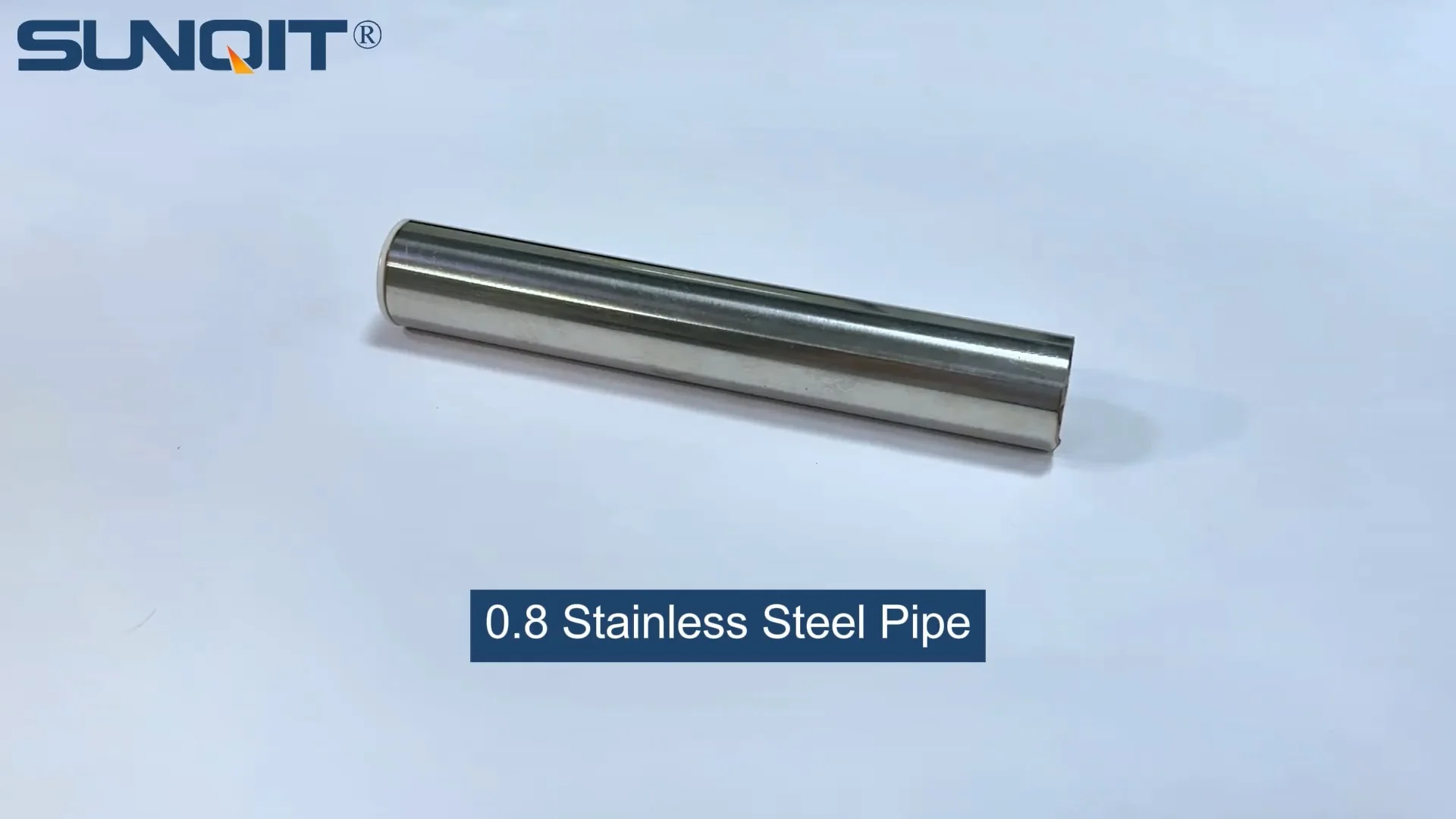
Stainless steel pipe, lean pipe, diameter is 28mm, material is SS201 or SS304, SS201 is normally used in the market. It knows a KARAKURI, KAIZEN material for industrial plant to improve efficiency, save labor cost, standard management.
Let's say you're the operations manager at a mid-sized electronics assembly plant. Your team has been struggling with frequent breakdowns in the roller track system that moves circuit boards between workstations. The old steel pipes supporting the rollers are bending under the daily wear, and you're tired of production delays caused by repairs. After researching, you narrow it down to two options: 1.2mm stainless steel pipes—either seamless or welded. But which one do you choose? Budget is tight this quarter, but you can't afford to skimp on durability. Sound familiar? If you've ever stood at this crossroads, you know the decision feels like balancing a scale with "cost" on one side and "long-term reliability" on the other. Let's break it down.
First Things First: What Makes 1.2mm Stainless Steel Pipe So Popular?
Before diving into the seamless vs. welded debate, let's talk about why 1.2mm stainless steel pipe is a staple in industries like manufacturing, logistics, and electronics. At just over 1/20th of an inch thick, it strikes a sweet spot between lightweight flexibility and structural rigidity. It's thin enough to be shaped into frames, roller track supports, and material racks, yet strong enough to handle the daily grind of moving parts, tools, and products. Plus, stainless steel's corrosion resistance means it holds up in humid factories or cleanrooms—no rusty pipes threatening product quality. This versatility is why it's a cornerstone of the stainless steel pipe series , a go-to for lean production systems worldwide.
Seamless 1.2mm Stainless Steel Pipe: The "No Weak Link" Option
Imagine a pipe born from a single piece of metal, no joins, no seams—just a smooth, unbroken cylinder. That's a seamless pipe. The manufacturing process reads like something out of a metalworker's dream: start with a solid stainless steel billet (think a thick metal rod), heat it until it's malleable, then pierce it with a mandrel to create a hollow tube. From there, the tube is drawn through dies to reduce its diameter and wall thickness down to 1.2mm, all while maintaining that seamless integrity.
The result? A pipe with uniform strength. Without a weld seam, there's no weak point where stress, pressure, or vibration can concentrate. This makes seamless pipes ideal for high-stress applications—like supporting heavy roller track systems in automotive plants, where thousands of parts roll over them daily, or in precision machinery where even a tiny bend could throw off alignment.
But here's the catch: that seamless perfection comes at a cost. The process is labor-intensive and requires specialized equipment, which drives up production time and raw material usage (you start with a solid billet, so there's more waste). For a 1.2mm seamless pipe, you're looking at a price tag that's often 30-50% higher than its welded counterpart. If your application demands zero compromises on strength—say, in medical device manufacturing where sterility and structural integrity are non-negotiable—this premium might be worth it. But for most general manufacturing uses, is it overkill?

Welded 1.2mm Stainless Steel Pipe: The Practical, Budget-Friendly Alternative
Welded pipes take a different approach. Instead of starting with a solid billet, manufacturers roll a flat stainless steel strip into a cylinder, then fuse the edges together with a weld. Think of it like rolling a piece of paper into a tube and taping the seam—though with far more precision (we're talking laser or TIG welding here, not Scotch tape). The welded seam is then often treated (ground down, polished) to smooth it out, making the pipe nearly indistinguishable from seamless at first glance.
So, why choose welded? Cost, for starters. The process uses less raw material (no solid billet to waste), and modern welding techniques are fast and automated, which lowers production costs. For a 1.2mm welded pipe, you'll typically pay 20-40% less than seamless—a difference that adds up quickly when you're buying hundreds of meters for a factory-wide roller track upgrade.
But what about strength? It's true that the weld seam was once a liability. Older welding methods left weak, porous seams prone to cracking under stress. But today's advanced techniques—like laser welding—create seams that are often as strong as the pipe itself. In fact, most welded 1.2mm stainless steel pipes meet industry standards for tensile strength (how much pull they can handle before breaking) and yield strength (how much they can bend before deforming permanently). For non-critical applications—like supporting lightweight roller track in a warehouse or building temporary workbenches—welded pipes perform just as well as seamless, if not better, for the price.
| Feature | Seamless 1.2mm Stainless Steel Pipe | Welded 1.2mm Stainless Steel Pipe |
|---|---|---|
| Manufacturing Process | Solid billet pierced, drawn, and rolled to size—no weld seam. | Flat strip rolled into a cylinder, welded at the seam, then polished. |
| Strength | Uniform strength; no weak seam. Ideal for high-stress, precision applications. | Seam strength matches pipe (modern welding). Sufficient for most general uses. |
| Cost | Higher (30-50% more than welded) due to labor and material waste. | Lower (20-40% less than seamless) due to efficient production. |
| Best For | High-pressure systems, medical equipment, precision machinery, heavy loads. | Roller tracks, workbenches, material racks, low-to-medium stress applications. |
| Availability | Less common; may require ordering from specialized suppliers. | Widely available from most lean pipe supplier and metal distributors. |

The Strength Test: When Does Seamless Actually Outperform Welded?
Let's get technical for a minute. To really understand the strength difference, let's look at the numbers. A typical 1.2mm seamless stainless steel pipe (304 grade, the most common) has a tensile strength of around 620 MPa (megapascals) and a yield strength of 310 MPa. A welded pipe of the same grade and thickness? Tensile strength around 580-600 MPa, yield strength around 290-300 MPa. That's a small gap—around 5-7%—hardly noticeable in everyday use.
But where seamless pulls ahead is in fatigue resistance. Fatigue happens when a material is subjected to repeated stress—like a roller track pipe that bends slightly every time a heavy cart rolls over it. Over time, tiny cracks can form at stress points, and in welded pipes, the seam is more prone to this cracking than the rest of the pipe. If your application involves constant, repetitive stress (think 24/7 production lines with heavy loads), seamless might last 2-3 times longer than welded. But for most factories running 8-hour shifts with moderate loads, welded will still last 5-10 years—plenty long enough to justify the lower cost.
Cost Breakdown: How Much Are We Really Talking About?
Let's put this in real-world terms. Suppose you need 500 meters of 1.2mm stainless steel pipe for a new roller track system. You reach out to a lean pipe supplier and get quotes:
- Seamless: $15 per meter → Total: $7,500
- Welded: $9 per meter → Total: $4,500
That's a $3,000 difference—enough to fund another small project, like upgrading workbench lighting or buying new tools. For a small business, that's not chump change. And remember, this is just the pipe cost; installation, fittings, and labor are separate. Welded pipes are also lighter, which can lower shipping and handling costs—a bonus for tight budgets.
Of course, if you cut corners on quality, you might end up paying more in the long run. A cheap welded pipe with a poorly done seam could start cracking after a year, leading to downtime, replacement costs, and frustrated workers. That's why it's crucial to buy from a reputable lean pipe supplier who can provide test reports for their welded pipes—look for certifications like ASTM A312 (a standard for stainless steel pipes) to ensure the welds meet strength requirements.
Applications: When to Choose Seamless, When to Choose Welded
At the end of the day, the choice comes down to your specific needs. Let's map out common scenarios:
Choose Seamless If…
- You're building precision equipment where even minor deformation could ruin products (e.g., semiconductor manufacturing).
- Your pipes will be under constant, heavy stress (e.g., supporting overhead roller track with 50kg+ loads every minute).
- You need corrosion resistance in extreme environments (e.g., chemical plants, marine settings).
Choose Welded If…
- You're working with a tight budget and need to maximize materials (most small-to-medium manufacturers fall here).
- Your application is low-to-medium stress (e.g., assembly line roller track for small parts, workbench frames).
- You need pipes quickly—welded is often in stock at lean pipe supplier warehouses, while seamless may require ordering.
Final Thoughts: It's About Balance, Not Perfection
Going back to our operations manager friend: if her roller track system moves lightweight circuit boards (1-2kg each) 8 hours a day, 5 days a week, welded 1.2mm stainless steel pipe is the way to go. She'll save thousands, and the pipes will last long enough to justify the investment. But if she were running a foundry moving 50kg castings 24/7, seamless would be worth every penny to avoid downtime.
The key is to assess your own needs: What's the load? How often will it be used? What's your budget? And don't forget to talk to your lean pipe supplier —they've seen it all and can help you pick the right option based on your specific setup. At the end of the day, both seamless and welded 1.2mm stainless steel pipes are excellent choices; it's just a matter of which one fits your unique puzzle.
So, which will you choose? The "no-compromise" seamless, or the "smart value" welded? Whatever you decide, rest easy knowing you're armed with the facts to make a choice that keeps your production line moving—and your budget intact.