- Company Articles
- Products and Technology
- Product knowledge
- Seamless vs Welded 2.0mm Stainless Steel Pipe: Pros & Cons

Seamless vs Welded 2.0mm Stainless Steel Pipe: Pros & Cons
Related Product
2.0mm Stainless Steel Pipe
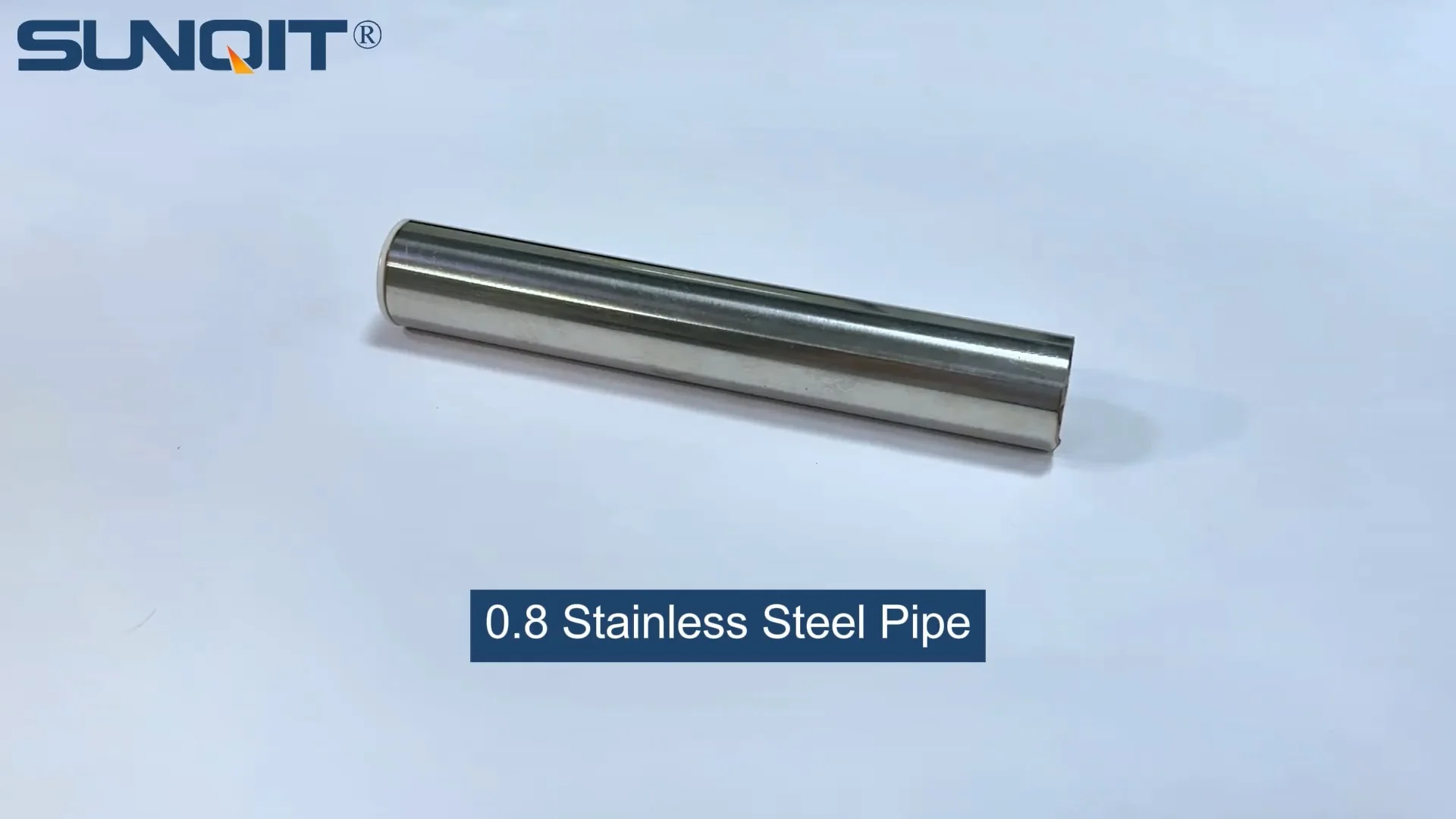
Stainless steel pipe, lean pipe, diameter is 28mm, material is SS201 or SS304, SS201 is normally used in the market. It knows a KARAKURI, KAIZEN material for industrial plant to improve efficiency, save labor cost, standard management.
Introduction: The Backbone of Modern Industry
Stainless steel pipes are the unsung heroes of countless industries. From manufacturing floors to chemical plants, from construction sites to food processing facilities, these pipes carry fluids, support structures, and streamline operations. But not all stainless steel pipes are created equal—especially when it comes to thickness and construction. Today, we're zeroing in on a workhorse thickness: 2.0mm. Within the broader stainless steel pipe series , 2.0mm options strike a sweet spot between strength and versatility, making them a go-to for everything from light structural work to medium-duty fluid transport. But here's the kicker: when you're shopping for 2.0mm stainless steel pipes, you'll face a critical choice: seamless or welded? Let's unpack what that means, and why it matters for your project.
Whether you're building a roller track for moving assembly parts, installing a fluid system in a lab, or constructing a support frame, the type of pipe you choose can impact durability, cost, and performance. Even seasoned pros sometimes overlook the seamless vs welded debate, assuming "stainless steel is stainless steel." But trust me—skip this step, and you might end up with a pipe that cracks under pressure, rusts prematurely, or blows your budget. Let's break it down, starting with how these two types of pipes are actually made.
How They're Made: The Core Difference
To understand why seamless and welded pipes behave differently, you need to peek into the manufacturing process. It's like comparing a tailored suit (seamless) to a ready-to-wear one (welded)—both serve the purpose, but the "how" affects the final product.
Seamless 2.0mm Stainless Steel Pipes: No Welds, No Compromises
Seamless pipes start as solid stainless steel billets—think of a thick metal rod. The billet is heated until it's malleable, then pierced with a mandrel (a long, cylindrical tool) to create a hollow tube. From there, the tube is rolled and stretched repeatedly to reduce its diameter and wall thickness until it hits that precise 2.0mm mark. The result? A pipe with no seams, no welds, just a smooth, continuous loop of stainless steel. It's a labor-intensive process, requiring specialized machinery and skilled operators, but the payoff is a pipe with uniform structure from end to end.
Welded 2.0mm Stainless Steel Pipes: Efficiency Meets Practicality
Welded pipes take a different route. Imagine a flat sheet of stainless steel, cut to the exact width needed for the pipe's circumference. This sheet is rolled into a cylinder, with the edges overlapping slightly. Then, the overlapping edges are welded together—usually with TIG (Tungsten Inert Gas) welding for precision, though MIG or laser welding is also common. After welding, the pipe is sized down to 2.0mm wall thickness and the weld seam is often treated (annealed or polished) to smooth it out. The result? A pipe with a visible (or sometimes nearly invisible) weld line running along its length. It's a faster, more straightforward process, which is why welded pipes are so widely available.

Pros & Cons: Seamless vs Welded Showdown
Now that we know how they're made, let's dive into the nitty-gritty: what makes seamless better in some cases, and welded the smarter choice in others. We'll break it down by key factors like strength, cost, availability, and more.
| Factor | Seamless 2.0mm Stainless Steel Pipe | Welded 2.0mm Stainless Steel Pipe |
|---|---|---|
| Structural Integrity | Pro: No weld seam means no weak point. The pipe's strength is consistent around its circumference, making it ideal for high-pressure applications. | Con: The weld seam is a potential weak spot. If the weld isn't properly executed, it can crack under stress or corrode faster than the rest of the pipe. |
| Cost | Con: More expensive. The complex manufacturing process (heating, piercing, rolling) drives up production costs, so you'll pay a premium—often 30-50% more than welded. | Pro: Budget-friendly. Welding flat sheets is faster and uses less material, so welded pipes are typically 20-40% cheaper than seamless of the same size. |
| Size Availability | Con: Limited to smaller diameters. Seamless pipes are harder to produce in large diameters (over 24 inches), so options are narrower. | Pro: Wide range of sizes. Welded pipes can be made in almost any diameter or length, from tiny ½-inch tubes to massive 48-inch cylinders. |
| Lead Time | Con: Longer wait times. Since they're more complex to make, seamless pipes often have lead times of 4-6 weeks (or more for custom sizes). | Pro: Quick turnaround. Welded pipes are mass-produced, so most suppliers keep them in stock. You could have them shipped within days. |
| Corrosion Resistance | Pro: Superior resistance. Without a weld, there's no crevice where moisture or chemicals can get trapped, reducing corrosion risk. | Con: Risk at the seam. Even with treatment, the weld area can be more prone to crevice corrosion if not properly maintained. |
Seamless Pipes: When to Splurge
Seamless pipes shine in scenarios where failure isn't an option. Think high-pressure systems: hydraulic lines in heavy machinery, oil and gas pipelines, or chemical transport where fluids are under extreme pressure. Because there's no weld, they can handle pressures up to 10,000 PSI (depending on grade), whereas welded pipes top out around 3,000-5,000 PSI. They're also a must for industries like aerospace or pharmaceuticals, where even tiny flaws can have catastrophic consequences.
Another win for seamless? High-temperature applications. Stainless steel expands and contracts with heat, and a weld seam can weaken or crack under repeated thermal stress. Seamless pipes, with their uniform structure, hold up better in furnaces, boilers, or exhaust systems.
Welded Pipes: When to Save
Welded pipes are the practical choice for most everyday applications. If you're building a roller track in a warehouse to move boxes, for example, you don't need to withstand extreme pressure—you just need something strong enough to support the load and resist dents. Welded 2.0mm pipes work perfectly here, and the cost savings let you install longer tracks or add extra features like caster wheels for mobility.
They're also ideal for low to medium-pressure systems: plumbing in commercial buildings, HVAC ducting, or handrails in public spaces. Even in manufacturing, welded pipes are the go-to for non-critical lines, like cooling water loops or compressed air lines (as long as pressure stays under 3,000 PSI). And because they're widely available, you can easily source them from a lean pipe supplier without waiting weeks for production.

Durability: Which Lasts Longer?
Let's talk lifespan. Both seamless and welded 2.0mm stainless steel pipes are built to last—stainless steel is famous for its corrosion resistance, after all—but their durability depends on two things: the application and maintenance.
In harsh environments (saltwater, chemicals, high heat), seamless pipes have the edge. Without a weld seam, there's less chance of localized corrosion or stress cracking. A seamless pipe in a chemical plant might last 20-30 years with proper care, whereas a welded pipe in the same setting might need replacement after 15-20 years—especially if the weld isn't regularly inspected.
In milder environments, though? The difference narrows. A welded pipe used in a roller track for dry goods, or as a handrail in a shopping mall, can easily last 30+ years. The key is maintenance: regular cleaning (to remove dirt or salt), avoiding abrasive chemicals, and inspecting welded seams for signs of wear (like discoloration or pitting). With basic care, both types will outlive most other materials.
Cost: Seamless vs Welded—What's the Price Tag?
Let's get real: budget matters. Seamless pipes are pricier—there's no way around it. On average, you'll pay 30-50% more for seamless vs welded 2.0mm stainless steel pipe of the same diameter and grade. For example, a 1-inch seamless pipe might cost $25-$35 per foot, while a welded one could be $15-$20 per foot. If you're buying 100 feet, that's a difference of $1,000-$1,500—money that could go toward other project needs, like better roller track accessories or high-quality caster wheels.
Why the price gap? Seamless production requires more energy (heating billets), specialized equipment (mandrels, rolling mills), and skilled labor. Welded pipes, by contrast, use flat sheets that are cheaper to source, and welding is a faster process. Plus, seamless pipes have higher scrap rates during production—if a pipe develops a flaw during rolling, it's scrapped, driving up costs.
That said, don't let cost be the only factor. If your project needs the pressure resistance or durability of seamless, the extra cost is an investment. But if you're working on a low-stakes application, welded pipes let you stretch your budget further.
Applications: Real-World Examples
Still on the fence? Let's look at real scenarios where one type clearly outperforms the other.
Scenario 1: Chemical Processing Plant
A plant needs to transport nitric acid (a highly corrosive chemical) at 5,000 PSI. Welded pipes are risky here—even a tiny flaw in the weld could lead to leaks, endangering workers and causing costly downtime. Seamless 2.0mm pipes are the only safe choice, despite the higher cost.
Scenario 2: Warehouse Roller Track System
A logistics company wants to install 500 feet of roller track to move boxes (20-50 lbs each) from receiving to shipping. Pressure is minimal—just gravity and the weight of the boxes. Welded 2.0mm pipes are perfect here: they're strong enough to support the load, cost less, and are easy to source from a lean pipe supplier with quick delivery.
Scenario 3: Residential Plumbing Upgrade
A homeowner is replacing old galvanized pipes with stainless steel for better corrosion resistance. Water pressure in homes is typically 40-80 PSI—way below what even welded pipes can handle. Welded 2.0mm pipes are the obvious pick: cheaper, easy to cut and install, and more than durable enough for the job.
Sourcing Smart: Working with a Lean Pipe Supplier
No matter which type you choose, partnering with the right supplier matters. A reputable lean pipe supplier won't just sell you pipes—they'll help you pick the right type for your project. Here's what to ask:
- What's my pressure requirement? Be honest about max PSI—suppliers can recommend seamless or welded based on this.
- What's the environment like? Saltwater, chemicals, high heat? This affects material grade (304 vs 316 stainless) and whether seamless is necessary.
- Do you have samples? Ask for a small section of pipe to inspect the weld (for welded) or uniformity (for seamless).
- What's the lead time? If you need pipes fast, welded is likely the way to go—most lean pipe supplier stock them.
A good supplier will also provide certifications (like ISO or ASTM) to prove the pipe meets industry standards. Don't skip this—certifications ensure the pipe is made with quality stainless steel and tested for strength.
Maintenance: Keeping Your Pipes in Top Shape
Whether you choose seamless or welded, a little maintenance goes a long way. Here's how to extend their lifespan:
For Seamless Pipes: Focus on general care—clean with mild detergent and a soft cloth to remove dirt, and avoid abrasive tools that scratch the surface (scratches can trap moisture and lead to corrosion). Inspect for dents or bulges, which could indicate stress, especially in high-pressure systems.
For Welded Pipes: Pay extra attention to the weld seam. Clean it thoroughly to remove grime, and check for discoloration (a sign of corrosion) or small cracks. If the seam feels rough, a quick polish with a soft abrasive pad can smooth it out and reduce crevice corrosion risk.
In both cases, avoid exposing the pipes to harsh chemicals (like bleach or hydrochloric acid) unless they're specifically rated for it. And if you're using them outdoors, consider a protective coating (like clear lacquer) to shield against salt and UV rays.
Conclusion: Choosing What's Right for You
At the end of the day, there's no "better" pipe—only the right pipe for your project. Seamless 2.0mm stainless steel pipes are the workhorses of high-pressure, high-stakes applications, offering unmatched strength and durability. Welded pipes, on the other hand, are the practical, budget-friendly choice for everyday use, from roller track systems to plumbing.
Remember: the key is to assess your needs first. Ask: What's the max pressure? What's the environment like? How long do I need the pipes to last? And don't hesitate to lean on your lean pipe supplier for guidance—they've seen it all and can help you avoid costly mistakes.
Whether you go seamless or welded, 2.0mm stainless steel pipes are built to perform. With the right choice, you'll get a reliable, long-lasting solution that keeps your project running smoothly for years to come.