- Company Articles
- Products and Technology
- Procurement Guidelines
- Selecting Flat Adjustable Swivel Castor Wheels: Size & Fit Guide

Selecting Flat Adjustable Swivel Castor Wheels: Size & Fit Guide
Related Product
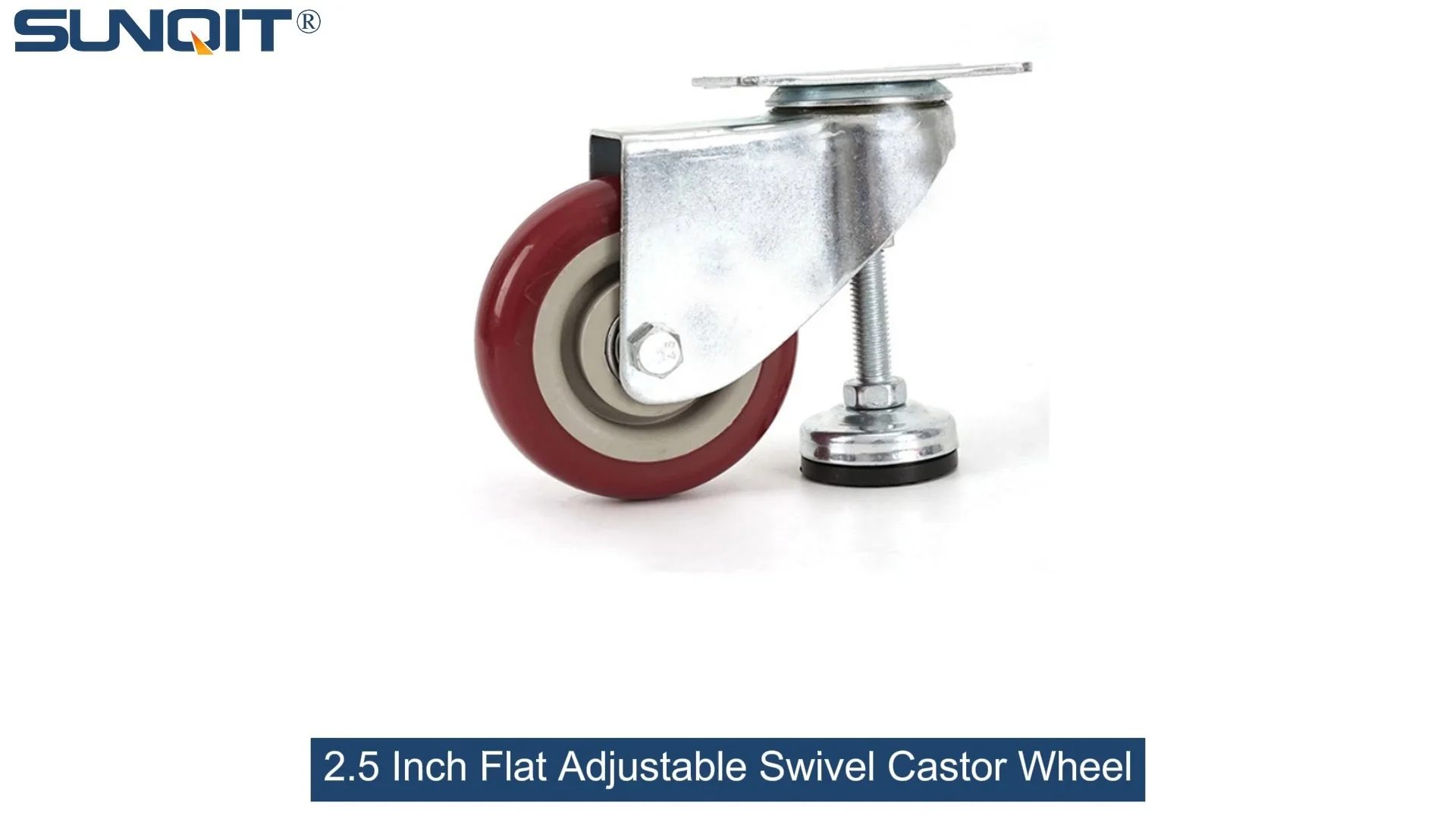
Flat Adjustable Swivel Castor Wheel
Swivel Chair Casters Ball Bearing Wheels Rubber Base with adjustable height function. Resistant to abrasion, impact and corrosion. Heavy payload can hold 80Kgs per pcs,which can make it works at a stable and smooth status.
Introduction: The Unsung Heroes of Workplace Mobility
Walk into any factory, workshop, or warehouse, and you'll notice something that rarely gets the attention it deserves: the wheels under the equipment. From the workbench where an assembler spends eight hours a day to the turnover trolley shuttling parts across the floor, caster wheels are the silent workhorses keeping operations moving. But not all caster wheels are created equal. If you've ever dealt with a wobbly cart that jams on uneven floors, a workbench that won't stay level, or a trolley that's impossible to maneuver around tight corners, you know the difference the right caster can make.
Enter flat adjustable swivel castor wheels—a versatile solution designed to combine mobility, stability, and adaptability. These aren't your average wheels: they feature a flat mounting plate for secure attachment, a swivel mechanism for 360-degree movement, and an adjustable height function to fine-tune stability. Whether you're setting up a new lean system, upgrading a production line, or simply replacing worn-out casters on a trusty workbench, choosing the right flat adjustable swivel castors requires more than just picking the first option off the shelf. It means understanding size, load capacity, materials, and how they fit into your specific workflow.
In this guide, we'll break down everything you need to know to select flat adjustable swivel castor wheels that don't just "work"—they enhance efficiency, reduce downtime, and keep your team moving smoothly. We'll cover key factors like size and fit, dive into real-world applications (think workbenches and turnover trolleys), and even explore caster accessories that can take your setup from "good" to "great." Let's get rolling.
What Are Flat Adjustable Swivel Castor Wheels, Anyway?
Before we jump into selection, let's make sure we're all on the same page about what these wheels actually are. Flat adjustable swivel castors blend three key features: flat mounting plates , adjustable height , and swivel functionality . Let's break that down:
- Flat Mounting Plate: Unlike stem-mount casters (which use a threaded rod to attach to equipment), these casters have a flat, metal plate with pre-drilled holes. This design distributes weight evenly across the mounting surface, making them ideal for heavy equipment like workbenches or metal shelving where stability is non-negotiable.
- Adjustable Height: Ever set up a workbench only to find it rocks because the floor is uneven? Adjustable casters solve that. Most models feature a threaded stem or bolt that lets you raise or lower the wheel by turning a nut or handle, leveling the equipment even on rough surfaces. This isn't just about comfort—it's about safety, too. A level workbench reduces strain on the user and prevents tools or materials from sliding off.
- Swivel Functionality: Unlike rigid casters (which only roll forward and backward), swivel casters rotate 360 degrees, allowing the equipment to pivot and turn with minimal effort. This is a game-changer for tight spaces, like a crowded production line where a turnover trolley needs to navigate between machines or a workbench needs to be repositioned for a new task.
Put together, these features make flat adjustable swivel casters a go-to choice for applications where mobility, stability, and adaptability are priorities. Now, let's dig into how to choose the right ones for your needs.

Key Factor 1: Size—It's Not Just About Diameter
When most people think about caster size, they focus on wheel diameter—and for good reason. A larger wheel generally rolls more easily over obstacles like cracks or thresholds and can support more weight. But size is about more than just how big the wheel looks. To find the perfect fit, you'll need to consider three dimensions: diameter, width, and mounting plate size.
Wheel Diameter: The Foundation of Mobility
Wheel diameter is measured from one edge of the wheel to the opposite edge, and it's the most critical size factor for mobility. Smaller wheels (2–3 inches) are lightweight and affordable but struggle with rough terrain and heavy loads. Larger wheels (4–6 inches) glide over debris and uneven floors but add height to the equipment, which might be a problem if you're working with low-clearance shelving or ergonomic workbench heights.
For example, a workbench used for light assembly might do fine with 3-inch wheels—they're low enough to keep the bench at a comfortable height and maneuverable enough for occasional repositioning. But a turnover trolley hauling 500-pound pallets? That's going to need 5-inch or larger wheels to handle the weight and roll smoothly across concrete floors.
Wheel Width: Stability and Weight Distribution
Width (the distance across the wheel's tread) affects how the caster handles weight and floor contact. A wider wheel spreads the load over a larger area, reducing pressure on the floor (important for delicate surfaces like polished concrete or vinyl) and improving stability. Narrow wheels, on the other hand, are better for tight spaces and applications where precision movement is key, like medical equipment or lab carts.
As a rule of thumb: if you're dealing with heavy loads or uneven floors, opt for a wider wheel. For light loads or smooth surfaces, a narrower wheel will work just fine.
Mounting Plate Size: Secure Attachment Matters
The flat mounting plate is what connects the caster to your equipment, so its size and bolt pattern need to match the mounting surface. A plate that's too small won't distribute weight evenly, leading to wobbling or even failure. Check the equipment's manual for recommended plate dimensions, or measure the existing mounting holes (center-to-center distance) to ensure a snug fit. Most manufacturers list mounting plate dimensions (length x width) and bolt hole spacing in their product specs—don't skip this step!
| Wheel Diameter (Inches) | Typical Width (Inches) | Max Load Capacity (Lbs per Caster) | Best For | Floor Type Compatibility |
|---|---|---|---|---|
| 2–2.5 | 0.75–1 | 100–200 | Light workbenches, small tool carts | Smooth concrete, vinyl, hardwood |
| 3–4 | 1–1.5 | 200–400 | Standard workbenches, medium turnover trolleys | Concrete, tile, uneven floors |
| 5–6 | 1.5–2 | 400–800 | Heavy-duty turnover trolleys, material racks | Rough concrete, industrial floors with cracks |
| 7+ | 2+ | 800+ | Large industrial carts, machinery bases | Outdoor surfaces, gravel, extreme unevenness |
Pro tip: When in doubt, size up. A slightly larger wheel than you think you need will often perform better in the long run, especially if your needs change (e.g., adding more weight to a trolley over time).

Key Factor 2: Load Capacity—Don't Cut Corners on Weight
Nothing ruins a caster faster than overloading it. A wheel that's rated for 300 pounds but forced to carry 500 will wear out quickly, wobble, or even snap—putting workers and equipment at risk. Calculating load capacity isn't as simple as checking the product label, though. You need to account for the total weight of the equipment, the materials it carries, and add a safety margin to avoid failure.
Step 1: Calculate Total Weight
Start by adding up the weight of the equipment itself (e.g., the workbench frame, the body of the turnover trolley) and the maximum weight of materials it will carry (tools, parts, boxes, etc.). For example, a wooden workbench might weigh 150 pounds, and the assembler using it could add another 200 pounds of tools and parts. Total weight? 350 pounds.
Step 2: Divide by the Number of Casters
Most equipment uses 4 casters (one at each corner), so divide the total weight by 4 to get the load per caster. In the example above, 350 pounds ÷ 4 casters = 87.5 pounds per caster. But wait—this is just the minimum. Casters rarely carry weight evenly, especially if the load is unbalanced (e.g., a trolley with a heavy box on one side). That's where the safety factor comes in.
Step 3: Add a Safety Margin
Industry best practice is to multiply the per-caster load by 1.5 (a 50% safety margin) to account for uneven weight distribution, sudden impacts (like hitting a threshold), and wear and tear. Using our example: 87.5 pounds x 1.5 = 131.25 pounds per caster. So you'd need casters rated for at least 132 pounds each—not 87.5.
For heavy-duty applications (like industrial trolleys or machinery), some experts recommend a 200% safety margin (multiply by 2). Better safe than sorry—replacing a broken caster is cheap compared to repairing a damaged workbench or treating a workplace injury.

Key Factor 3: Material—Matching the Wheel to the Floor
You wouldn't wear flip-flops to hike a mountain, and you shouldn't put the wrong wheel material on your workplace floor. The material of the caster wheel affects everything from noise levels to floor protection to durability. Here's a breakdown of the most common materials and when to use them:
Rubber: The Quiet, Gentle Option
Rubber wheels are soft, grippy, and quiet—making them ideal for indoor spaces like offices, labs, or workshops where noise is a concern. They're also gentle on delicate floors (hardwood, vinyl, polished concrete) and provide good traction, even on smooth surfaces. The downside? They're not the most durable. Heavy loads or rough floors can cause rubber to crack or wear down over time. Best for: Light workbenches, medical carts, or equipment used on sensitive floors.
Polyurethane: The All-Rounder
Polyurethane (PU) wheels are a popular middle ground. They're made by bonding a polyurethane tread to a hard core (usually plastic or metal), combining the best of rubber and hard materials. PU wheels are quiet, non-marking (great for cleanrooms or showrooms), and more durable than rubber. They also roll smoothly over small obstacles and have good load capacity. The only catch? They're slightly more expensive than rubber. Best for: Most workbenches, turnover trolleys, and general warehouse use.
Nylon: The Heavy-Duty Workhorse
Nylon wheels are hard, tough, and built for heavy loads. They're resistant to oil, chemicals, and high temperatures—making them perfect for industrial settings, garages, or factories where floors are often dirty or exposed to spills. Nylon is also budget-friendly and long-lasting. The downside? They're noisy on hard floors and can scratch delicate surfaces. Best for: Heavy turnover trolleys, material racks, and outdoor use.
Steel: The Industrial Powerhouse
Steel wheels are the strongest option, with load capacities up to several thousand pounds. They're nearly indestructible, resistant to all kinds of debris, and work well in extreme temperatures (hot foundries, cold freezers). But they're loud, heavy, and will scratch or dent even the toughest floors. Save steel wheels for applications where nothing else will do: industrial machinery, outdoor carts, or environments with sharp debris (like metal shavings).
Pro tip: If you're unsure about floor type, test a single caster in a hidden area first. Roll it back and forth, apply weight, and check for scratches or marks. It's a small step that can save you from costly floor repairs later.
Key Factor 4: Adjustability—Leveling the Playing Field
We touched on adjustability earlier, but it's worth diving deeper. Flat adjustable swivel casters aren't just about height—they're about solving real-world problems like uneven floors, ergonomic needs, and equipment alignment. Here's how to make the most of this feature:
Height Adjustment Range
Adjustable casters let you raise or lower the equipment by turning a threaded stem or a bolt on the caster. The adjustment range (usually 0.5–2 inches) determines how much you can level the equipment. For example, if your workshop floor slopes by 1 inch from one corner to another, you'll need casters with at least 1 inch of adjustment to keep the workbench level.
Look for casters with easy-to-use adjustment mechanisms—some have a hex nut that requires a wrench, while others have a hand-turn knob for quick changes. If you'll need to adjust the height frequently (e.g., moving the workbench between floors with different levels), a hand-turn knob is worth the extra cost.
Locking vs. Non-Locking Adjustment
Some adjustable casters lock in place once you set the height, preventing them from slipping over time. This is critical for equipment that stays in one place for long periods, like a stationary workbench. Non-locking casters are better for equipment that's moved often—you can adjust the height quickly when needed without fumbling with locks.
Ergonomic Benefits
Adjustability isn't just about stability—it's about worker comfort. A workbench that's too low forces the user to hunch over, leading to back pain; too high causes shoulder strain. With adjustable casters, you can tweak the height to match the worker's needs, reducing fatigue and boosting productivity. It's a small detail that makes a big difference in daily operations.
Matching Casters to Your Application: Real-World Examples
Now that we've covered the basics, let's put it all together with three common applications: workbenches, turnover trolleys, and lean system setups. Each has unique needs, and understanding them will help you apply the size, load, and material guidelines above.
Application 1: Workbenches—Stability Meets Occasional Mobility
Workbenches are where precision happens. Whether it's assembling electronics, packing orders, or repairing tools, the surface needs to be level, stable, and at a comfortable height. Most workbenches are moved rarely (if ever), but when they are, you need them to glide smoothly without jostling the tools or parts on top.
Size: 3–4 inch wheels are ideal. They're low enough to keep the bench at a standard height (36–40 inches) and small enough to avoid adding unnecessary bulk. Load capacity: Calculate the bench weight + tools + maximum materials, then add a 50% safety margin. For a typical 200-pound workbench with 250 pounds of tools/parts, 450 pounds ÷ 4 casters = 112.5 pounds per caster x 1.5 = 168.75 pounds. So aim for 170+ pound capacity. Material: Polyurethane is a safe bet—it's quiet, non-marking, and smooth-rolling for occasional moves. Adjustability: Look for at least 1 inch of adjustment to level the bench on uneven floors.
Application 2: Turnover Trolleys & Racks—Heavy Loads, Frequent Movement
Turnover trolley and rack systems are the backbone of material handling. They carry everything from raw materials to finished products, often over long distances and rough floors. Maneuverability is key here—trolleys need to pivot around corners, fit through doorways, and stop quickly when needed.
Size: 4–6 inch wheels. Larger wheels roll over cracks and debris, reducing effort for the person pushing. Load capacity: Trolleys often carry heavy loads (500+ pounds), so don't skimp on safety margins. For a 600-pound trolley + 400 pounds of materials = 1,000 pounds total. 1,000 ÷ 4 casters = 250 pounds per caster x 1.5 = 375 pounds. Opt for 400+ pound capacity. Material: Nylon or polyurethane. Nylon is better for industrial floors with oil or chemicals; polyurethane is quieter for indoor use. Adjustability: 0.5–1 inch of adjustment helps keep loads stable, even if the trolley is unevenly packed.
Application 3: Lean Systems—Efficiency Through Mobility
Lean system principles focus on reducing waste and streamlining workflows. In a lean setup, equipment needs to be flexible—able to adapt to changing production demands quickly. This means casters that move smoothly, lock securely, and last through constant use.
Size: 3–5 inches, depending on the equipment. Workstations might use 3-inch wheels for frequent repositioning, while material carts could use 5-inch wheels for long-haul moves. Load capacity: Lean systems often involve just-in-time delivery, so loads might vary. Err on the side of higher capacity (add a 60–70% safety margin) to handle fluctuations. Material: Polyurethane for noise reduction and floor protection—lean environments thrive on calm, efficient workspaces. Adjustability: Critical for aligning workstations in a continuous flow. Look for casters with easy-to-use adjustment knobs to speed up reconfigurations.
Caster Accessories: Small Add-Ons, Big Improvements
Even the best caster wheels can be made better with the right accessories. Caster accessories solve specific problems, from preventing unwanted movement to protecting floors to extending the life of your casters. Here are the most useful ones to consider:
Brakes: Stop When You Need To
Most adjustable swivel casters come with brake options, and they're non-negotiable for safety. The two main types are: Total lock brakes (lock both the wheel and the swivel mechanism, preventing all movement) and directional lock brakes (lock the swivel but let the wheel roll forward/backward). For workbenches, total lock brakes are best—you don't want the bench moving while someone's using it. For trolleys, directional locks can help keep the cart moving straight in tight aisles.
Floor Protectors: Keep Surfaces Scratch-Free
Even soft materials like polyurethane can scratch delicate floors under heavy loads. Floor protectors (often rubber or felt pads that attach to the caster base) add an extra layer of cushioning. They're cheap, easy to install, and a must if you're using casters on hardwood, tile, or polished concrete.
Swivel Locks: Control Maneuverability
Swivel locks prevent the caster from rotating, turning it into a rigid caster. This is useful for equipment that needs to move in straight lines (e.g., a trolley that always travels the same path) or for reducing wobble at high speeds. Just flip the lock when you need straight-line movement, and release it when you need to pivot.
Mounting Plates & Adapters: Ensure a Perfect Fit
If your equipment's existing mounting holes don't match the caster's plate, mounting plate adapters can bridge the gap. They're metal plates with multiple bolt patterns, allowing you to attach casters to almost any surface. For custom setups, universal mounting plates are a lifesaver.
Common Mistakes to Avoid
Even with the best intentions, it's easy to make mistakes when selecting casters. Here are four pitfalls to steer clear of:
Mistake 1: Underestimating Load Capacity
This is the biggest culprit behind caster failure. Remember: total weight includes the equipment, materials, and any unexpected additions. Always add the 50% safety margin—you'll rarely regret it.
Mistake 2: Ignoring Floor Type
Using steel wheels on polished concrete is a recipe for scratches. Using rubber wheels in a factory with oil spills will lead to premature wear. Take 5 minutes to assess your floor type (smooth, rough, chemical-exposed) before choosing material.
Mistake 3: Overlooking Adjustability
Uneven floors are common in older buildings, and even new ones can have slight slopes. A caster without adjustability will leave your equipment wobbly, leading to user fatigue and potential accidents.
Mistake 4: Skipping Accessories
Brakes and swivel locks might seem like "extras," but they're essential for safety. A trolley without brakes can roll away on a slope; a workbench without swivel locks can spin unexpectedly. Invest in the accessories that match your use case.
Conclusion: Invest in the Right Casters, Reap the Rewards
Flat adjustable swivel castor wheels might not be the most glamorous part of your workplace, but they're one of the most impactful. The right set can turn a frustrating, wobbly workbench into a stable, adaptable workspace. It can make a heavy turnover trolley feel light as a feather to push. And in a lean system, it can streamline workflows, reduce waste, and keep your team focused on what matters—productivity.
By focusing on size (diameter, width, mounting plate), load capacity (with a safety margin), material (matching floor type and use), and adjustability (for leveling and ergonomics), you'll select casters that fit your needs perfectly. Don't forget to pair them with the right accessories—brakes, locks, and floor protectors—to maximize safety and longevity.
At the end of the day, caster wheels are an investment in your team's efficiency, safety, and comfort. Take the time to get them right, and you'll wonder how you ever managed with the wrong ones.