- Company Articles
- Products and Technology
- Product knowledge
- Selecting One Way Rotatory Straight Lean Pipe Joints by Industry: A Guide

Selecting One Way Rotatory Straight Lean Pipe Joints by Industry: A Guide
Related Product
One Way Rotatory Straight Lean Pipe Joint
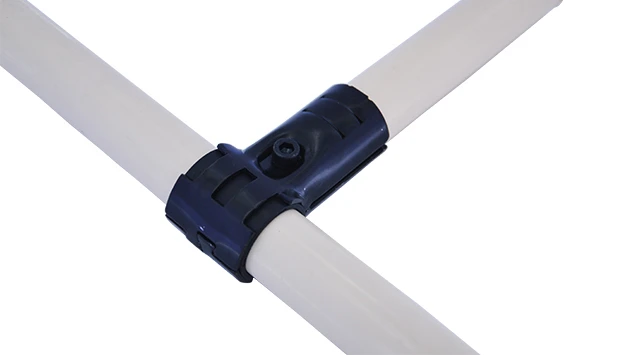
Two way lean pipe joint for 2 pcs 28MM lean pipe connection in straight angle with rotatory fucntion, which used widely in workbench, flow rack, hand trolley frame connection.
In the world of modern manufacturing and logistics, efficiency isn't just a goal—it's the difference between thriving and falling behind. Every tool, every component, and every connection in your workflow plays a role in keeping operations smooth, and few components are as quietly critical as the lean pipe joint. Among these, the one way rotatory straight lean pipe joint stands out for its ability to add controlled, directional movement to lean systems, reducing bottlenecks and simplifying material handling. But here's the thing: not all joints are created equal, and what works for a automotive assembly line might fail miserably in a electronics workshop. That's why selecting the right one way rotatory straight lean pipe joint requires a deep dive into your industry's unique needs, challenges, and workflows. Let's explore how to make that choice.
What Are One Way Rotatory Straight Lean Pipe Joints?
Before we dive into industry specifics, let's clarify what these joints are and why they matter. A one way rotatory straight lean pipe joint is a specialized connector designed to link lean pipes (hollow tubes used in lean manufacturing systems) while allowing controlled, one-directional rotation. Unlike fixed joints, which lock pipes into rigid angles, these joints let sections of your lean system —like workbench extensions, conveyor rails, or material racks—pivot or glide in a single, predetermined direction. Think of it as a hinge with a purpose: it doesn't spin freely but moves just enough to let materials flow, tools adjust, or workstations reconfigure without disassembly.
These joints are the unsung heroes of lean management. By enabling smooth, directional movement, they reduce the need for manual lifting, minimize the risk of product damage from abrupt handling, and adapt to changing production demands. Whether you're building a workbench that needs a tilting surface for assembly or a flow rack that feeds parts to a conveyor, the right joint turns static structures into dynamic, productivity-boosting tools.
Key Features to Consider When Selecting Joints
Not all one way rotatory straight lean pipe joints will fit your needs. To choose wisely, focus on these critical features:
- Material: Most joints are made from aluminum, stainless steel, or coated steel. Aluminum is lightweight and corrosion-resistant, ideal for clean environments like electronics labs. Stainless steel offers higher strength and durability, better for heavy-load industries like automotive. Coated steel (often with PE or plastic) adds grip and is cost-effective for general manufacturing.
- Load Capacity: How much weight can the joint support while rotating? A joint for a small parts bin might handle 10kg, while one for an automotive transmission rack could need to bear 100kg or more. Overloading leads to jamming or failure—always check the manufacturer's specs.
- Rotation Range: This is the angle the joint can pivot (e.g., 0–90 degrees or 0–180 degrees). A 90-degree joint might work for a folding workbench, while a 180-degree joint could be better for a conveyor that needs to tilt to unload materials.
- Compatibility: Ensure the joint fits your existing lean pipes. Check pipe diameter (common sizes are 28mm or 30mm), material (aluminum vs. steel), and connection type (threaded, snap-fit, or bolt-on). Mismatched joints lead to wobbly structures and safety risks.
- Durability: Look for features like rust-resistant coatings, reinforced pivot points, and smooth bearings. In high-traffic areas—like a busy production assemble line—joints take constant wear; a cheap, flimsy joint will fail quickly, halting operations.

Industry-Specific Selection Guide
Now, let's break down how to choose these joints for five key industries. Each has unique demands, and the right joint can make or break your lean system's performance.
1. Electronics Manufacturing
Electronics production lines are all about precision and protection. Sensitive components like circuit boards, microchips, and semiconductors are prone to static damage, and workspaces are often tight, with operators needing quick access to tools and parts. Here's what matters:
Key Challenges: Static electricity (ESD) risks, small part handling, and the need for clean, non-corrosive equipment. Workstations must be adaptable to different product sizes (e.g., switching from smartphone PCBs to larger tablets).
Ideal Joint Features: Look for ESD-safe materials (stainless steel or aluminum with anti-static coatings) to prevent static buildup. Opt for low-profile, lightweight joints—bulky designs take up valuable workspace. A rotation range of 0–45 degrees is often enough for tilting workbench surfaces, making it easier to inspect components without straining. Load capacity? Most electronics parts are lightweight, so 15–20kg per joint is sufficient.
Real-World Application: A leading electronics manufacturer in South Korea upgraded their ESD workstations with aluminum one way rotatory joints. By adding a tilting surface to their assembly benches, operators could angle PCBs toward themselves, reducing eye strain and cutting assembly time by 12%. The ESD-safe coating also eliminated static-related component failures, saving thousands in rework costs.
2. Automotive Manufacturing
Automotive plants are high-stakes environments: heavy parts, fast-paced assembly lines, and constant vibration. Here, joints must handle rugged use and heavy loads without compromising safety.
Key Challenges: Heavy components (engines, transmissions, body panels), repetitive motion, and the need for quick reconfiguration (e.g., switching from SUV to sedan production). Joints must withstand oil, grease, and frequent cleaning.
Ideal Joint Features: Stainless steel is a must here—it resists corrosion from oils and cleaning agents and offers the strength to handle 50–100kg loads. Look for joints with sealed bearings to keep grease and debris out, ensuring smooth rotation even after months of use. A rotation range of 0–180 degrees works well for adjustable material racks; for example, a rack holding transmission parts can tilt to feed components directly to the assembly line, reducing manual lifting.
Real-World Application: A European automotive supplier used stainless steel one way rotatory joints to build adjustable flow racks for axle assemblies. The joints allowed the racks to tilt 30 degrees, letting axles roll gently onto conveyor belts instead of being lifted by workers. This cut back strain injuries by 20% and sped up part delivery to the line by 18%.
3. Logistics & Warehousing
In warehouses and distribution centers, the name of the game is speed. Flow racks, conveyor systems, and turnover trolleys need to move goods quickly from receiving to shipping, with minimal human intervention. Here, joints are critical for keeping materials flowing.
Key Challenges: High throughput, varying package sizes (from small boxes to large cartons), and the need for 24/7 reliability. Joints must work seamlessly with flow racks and roller tracks to ensure gravity-fed movement doesn't jam.
Ideal Joint Features: Go for heavy-duty stainless steel joints with a wide rotation range (0–90 degrees) to adjust flow rack angles based on package weight—steeper angles for lighter boxes, shallower for heavier ones. Load capacity should be 30–50kg per joint to handle stacked cartons. Look for joints with locking mechanisms, too; once you set the angle, it shouldn't slip under load.
Real-World Application: A U.S.-based logistics firm installed one way rotatory joints on their flow racks for e-commerce orders. By adjusting the rack angle via the joints, they could speed up the flow of small parcels during peak seasons and slow it down for fragile items. This flexibility reduced jams by 30% and cut order processing time by 18%.
4. Food & Beverage Processing
Food and beverage facilities have strict hygiene standards. Equipment must be easy to clean, resistant to moisture and chemicals, and compliant with regulations like FDA or EU food safety laws.
Key Challenges: Frequent washdowns with sanitizers, exposure to moisture and food acids, and the need for non-toxic, corrosion-proof materials. Joints must not trap food particles or harbor bacteria.
Ideal Joint Features: Stainless steel is non-negotiable here—it resists rust and is easy to sanitize. Look for joints with smooth, crevice-free designs to prevent food buildup. A rotation range of 0–180 degrees is useful for tilting conveyor sections to drain liquids (e.g., rinsing vegetables) or emptying ingredient bins. Load capacity depends on the product: 25–35kg for lightweight items like snack packages, 50+kg for bulk ingredients like flour or sugar.
Real-World Application: A bakery in France used stainless steel one way rotatory joints to build adjustable dough-mixing stations. By tilting the ingredient bins via the joints, workers could pour flour and sugar directly into mixers without lifting heavy bags, reducing back injuries. The smooth, washable design also made daily sanitizing a breeze, passing their annual health inspection with zero violations.
5. Healthcare & Medical Device Manufacturing
Healthcare facilities and medical device plants demand precision, cleanliness, and compliance. From surgical tool assembly to pharmaceutical packaging, even small errors can have life-or-death consequences.
Key Challenges: Sterile environments, strict documentation (traceability of components), and the need for ultra-quiet operation (loud joints can disrupt lab work). Joints must not shed particles or contaminate sterile zones.
Ideal Joint Features: Anodized aluminum joints are a top choice—they're lightweight, corrosion-resistant, and produce minimal particle shedding. Look for joints with precision bearings to ensure smooth, silent rotation (no squeaking!). Load capacity is often low (10–15kg) for small medical devices, but the focus is on stability—no wobbling during delicate tasks like assembling syringes.
Real-World Application: A medical device maker in Germany used aluminum one way rotatory joints to build adjustable workstations for syringe assembly. The silent rotation let operators focus without distractions, and the sterile, particle-free design ensured compliance with ISO 13485 standards. The result? A 9% increase in assembly accuracy and fewer rejected batches.

Industry Comparison Table: One Way Rotatory Joint Selection
| Industry | Key Requirements | Recommended Joint Material | Load Capacity (per joint) | Rotation Range | Common Applications |
|---|---|---|---|---|---|
| Electronics | ESD protection, lightweight, clean | Aluminum (anti-static coated) | 15–20kg | 0–45° | ESD workbenches, PCB assembly stations |
| Automotive | Heavy loads, durability, vibration resistance | Stainless steel | 50–100kg | 0–180° | Material racks, assembly line conveyors |
| Logistics/Warehousing | High throughput, adjustability | Stainless steel or coated steel | 30–50kg | 0–90° | Flow racks, turnover trolleys |
| Food & Beverage | Hygiene, corrosion resistance, easy cleaning | Stainless steel (304 or 316 grade) | 25–50kg | 0–180° | Ingredient bins, rinsing conveyors |
| Healthcare | Sterility, low particle shedding, silent operation | Anodized aluminum | 10–15kg | 0–60° | Surgical tool workbenches, lab equipment racks |
Common Mistakes to Avoid
Even with the right industry insights, it's easy to make missteps. Here are four pitfalls to steer clear of:
- Choosing based on price alone: A cheap joint might save money upfront, but it will wear out quickly, leading to downtime and replacement costs. Invest in quality from a reputable lean pipe supplier —it pays off in the long run.
- Ignoring compatibility: Don't assume all lean pipes are the same. Measure your pipe diameter and check if the joint fits your pipe type (aluminum vs. steel). Mismatched joints lead to unstable structures and safety risks.
- Overlooking environmental factors: A joint that works in a dry electronics lab will rust in a food processing plant. Always factor in moisture, chemicals, and temperature when selecting materials.
- Forgetting future scalability: Your lean system might need to grow or change. Choose joints that are easy to adjust or reconfigure—avoid permanent welds or one-time-use designs.
Maintenance Tips for Longevity
Once you've selected the right joints, proper maintenance will extend their life and keep your lean system running smoothly:
- Lubricate regularly: Use food-grade lubricant for food facilities, silicone-based lube for electronics, and heavy-duty grease for automotive joints. Aim for monthly checks, or more often in high-use areas.
- Clean thoroughly: Wipe down joints with a damp cloth (or sanitizer, for food/healthcare) to remove dust, debris, or food particles. Avoid abrasive cleaners that scratch surfaces.
- Tighten loose connections: Vibration can loosen bolts over time. Check joints weekly and tighten as needed to prevent wobbling.
- replace worn parts: If a joint starts sticking or rotating unevenly, replace bearings or gaskets promptly. Waiting leads to bigger failures.
Final Thoughts: It's About More Than a Joint
Selecting one way rotatory straight lean pipe joints isn't just about picking a connector—it's about strengthening your entire lean system . The right joint adapts to your industry's needs, reduces waste, and empowers your team to work smarter, not harder. By focusing on material, load capacity, rotation range, and industry-specific demands, you'll build a lean system that's not just efficient today, but ready to grow tomorrow.
And remember: you don't have to go it alone. Partner with a trusted lean pipe supplier who understands your industry. They can help assess your needs, recommend the best joints, and even provide custom solutions. After all, in lean manufacturing, every detail counts—and that includes the small but mighty joint that keeps your operations moving forward.