- Company Articles
- Products and Technology
- Product knowledge
- Selecting the Right One Way Rotatory Straight Lean Pipe Joint for Your Project

Selecting the Right One Way Rotatory Straight Lean Pipe Joint for Your Project
Related Product
One Way Rotatory Straight Lean Pipe Joint
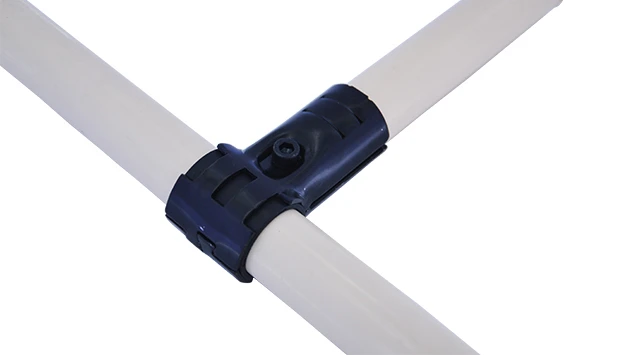
Two way lean pipe joint for 2 pcs 28MM lean pipe connection in straight angle with rotatory fucntion, which used widely in workbench, flow rack, hand trolley frame connection.
Walk into any well-run manufacturing facility, and you'll notice something subtle but powerful: the way work flows. Parts glide smoothly from one station to the next, workbenches adjust to fit changing tasks, and teams move with a rhythm that feels almost choreographed. Behind that harmony often lies a quiet hero: the lean pipe joint. These unassuming connectors are the backbone of flexible, efficient workspaces, but not all joints are created equal. Today, we're zeroing in on a game-changer for controlled movement and adaptability: the one way rotatory straight lean pipe joint. Whether you're building a lean pipe workbench, setting up a roller track system, or revamping your entire lean system, choosing the right joint can mean the difference between a workflow that hums and one that sputters.
Let's start with the basics. Lean systems thrive on two principles: eliminating waste and maximizing flexibility. Every component, from the aluminum lean pipe to the smallest joint, must serve both. The one way rotatory straight lean pipe joint does exactly that. Unlike fixed joints that lock pipes in place or swivel joints that rotate freely, this type allows movement in one direction while resisting it in the other—think of it as a "one-way street" for your pipe structures. This controlled rotation is a secret weapon for assembly lines, material handling, and any setup where precision and predictability matter. But how do you know if it's the right fit for your project? Let's dive in.
What Is a One Way Rotatory Straight Lean Pipe Joint?
At first glance, a one way rotatory straight lean pipe joint looks similar to other lean pipe joints—small, metal (or sometimes plastic), with a design that clamps onto lean pipes. But its magic lies in its internal mechanism. Inside, a spring-loaded pin or ratchet system allows the joint to rotate smoothly in one direction (say, clockwise) but locks when turned the opposite way (counterclockwise). This "one-way" action is crucial for scenarios where you want materials or structures to move in a specific path without backsliding.
Take a simple example: a roller track used to feed parts to an assembly station. If the track slopes slightly downward, gravity would normally pull parts forward—but without a one way joint, a bump or vibration could send them sliding back, causing jams or delays. Add a one way rotatory joint to the track's support structure, and suddenly, the track holds its angle firmly, ensuring parts only move forward. It's a small detail, but in high-volume production, those small details prevent costly interruptions.
These joints are typically made from durable materials like steel (with chrome plating for corrosion resistance) or aluminum for lighter applications. They're designed to work with standard lean pipes—including aluminum lean pipe, stainless steel pipe, and even PE-coated lean pipe—making them compatible with most existing lean systems. And while they're called "straight," they can often be paired with elbows or tees to create more complex structures, adding to their versatility.
Why It Matters: The Role of One Way Rotatory Joints in Lean Systems
Lean manufacturing isn't just about cutting costs—it's about creating systems that adapt. A static workspace might work for a single product, but in today's world of frequent design changes and custom orders, rigidity is a death sentence. One way rotatory straight lean pipe joints excel at fostering adaptability while maintaining control.
Consider a lean pipe workbench in an electronics plant. Workers assemble circuit boards that vary in size from week to week. With fixed joints, adjusting the workbench's height or adding side shelves would require tools, time, and possibly a maintenance crew. But with one way rotatory joints, operators can adjust the bench on the fly: lift a section, rotate it to the desired angle, and let the joint lock into place. No tools, no delays—just a workspace that bends to the task at hand.
Another example is material flow in a warehouse. Roller tracks are a staple for moving boxes or totes, but not all items weigh the same. A heavy box might need a steeper incline to slide forward, while a lighter one could tip or jam if the slope is too steep. One way rotatory joints let you (fine-tune) the track's angle for each load, ensuring smooth, consistent movement. This level of control reduces waste—no more damaged goods from jams, no more time wasted unclogging tracks—and keeps workers focused on value-adding tasks, not troubleshooting.
Perhaps most importantly, these joints future-proof your lean system. As your needs change—new products, higher volumes, updated safety standards—you won't need to tear down and rebuild your structures. Swap out a few joints, adjust the angles, and your workspace evolves right along with you. For small manufacturers and large facilities alike, that adaptability translates to long-term savings and a competitive edge.

Key Features to Look for When Selecting a One Way Rotatory Joint
Not all one way rotatory straight lean pipe joints are built to the same standard. To ensure you're getting a joint that will stand up to daily use and deliver the control you need, keep an eye on these critical features:
1. Load Capacity
This is non-negotiable. A joint that can't support the weight of your materials or structure will fail, leading to downtime or even safety hazards. Check the manufacturer's specs for both static load (weight when stationary) and dynamic load (weight when moving). For example, a joint rated for 50kg static might only handle 30kg dynamically—important if you're using it on a roller track where items are constantly sliding.
2. Rotation Range and Locking Strength
How far can the joint rotate before locking? Some models allow 180° rotation in one direction, while others are limited to 90° or even 45°. Think about your needs: a workbench might need full 180° adjustability, while a roller track might only require 30° to set the right slope. Also, test the locking mechanism—you want it to engage firmly but release smoothly when needed. A weak lock will let the joint slip; a stiff one will make adjustments frustrating.
3. Material and Corrosion Resistance
Steel joints with chrome plating are tough and affordable, making them ideal for dry, indoor environments. But if your facility deals with moisture, chemicals, or food processing, stainless steel or aluminum lean pipe joints are better—they resist rust and corrosion. For cleanrooms or pharmaceutical settings, look for joints with smooth surfaces (no crevices where dust can hide) and FDA-approved materials.
4. Compatibility with Your Pipes
Lean pipes come in different diameters—1.5mm, 2.0mm, and 1.2mm are common. Make sure the joint's clamp size matches your pipe's outer diameter. A loose fit will cause wobbling; a tight one might crack the pipe (especially if it's PE-coated). Some suppliers offer adjustable clamps, which are great if you're using pipes from multiple manufacturers or plan to upgrade later.
5. Ease of Installation and Adjustment
Time is money, and a joint that takes 10 minutes to install per connection adds up fast. Look for models with tool-free clamps (like thumb screws or quick-release levers) for faster setup. Also, check how easy it is to adjust the rotation—some joints require a hex key to loosen before rotating, while others let you simply pull and turn. For high-adjustment environments, the latter is a lifesaver.

How It Stacks Up: Comparing Lean Pipe Joint Types
To truly appreciate the one way rotatory straight lean pipe joint, it helps to see how it compares to other common joint types. Let's break down the pros and cons:
| Joint Type | Best For | Pros | Cons |
|---|---|---|---|
| One Way Rotatory Straight | Roller tracks, adjustable workbenches, sloped material racks | Controlled movement, adaptable angles, prevents backsliding | Limited rotation direction, higher cost than fixed joints |
| Fixed (e.g., 90°, 45°) | Static structures, rigid frames, shelving | Inexpensive, strong, low maintenance | No adjustability; requires disassembly to reconfigure |
| 360° Swivel | Mobile trolleys, rotating workstations | Full rotation, highly flexible | No locking; can drift out of position under load |
| Internal Rotary | Folding structures, compact workspaces | Space-saving, smooth rotation | Lower load capacity, limited to specific pipe types |
As you can see, the one way rotatory joint fills a unique niche: it offers flexibility without sacrificing control. For projects where movement needs to be predictable and directional—like a roller track feeding parts to a machine—it's often the best choice. For static structures, a fixed joint might suffice, but if you anticipate even minor changes in your workflow, the one way rotatory joint is worth the investment.
Real-World Applications: Where One Way Rotatory Joints Shine
To bring this to life, let's look at three common scenarios where one way rotatory straight lean pipe joints make a tangible difference. These examples come from real-world facilities (with names changed for privacy), but they reflect challenges many manufacturers face.
1. Automotive Assembly Line: Roller Track Material Flow
A mid-sized auto parts manufacturer was struggling with a bottleneck on their brake caliper assembly line. Parts were delivered via a gravity-fed roller track, but lightweight components often got stuck or rolled back, causing workers to stop and manually push them forward. This added 15-20 minutes of downtime per shift.
After consulting with their lean pipe supplier, they replaced the fixed joints on the roller track with one way rotatory straight joints. The new joints allowed them to set a gentle, consistent slope (15°) and locked the track in place, preventing backsliding. Within a week, downtime dropped by 90%, and workers reported less physical strain from pushing parts. The investment in new joints paid for itself in under a month.
2. Electronics Plant: Adjustable Lean Pipe Workbench
An electronics manufacturer produces both small circuit boards (for smartphones) and large control panels (for industrial machines). Their workbenches were fixed at a single height, forcing workers to hunch over small boards or reach up for large panels—leading to ergonomic complaints and slower assembly times.
They upgraded to lean pipe workbenches fitted with one way rotatory joints on the legs and side extensions. Now, workers can adjust the bench height from 75cm to 105cm in seconds, and fold down side shelves when not in use. The joints lock securely, so the bench doesn't wobble during use. Within three months, ergonomic injuries dropped by 40%, and assembly speed increased by 15% as workers could position materials at the optimal height.
3. Food Packaging Facility: Sanitary Material Racks
A food packaging company needed material racks that could be easily cleaned and adjusted for different package sizes (bags, boxes, cans). Their old steel racks were hard to sanitize (rust trapped in crevices) and couldn't be reconfigured without tools.
They switched to aluminum lean pipe racks with stainless steel one way rotatory joints. Aluminum is naturally corrosion-resistant, and the joints' smooth surfaces left no room for food particles to hide. Workers could tilt shelves to 10° for boxed goods or flatten them for cans, using the joints to lock angles in place. The new racks met FDA standards and reduced cleaning time by 30%, while the adjustability let them handle 50% more product types without buying new racks.
Maintenance Tips to Keep Your Joints Working Like New
Even the best lean pipe joint will fail prematurely without proper care. Here's how to extend their lifespan and ensure consistent performance:
- Lubricate moving parts quarterly: The rotation mechanism relies on smooth movement. Use a food-grade lubricant (for cleanrooms or food facilities) or a light machine oil (for industrial settings) to keep joints from sticking. Wipe away excess to prevent attracting dust.
- Inspect locks monthly: Check that the one-way lock engages firmly. If it slips or feels loose, tighten the clamp or replace worn components (like springs or pins). A slipping lock is a safety risk—don't ignore it.
- Clean regularly: Wipe down joints with a damp cloth to remove grease, dust, or debris. For stainless steel or aluminum lean pipe joints, use a mild detergent to avoid scratching the surface.
- replace worn joints promptly: If a joint's clamp is cracked, the rotation is uneven, or the lock fails, replace it immediately. A single faulty joint can compromise the entire structure, leading to accidents or downtime.
How to Choose a Reliable Lean Pipe Supplier
Your joint is only as good as the supplier behind it. When shopping for one way rotatory straight lean pipe joints, look for these signs of a trustworthy partner:
1. Quality Certifications
Reputable suppliers will have ISO 9001 certification (for quality management) or ISO 14001 (for environmental standards). For industries like aerospace or medical devices, look for AS9100 or ISO 13485 certifications. These ensure the joints are manufactured to strict standards.
2. Technical Support
A good supplier doesn't just sell parts—they help you solve problems. Do they offer guidance on load capacities, installation, or material selection? Can they provide CAD drawings or samples for testing? Avoid suppliers who rush you to buy without understanding your needs.
3 Inventory and Lead Times
Nothing kills a project faster than waiting 8 weeks for a joint. Look for suppliers with local warehouses or short lead times (2-5 business days for standard parts). For custom orders, ask about their production timeline and communication process—will they update you if delays occur?
4. Customer Reviews
Check online reviews or ask for references. Do other customers praise the supplier's product quality and responsiveness? Watch for red flags like frequent complaints about defective parts or unhelpful customer service.
Final Thoughts: Invest in the Joint That Grows With You
Selecting the right one way rotatory straight lean pipe joint might seem like a small decision, but it's one that ripples through your entire operation. A well-chosen joint turns a static workspace into a dynamic, adaptable system—one that reduces waste, boosts productivity, and keeps workers safe and happy. Whether you're building a single lean pipe workbench or overhauling a full lean system, prioritize joints that balance strength, flexibility, and durability.
Remember: the goal of lean manufacturing isn't perfection—it's progress. By choosing components that support adaptability, you're not just solving today's problems; you're building a foundation for tomorrow's successes. So take the time to evaluate your needs, test different joints, and partner with a supplier who understands your vision. Your workflow (and your bottom line) will thank you.