- Company Articles
- Products and Technology
- Product knowledge
- Shock-Absorbing Flat Swivel Castor Wheel with Brake for Sensitive Equipment Protection

Shock-Absorbing Flat Swivel Castor Wheel with Brake for Sensitive Equipment Protection
Related Product
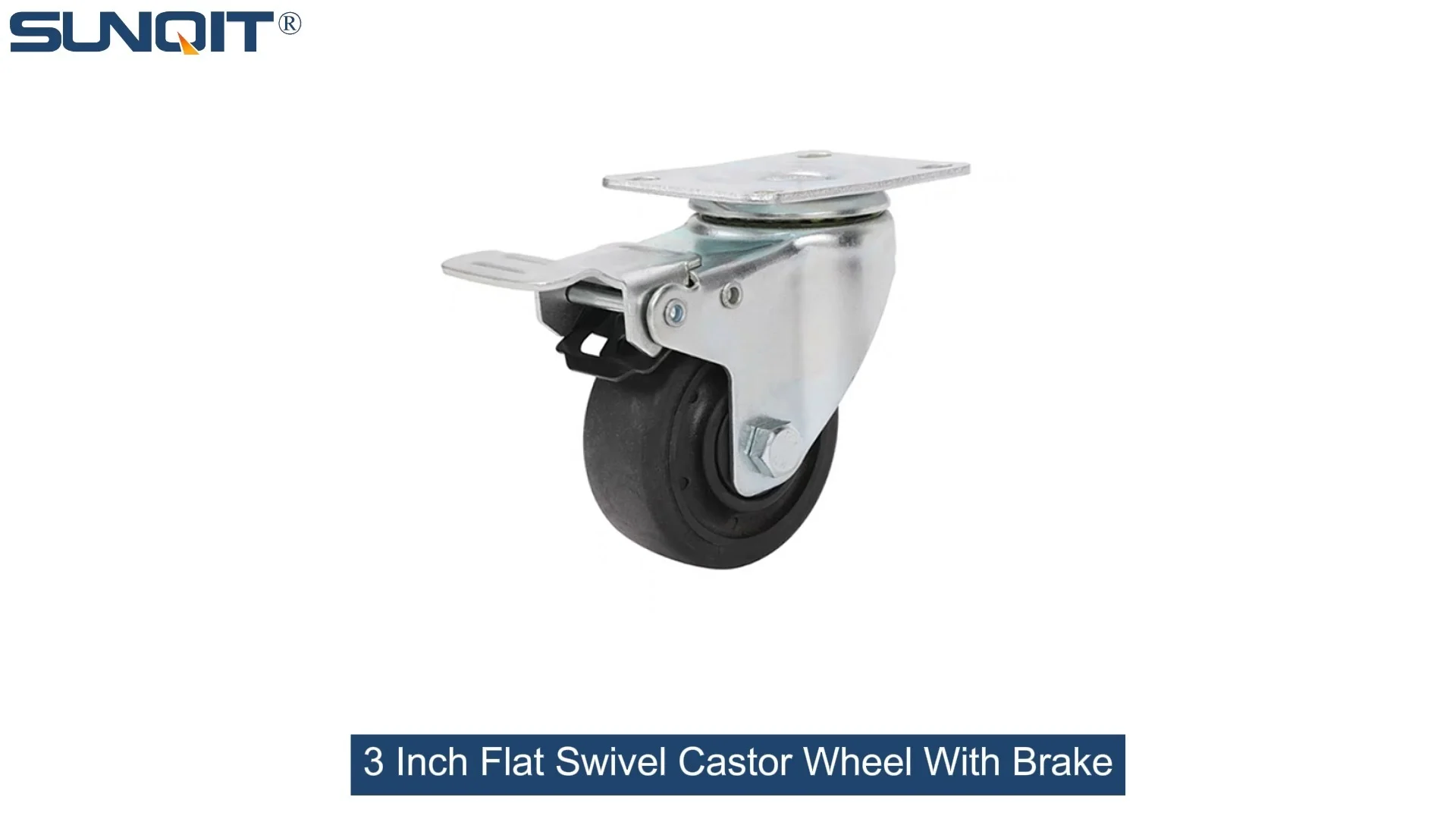
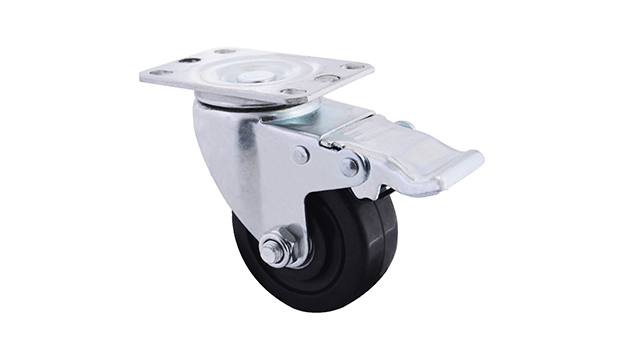
Flat Swivel Castor Wheel With Brake
Chair Casters Ball Bearing Wheels Rubber Base with brake design. Resistant to abrasion, impact and corrosion. Heavy payload can hold 70Kgs per pcs,which can make it works at a stable and smooth status.
In the world of precision and care, where the difference between success and failure can be measured in microns or milliseconds, there's an unsung hero working behind the scenes: mobility. Think about the medical lab where a centrifuge spins at 15,000 RPM to separate blood components, or the semiconductor factory where a single speck of dust can ruin a batch of microchips worth thousands of dollars. These aren't just workplaces—they're environments where sensitive equipment doesn't just need to work; it needs to survive being moved. And that's where the right castor wheel comes in.
We often take mobility for granted. Roll a cart here, move a machine there—what's the big deal? But for equipment that measures, analyzes, or creates with pinpoint accuracy, even the smallest jolt can throw off calibrations, damage internal components, or compromise results. That's why today, we're diving into a tool that's changing the game for industries that can't afford mistakes: the shock-absorbing flat swivel castor wheel with brake. This isn't just a wheel on a bracket; it's a protection system designed to keep your most valuable equipment safe, whether it's gliding across a hospital floor or being repositioned in a busy manufacturing plant.
Why Sensitive Equipment Can't Afford "Just Any" Mobility
Let's start with the problem: sensitive equipment is, by nature, delicate. It's built to detect the smallest changes in temperature, pressure, or light. It's calibrated to within fractions of a degree or a hair's width. But here's the catch: in most workplaces, that equipment doesn't stay in one spot. Labs need to rearrange for new experiments, hospitals need to move machines to patients' bedsides, and factories need to reconfigure production lines to meet shifting demands. Mobility is essential—but it's also a risk.
Consider a standard castor wheel. You've seen them on office chairs, grocery carts, or basic utility carts. They're cheap, simple, and get the job done for moving boxes or files. But under a piece of sensitive equipment? They're a disaster waiting to happen. Standard castors transmit vibrations directly from the floor to the equipment. A rough patch of concrete, a loose tile, or even a sudden stop can send a shockwave through the wheel, up the bracket, and into the machine. Over time, those shocks add up: calibration drift, worn-out internal parts, or in the worst cases, complete equipment failure.
Then there's the issue of control. Standard swivel castors can be jerky, especially when changing direction. Ever tried to move a heavy cart and felt it "catch" on the floor, pulling to one side? That sudden movement isn't just annoying—it's dangerous for equipment with fragile components. And without a reliable brake, even a slight incline can send an unattended cart rolling, risking collisions or spills.
The cost of these risks isn't just financial. In a hospital, a damaged blood analyzer could delay critical test results. In a research lab, a misaligned microscope might invalidate weeks of experiments. In manufacturing, a jolted inspection machine could let defective products slip through, harming brand reputation. For these industries, "good enough" mobility isn't enough. They need mobility that protects.
Meet the Solution: Shock-Absorbing Flat Swivel Castor Wheel with Brake
Enter the shock-absorbing flat swivel castor wheel with brake. At first glance, it might look similar to other castors, but under the surface, it's engineered for a very specific purpose: to move sensitive equipment without moving its internal components. Let's break down what makes this castor wheel a game-changer for anyone who values precision and protection.
What Makes This Castor Wheel Different?
The key word here is "shock-absorbing." Unlike standard castors, which act like rigid levers transferring every bump and jolt, this design includes a built-in suspension system. Think of it like the shocks on a car—instead of feeling every pothole, the suspension absorbs the impact, keeping the ride smooth. For your equipment, that means less vibration, fewer jolts, and a significantly lower risk of damage during movement.
Then there's the "flat swivel" design. Swivel castors are great for maneuverability, but traditional models can bind or stick when turning, causing sudden jerks. The flat swivel plate on this castor is designed to rotate smoothly, with minimal friction, so changes in direction feel gradual and controlled. No more yanking or pulling—just easy, fluid movement, even with heavy loads.
And let's not forget the "brake." This isn't just a flimsy lever that half-heartedly slows the wheel. The brake system here is a dual-lock mechanism: it locks both the wheel itself and the swivel plate. That means when you engage the brake, the castor doesn't just stop rolling—it stops moving entirely. No more slow drifts, no more unexpected swivels. Your equipment stays exactly where you put it, even on uneven floors.
How It Works: The Science Behind the Protection
To truly appreciate this castor wheel, it helps to understand the engineering that goes into each component. Let's start with the star of the show: the shock absorption mechanism.
The Shock Absorption Mechanism: More Than Just a Spring
At the heart of the shock-absorbing feature is a combination of materials and design that work together to dampen impacts. Most models use a spring-loaded suspension, but not just any spring. These are precision-engineered coil springs, calibrated to absorb specific levels of force—typically between 50 and 200 pounds per castor, depending on the model. When the wheel hits a bump, the spring compresses, absorbing the energy of the impact before it can reach the equipment above.
But springs alone can sometimes create a "bounce" effect, which is just as bad as the original jolt. That's why many designs add a damping element, like a rubber or polyurethane cushion, alongside the spring. The cushion acts like a shock absorber in a car, slowing the spring's rebound and ensuring the energy is dissipated gradually, not released all at once. The result? A smooth, controlled ride that feels more like gliding than rolling.
The wheel itself also plays a role. Most shock-absorbing castors use a polyurethane tread, which is softer and more flexible than hard rubber or plastic. Polyurethane has natural shock-absorbing properties—think of how a rubber ball bounces less than a plastic one—and it also provides better grip, reducing the chance of slipping on smooth floors. The tread is often textured or grooved to channel away debris, ensuring the wheel rolls evenly even if there's a small rock or dust ball in the way.
Swivel Design: Smooth Movement Without the Jolt
The swivel function is where many castors fail, but not this one. The flat swivel plate is mounted on precision ball bearings, which reduce friction to almost zero. When you push or pull the equipment, the plate rotates smoothly around the bearings, allowing the wheel to face any direction without resistance. This might sound minor, but it makes a huge difference in how the equipment handles. Instead of fighting against a sticky swivel, you can guide the load with one hand, making tight turns or navigating narrow aisles with ease.
The swivel plate is also designed to be "self-centering" in some models, meaning if you let go, it gently returns to a straight position. This prevents the wheel from flopping around when not in use, which is especially helpful for equipment that's moved frequently. No more dealing with wheels that twist sideways and get stuck—this castor stays aligned until you need it to turn.
The Brake System: Locking in Stability When It Matters Most
What good is smooth movement if you can't keep the equipment still when you need to? The brake system on this castor is a masterclass in reliability. Most standard castor brakes only lock the wheel, leaving the swivel plate free to rotate. That means even if the wheel isn't rolling, the equipment can still shift or pivot, which is a big problem for sensitive setups. The dual-lock brake here changes that: when you press the brake pedal (usually with your foot), two things happen at once.
First, a metal pad clamps down on the wheel, stopping it from rolling. Second, a separate mechanism locks the swivel plate, preventing it from rotating. The result is a castor that's completely immobilized—no movement in any direction. This is crucial for tasks that require absolute stability, like calibrating a microscope or running a delicate experiment. Even if someone bumps the equipment, it won't budge. And releasing the brake is just as easy: a quick tap with your foot, and you're ready to move again.

Beyond the Castor: Complementary Components for Total Protection
A great castor wheel is powerful on its own, but when paired with the right complementary components, it becomes part of a complete protection system. Let's talk about three key partners that enhance its effectiveness: adjustable leveling feet, workbenches, and lean systems.
Adjustable Leveling Feet: The Perfect Partner for Stationary Stability
Mobility is essential, but there are times when you need your equipment to stay put—permanently, or at least for a while. That's where adjustable leveling feet come in. These handy accessories are designed to work alongside castors, providing a stable base when the equipment is stationary. Here's how it works: when you need to move the equipment, the castors are down, and the leveling feet are retracted. When you're ready to set up, you extend the leveling feet, lifting the castors off the ground and resting the equipment firmly on the feet. This ensures that even if the floor is uneven, the equipment stays level and stable—no rocking, no shifting, and no risk of the castors accidentally rolling.
Adjustable leveling feet are especially useful in labs or manufacturing facilities where equipment might stay in one spot for weeks, then need to be moved for maintenance or reconfiguration. By combining the mobility of the castor wheel with the stability of leveling feet, you get the best of both worlds: flexibility and reliability. Most leveling feet are height-adjustable, so you can fine-tune the setup to match the floor's contours, ensuring the equipment is perfectly level—critical for precision instruments that rely on gravity or balance.
Workbenches: The Foundation for Sensitive Setups
Many sensitive tools and machines aren't standalone—they're mounted on workbenches. Whether it's a lab bench holding test tubes and microscopes or a manufacturing workbench with assembly tools, the workbench itself becomes part of the equipment ecosystem. That's why choosing the right workbench, and equipping it with the right castors, is so important.
Modern workbenches, especially those used in precision settings, are often built with aluminum profiles—a lightweight yet durable material that's easy to customize. These workbenches can be fitted with shock-absorbing castor wheels, turning the entire bench into a mobile workstation. Imagine a semiconductor lab where a workbench holding wafer inspection tools can be rolled right up to the production line, then locked in place with the castor brakes. No more carrying delicate wafers across the room; the tools come to the work. And because the castors absorb shocks, the inspection tools stay calibrated, ensuring accurate results every time.
Workbenches also benefit from the dual-lock brakes on the castors. When the bench is in use, the brakes keep it steady, preventing even the smallest movement that could throw off measurements. And when it's time to clean or reconfigure the workspace, releasing the brakes and rolling the bench out of the way is quick and easy—no heavy lifting required.
Lean Systems: Efficiency Meets Equipment Care
In today's fast-paced industries, efficiency is king. Lean systems—approaches that focus on minimizing waste and maximizing productivity—are everywhere, from manufacturing to healthcare. But lean doesn't have to mean cutting corners on equipment care. In fact, the shock-absorbing castor wheel is a perfect fit for lean environments, where workspaces need to be flexible, adaptable, and always ready for the next task.
Lean systems thrive on quick changes: reconfiguring a production line to make a new product, rearranging a lab to accommodate a new experiment, or moving medical equipment to respond to an emergency. In these scenarios, downtime is waste, and damage to equipment is even worse. The shock-absorbing castor wheel reduces both. By allowing equipment to be moved quickly without risk of damage, it keeps lean processes running smoothly. No more waiting for specialized movers or worrying about calibration after each shift—just fast, safe, efficient mobility.
Plus, the combination of castors and adjustable leveling feet aligns perfectly with lean principles of "5S" (Sort, Set in Order, Shine, Standardize, Sustain). A mobile workstation can be "set in order" exactly where it's needed, then "standardized" with the leveling feet for consistent performance. And when it's time to "shine" (clean), the workstation can be rolled out of the way, making cleaning faster and more thorough. It's a small component, but it plays a big role in keeping lean systems lean.

Real-World Applications: Where This Castor Wheel Shines
Talk is cheap—let's look at real-world scenarios where the shock-absorbing flat swivel castor wheel with brake has made a tangible difference. From hospitals to factories, these castors are protecting equipment and improving workflows in ways that matter.
Medical and Laboratory Settings: Protecting Life-Saving Equipment
In hospitals, every second counts, and equipment reliability can be a matter of life or death. Take mobile X-ray machines, for example. These devices need to be moved quickly from room to room, often over uneven hospital floors with thresholds and carpet edges. A standard castor might jolt the machine, misaligning the X-ray tube and producing blurry images—delaying diagnosis and treatment. With shock-absorbing castors, the X-ray machine glides smoothly, even over bumps, ensuring clear images and faster care.
Laboratories face similar challenges. A PCR analyzer, used to detect viruses like COVID-19, has delicate internal components that can be thrown off by vibrations. If the analyzer is moved to a new location with standard castors, it might need hours of recalibration before it can produce accurate results. With shock-absorbing castors, the move is so smooth that calibration times are cut in half, getting critical test results to patients faster. In a pandemic, that speed can save lives.
Electronics Manufacturing: Precision in Every Move
The electronics industry is all about precision. A semiconductor wafer, for example, is just a few millimeters thick and contains billions of tiny circuits. Even a small scratch or vibration can render it useless. That's why wafer inspection stations—machines that check for defects—need to be moved with extreme care. These stations are often mounted on mobile workbenches fitted with shock-absorbing castors. When the workbench is rolled into position, the castor brakes lock it down, and adjustable leveling feet ensure it's perfectly level. The result? Defect detection rates improve, and fewer wafers are wasted—saving manufacturers thousands of dollars per batch.
Another example is printed circuit board (PCB) assembly lines. PCBs are delicate, and the machines that place components on them (pick-and-place machines) are highly calibrated. If these machines need to be repositioned, standard castors can jolt the delicate placement heads, leading to misaligned components and defective PCBs. Shock-absorbing castors eliminate that risk, allowing quick line reconfigurations without sacrificing quality.
Data Centers: Keeping Servers and Networks Secure
Data centers are the backbone of our digital world, and their servers handle terabytes of critical data every second. Servers generate heat, so they're often mounted in racks on wheels, allowing technicians to pull them out for maintenance or cooling. But servers are also sensitive to movement—even a small jolt can loosen connections or damage hard drives. Shock-absorbing castors on server racks ensure that when a rack is pulled out or pushed back, the servers inside stay stable. The dual-lock brakes keep the rack from rolling accidentally, preventing costly downtime or data loss.
Networking equipment, like routers and switches, is equally sensitive. These devices manage the flow of data between servers, and any disruption can cause outages. By mounting them on mobile racks with shock-absorbing castors, data centers can quickly reconfigure their networks to handle traffic spikes or repair failures—all without risking damage to the equipment.
Comparing the Options: Why Standard Castors Fall Short
By now, it's clear that the shock-absorbing flat swivel castor wheel with brake offers unique benefits for sensitive equipment. But just how much better is it than a standard castor? Let's take a closer look with a side-by-side comparison.
| Feature | Shock-Absorbing Flat Swivel Castor with Brake | Standard Swivel Castor |
|---|---|---|
| Vibration Transmission | Minimal—shock absorption reduces vibration by 70-90% | High—transmits most floor vibrations directly to equipment |
| Swivel Smoothness | Fluid rotation with ball bearings; no binding or jerking | Often stiff or sticky; can cause sudden direction changes |
| Brake Functionality | Dual-lock: stops wheel rolling AND swivel rotation | Single-lock: only stops wheel rolling; swivel may still move |
| Impact Resistance | Absorbs impacts from bumps, thresholds, and uneven floors | Transfers impacts to equipment, risking component damage |
| Calibration Maintenance | Reduces need for frequent recalibration after movement | Often requires recalibration due to jolts and vibrations |
| Best For | Sensitive equipment (labs, medical, electronics, data centers) | Heavy, non-delicate loads (carts, storage racks, basic furniture) |
The table tells a clear story: standard castors are fine for moving boxes or bulky items, but they're a liability for sensitive equipment. The hidden costs of using standard castors—recalibration time, equipment repairs, wasted materials—far outweigh the initial savings. For industries where precision and reliability matter, the shock-absorbing castor wheel isn't just an upgrade; it's an investment in success.
Technical Specifications: What to Look for When Choosing
Not all shock-absorbing castors are created equal. When shopping for the right one for your equipment, there are several key specifications to consider. Let's break them down to help you make an informed choice.
Load Capacity: Matching the Castor to Your Equipment
First and foremost, you need to know how much weight each castor will need to support. Load capacity is measured per castor, so if your equipment weighs 1,000 pounds and uses four castors, you'll need castors rated for at least 250 pounds each (and ideally more, to be safe). Shock-absorbing castors typically range from 200 to 800 pounds per castor, depending on the size and design. Don't skimp here—overloading a castor can damage the shock absorption mechanism or cause the wheel to fail, putting your equipment at risk.
Wheel Diameter and Tread Material
Wheel diameter affects both mobility and shock absorption. Larger wheels (5-6 inches) roll more easily over bumps and thresholds, while smaller wheels (3-4 inches) are better for tight spaces. For most sensitive equipment, a 4-5 inch wheel is a good balance. The tread material is also important: polyurethane is the gold standard for shock absorption and grip, but it's not the only option. Rubber treads are quieter but may wear faster, while nylon treads are durable but offer less shock absorption. Choose polyurethane if possible—it offers the best combination of protection, grip, and longevity.
Mounting Type and Compatibility
Castors come in two main mounting types: plate mount and stem mount. Plate mount castors have a flat metal plate with holes for bolts, making them easy to attach to workbenches, equipment bases, or racks. Stem mount castors have a rod (stem) that fits into a socket, which is common on furniture but less secure for heavy equipment. For sensitive setups, plate mount is almost always better—it provides a stronger, more stable connection. Make sure the castor's mounting plate matches the size and bolt pattern of your equipment or workbench to avoid compatibility issues.
Environmental Considerations
Finally, think about the environment where the castor will be used. If it's in a cleanroom or medical facility, look for castors with non-marking treads to avoid scuffing floors. If it's in a factory with oil or chemicals, choose a tread material resistant to those substances. Temperature is another factor: some tread materials harden in cold environments or soften in heat, reducing shock absorption. Check the manufacturer's specs to ensure the castor is rated for your workspace's conditions.
Installation and Maintenance: Keeping Your Castors in Top Shape
Even the best castor wheel won't protect your equipment if it's installed incorrectly or poorly maintained. Let's walk through the basics of installation and upkeep to ensure your castors perform at their best for years to come.
Installation: Getting It Right the First Time
Installing a plate mount castor is straightforward, but attention to detail matters. Start by cleaning the mounting surface on your equipment or workbench—dust, grease, or debris can prevent the plate from sitting flush, leading to instability. Next, align the castor's mounting plate with the pre-drilled holes (or drill new ones if needed, using the plate as a template). Use bolts that are long enough to secure the plate but not so long that they protrude through the other side and damage equipment. Tighten the bolts evenly, alternating between corners to ensure the plate doesn't warp. Finally, test the castor by rolling it back and forth—there should be no wobbling or clicking. If something feels off, check the bolts and realign if necessary.
Pro tip: Always install castors in sets of four, even if the equipment is lightweight. Four castors distribute weight evenly, reducing stress on individual wheels and improving stability. And make sure the castors are spaced as far apart as possible—wider spacing = better balance.
Maintenance: Simple Steps for Longevity
Like any mechanical component, castors need regular care to stay in top shape. Here's a quick maintenance checklist to follow:
Clean the wheels: At least once a week, wipe the treads with a damp cloth to remove dirt, hair, or debris. Built-up debris can cause the wheel to roll unevenly, increasing vibration. For sticky substances like oil or grease, use a mild detergent and a brush to scrub the treads clean.
Lubricate the swivel joint: Every 3-6 months, apply a few drops of lubricating oil (like 3-in-1 oil) to the swivel joint. This keeps the rotation smooth and prevents rust. Avoid over-lubricating, as excess oil can attract dirt.
Inspect the brake system: Check the brake pads for wear and ensure the brake lever moves freely. If the brake feels loose or doesn't lock properly, tighten the adjustment screws (if present) or replace the brake mechanism if worn. A faulty brake is a safety hazard—don't ignore it.
Check for damage: Regularly inspect the wheel tread for cracks, cuts, or uneven wear. If the tread is damaged, replace the wheel immediately—damaged treads reduce shock absorption and grip. Also, check the shock absorption spring or cushion for signs of wear or deformation. If it's not bouncing back properly, it may need to be replaced.
Conclusion: Investing in Protection That Moves With You
In a world where sensitive equipment drives innovation, research, and care, mobility shouldn't be a risk—it should be a tool. The shock-absorbing flat swivel castor wheel with brake isn't just a mobility solution; it's a protection system that ensures your most valuable equipment stays safe, calibrated, and ready to perform, whether it's being moved across a lab or locked in place for a critical experiment.
From hospitals to data centers, from electronics factories to research labs, this castor wheel is changing the way industries approach mobility. It reduces downtime, minimizes repair costs, and gives peace of mind knowing that your equipment can handle the bumps of daily operation—literally. When paired with adjustable leveling feet, durable workbenches, and lean systems, it becomes part of a complete ecosystem that balances efficiency with care.
So the next time you think about moving sensitive equipment, remember: not all castors are created equal. The difference between a standard castor and a shock-absorbing, dual-lock castor isn't just in the price tag—it's in the protection, the precision, and the confidence that comes with knowing your equipment is safe. In the end, that's an investment worth making.