- Company Articles
- Products and Technology
- Product knowledge
- Shock Absorption Benefits of Aluminum Profile Rubber Strips in Assembly Processes

Shock Absorption Benefits of Aluminum Profile Rubber Strips in Assembly Processes
Related Product
Aluminum Profile Rubber Strip
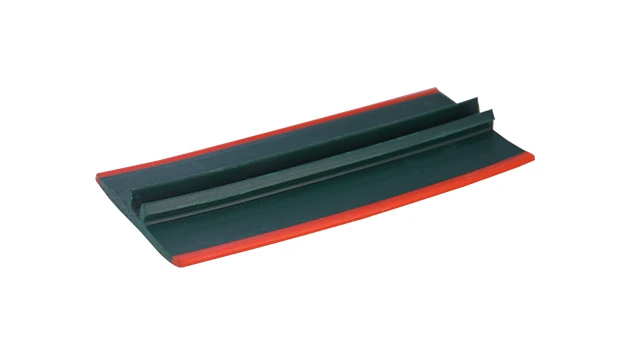
The tread strip fits into a T-slot channel and provides an anti-slip ribbed surface. It has a key pad that presses into a T-slot and is commonly used for adding traction on steps or as padding for doors. Tread strip can be ordered by rolls. The high quali
The Unsung Hero of Smooth Assembly Lines
Imagine standing on a busy assembly line, where every second counts. Workers are hunched over workbenches, carefully fitting tiny components into larger machines. Conveyors hum in the background, carrying parts from one station to the next. Roller tracks glide smoothly as operators load and unload materials. In this high-stakes environment, even the smallest disruption—a sudden jolt, a clatter of metal, or a misaligned part—can throw off the entire rhythm, leading to delays, defects, or worse, damaged products. What if there was a component that could quiet the chaos, protect delicate parts, and keep the line moving like a well-oiled machine? Enter the aluminum profile rubber strip: a small but mighty tool that's redefining stability and efficiency in modern manufacturing.
Assembly processes are the backbone of manufacturing, whether you're building smartphones, automotive parts, or medical devices. The precision required is staggering—parts often measure in millimeters, and tolerances are razor-thin. Yet, for all the advanced technology on the line, one constant challenge remains: vibration. From the whir of machinery to the accidental bump of a tool, vibration travels through workbenches, roller tracks, and conveyor systems, threatening to shake components out of place or compromise their integrity. This is where aluminum profile rubber strips step in, acting as a buffer between hard surfaces and the sensitive work happening on them. Let's dive into why these unassuming strips are becoming a staple in lean system setups worldwide.
What Are Aluminum Profile Rubber Strips, Anyway?
Before we unpack their benefits, let's get clear on what aluminum profile rubber strips are. If you've ever seen a modular workbench or a flexible production line, you've probably noticed the aluminum profiles—those sleek, T-slotted metal rails that form the backbone of everything from material racks to assembly stations. Aluminum profiles are popular because they're lightweight, strong, and infinitely customizable; you can bolt, clamp, or slot accessories into their T-shaped grooves to build just about any structure you need. But aluminum, for all its perks, is a hard material. When parts, tools, or even workers come into contact with it, the result is often noise, vibration, and potential damage.
That's where the rubber strip comes in. Designed to fit snugly into the T-slot of aluminum profiles, these strips are made from durable, flexible rubber compounds (often EPDM or neoprene) that act as a shock-absorbing barrier. They're not just strips of rubber, though—they're engineered to withstand the rigors of industrial use: resistant to oils, chemicals, and temperature fluctuations, and tough enough to handle repeated impacts without cracking or losing their elasticity. Some are even designed with ribbed or textured surfaces to enhance grip, preventing tools or parts from sliding around on workbenches. Think of them as the "cushioning layer" that turns a rigid aluminum frame into a gentle, supportive surface for precision work.

The Science of Shock Absorption: How Rubber Strips Work Their Magic
To understand why aluminum profile rubber strips are so effective, let's break down the science of shock absorption. When two hard surfaces collide—say, a metal part hitting an aluminum workbench—most of the impact energy is transferred directly through the surfaces, causing vibration. This vibration isn't just annoying; it can loosen screws over time, wear down machinery, and even damage sensitive components like circuit boards or delicate sensors. Rubber, on the other hand, is an elastomer—a material that can deform under stress and then return to its original shape. When an impact occurs, the rubber strip compresses, absorbing and dispersing the energy instead of letting it bounce back as vibration.
It's like the difference between dropping a glass on a concrete floor versus a carpeted one. The concrete doesn't give, so the glass shatters; the carpet absorbs the impact, and the glass survives. In assembly terms, this means fewer cracked screens on electronic devices, fewer bent metal brackets, and fewer scratched surfaces on finished products. But the benefits go beyond just protecting parts. By dampening vibration, rubber strips also reduce noise. Anyone who's worked in a factory knows how deafening the constant clanging of metal can be. Rubber strips muffle these sounds, turning a (cì'ěr—shrill) environment into a more peaceful one—something workers will thank you for at the end of a long shift.

5 Key Shock Absorption Benefits for Assembly Processes
Now that we know how they work, let's explore the real-world benefits of aluminum profile rubber strips in assembly processes. These aren't just "nice-to-haves"—they're critical for improving quality, safety, and efficiency.
1. Protecting Sensitive Components: Fewer Defects, Lower Costs
In industries like electronics or medical device manufacturing, even the smallest shock can ruin a product. A smartphone motherboard, for example, has hundreds of tiny solder points that can crack if jostled too hard. When these components are placed on a bare aluminum workbench, accidental knocks or vibrations from nearby machinery can easily cause micro-fractures, leading to faulty products that fail quality checks. Aluminum profile rubber strips create a soft landing pad, absorbing the energy from impacts and preventing these micro-damages. The result? Fewer defects, lower rework costs, and higher customer satisfaction. One electronics manufacturer reported a 23% reduction in defective units after installing rubber strips on their assembly workbenches—proof that small changes can lead to big improvements.
2. Extending Equipment Lifespan: Less Wear, More Uptime
Assembly lines rely on expensive equipment: workbenches, roller tracks, conveyors, and robotic arms. Over time, constant vibration can loosen bolts, misalign tracks, and wear down moving parts, leading to breakdowns and costly repairs. Aluminum profile rubber strips act as a buffer, reducing the stress on these systems. For example, roller tracks—used to slide parts between stations—are prone to wear when metal parts grind against aluminum rails. Adding rubber strips along the track's edges cushions the movement, reducing friction and extending the track's lifespan by up to 50%, according to some manufacturers. The same goes for workbenches: by absorbing the shock of tools being set down or parts being assembled, rubber strips prevent the frame from developing stress cracks, keeping the workbench stable and functional for years longer than unprotected alternatives.
3. Noise Reduction: A Quieter, Safer Workplace
OSHA sets strict limits on workplace noise—exposure to sounds above 85 decibels for 8 hours can lead to hearing loss. On a typical assembly line, the clanging of metal parts, the rattle of roller tracks, and the hum of machinery often push noise levels into the danger zone. Aluminum profile rubber strips are a simple, cost-effective way to turn down the volume. By dampening vibrations and softening impacts, they can reduce noise by 10-15 decibels in some cases—enough to make the difference between wearing earplugs all day and being able to converse without shouting. A quieter workplace isn't just more comfortable; it's safer. Workers are more alert, communication is clearer, and the risk of accidents due to misheard instructions drops significantly. Plus, happy workers are more productive—studies show that noise reduction in manufacturing settings can boost productivity by up to 12%.
4. Enhancing Ergonomics: Happier, Healthier Workers
Ergonomics is a top priority in modern manufacturing. Workers spend hours standing at workbenches, repetitive motions straining their hands, wrists, and backs. Vibration adds another layer of stress—constant shaking can lead to fatigue, numbness, and even long-term conditions like carpal tunnel syndrome. Aluminum profile rubber strips reduce the vibration (chuándì—transmitted) to workers' hands and arms as they handle tools or assemble parts. For example, when using a power screwdriver on a bare aluminum workbench, the vibration from the tool travels up the bench and into the operator's arms. With a rubber strip, much of that vibration is absorbed, making the task less tiring. Over time, this can reduce worker fatigue, lower the risk of injury, and improve overall job satisfaction. It's a small change that shows employees their well-being matters—and that translates to lower turnover and higher morale.
5. Supporting Lean System Goals: Minimizing Waste, Maximizing Efficiency
Lean system principles focus on eliminating waste—whether it's time, materials, or energy. Aluminum profile rubber strips align perfectly with this mindset. By reducing defects, they cut down on material waste. By extending equipment life, they minimize downtime and repair costs. By improving ergonomics, they reduce lost workdays due to injury. Even the installation process supports lean goals: rubber strips are easy to install (simply slide them into the T-slot of aluminum profiles) and require no special tools or training. They're also reusable—if you reconfigure your assembly line (a common lean practice), you can remove and reattach the strips to the new setup. In short, rubber strips help create a more efficient, waste-free operation—exactly what lean manufacturing is all about.
How Aluminum Profile Rubber Strips Stack Up Against Other Solutions
You might be wondering: aren't there other ways to absorb shock in assembly processes? Foam pads, silicone mats, and rubber sheets are all common alternatives. But aluminum profile rubber strips offer unique advantages that make them stand out. Let's compare them side by side:
| Feature | Aluminum Profile Rubber Strips | Foam Pads | Silicone Mats | Rubber Sheets |
|---|---|---|---|---|
| Shock Absorption Efficiency | High (absorbs 70-80% of impact energy) | Medium (absorbs 40-50%, compresses over time) | Medium-High (absorbs 60-70%, but less durable) | High (absorbs 70-80%), but thicker and less flexible |
| Durability | Excellent (resists oils, chemicals, and temperature changes; lasts 3-5 years) | Poor (breaks down quickly under heavy use; 6-12 months) | Good (resists chemicals, but tears easily; 1-2 years) | Good (durable, but prone to slipping on smooth surfaces) |
| Installation | Easy (slides into T-slot; no adhesives needed) | Requires adhesive (can leave residue when removed) | Heavy (needs to be cut to size; may shift during use) | Requires cutting and adhesive; difficult to reposition |
| Cost-Effectiveness | High (long lifespan and reusable) | Low upfront cost, but high replacement cost | Medium (higher upfront cost, moderate lifespan) | Medium (thick sheets are expensive; hard to reuse) |
| Compatibility with Aluminum Profiles | Perfect (designed for T-slot profiles) | Poor (doesn't attach to profiles; slides around) | Fair (can be placed on profiles, but no secure fit) | Fair (heavy and inflexible; hard to contour to profiles) |
As the table shows, aluminum profile rubber strips offer the best balance of efficiency, durability, and ease of use—especially for assembly lines that rely on aluminum profiles. They're not just a shock absorber; they're a tailored solution for the unique needs of modern manufacturing.
Practical Tips for Using Aluminum Profile Rubber Strips
Ready to add aluminum profile rubber strips to your assembly line? Here are a few tips to get the most out of them:
Choose the right material: EPDM rubber is ideal for general use, while neoprene offers better chemical resistance—great for automotive or industrial settings where oils and solvents are present. If you work in a cleanroom (like medical device manufacturing), look for FDA-approved rubber strips.
Measure twice, buy once: Aluminum profiles come in different sizes (e.g., 2020, 3030, 4040), and so do rubber strips. Make sure the strip's width matches the T-slot size of your profiles to ensure a snug fit.
Install in high-impact areas: Focus on workbenches where parts are assembled, roller tracks where materials slide, and conveyor edges where items are loaded/unloaded—these are the spots where vibration and impact are highest.
Inspect regularly: While durable, rubber strips will wear over time. Check for cracks, tears, or loss of elasticity every 6 months, and replace as needed to maintain optimal performance.
Combine with other lean tools: Rubber strips work best when paired with other lean system tools like modular workbenches, ergonomic seating, and visual management boards. Together, they create a cohesive, efficient workspace.
Conclusion: Small Strips, Big Impact
In the fast-paced world of manufacturing, it's easy to overlook small components. But aluminum profile rubber strips prove that great things come in small packages. They protect sensitive parts, extend equipment life, reduce noise, support worker health, and align with lean system goals—all while being affordable, easy to install, and durable. Whether you're running a small workshop or a large-scale production facility, these unassuming strips can make a measurable difference in your assembly processes.
So the next time you walk through your assembly line, take a look at those aluminum profiles. Are they bare and rigid, or do they have the soft, shock-absorbing protection of rubber strips? If it's the former, consider making the switch. Your workers will appreciate the quieter, more comfortable environment. Your bottom line will thank you for fewer defects and lower costs. And your assembly line? It'll run smoother, safer, and more efficiently than ever before. After all, in manufacturing, success often comes down to the details—and aluminum profile rubber strips are one detail that shouldn't be missed.