- Company Articles
- Products and Technology
- Product knowledge
- Single Side Aluminum Pipe: Backbone of Modern Flexible Production Lines

Single Side Aluminum Pipe: Backbone of Modern Flexible Production Lines
Related Product
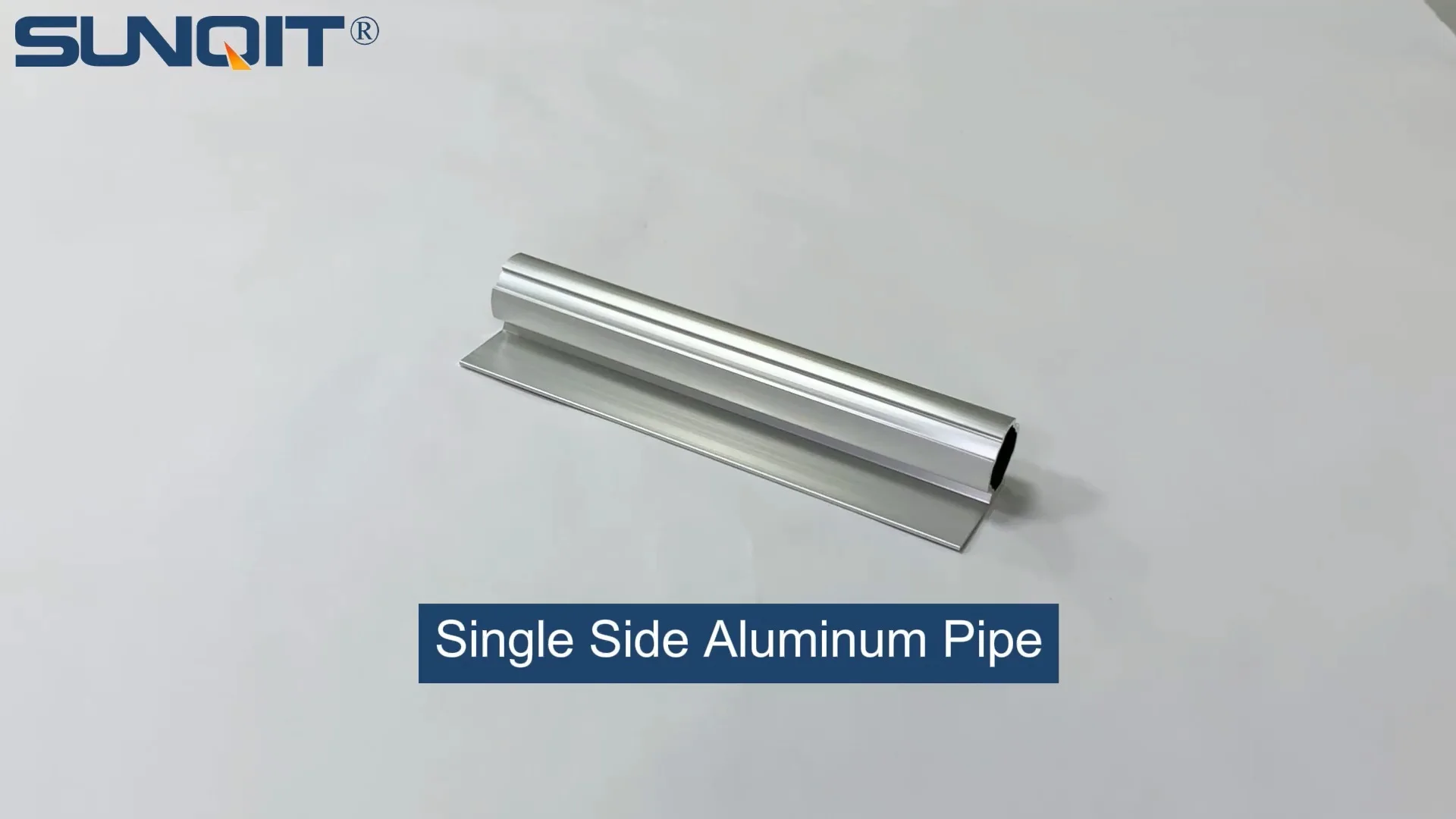
Single Side Aluminum Pipe
The single-sided plane can be installed with a back-mounted material box, and can also be used as a sidewall or partition.
The Shift to Flexible Manufacturing: Why Adaptability Matters More Than Ever
Walk into any manufacturing facility today, and you'll likely notice a stark difference from a decade ago. Gone are the days of monolithic, rigid production lines churning out identical products for years on end. Instead, factories are buzzing with change: teams reconfiguring workstations overnight, lines switching between product variants in hours, and small-batch runs becoming the norm. This shift isn't just a trend—it's a survival strategy. In an era where consumer demands evolve at lightning speed and competitors lurk around every corner, manufacturers can no longer afford to be tied to inflexible infrastructure.
The problem with traditional production setups is simple: they're built for stability, not change. Welded steel frames, fixed conveyor belts, and permanent workbenches work well when you're making the same thing indefinitely, but they crumble when faced with shorter product lifecycles or custom orders. Imagine a electronics manufacturer that suddenly needs to shift from assembling smartwatches to fitness trackers. With a rigid system, they'd spend weeks (or months) rebuilding their lines, losing valuable time and money. But with a flexible setup? They could adapt in days, if not hours.
This is where modern modular solutions come into play—and at the heart of many of these solutions lies a humble yet powerful component: the single side aluminum pipe. Far more than just a length of metal, it's the backbone of systems that let manufacturers pivot quickly, reduce waste, and stay competitive. In this article, we'll dive into what makes single side aluminum pipe so special, how it integrates with other key components like aluminum profiles and lean systems, and why it's becoming the go-to choice for forward-thinking production facilities.
What is Single Side Aluminum Pipe? Breaking Down the Basics
Let's start with the fundamentals: What exactly is single side aluminum pipe, and how does it differ from the aluminum tubes you might find in a hardware store? At its core, it's a lightweight, extruded aluminum tube designed with a specific purpose: modularity. Unlike standard pipes, which are smooth and uniform, single side aluminum pipe features a longitudinal T-slot along one side—a simple but genius design choice that transforms it from a static tube into a versatile building block.
To understand why this matters, let's talk about how it's made. Single side aluminum pipe is typically crafted from high-grade aluminum alloys (often 6063 or 6061, known for their strength-to-weight ratio) using an extrusion process. Extrusion involves heating the aluminum to a malleable state and forcing it through a die, which shapes it into the desired form—in this case, a pipe with a single T-slot. This process ensures precision: the slot is consistent in size and depth, allowing for a tight, secure fit with compatible accessories. The result? A pipe that's not just strong and durable, but also infinitely adaptable.
The T-slot is the real star here. It's a narrow channel that runs the entire length of the pipe, designed to accept bolts, brackets, and connectors without the need for welding or drilling. Want to attach a shelf to your pipe? Slide a bracket into the slot, tighten a screw, and you're done. Need to move that shelf six inches to the left? Loosen the screw, reposition, and retighten. No tools beyond a hex key or screwdriver, no permanent modifications, no hassle. This simplicity is what makes single side aluminum pipe a game-changer for modular systems.
But it's not just about the slot. The aluminum itself offers key advantages over other materials. Aluminum is naturally corrosion-resistant, so unlike steel, it won't rust in humid or damp environments—a big plus for factories that deal with liquids or high moisture. It's also lightweight: a 1-meter length of 28mm single side aluminum pipe weighs roughly 0.5kg, compared to 2kg for a similar steel pipe. This makes it easy to handle during assembly and reduces the load on floors and support structures. And despite its light weight, it's surprisingly strong: aluminum alloys used in these pipes can support significant weight, making them suitable for everything from workbench frames to material racks.

The Building Blocks: Single Side Aluminum Pipe and Its Ecosystem
A single side aluminum pipe on its own is useful, but its true power shines when paired with the right accessories and components. Think of it as a Lego brick: great by itself, but incredible when combined with other bricks to build something bigger. In the world of flexible manufacturing, these "bricks" include aluminum profiles, extrusion profiles, and a wide range of connectors and brackets—all designed to work seamlessly with single side aluminum pipe.
Let's start with aluminum profiles. While single side aluminum pipe is a type of profile, the term "aluminum profile" often refers to more complex shapes, like rectangular or square tubes with multiple T-slots (think of the industrial aluminum framing you see in machine guards or conveyor systems). The beauty of single side aluminum pipe is that it's fully compatible with many standard aluminum profiles. For example, a manufacturer might use square aluminum extrusion profiles for the main frame of a workbench and single side aluminum pipes for the adjustable shelving or tool holders. The shared T-slot design means accessories like corner brackets or cross-connectors work with both, creating a unified system.
Then there are the accessories—the nuts, bolts, brackets, and joints that turn pipes and profiles into functional structures. Aluminum profile accessories are specifically engineered for this modular world. Take, for instance, the internal rotary aluminum joint: a small, cylindrical component that fits into the T-slot of two perpendicular pipes, allowing them to rotate relative to each other. Need a workbench with a fold-down shelf? Use a rotary joint. Want a material rack that can tilt to unload parts? Add a joint with a locking mechanism. Other essentials include end caps (to smooth rough edges and prevent debris buildup), gusset plates (for reinforcing corners), and leveling feet (to stabilize structures on uneven floors).
This ecosystem is what makes single side aluminum pipe so integral to lean systems. Lean manufacturing is all about minimizing waste—whether that's time, materials, or space. By using modular components, manufacturers can build exactly what they need, when they need it, and reconfigure it when needs change. A lean system built with single side aluminum pipe isn't just a production line; it's a living, breathing setup that adapts to workflow improvements. For example, if a team realizes a workbench is too low, they can swap out the legs for longer pipes. If a new machine is added, they can extend a conveyor using additional pipes and connectors. There's no need to buy new equipment or hire welders—just reimagine and rebuild.

Why Single Side Aluminum Pipe Stands Out: Advantages Over Traditional Materials
To truly appreciate single side aluminum pipe, it helps to compare it to the materials it's replacing. For decades, manufacturers relied on steel pipes, wooden frames, or even plastic-coated lean pipes (often called "lean tubes") for their production setups. Each has its pros, but none offer the same blend of flexibility, durability, and cost-effectiveness as single side aluminum pipe. Let's break down the key advantages:
| Feature | Single Side Aluminum Pipe | Steel Pipe | Plastic-Coated Lean Pipe | Wooden Framing |
|---|---|---|---|---|
| Weight (per meter, 28mm) | ~0.5kg | ~2kg | ~0.8kg | ~1.2kg (pine) |
| Corrosion Resistance | High (natural oxide layer) | Low (requires painting/coating) | Medium (plastic coating prone to scratches) | Low (prone to rot/mold) |
| Assembly Time | Fast (tool-free with quick-connect joints) | Slow (requires welding/drilling) | Medium (clamps require tightening) | Slow (cutting, screwing, gluing) |
| Reusability | High (100% recyclable, reconfigurable) | Medium (welded joints limit reuse) | Medium (plastic coating degrades over time) | Low (screws damage wood; not recyclable) |
| Cost (Long-Term) | High initial, low over time (reusable) | Medium initial, high over time (maintenance/replacement) | Low initial, medium over time (coating wear) | Low initial, high over time (frequent replacement) |
Let's unpack a few of these. Take weight, for example: steel pipes are strong, but their heft makes them hard to maneuver. A team reconfiguring a steel frame might need two people just to lift a section, increasing the risk of injury and slowing down work. Single side aluminum pipe, by contrast, is light enough for one person to handle, making adjustments quick and safe. This is a big deal in factories where every minute of downtime costs money.
Corrosion resistance is another critical factor, especially in industries like food processing, pharmaceuticals, or automotive, where moisture or chemicals are present. Steel pipes rust without regular maintenance, and plastic-coated lean pipes can develop cracks in their coating, exposing the metal underneath. Aluminum, however, forms a thin oxide layer when exposed to air, which acts as a natural barrier against corrosion. It can withstand splashes, humidity, and even mild chemicals without deteriorating—no painting or recoating required.
But perhaps the biggest advantage is reusability. In traditional setups, once you build something with steel or wood, it's essentially permanent. If you need to change it, you'll likely have to cut it apart, wasting material and time. Single side aluminum pipe? It's designed to be taken apart and reassembled repeatedly. A workbench frame today could become a material rack tomorrow, and then a conveyor guard next month. This not only reduces waste (a key lean principle) but also lowers long-term costs. Instead of buying new materials for every project, you can repurpose what you already have.
Even compared to plastic-coated lean pipes (a popular modular option), single side aluminum pipe holds its own. Lean pipes are affordable and flexible, but they're less durable—their plastic coating can chip or peel, and the metal core is often thinner, limiting load capacity. Single side aluminum pipe offers the same modularity but with better strength and longevity. It's a small upgrade in initial cost that pays off in reliability and adaptability.

Real-World Applications: Powering Lean Systems and Workbenches
Enough theory—let's talk about how single side aluminum pipe is actually used on the factory floor. Its versatility means it pops up in a wide range of applications, but two areas stand out: lean system infrastructure and custom workbenches. These are where its modularity, strength, and adaptability truly shine, helping manufacturers streamline workflows and boost productivity.
Take lean systems, for example. Lean manufacturing is all about eliminating waste—whether that's excess inventory, unnecessary movement, or inefficient processes. Single side aluminum pipe plays a key role here by enabling "visual management" and "5S" principles (Sort, Set in Order, Shine, Standardize, Sustain). For instance, a production line might use single side aluminum pipe to build a flow rack: a tilted rack with roller tracks that allow materials to slide forward as they're used, ensuring workers always have what they need at their fingertips (no more walking to a distant storage area). The pipe forms the frame, while aluminum profile accessories like brackets and connectors hold the rollers in place. If the team realizes the rack is too tall, they can swap out the legs for shorter pipes; if they need more capacity, they can add an extra shelf by sliding brackets into the T-slots.
Workbenches are another common application—and where single side aluminum pipe really shows its customization potential. A standard workbench might have a fixed height and a flat top, but with single side aluminum pipe, manufacturers can build benches tailored to their exact needs. Need a bench for assembly line workers of different heights? Add adjustable legs with leveling feet. Want to integrate tools, bins, or a monitor arm? Attach them directly to the pipe's T-slot. Even specialized workbenches, like ESD (electrostatic discharge) workstations for electronics manufacturing, can be built using single side aluminum pipe as the frame, with ESD-safe materials (like conductive laminates) mounted on top. The best part? If the task changes—say, the bench is repurposed for testing instead of assembly—you can reconfigure the accessories without replacing the entire bench.
Let's look at a hypothetical example to bring this to life. Imagine a small automotive parts manufacturer that produces custom brackets for luxury cars. Their production runs are short (sometimes just 50 units per design), and each bracket requires different tools and fixtures. With traditional steel workbenches, they'd need a separate bench for each bracket type, taking up valuable floor space. But with single side aluminum pipe, they can build one modular bench that adapts. For Bracket A, they attach a specific fixture to the pipe's T-slot and set the bench height to 80cm. For Bracket B, they swap the fixture, adjust the height to 90cm, and add a small shelf for extra tools. The total time to reconfigure? Less than 30 minutes. No more wasted space, no more downtime between runs—just a bench that works as hard as the team does.
It's not just about big factories, either. Small and medium-sized enterprises (SMEs) are increasingly turning to single side aluminum pipe because it lets them compete with larger companies without breaking the bank. A startup making artisanal furniture, for example, might use single side aluminum pipe to build a mobile workbench that can be moved around the shop, or a temporary assembly line during peak seasons. They don't need to invest in permanent infrastructure—they can start small and scale as they grow, adding more pipes and accessories as needed.
Sustainability and Longevity: A Greener Choice for Modern Factories
In today's manufacturing landscape, sustainability isn't just a buzzword—it's a business imperative. Customers, regulators, and even investors are demanding greener practices, and manufacturers are under pressure to reduce their environmental footprint. Single side aluminum pipe aligns perfectly with this shift, offering both short-term efficiency and long-term sustainability benefits.
First, let's talk about aluminum itself. Aluminum is 100% recyclable, and recycling it uses just 5% of the energy required to produce new aluminum from raw ore. This means that even if a single side aluminum pipe reaches the end of its life (which, given its durability, could be decades), it can be melted down and turned into new products with minimal environmental impact. Compare that to plastic-coated lean pipes, where the plastic coating and metal core are difficult to separate for recycling, or wooden frames, which often end up in landfills when they rot or break.
But the sustainability story doesn't end with recyclability. Single side aluminum pipe also reduces waste through its modular design. In traditional setups, if you need to change a structure, you often have to cut or destroy existing materials—resulting in scraps that end up as waste. With single side aluminum pipe, you simply disassemble and reuse. A 2021 study by the Modular Construction Institute found that modular systems using aluminum components generate up to 70% less construction waste than traditional methods. For a factory that reconfigures its layout twice a year, this adds up to significant savings in both materials and disposal costs.
Energy efficiency is another plus. Aluminum's lightweight nature reduces the energy required to transport and install it. A truckload of single side aluminum pipe can carry 4x more units than a truckload of steel pipe, cutting down on fuel consumption and emissions. Once installed, the pipe's durability means less frequent replacement—so fewer deliveries, less packaging, and lower overall energy use over time. Even the extrusion process, while energy-intensive, is becoming greener as aluminum producers adopt renewable energy sources (many major extruders now use solar or wind power to run their plants).
Longevity is the final piece of the puzzle. Single side aluminum pipe isn't just reusable—it's built to last. Aluminum alloys are resistant to fatigue, meaning they can withstand repeated assembly and disassembly without weakening. The T-slots, when properly maintained, won't wear out or deform, ensuring a tight fit for accessories even after years of use. Compare this to plastic-coated lean pipes, where the coating can degrade from UV exposure or chemical contact, or wooden frames, which warp or crack over time. A single side aluminum pipe system installed today could still be in use 20 years from now—adapted, reconfigured, and repurposed along the way.
The Future of Flexible Manufacturing: Where Single Side Aluminum Pipe is Headed
As manufacturing continues to evolve, so too will the tools and materials that power it. So what does the future hold for single side aluminum pipe? If current trends are any indication, its role in flexible production lines will only grow—driven by advancements in technology, changes in consumer demand, and a continued focus on sustainability.
One area to watch is the integration of smart technology. Imagine a single side aluminum pipe system equipped with sensors that monitor usage: how often a workbench is reconfigured, which accessories are most used, or even the weight load on a rack. This data could help manufacturers optimize their setups further, ensuring they're not wasting space or materials on underused components. Some forward-thinking suppliers are already experimenting with "smart T-slots" that can power small devices (like LED lights or barcode scanners) via low-voltage wiring, eliminating the need for messy external cables.
Another trend is the rise of "digital twins"—virtual replicas of physical production lines. With single side aluminum pipe's modularity, manufacturers could design and test new layouts in a digital twin before physically reconfiguring their lines. Software tools could even generate a list of the exact pipes, brackets, and accessories needed for a new setup, reducing errors and downtime. This blend of physical modularity and digital planning could revolutionize how factories adapt to change, making reconfigurations faster and more precise than ever.
Sustainability will also drive innovation. We're likely to see new aluminum alloys that are even more recyclable or require less energy to produce. Some suppliers are already exploring bio-based coatings for the T-slots (to improve grip or reduce friction) made from renewable materials. There's also growing interest in "circular economy" models, where suppliers take back old or unused aluminum components, recycle them, and turn them into new pipes—closing the loop and reducing reliance on virgin materials.
Finally, as manufacturing becomes more global, we'll see greater standardization in single side aluminum pipe systems. Currently, T-slot sizes and accessory designs can vary slightly between suppliers, making it hard to mix and match components. But industry groups are working to establish universal standards, ensuring that a bracket from Supplier A fits a pipe from Supplier B. This will make it easier for manufacturers to source components globally, reducing costs and increasing flexibility.
Conclusion: Embracing the Backbone of Flexible Production
In a world where change is the only constant, flexibility isn't just an advantage—it's a necessity. Manufacturers that cling to rigid, one-size-fits-all systems will struggle to keep up with competitors that can pivot quickly, reduce waste, and customize products on demand. Single side aluminum pipe isn't just a component; it's a mindset shift—a way of building production lines that grow, adapt, and evolve with your business.
From its humble T-slot design to its compatibility with aluminum profiles and lean systems, single side aluminum pipe offers a rare combination of strength, versatility, and sustainability. It's lightweight enough to handle with ease, durable enough to last decades, and flexible enough to turn any production challenge into an opportunity. Whether you're building a simple workbench or a complex lean system, it's the backbone that holds everything together—literally and figuratively.
As we look to the future, one thing is clear: the factories of tomorrow won't be defined by their size or speed, but by their ability to adapt. And at the heart of those adaptable factories? Single side aluminum pipe. It's not just changing how we build production lines—it's changing how we think about manufacturing itself. So the next time you walk through a factory, take a closer look at the structures around you. Chances are, you'll spot the telltale T-slot of a single side aluminum pipe—and you'll know you're looking at the future of flexible production.