- Company Articles
- Products and Technology
- Product knowledge
- Single Side Aluminum Pipe: Definition, Structure and Core Functions in Lean Systems

Single Side Aluminum Pipe: Definition, Structure and Core Functions in Lean Systems
Related Product
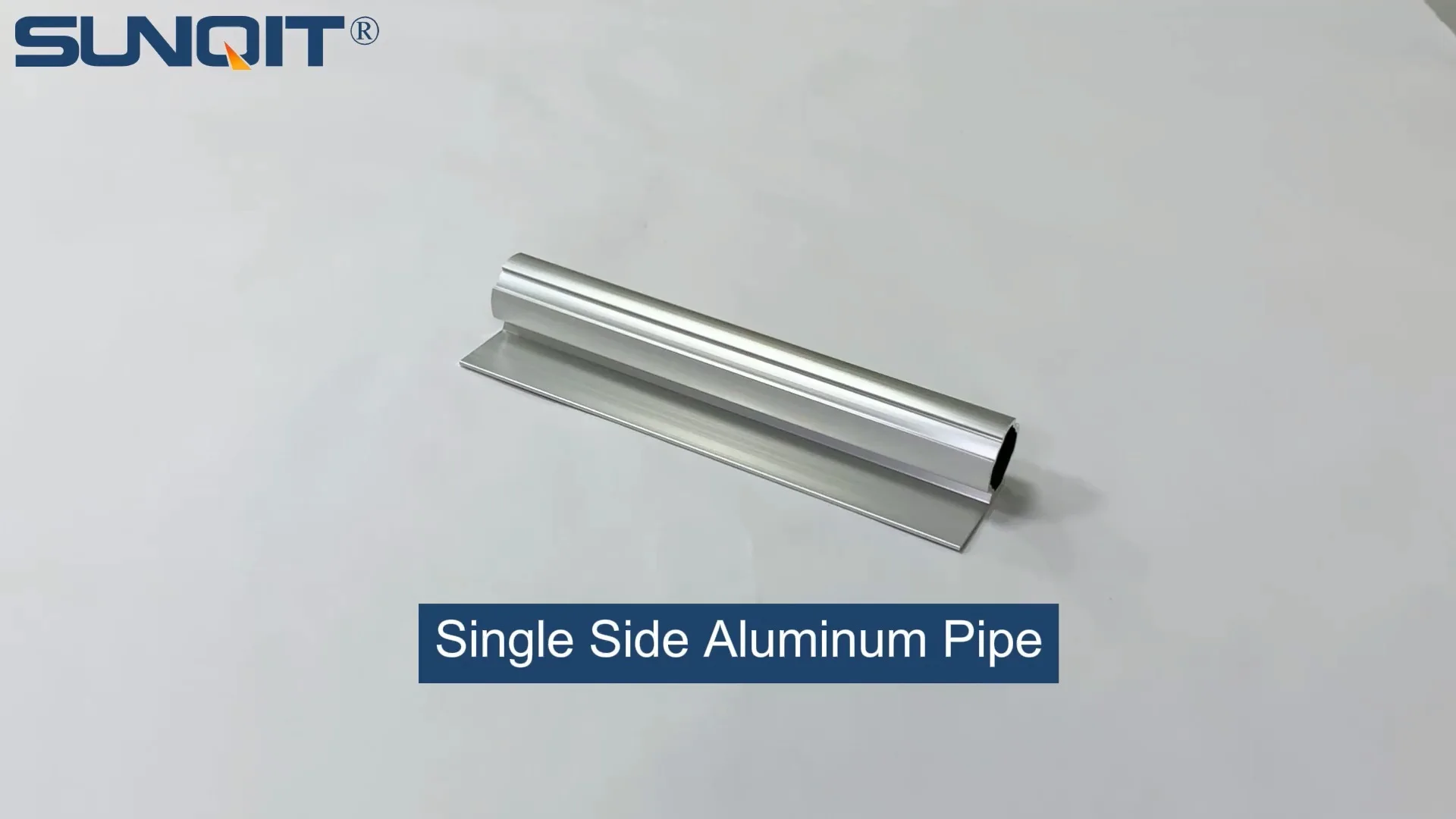
Single Side Aluminum Pipe
The single-sided plane can be installed with a back-mounted material box, and can also be used as a sidewall or partition.
Introduction: The Backbone of Modern Lean Manufacturing
Walk into any thriving manufacturing facility today, and you'll notice a quiet revolution happening on the shop floor. Gone are the days of rigid, one-size-fits-all production lines that take weeks to reconfigure. Instead, you'll find workstations that adapt like living organisms—adjusting heights, rearranging layouts, and evolving with the ebb and flow of daily production needs. At the heart of this flexibility lies a humble yet powerful component: the single side aluminum pipe.
In the world of lean manufacturing, where efficiency, waste reduction, and continuous improvement aren't just buzzwords but survival strategies, the tools we use matter as much as the processes we design. Lean systems thrive on eliminating non-value-added steps, streamlining workflows, and empowering teams to adapt quickly. And when it comes to building the physical infrastructure that supports these goals—workbenches, material racks, assembly lines, and turnover trolleys—single side aluminum pipe has emerged as a game-changer.
But what exactly is a single side aluminum pipe? How does its structure differ from other materials like stainless steel pipe series or traditional steel tubes? And most importantly, how does it drive core functions in lean systems that save time, reduce costs, and boost productivity? In this article, we'll dive deep into these questions, exploring the definition, structure, and real-world impact of single side aluminum pipe. Whether you're a plant manager looking to upgrade your facility, a lean coordinator aiming to cut waste, or simply curious about the tools shaping modern manufacturing, this guide will unpack why this unassuming component has become indispensable in today's factories.
In the world of lean manufacturing, where efficiency, waste reduction, and continuous improvement aren't just buzzwords but survival strategies, the tools we use matter as much as the processes we design. Lean systems thrive on eliminating non-value-added steps, streamlining workflows, and empowering teams to adapt quickly. And when it comes to building the physical infrastructure that supports these goals—workbenches, material racks, assembly lines, and turnover trolleys—single side aluminum pipe has emerged as a game-changer.
But what exactly is a single side aluminum pipe? How does its structure differ from other materials like stainless steel pipe series or traditional steel tubes? And most importantly, how does it drive core functions in lean systems that save time, reduce costs, and boost productivity? In this article, we'll dive deep into these questions, exploring the definition, structure, and real-world impact of single side aluminum pipe. Whether you're a plant manager looking to upgrade your facility, a lean coordinator aiming to cut waste, or simply curious about the tools shaping modern manufacturing, this guide will unpack why this unassuming component has become indispensable in today's factories.
Definition: What Sets Single Side Aluminum Pipe Apart?
Let's start with the basics: A single side aluminum pipe is a lightweight, extruded aluminum profile designed with a specialized T-slot along one side (hence "single side") to enable quick and secure attachment of accessories. Unlike solid aluminum pipes or even double-sided T-slot aluminum profiles, its unique design prioritizes simplicity and versatility, making it ideal for applications where rapid assembly, disassembly, and reconfiguration are critical.
To understand its uniqueness, compare it to other common options. Stainless steel pipe series, for example, are durable but heavy, requiring welding or complex fittings that limit flexibility. Traditional aluminum profiles often feature T-slots on multiple sides, which, while versatile, can be overkill (and more expensive) for simpler setups. Single side aluminum pipe strikes a balance: it's lightweight enough to be maneuvered by a single worker, strong enough to support daily operational loads, and designed with just enough functionality to keep assembly fast and hassle-free.
At its core, this pipe is a product of precision engineering. Most are made from 6063-T5 aluminum alloy, a material prized for its excellent extrudability, corrosion resistance, and strength-to-weight ratio. This alloy ensures the pipe can withstand the wear and tear of factory environments—from frequent adjustments to exposure to oils, coolants, and humidity—without warping or rusting. Surface treatments like anodizing (which creates a hard, protective oxide layer) or powder coating further enhance its durability, ensuring it maintains its integrity even in high-traffic areas.
But what truly defines single side aluminum pipe is its purpose: to serve as a modular building block. It's not just a tube; it's a foundation for creating customized, on-demand structures. Whether you're building a small workbench for electronics assembly or a multi-tiered material rack for automotive parts, this pipe acts as the "skeleton" that holds everything together—all without the need for specialized tools or permanent fasteners.
To understand its uniqueness, compare it to other common options. Stainless steel pipe series, for example, are durable but heavy, requiring welding or complex fittings that limit flexibility. Traditional aluminum profiles often feature T-slots on multiple sides, which, while versatile, can be overkill (and more expensive) for simpler setups. Single side aluminum pipe strikes a balance: it's lightweight enough to be maneuvered by a single worker, strong enough to support daily operational loads, and designed with just enough functionality to keep assembly fast and hassle-free.
At its core, this pipe is a product of precision engineering. Most are made from 6063-T5 aluminum alloy, a material prized for its excellent extrudability, corrosion resistance, and strength-to-weight ratio. This alloy ensures the pipe can withstand the wear and tear of factory environments—from frequent adjustments to exposure to oils, coolants, and humidity—without warping or rusting. Surface treatments like anodizing (which creates a hard, protective oxide layer) or powder coating further enhance its durability, ensuring it maintains its integrity even in high-traffic areas.
But what truly defines single side aluminum pipe is its purpose: to serve as a modular building block. It's not just a tube; it's a foundation for creating customized, on-demand structures. Whether you're building a small workbench for electronics assembly or a multi-tiered material rack for automotive parts, this pipe acts as the "skeleton" that holds everything together—all without the need for specialized tools or permanent fasteners.

Structure: Breaking Down the Design
To appreciate how single side aluminum pipe enables lean manufacturing, we need to look closely at its structure. Its design is a masterclass in functional simplicity, with each element serving a specific purpose to support modularity, strength, and ease of use. Let's break it down into key components: the pipe body, the T-slot, surface treatments, and compatible accessories.
Its hollow design reduces weight (a 30x30mm single side aluminum pipe weighs roughly 0.5kg per meter, compared to 1.2kg for a similar-sized stainless steel pipe), making it easy to transport and assemble without heavy equipment. This lightness is a critical lean advantage: it cuts down on setup time, reduces the risk of worker injury, and allows for quick reconfigurations when production needs change.
How does it work? Accessories are attached using T-nuts (small, T-shaped fasteners) that slide into the slot and rotate 90 degrees to lock in place. Once positioned, a bolt is tightened to secure the accessory to the pipe. This system allows for infinite adjustability—you can slide accessories along the slot to any position, lock them in seconds, and release them just as quickly when you need to reconfigure. Compare this to welding (permanent, time-consuming) or bolted connections (require pre-drilled holes, limiting flexibility), and the T-slot's value becomes clear: it turns "fixed" structures into "adaptable" ones.
For facilities with specific aesthetic or environmental needs, powder coating is another option. This process electrostatically applies a dry powder to the pipe, which is then cured under heat to form a hard, colorful finish. Powder coating offers more color options (including custom shades to match company branding) and can add an extra layer of protection against chemicals or UV exposure.
The Pipe Body: Lightweight Strength
The pipe itself is typically cylindrical or rectangular in cross-section, with dimensions ranging from 20x20mm (for light-duty applications like small workbenches) to 40x40mm (for heavier loads like material racks). Wall thickness varies by application but generally falls between 1.2mm and 2.0mm—a sweet spot that balances weight and rigidity. For example, a 30x30mm pipe with a 1.5mm wall can support up to 50kg per linear meter when properly braced, more than enough for most workstation or shelving needs.Its hollow design reduces weight (a 30x30mm single side aluminum pipe weighs roughly 0.5kg per meter, compared to 1.2kg for a similar-sized stainless steel pipe), making it easy to transport and assemble without heavy equipment. This lightness is a critical lean advantage: it cuts down on setup time, reduces the risk of worker injury, and allows for quick reconfigurations when production needs change.
The T-Slot: The Key to Versatility
The star of the show is the T-slot—a narrow, T-shaped groove running along one side of the pipe. This slot is precision-machined to accept a range of aluminum pipe accessories, including brackets, clamps, joints, and even small tools like cable management clips. The slot's dimensions are standardized (common widths include 6mm, 8mm, and 10mm) to ensure compatibility with off-the-shelf accessories, eliminating the need for custom parts.How does it work? Accessories are attached using T-nuts (small, T-shaped fasteners) that slide into the slot and rotate 90 degrees to lock in place. Once positioned, a bolt is tightened to secure the accessory to the pipe. This system allows for infinite adjustability—you can slide accessories along the slot to any position, lock them in seconds, and release them just as quickly when you need to reconfigure. Compare this to welding (permanent, time-consuming) or bolted connections (require pre-drilled holes, limiting flexibility), and the T-slot's value becomes clear: it turns "fixed" structures into "adaptable" ones.
Surface Treatments: Durability Meets Aesthetics
While functionality is paramount, single side aluminum pipe doesn't skimp on durability. Most pipes undergo anodizing, an electrochemical process that thickens the natural oxide layer on the aluminum surface. This treatment makes the pipe scratch-resistant, corrosion-resistant, and easy to clean—critical in environments where spills or debris are common. Anodized pipes also have a sleek, uniform finish (often silver, black, or gold) that resists fading, keeping workstations looking professional even after years of use.For facilities with specific aesthetic or environmental needs, powder coating is another option. This process electrostatically applies a dry powder to the pipe, which is then cured under heat to form a hard, colorful finish. Powder coating offers more color options (including custom shades to match company branding) and can add an extra layer of protection against chemicals or UV exposure.
Accessories: The Building Blocks of Customization
A pipe is only as useful as the accessories it works with, and single side aluminum pipe pairs seamlessly with a range of aluminum pipe accessories designed for quick assembly. These include:- End caps: Plastic or aluminum caps that snap onto the pipe ends to prevent dust buildup and protect workers from sharp edges.
- Angle brackets: L-shaped brackets that connect pipes at 90-degree angles, ideal for building workbench frames or shelving corners.
- Flange plates: Flat plates with holes that attach to the T-slot, allowing the pipe to be mounted to walls, floors, or other structures.
- Adjustable feet: Threaded feet that screw into the pipe ends to level workstations on uneven floors, enhancing ergonomics.
- Clamps and clips: For securing tools, cables, or small parts bins directly to the pipe, keeping workspaces organized.
| Model | Outer Dimensions (mm) | T-Slot Width (mm) | Wall Thickness (mm) | Weight (kg/m) | Max Load Capacity (kg/m) |
|---|---|---|---|---|---|
| SSAP-2020 | 20x20 | 6 | 1.2 | 0.35 | 30 |
| SSAP-3030 | 30x30 | 8 | 1.5 | 0.52 | 50 |
| SSAP-4040 | 40x40 | 10 | 2.0 | 0.78 | 80 |
| SSAP-3060 | 30x60 | 8 | 1.5 | 0.85 | 70 |
*Table 1: Common single side aluminum pipe specifications (values may vary by supplier).

Core Functions in Lean Systems: Driving Efficiency and Flexibility
Now that we understand what single side aluminum pipe is and how it's structured, let's explore its core functions in lean systems. Lean manufacturing is built on five principles: value, value stream, flow, pull, and perfection. Single side aluminum pipe directly supports each of these by enabling structures that are adaptable, efficient, and waste-free. Here's how:
Single side aluminum pipe eliminates this waste by enabling modular workstations. Because it assembles with simple accessories (no welding or drilling required), workers can reconfigure a workstation in minutes. Need to add a shelf? Slide a bracket into the T-slot and lock it in. Want to lower the height for ergonomic comfort? Swap out the adjustable feet for shorter ones. Even major overhauls—like converting a single-deck workbench into a double-deck one—can be done in under an hour with basic hand tools.
For example, material racks built with single side aluminum pipe can be designed to hold parts at the exact height and angle needed for assembly line workers, eliminating the need to bend, reach, or search for components. Roller tracks (another key accessory) can be attached to the T-slot to create gravity-fed lanes, allowing parts to "flow" from storage to the assembly line with minimal manual handling. Even turnover trolleys—used to transport parts between stations—can be built with the pipe to match the height of workbenches, ensuring seamless loading and unloading.
The pipe's lightweight nature also plays a role here. Unlike heavy steel racks, aluminum structures can be easily moved (or even mounted on casters) to adjust to changing production layouts. This flexibility ensures the facility can adapt to shifting demand without disrupting the overall flow.
During peak seasons, for instance, a factory can quickly add temporary workstations or expand material racks using spare pipes and accessories. When demand drops, these structures can be disassembled, and the pipes stored compactly (or repurposed for other uses). This "pay-as-you-grow" model prevents overinvestment in fixed infrastructure and ensures resources are only used when necessary.
Moreover, the pipe's compatibility with aluminum profile accessories (like sensors or LED lights) makes it easy to integrate with smart manufacturing tools. For example, a pull system might use sensors to trigger material replenishment when stock levels drop; these sensors can be mounted directly to the pipe's T-slot, creating a connected, responsive workflow.
For example, a workbench built with single side aluminum pipe can be adjusted from 700mm to 900mm in height, ensuring both tall and short workers can stand comfortably. A material rack can be tilted slightly to bring parts closer to eye level, reducing neck strain. Even small touches—like adding a footrest bar or a cup holder—can make a big difference in daily comfort. Over time, these ergonomic improvements translate to lower absenteeism, fewer workplace injuries, and higher employee retention.
For instance, if a supplier changes the packaging of a key component, a single side aluminum pipe rack can be adjusted to fit the new box dimensions in minutes. No need to wait for custom shelving or modify existing racks—simply reposition the brackets and dividers. This agility ensures the JIT system remains robust, even when external variables (like supplier changes) disrupt the status quo.
1. Enabling Modular Workstations (Waste Reduction)
One of the biggest wastes in manufacturing is "overprocessing"—spending time or resources on tasks that don't add value. Traditional workstations, built with welded steel or fixed wooden frames, are a classic example: if production needs change (e.g., a new product line requires a taller bench or a wider surface), the entire workstation often needs to be replaced or extensively modified. This wastes time, money, and materials.Single side aluminum pipe eliminates this waste by enabling modular workstations. Because it assembles with simple accessories (no welding or drilling required), workers can reconfigure a workstation in minutes. Need to add a shelf? Slide a bracket into the T-slot and lock it in. Want to lower the height for ergonomic comfort? Swap out the adjustable feet for shorter ones. Even major overhauls—like converting a single-deck workbench into a double-deck one—can be done in under an hour with basic hand tools.
Real-World Example:
A consumer electronics manufacturer was struggling with frequent product changes. Their old wooden workbenches took 2-3 days to modify, leading to production delays. After switching to single side aluminum pipe workbenches, they reduced reconfiguration time to 30 minutes per station. Over a year, this saved 200+ hours of downtime and allowed them to introduce 15 new product variants without missing deadlines.
2. Supporting Continuous Flow (Flow Optimization)
Lean systems thrive on "flow"—the uninterrupted movement of materials and products through the production process. Bottlenecks, delays, and disorganized work areas disrupt this flow, leading to idle time and excess inventory. Single side aluminum pipe helps maintain flow by enabling the creation of custom material handling structures that keep parts moving smoothly.For example, material racks built with single side aluminum pipe can be designed to hold parts at the exact height and angle needed for assembly line workers, eliminating the need to bend, reach, or search for components. Roller tracks (another key accessory) can be attached to the T-slot to create gravity-fed lanes, allowing parts to "flow" from storage to the assembly line with minimal manual handling. Even turnover trolleys—used to transport parts between stations—can be built with the pipe to match the height of workbenches, ensuring seamless loading and unloading.
The pipe's lightweight nature also plays a role here. Unlike heavy steel racks, aluminum structures can be easily moved (or even mounted on casters) to adjust to changing production layouts. This flexibility ensures the facility can adapt to shifting demand without disrupting the overall flow.
3. Enhancing Adaptability (Pull System Support)
Lean's "pull" principle emphasizes producing only what's needed, when it's needed, to avoid overproduction (another major waste). To do this, manufacturers need systems that can scale up or down quickly based on customer demand. Single side aluminum pipe excels here because it's both scalable and reusable.During peak seasons, for instance, a factory can quickly add temporary workstations or expand material racks using spare pipes and accessories. When demand drops, these structures can be disassembled, and the pipes stored compactly (or repurposed for other uses). This "pay-as-you-grow" model prevents overinvestment in fixed infrastructure and ensures resources are only used when necessary.
Moreover, the pipe's compatibility with aluminum profile accessories (like sensors or LED lights) makes it easy to integrate with smart manufacturing tools. For example, a pull system might use sensors to trigger material replenishment when stock levels drop; these sensors can be mounted directly to the pipe's T-slot, creating a connected, responsive workflow.
4. Promoting Ergonomics (People-Centric Design)
Lean isn't just about processes—it's about people. Fatigued, uncomfortable workers are less productive and more prone to errors. Single side aluminum pipe supports ergonomics by allowing workstations to be tailored to individual needs. Adjustable heights, customizable angles, and integrated tool holders reduce strain on wrists, backs, and shoulders, leading to happier, healthier teams.For example, a workbench built with single side aluminum pipe can be adjusted from 700mm to 900mm in height, ensuring both tall and short workers can stand comfortably. A material rack can be tilted slightly to bring parts closer to eye level, reducing neck strain. Even small touches—like adding a footrest bar or a cup holder—can make a big difference in daily comfort. Over time, these ergonomic improvements translate to lower absenteeism, fewer workplace injuries, and higher employee retention.
5. Reducing Lead Times (Just-In-Time Support)
Just-in-Time (JIT) manufacturing relies on receiving materials exactly when they're needed, minimizing inventory costs. But JIT requires a high degree of flexibility in how materials are stored and accessed. Single side aluminum pipe material racks are ideal for this, as they can be quickly reorganized to accommodate different part sizes, quantities, or storage locations.For instance, if a supplier changes the packaging of a key component, a single side aluminum pipe rack can be adjusted to fit the new box dimensions in minutes. No need to wait for custom shelving or modify existing racks—simply reposition the brackets and dividers. This agility ensures the JIT system remains robust, even when external variables (like supplier changes) disrupt the status quo.

Advantages Over Other Materials
While single side aluminum pipe isn't the only option for building lean structures, it offers distinct advantages over alternatives like stainless steel pipe series, wooden frames, or even multi-sided aluminum profiles. Let's compare:
vs. Stainless Steel Pipe Series
Stainless steel pipes are strong and corrosion-resistant, making them popular in heavy-industry settings. However, they're heavy (3-4x the weight of aluminum), require welding or specialized fittings, and are difficult to reconfigure. For lean environments prioritizing flexibility and speed, stainless steel is often overkill. Single side aluminum pipe provides comparable strength for most manufacturing applications at a fraction of the weight and cost, with the added benefit of tool-free assembly.vs. Wooden Frames
Wood is cheap and easy to work with, but it's prone to warping, rotting, and damage from moisture or pests. It also lacks the modularity of aluminum—once cut, it can't be easily adjusted. For temporary setups, wood might suffice, but for long-term lean systems requiring adaptability, it's a poor choice. Aluminum pipe, by contrast, lasts decades with minimal maintenance and can be reused indefinitely.vs. Multi-Sided Aluminum Profiles
Double or multi-sided T-slot aluminum profiles are versatile, but they're more expensive and complex than single side pipe. For simple structures like basic workbenches or small material racks, the extra T-slots are unnecessary and add cost. Single side aluminum pipe offers "just enough" functionality at a lower price point, making it ideal for budget-conscious lean initiatives.Sustainability: A Hidden Lean Advantage
Lean manufacturing isn't just about efficiency—it's also about reducing environmental waste. Single side aluminum pipe aligns with this by being 100% recyclable. At the end of its lifespan, it can be melted down and reused to make new pipes, reducing reliance on virgin materials. Its durability also means less frequent replacement, further cutting down on waste. Compared to wooden frames (which end up in landfills) or steel (which requires energy-intensive recycling), aluminum pipe is a greener choice for forward-thinking facilities.Conclusion: More Than a Pipe—A Lean Enabler
Single side aluminum pipe may seem like a simple component, but its impact on lean systems is profound. By combining lightweight strength, modular design, and tool-free assembly, it addresses core lean principles—eliminating waste, optimizing flow, supporting continuous improvement, and empowering workers. It transforms static, rigid factory structures into dynamic, adaptable ecosystems that can evolve with changing needs, all while reducing costs and boosting productivity.
As manufacturing continues to evolve—with shorter product lifecycles, higher customization demands, and a focus on sustainability—the need for flexible infrastructure will only grow. Single side aluminum pipe is more than ready to meet this challenge. It's not just a pipe; it's a tool that helps teams turn lean principles into action, one workstation, rack, and trolley at a time.
So, the next time you walk through a factory and see a sleek, adaptable workstation or a smoothly flowing material rack, take a closer look. Chances are, single side aluminum pipe is the unsung hero holding it all together—quietly driving the efficiency, flexibility, and innovation that define modern lean manufacturing.
As manufacturing continues to evolve—with shorter product lifecycles, higher customization demands, and a focus on sustainability—the need for flexible infrastructure will only grow. Single side aluminum pipe is more than ready to meet this challenge. It's not just a pipe; it's a tool that helps teams turn lean principles into action, one workstation, rack, and trolley at a time.
So, the next time you walk through a factory and see a sleek, adaptable workstation or a smoothly flowing material rack, take a closer look. Chances are, single side aluminum pipe is the unsung hero holding it all together—quietly driving the efficiency, flexibility, and innovation that define modern lean manufacturing.