- Company Articles
- Products and Technology
- Product knowledge
- Single Side Aluminum Pipe for Mechanical Manufacturing: Enhancing Workflow Efficiency

Single Side Aluminum Pipe for Mechanical Manufacturing: Enhancing Workflow Efficiency
Related Product
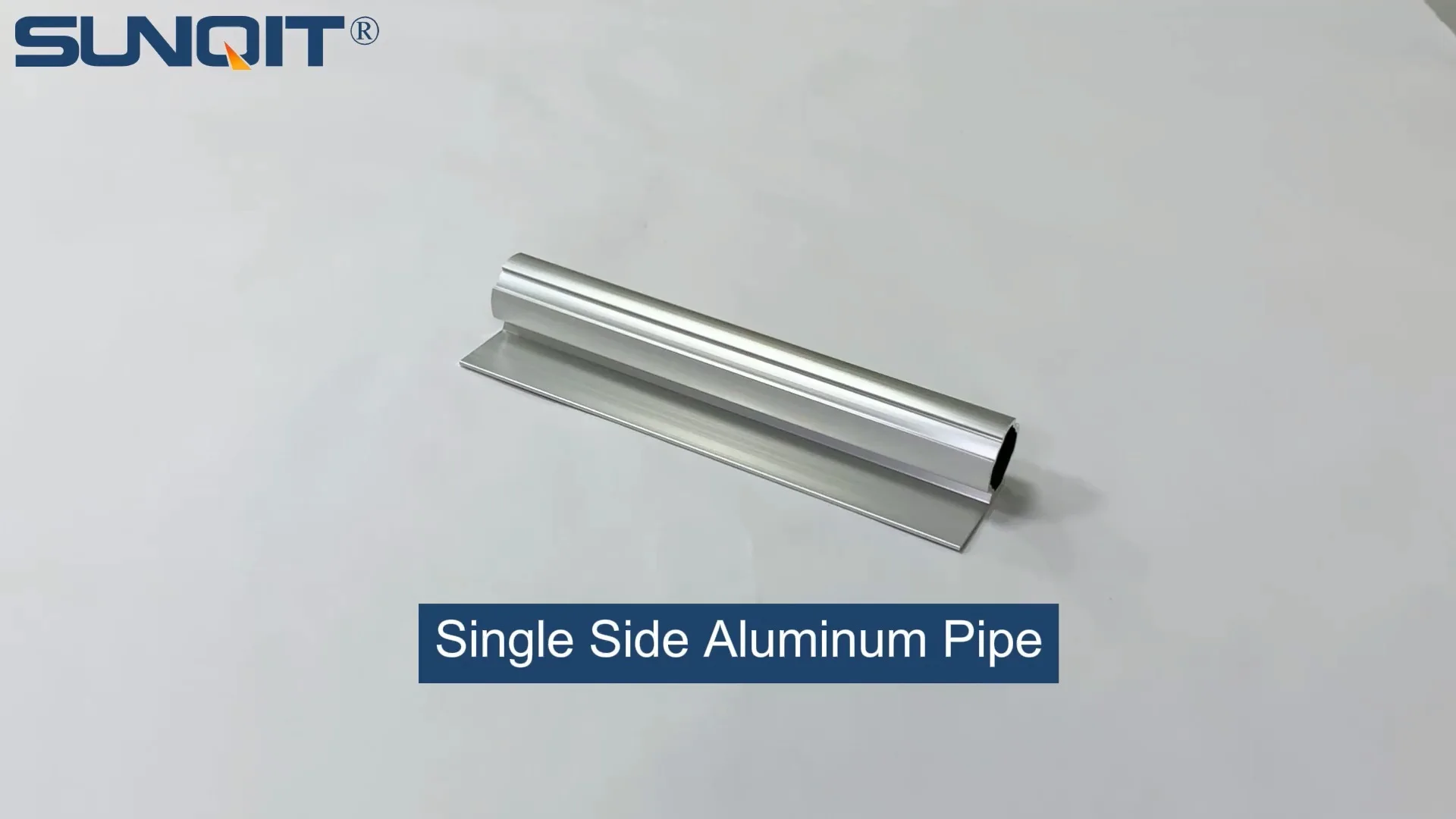
Single Side Aluminum Pipe
The single-sided plane can be installed with a back-mounted material box, and can also be used as a sidewall or partition.
In the fast-paced world of mechanical manufacturing, where every second counts and production targets loom large, workflow efficiency isn't just a buzzword—it's the backbone of profitability and competitiveness. Manufacturers today grapple with a host of challenges: rigid production lines that resist quick adjustments, clunky material handling systems that create bottlenecks, and workstations that fail to adapt to evolving product designs. These inefficiencies don't just slow down output; they drain resources, frustrate teams, and stifle innovation. But what if there was a solution that could transform these pain points into opportunities for agility and productivity? Enter the single side aluminum pipe—a humble yet powerful component that's quietly revolutionizing how mechanical manufacturing floors operate. Lightweight, modular, and endlessly adaptable, this unassuming extrusion is proving to be a cornerstone of modern, lean-driven production environments. Let's dive into how it works, why it matters, and how it can redefine workflow efficiency for your operation.
Understanding Single Side Aluminum Pipe: Beyond the Basics
At first glance, single side aluminum pipe might look like any other metal tube, but its design and composition set it apart as a tool for efficiency. Crafted from high-grade aluminum alloys—typically 6063-T5, a material prized for its excellent balance of strength, corrosion resistance, and machinability—this pipe is extruded into a precise cross-section that includes a specialized feature: a single, continuous T-slot running along one side. Unlike standard aluminum pipes, which are often smooth or feature slots on multiple sides, the single side design is intentional. It prioritizes focused functionality, allowing for targeted mounting of accessories without unnecessary complexity. This T-slot isn't just a groove; it's a gateway to customization, enabling the attachment of brackets, joints, guides, and tools with simple fasteners—no welding, no drilling, no permanent modifications required.
Dimensions vary to suit different applications, with common diameters ranging from 20mm to 40mm and wall thicknesses from 1.2mm to 2.0mm, though custom sizes are available for specialized needs. What truly distinguishes single side aluminum pipe, however, is its weight-to-strength ratio. Aluminum is naturally lighter than steel—about one-third the weight—yet the extrusion process aligns the metal's grain structure, creating a pipe that can support significant loads (up to 150kg per linear meter in some configurations) without bending or warping. This combination of lightness and durability makes it ideal for everything from workbench frames to material racks, where reducing weight eases handling while maintaining structural integrity.
Material Matters: Why Aluminum? Why 6063-T5?
Mechanical manufacturing environments are tough: they're exposed to oils, coolants, and occasional moisture, not to mention the wear and tear of daily use. Aluminum's natural resistance to corrosion means single side aluminum pipe won't rust or degrade over time, unlike steel, which requires painting or coating to survive. The 6063-T5 alloy takes this a step further. After extrusion, the pipe undergoes a heat treatment process (T5 tempering) that enhances its mechanical properties, increasing hardness and tensile strength. This makes it resilient enough to withstand the rigors of factory floors—from the vibrations of machinery to the impact of tools and parts—while remaining malleable enough for easy assembly. For manufacturers, this translates to longer-lasting equipment, lower maintenance costs, and a system that retains its functionality (and appearance) for years.
Key Features Driving Workflow Efficiency
Single side aluminum pipe's popularity isn't just due to its material—it's the synergy of its features that makes it a workflow game-changer. Let's break down the attributes that set it apart:
Modularity at Its Core: In manufacturing, flexibility is non-negotiable. Product lines change, batch sizes fluctuate, and new designs require reconfigured workstations. Single side aluminum pipe thrives here. Its T-slot design and compatibility with a wide range of aluminum profile accessories mean you can assemble, disassemble, and reconfigure structures in minutes, not days. Need to extend a workbench? Add a few pipe sections and joints. Repurpose a material rack for a new part? Swap out the roller tracks and adjust the height. This modularity eliminates the "sunk cost" of fixed infrastructure, turning your production floor into a dynamic space that evolves with your needs.
Tool-Free Assembly (Mostly): Traditional manufacturing setups often rely on welding or drilling, which require skilled labor, specialized equipment, and significant downtime. Single side aluminum pipe flips this script. Using simple fasteners—like T-bolts, wing nuts, or slide-in connectors—teams can build and modify structures with basic hand tools. A maintenance technician or even a line operator can assemble a small workstation in under an hour, freeing up engineers for higher-value tasks. This democratization of assembly reduces reliance on specialized trades and cuts down on setup time, a critical factor in meeting tight production deadlines.
Lightweight, Yet Sturdy: Heavy equipment isn't just hard to move—it's dangerous. Steel workbenches or racks can weigh hundreds of pounds, requiring forklifts or multiple workers to reposition. Single side aluminum pipe's lightweight nature (about 2.7kg per meter for a 30mm diameter pipe) makes it easy to handle manually. This not only reduces the risk of workplace injuries but also enables quick adjustments. For example, a team can reposition a roller track conveyor section to align with a new assembly station in minutes, without waiting for heavy machinery. Yet, despite its lightness, it doesn't sacrifice strength. When paired with reinforced aluminum profile accessories like internal straight aluminum joints or parallel brackets, it can support tools, parts, and even small machinery with confidence.
Corrosion Resistance for Longevity: Mechanical manufacturing floors are rarely pristine. Coolants, lubricants, and occasional spills are part of the daily grind. Steel components left unprotected can rust, weakening over time and requiring frequent replacement. Aluminum, however, forms a natural oxide layer that resists corrosion, even in damp or chemical-exposed environments. This means single side aluminum pipe structures maintain their integrity and appearance for years, reducing the need for costly replacements and minimizing downtime for repairs. For manufacturers in industries like automotive or aerospace, where cleanliness and reliability are paramount, this resistance is a non-negotiable advantage.

Integration with Aluminum Profile Accessories: The Building Blocks of Versatility
A single side aluminum pipe on its own is useful, but its true power emerges when paired with the right aluminum profile accessories. These components—joints, brackets, guides, and mounts—turn a simple pipe into a fully functional system. Think of the pipe as the backbone and the accessories as the muscles and joints that give it movement and purpose. Let's explore some key accessories and how they amplify the pipe's efficiency:
| Accessory Type | Primary Function | How It Works with Single Side Aluminum Pipe | Workflow Benefit |
|---|---|---|---|
| Internal Straight Aluminum Joint | Connects two pipes end-to-end in a straight line | Slides into the T-slot of each pipe, secured with a hex bolt; creates a rigid, seamless connection | Enables the creation of long spans (e.g., workbench frames or conveyor rails) without welding |
| Parallel Aluminum Joint A | Mounts two parallel pipes at a fixed distance | Features dual T-slot fasteners; adjusts to pipe spacing from 50mm to 150mm | Ideal for building stable workbench surfaces or material rack frames with uniform support |
| Roller Track Placon Mount Flat | Attaches roller tracks to the pipe for material flow | Clamps onto the pipe's T-slot; provides a level, secure base for roller track sections | Creates smooth, gravity-fed material paths (e.g., moving parts from storage to assembly) |
| Aluminum Guide Rail A | Guides parts along roller tracks to prevent misalignment | Mounts vertically along the edge of the pipe; features a low-friction surface | Reduces jams and rework by keeping parts on track during transport |
| Swivel Caster Wheel with Brake | Adds mobility to stationary structures | Attaches via a mounting plate secured to the pipe's T-slot; lockable brake for stability | Transforms fixed racks into mobile trolleys for on-demand material delivery to lines |
What's remarkable about this ecosystem of accessories is its interoperability. A single side aluminum pipe from one supplier will typically work with accessories from another, thanks to standardized T-slot dimensions. This means manufacturers aren't locked into a single brand, giving them the freedom to mix and match components to suit their specific needs. For example, a lean system supplier might recommend pairing the pipe with third-party ESD-safe accessories for electronics manufacturing or heavy-duty casters for automotive parts handling. This flexibility ensures that the system grows with your business, not against it.

Single Side Aluminum Pipe in Lean Systems: Aligning with the Principles of Waste Reduction
Lean manufacturing isn't just a philosophy—it's a practice built on eliminating waste, streamlining flow, and empowering teams to drive continuous improvement. Single side aluminum pipe aligns seamlessly with these principles, acting as a physical enabler of lean goals. Let's see how:
Eliminating "Waiting" Waste: In many factories, workers spend valuable time waiting for materials to arrive at their stations or for tools to be repositioned. Single side aluminum pipe addresses this by enabling the creation of point-of-use storage. For example, a workbench built with the pipe can have integrated tool holders, parts bins, and roller track sections that deliver components directly to the operator's hands. No more walking to a distant rack or searching for a misplaced tool—everything needed is within arm's reach. This cuts down on "waiting" waste, keeping operators focused on value-adding tasks.
Reducing "Overprocessing" Waste: Overprocessing occurs when a system is more complex than it needs to be, requiring unnecessary steps or resources. Traditional production lines often suffer from this: custom steel fixtures that require painting, welding, or frequent maintenance. Single side aluminum pipe's simplicity eliminates this. Its modular design means you only add what you need—no extra features, no excess weight, no wasted materials. For instance, a material rack built with the pipe can be sized exactly to the parts it holds, with just enough shelves and supports to get the job done. No over-engineering, no overspending.
Supporting "Continuous Flow": Lean manufacturing emphasizes the importance of continuous, uninterrupted flow of materials and information. Single side aluminum pipe, when paired with roller track systems, excels here. Imagine a production line where parts glide smoothly from one station to the next on gravity-fed roller tracks mounted to aluminum pipe frames. No more manually lifting heavy components or using clunky conveyors that require constant maintenance. The low-friction rollers, guided by aluminum guide rails, ensure parts move at a steady pace, matching the rhythm of the assembly process. This flow reduces bottlenecks and keeps work balanced across the line.
Enabling "Flexibility" for Changing Demand: One of the biggest wastes in manufacturing is inflexibility—investing in rigid infrastructure that can't adapt to shifts in product mix or demand. A lean system supplier will often highlight single side aluminum pipe as a solution to this, as it allows for quick reconfiguration. For example, a manufacturer producing small motors might need to switch from a batch size of 500 to 50 for a custom order. With a traditional steel line, this could take days of retooling. With single side aluminum pipe workstations and roller tracks, the team can adjust the line length, reposition workbenches, and modify material racks in a matter of hours, keeping production on track without costly delays.

Real-World Applications: How Single Side Aluminum Pipe Transforms Workflows
Theory is valuable, but real impact lies in application. Let's explore how single side aluminum pipe is making a difference across key areas of mechanical manufacturing:
Workstations: Ergonomic, Custom, and Adaptable
The workbench is the heart of any manufacturing operation—the place where precision meets productivity. Yet many workstations are relics of the past: fixed-height, cluttered, and designed for a single task. Single side aluminum pipe is changing this by enabling the creation of ergonomic, customizable workbenches that adapt to both the task and the worker. For example, a workstation built with 30mm single side aluminum pipe can be adjusted in height (using telescoping pipe sections and locking joints) to suit operators of different statures, reducing strain on backs and shoulders. The T-slot allows for easy mounting of tool hooks, LED task lights, ESD wrist strap holders, or even small monitors for digital work instructions. Add a roller track section along the back edge, and parts flow directly to the operator, eliminating the need to reach or bend.
Consider a case study from a mid-sized manufacturer of industrial valves. Prior to adopting single side aluminum pipe, their assembly workstations were fixed steel benches with no adjustability. Workers reported frequent neck and shoulder pain, and reconfiguring the line for new valve models took 2–3 days, requiring a team of welders. After switching to aluminum pipe workstations with modular accessories, they achieved three key wins: first, operator-reported discomfort dropped by 65% thanks to height-adjustable benches. Second, line reconfigurations now take 4–6 hours, done by the production team itself. Third, tool retrieval time decreased by 40% due to integrated tool holders, boosting per-operator output by 15%. For this manufacturer, the workbench wasn't just a table—it was a productivity hub, and single side aluminum pipe made it possible.
Material Handling: Smooth Flow, Reduced Effort
Moving materials across the factory floor is often a hidden source of inefficiency. Heavy pallets, misaligned conveyors, and manual cart transport can turn simple logistics into a daily headache. Single side aluminum pipe, paired with roller track systems, is solving this by creating gravity-fed or low-power material flow paths that are both efficient and gentle on parts. Roller tracks mounted to aluminum pipe frames can be angled slightly to allow parts to glide from storage racks to assembly stations, or from one workbench to the next. The aluminum guide rails keep parts centered, preventing jams, while swivel roller balls (1 inch or 0.5 inch, depending on part size) provide smooth, multi-directional movement for smaller components.
Take the example of a manufacturer of electric motors that struggled with moving stator assemblies—delicate, 10kg components—from the winding station to the testing area. Previously, operators carried them by hand, risking drops and damage. With single side aluminum pipe and roller track placon mounts, they built a 15-meter-long gravity conveyor. The stator assemblies now roll smoothly along the track, guided by aluminum guide rails, and stop automatically at the testing station via a simple brake mechanism. Not only did this eliminate damage (reducing scrap costs by $12,000 annually), but it also freed up two operators per shift to focus on assembly, increasing overall line capacity by 20%.
Assembly Lines: From Rigid to Responsive
In today's manufacturing landscape, product life cycles are shorter than ever. A line that produces one product today might need to shift to a completely different model next month. Traditional assembly lines, built with welded steel or fixed conveyors, can't keep up. Single side aluminum pipe's modularity, however, makes it possible to build lines that evolve with demand. For example, a manufacturer of small appliances might use the pipe to build a "U-shaped" assembly line, with workstations arranged in a loop to minimize travel time. If a new product requires additional steps, they can add a few pipe sections and a new workstation in a matter of hours. If demand drops, they can shrink the line to save space and resources.
A lean system supplier recently helped a furniture manufacturer implement this approach. The company produced office chairs, but seasonal demand fluctuations meant their line was either overcapacity or understaffed. Using single side aluminum pipe, they built a modular line with sections. During peak season (Q4), they expanded the line to 8 workstations with roller track material flow. During slow periods (Q2), they condensed it to 4 stations, reusing the excess pipe to build temporary storage racks. This flexibility reduced their off-season labor costs by 30% and allowed them to ramp up production 40% faster for peak demand—all without investing in additional fixed infrastructure.
Why Single Side Aluminum Pipe Stands Out: Comparing Alternatives
To truly appreciate single side aluminum pipe's value, it helps to compare it to common alternatives. Let's stack it up against steel, wood, and standard multi-slot aluminum pipe:
vs. Steel Pipe: Steel is strong, but it's heavy, prone to rust, and requires welding or drilling for modifications. A steel workstation might last longer, but it's nearly impossible to reconfigure without cutting or rewelding. Single side aluminum pipe, by contrast, offers 70% of steel's strength at 30% of the weight, resists corrosion, and can be modified in minutes. For manufacturers prioritizing agility, the trade-off is clear.
vs. Wood: Wood is cheap and easy to work with, but it's not durable. It warps with moisture, splinters, and can't support heavy loads. A wooden material rack might last a year in a factory environment; a single side aluminum pipe rack can last a decade or more. Wood also lacks the modularity—once you cut it, you can't un-cut it. Aluminum's reusability makes it a better long-term investment.
vs. Multi-Slot Aluminum Pipe: Multi-slot aluminum pipe (with slots on 2–4 sides) offers versatility, but it's often overkill. The extra slots add weight and cost without providing additional functionality for many applications. Single side aluminum pipe focuses on the essentials, delivering the same modularity at a lower price point and with less weight. For most manufacturing workflows, one well-placed slot is all you need.
Choosing the Right Single Side Aluminum Pipe: Key Considerations
Not all single side aluminum pipes are created equal, and selecting the right one for your needs requires careful consideration. Here are the factors to keep in mind:
- Load Capacity: Determine the maximum weight the pipe will need to support. For light-duty applications (e.g., small tool racks), a 1.2mm wall thickness may suffice. For heavy loads (e.g., workbenches with machinery), opt for 2.0mm walls and larger diameters.
- Environment: If your facility is humid, corrosive (e.g., near chemicals), or requires cleanroom standards, ensure the pipe is anodized or coated for extra protection. Anodized aluminum forms a harder, more corrosion-resistant surface than bare aluminum.
- Accessory Compatibility: Check that the pipe's T-slot dimensions (width, depth) match the accessories you plan to use. Most suppliers follow standard slot sizes (e.g., 8mm or 10mm), but custom slots exist, so verify compatibility with your chosen aluminum profile accessories.
- Supplier Support: A reliable lean system supplier or aluminum profile specialist can provide not just the pipe, but also design guidance, accessory recommendations, and even assembly training. Look for suppliers with a track record in manufacturing applications—they'll understand your workflow needs better than a general hardware provider.
Conclusion: The Future of Manufacturing Workflows is Modular
In the relentless pursuit of workflow efficiency, manufacturers can't afford to rely on outdated, rigid tools. The single side aluminum pipe represents more than just a component—it's a mindset shift toward flexibility, adaptability, and continuous improvement. By combining lightweight strength, modular design, and seamless integration with aluminum profile accessories, it empowers teams to build the production environments they need, not just the ones they've inherited. Whether it's ergonomic workbenches that reduce strain, roller track systems that streamline material flow, or lean assembly lines that adapt to changing demand, this humble pipe is proving to be a catalyst for transformation.
For manufacturers ready to leave behind the frustrations of rigid systems and embrace a future of agility, the message is clear: invest in tools that grow with you. Single side aluminum pipe isn't just a purchase—it's an investment in your team's productivity, your operation's resilience, and your company's ability to thrive in an ever-changing market. The next time you walk your production floor, take a look at your workstations, your material racks, your flow paths. Could they be better? With single side aluminum pipe, the answer is almost certainly yes. It's time to build the future of manufacturing—one modular, efficient step at a time.