- Company Articles
- Products and Technology
- Product knowledge
- Single Side Aluminum Pipe for Small-Scale Production: Cost-Effective Flexibility

Single Side Aluminum Pipe for Small-Scale Production: Cost-Effective Flexibility
Related Product
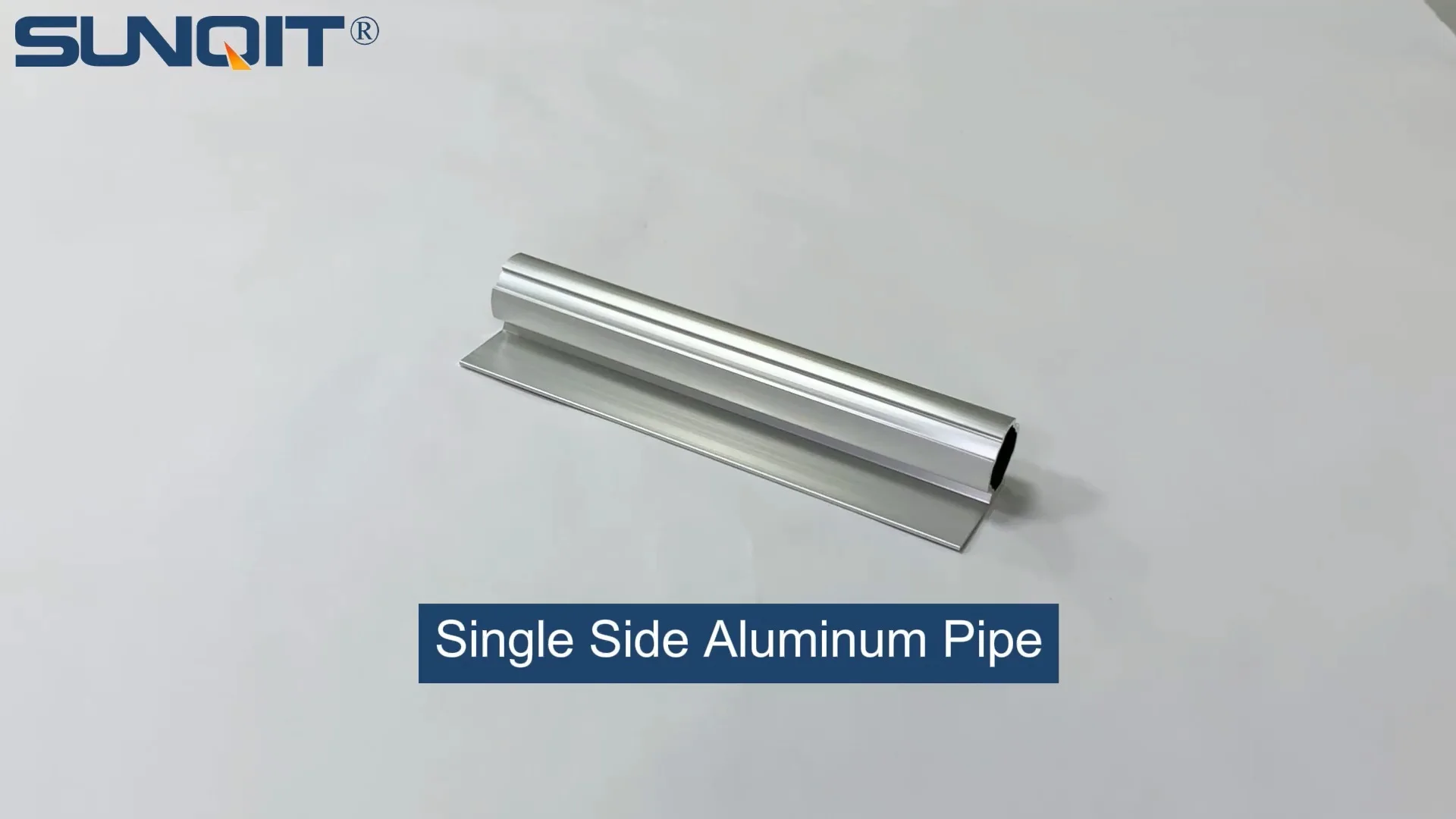
Single Side Aluminum Pipe
The single-sided plane can be installed with a back-mounted material box, and can also be used as a sidewall or partition.
The Small-Scale Producer's Dilemma: Rigidity vs. Adaptability
Running a small manufacturing or assembly operation—whether you're crafting custom electronics, packaging artisanal goods, or assembling components for local businesses—often feels like walking a tightrope. On one side, you've got limited space: that 500-square-foot workshop or garage-turned-factory can't afford to waste an inch. On the other, budget constraints mean every investment needs to pull its weight, today and tomorrow. And let's not forget the wild card: customer demands. One month, you're churning out 100 units of Product A; the next, a rush order for Product B requires rearranging your entire workflow. Rigid, one-size-fits-all equipment? It's a recipe for frustration, delays, and missed opportunities.
For years, small-scale producers turned to makeshift solutions: plywood workbenches that warp after a few months, steel racks that require welding (and a professional welder) to reconfigure, or plastic shelving that bends under heavy loads. These options check the "cheap" box upfront, but they fail where it matters most: flexibility. What if there was a system that grows with your business, adapts to new projects, and doesn't break the bank? Enter the single side aluminum pipe—a deceptively simple component that's quietly revolutionizing how small operations approach production, storage, and workflow design.
What Is Single Side Aluminum Pipe, Anyway?
At first glance, single side aluminum pipe looks like any other lightweight metal tube. But its magic lies in its design: a T-slot profile along one side that lets you attach accessories—joints, brackets, shelves, wheels—without drilling, welding, or specialized tools. Think of it as industrial-grade Legos for adults, but sturdier, more durable, and built for the demands of a production floor. Unlike traditional steel pipes, which are heavy and fixed, or plastic pipes that lack strength, single side aluminum pipe strikes a balance: it's lightweight enough for one person to handle, strong enough to support heavy tools or materials, and infinitely reconfigurable.
But it's not just the pipe itself that shines—it's the ecosystem around it. Aluminum profile accessories, from swivel joints that let you angle shelves at 45 or 90 degrees to caster wheels that turn a static workbench into a mobile cart, make it possible to build almost anything: workstations, material racks, assembly lines, even turnover trolleys for moving goods between stations. And because it's aluminum, it resists rust, stands up to daily wear and tear, and can be disassembled and reassembled dozens of times without losing integrity. For small-scale producers, this isn't just equipment—it's a lean system in disguise, designed to eliminate waste (time, space, money) and keep operations running smoothly, no matter what the day throws at you.

Why Small-Scale Producers Are Falling for Single Side Aluminum Pipe
Let's cut to the chase: why should you, as a small business owner, care about a metal pipe? The answer lies in three words: cost, flexibility, and control. Let's break it down.
1. It's Kind to Your Budget (Yes, Really)
Small businesses can't afford to sink money into equipment that only does one job. A custom steel workbench might cost $500 upfront, but if your next project requires a taller bench or extra shelves, you're looking at another $500 (and a trip to the hardware store). Single side aluminum pipe flips this model on its head. A basic starter kit—pipe, joints, a few accessories—costs a fraction of custom steel, and because you can reconfigure it, you'll never need to buy "new" equipment for a new task. Need to turn a workbench into a material rack? Just disassemble the top, add longer pipes, and reattach the shelves. The initial investment pays for itself in months, not years.
2. It Grows as Your Business Grows
Remember that rush order for Product B we mentioned earlier? With a traditional setup, you'd spend hours (or days) rearranging heavy steel racks or building new workbenches. With single side aluminum pipe, you can reconfigure your space in hours. Add a few extra pipes to extend a shelf, swap out fixed feet for casters to create more floor space, or build a temporary assembly line using roller tracks (another handy accessory) to speed up production. For a small bakery that suddenly needs to scale up holiday cookie production, or a electronics shop taking on a custom order with unique assembly steps, this adaptability isn't just convenient—it's critical. You're not stuck with a "set it and forget it" layout; you're in control, and your space works for you, not the other way around.
3. It Saves Space (Your Most Valuable Asset)
In a small workshop, every square foot counts. A bulky steel rack that takes up 10 square feet and can't be adjusted is a liability. Single side aluminum pipe, with its modular design, lets you build vertically, not just horizontally. Stack shelves up to the ceiling (using sturdy brackets, of course) to store materials, or design a compact workbench that folds down when not in use. Even better, when a project is done, you can disassemble the setup and store the pipes and accessories in a closet—no more permanent fixtures cluttering up your space. For producers working out of garages, basements, or small industrial units, this space-saving feature alone is worth the switch.
4. It's DIY-Friendly (No Welding Required)
You don't need to be a carpenter or a mechanic to work with single side aluminum pipe. The accessories click into place using simple bolts or levers, and most setups can be assembled with a basic wrench or Allen key. No need to hire a professional, no need to wait for a contractor—you and your team can build, modify, or repair equipment on the fly. This isn't just empowering; it's a time-saver. When a shelf breaks at 9 AM, you don't have to shut down production until a repair person arrives. You grab a spare joint, tighten a few bolts, and you're back up and running in 10 minutes.

Single Side Aluminum Pipe vs. Traditional Materials: The Numbers Don't Lie
Still on the fence? Let's put it to the test. Below is a comparison of single side aluminum pipe with two common alternatives: traditional steel and plywood. We'll look at initial cost, installation time, flexibility, durability, and who each material works best for.
| Material | Initial Cost (Basic Workbench) | Installation Time | Flexibility (1-10) | Durability (1-10) | Best For |
|---|---|---|---|---|---|
| Single Side Aluminum Pipe | $200–$300 | 1–2 hours (DIY) | 10 (fully reconfigurable) | 9 (rust-resistant, reusable) | Small businesses with changing needs |
| Traditional Steel | $400–$600 | 4–6 hours (requires welding) | 2 (fixed, hard to modify) | 10 (extremely strong) | Large factories with static workflows |
| Plywood/Particleboard | $100–$150 | 2–3 hours (requires cutting, screwing) | 3 (can be modified, but not easily) | 4 (warps, weakens over time) | Temporary setups or hobbyists |
The takeaway? Steel is tough but rigid and expensive. Plywood is cheap but flimsy. Single side aluminum pipe, though not the cheapest upfront, offers the best long-term value for small-scale producers who need to stay agile. It's an investment in your business's ability to adapt—and in today's fast-paced market, adaptability is everything.
Case Study: How a Small Electronics Shop Cut Costs by 30% with Single Side Aluminum Pipe
Let's meet Maria, the owner of a small electronics repair and assembly shop in Chicago. Before switching to single side aluminum pipe, Maria's workshop was a maze of mismatched equipment: a rickety plywood workbench that wobbled when she used her soldering iron, a steel shelf unit that was too tall to reach without a ladder, and plastic bins stacked on the floor (a tripping hazard waiting to happen). When she landed a contract to assemble 500 custom circuit boards, she realized her setup wouldn't cut it—she needed more workspace, better organization, and a way to move materials between stations without wasting time.
Maria considered buying new steel workbenches, but quotes came in at $1,200 for two units—money she didn't have. Instead, she stumbled on single side aluminum pipe and decided to take a chance. She bought a starter kit with 10 feet of pipe, a handful of aluminum profile accessories (joints, shelves, caster wheels), and a sheet of plywood for the workbench top. Total cost? $350. That afternoon, she and her assistant built two workbenches, a material rack, and a turnover trolley for moving circuit boards from assembly to testing. The best part? When the contract ended and she needed space for repair work, they disassembled the assembly line and rebuilt the workbenches into a smaller, more compact setup.
"I was blown away by how easy it was," Maria says. "We used to spend an hour just moving tools between stations. Now, with the mobile workbench, we can roll everything right to the job. And when we need to adjust the height or add a shelf? It takes 10 minutes. I've saved so much time—and money—that I was able to hire an extra employee. This pipe isn't just equipment; it's the reason we could take on bigger projects."

Building Your First Setup: Where to Start
Ready to dive in? Here's how to start building with single side aluminum pipe, even if you've never picked up a wrench before.
1. Define Your Needs
Before you buy anything, ask: What problem are you solving? Do you need more workspace? Better storage? A way to move materials? Sketch a rough design (even on a napkin!) of what you want to build. For example, a basic workbench might need: 4 vertical pipes (legs), 4 horizontal pipes (frame), a shelf, and a top surface. A material rack might need 6 vertical pipes, 12 horizontal pipes (for 3 shelves), and maybe a few diagonal braces for stability.
2. Choose Your Pipe and Accessories
Single side aluminum pipe comes in different lengths (typically 4–10 feet) and diameters (common sizes are 20mm, 30mm, or 40mm). For most small-scale projects, 30mm pipe is a safe bet—it's strong enough for tools and materials but not overly bulky. Next, pick your aluminum profile accessories: joints (T-joints, L-joints, swivel joints), shelves (plywood, metal, or plastic), caster wheels (locking or non-locking), and end caps (to cover sharp edges). Start simple—you can always add more accessories later.
3. Assemble and Test
Lay out all your parts on a flat surface. Attach the joints to the pipes first (most slide into the T-slot and tighten with a bolt). Then build the frame, adding shelves or other components as you go. Once assembled, give it a test: shake it gently to check stability, load it with the heaviest item you'll be using, and make sure it doesn't wobble. If something feels off, adjust the joints or add diagonal braces for extra support.
4. Iterate and Improve
The beauty of single side aluminum pipe is that it's never "finished." After using your setup for a week, ask: What's working? What's not? Maybe the workbench is too low, or the shelf is too narrow. Disassemble, adjust, and try again. Over time, you'll build a system that's perfectly tailored to your workflow.
The Future of Small-Scale Production: Lean, Flexible, and Aluminum
As small businesses face growing pressure to compete with larger companies—faster turnaround times, lower costs, more customization—rigid, outdated equipment will only hold them back. Single side aluminum pipe isn't just a trend; it's a glimpse into the future of manufacturing: decentralized, adaptable, and focused on the needs of the producer, not the other way around. It's a tool that lets small-scale operations punch above their weight, taking on bigger projects, serving more customers, and growing sustainably—without sacrificing quality or breaking the bank.
So, if you're tired of fighting with equipment that doesn't keep up, if you're ready to take control of your space and your workflow, and if you want to invest in something that grows with your business—consider single side aluminum pipe. It's more than a pipe. It's a promise: that your small operation can be just as efficient, just as flexible, and just as successful as any big factory. And in the end, isn't that what every small business owner dreams of?