- Company Articles
- Products and Technology
- Application Cases
- Single Side Aluminum Pipe in Consumer Electronics Production: Case Study

Single Side Aluminum Pipe in Consumer Electronics Production: Case Study
Related Product
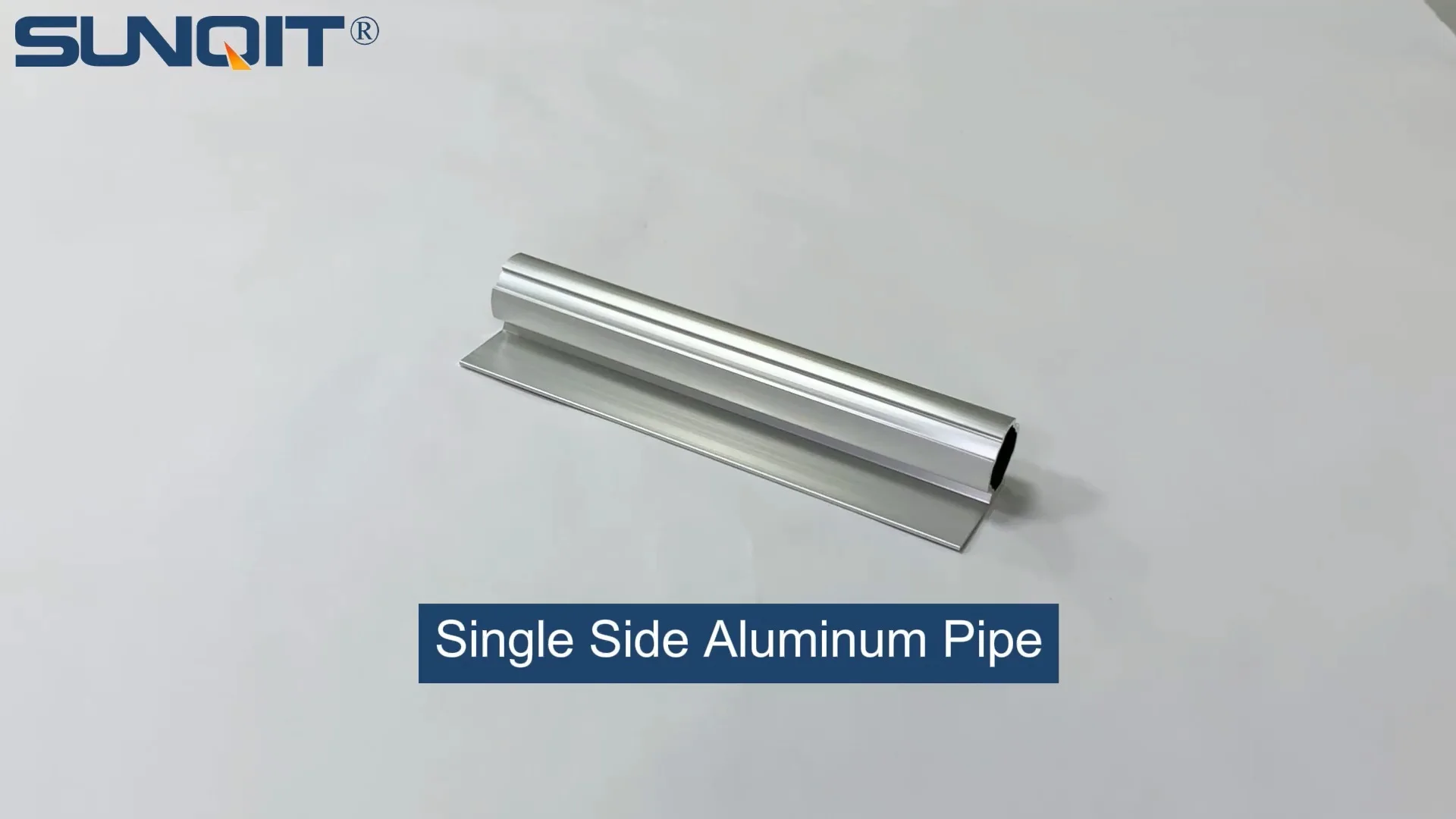
Single Side Aluminum Pipe
The single-sided plane can be installed with a back-mounted material box, and can also be used as a sidewall or partition.
Introduction: The Race for Agility in Consumer Electronics
In the world of consumer electronics, change is the only constant. New smartphones, wearables, and smart home devices hit the market every month, each with sleeker designs, more complex components, and tighter production timelines. For manufacturers, this pace isn't just a challenge—it's a make-or-break pressure to stay relevant. At the heart of this race lies a critical question: How do you build production lines that can keep up? Not just today, but tomorrow, next quarter, and beyond?
This is the story of TechFlow Electronics, a mid-sized contract manufacturer based in Southeast Asia, specializing in assembling circuit boards and components for leading global brands. By 2023, TechFlow was grappling with a familiar problem: its production floor felt stuck in the past. Rigid workstations, clunky material handling systems, and inflexible layouts were slowing down output and making it nearly impossible to adapt to new product designs. That's when they turned to an unlikely hero: the single side aluminum pipe. What followed wasn't just a hardware upgrade—it was a transformation in how they thought about lean manufacturing, modularity, and the human side of production.
The Challenge: When "Sturdy" Becomes "Stifling"
TechFlow's production line in 2022 was a patchwork of legacy systems. Most workstations were built with fixed steel frames and wooden tops—sturdy, but about as flexible as a concrete wall. When a client requested a new smartwatch component with a smaller footprint, the team spent three weeks reconfiguring just two workstations. Material flow was another pain point: parts moved via manual carts, leading to bottlenecks at assembly stations. Employees reported spending up to 15% of their shift just fetching components, and lead times for small-batch orders had ballooned to 12 days—far above the industry average of 7–8 days.
Maria Santos, TechFlow's Production Manager, summed it up bluntly: "We were trying to run a marathon in hiking boots. Our equipment wasn't designed for speed or adaptability. When a new product came in with different dimensions, we'd have to weld new frames or drill holes in existing workbenches. It wasn't just slow—it was demoralizing for the team. They'd see the inefficiencies every day and feel powerless to fix them."
The numbers told the same story. TechFlow's key metrics were trending downward: throughput per workstation had dropped by 8% year-over-year, and changeover time for new product lines averaged 40 hours—double what it was two years prior. Something had to give.

The Solution: Rethinking Production with Single Side Aluminum Pipe
After months of researching alternatives—from expensive automated conveyor systems to custom steel fabrication—TechFlow's engineering team stumbled on a simpler idea: aluminum profile systems, specifically single side aluminum pipe. Unlike traditional steel pipes, these lightweight, modular tubes feature T-slots along one side, allowing accessories like brackets, shelves, and guides to be attached without drilling or welding. They're part of a broader family of aluminum extrusion profiles, designed for quick assembly and endless reconfiguration.
"At first, we were skeptical," admits Raj Patel, TechFlow's Lead Engineer. "Aluminum? It seemed too flimsy for our needs. But when we tested a sample workstation built with single side aluminum pipe and aluminum profile accessories, we were blown away. It was light enough for two people to move, but rigid enough to support our circuit board fixtures. And the T-slots—they let us add a shelf here, a tool holder there, in minutes. No more waiting for the welding team."
TechFlow partnered with a local aluminum pipe supplier to pilot the system on their most problematic line: the "Flex Line," responsible for small-batch, high-mix components. The goal was modest: reduce changeover time by 25% and cut material handling delays by 20%. What they ended up with was a complete overhaul of their workflow, centered on three key components:
- Modular Workstations: Replacing fixed steel workbenches with custom-built stations using single side aluminum pipe frames. These workstations featured adjustable heights, tool rails with quick-attach holders, and integrated roller tracks for parts to slide directly into assembly positions.
- Dynamic Material Flow: Installing aluminum roller tracks along the line, connecting workstations with gravity-fed paths for components. Unlike the old manual carts, these tracks used swivel roller balls and plastic roller track guide rails (yellow for high-priority parts, grey for standard components) to ensure smooth, consistent movement.
- Lean System Integration: Aligning the new setup with TechFlow's existing lean initiatives—eliminating waste by reducing motion (employees no longer walked to fetch parts) and optimizing space (the slimmer aluminum frames freed up 15% of floor space).

The Implementation: Building a Line That Breathes
The pilot began in January 2024, with the Flex Line shutdown for a three-day "transformation sprint." The old steel workbenches were dismantled, and the team—including floor operators—got hands-on with the aluminum pipe and accessories. "We wanted the people who use the line every day to design it," Maria explains. "An operator suggested adding a tilted shelf for instruction manuals; another asked for a lower roller track to reduce bending. Those small tweaks made all the difference in adoption."
By the end of the third day, the new line was up and running. The centerpiece was a series of workbench E models (single deck, without casters) built from 20mm single side aluminum pipe, with aluminum guide rail A along the back for tool hooks. Between stations, 40mm steel roller track with yellow wheels carried component trays, while plastic roller track guide rails in grey directed finished parts to quality control. Even the material racks—previously static steel shelving—were replaced with adjustable units using aluminum profile brackets and internal rotary aluminum joints, allowing shelves to tilt for easier access.
"On day one, I was nervous," says Lina Wong, a Flex Line operator with 5 years at TechFlow. "I'd worked with the old steel benches so long, they felt like part of the job. But within an hour, I was hooked. The roller track brings parts right to my hands—I don't have to stretch or bend anymore. And when we switched to a new circuit board last month? We reconfigured my workstation in 20 minutes. Before, that would've taken a full day."

The Results: From Metrics to Morale
Six months into the pilot, the results were undeniable. TechFlow tracked key performance indicators (KPIs) before and after the aluminum pipe implementation, and the data spoke for itself:
| Metric | Before Implementation (2023) | After Implementation (2024) | Improvement |
|---|---|---|---|
| Changeover Time (New Product Lines) | 40 hours | 8 hours | 80% reduction |
| Material Handling Time per Unit | 4.2 minutes | 1.8 minutes | 57% reduction |
| Throughput per Workstation (units/day) | 120 | 165 | 37.5% increase |
| Employee Fatigue Reports (monthly) | 18 | 4 | 78% reduction |
| Lead Time for Small-Batch Orders | 12 days | 6.5 days | 46% reduction |
But the most surprising impact wasn't in the spreadsheets—it was on the floor. "We expected efficiency gains, but the cultural shift caught us off guard," Maria says. "Operators started suggesting improvements on their own. One team redesigned their material rack B (3 row, 3 floor) to include swivel roller balls 1 inch for faster bin access. Another added caster wheels to a workstation, turning it into a mobile repair station that could move to where the problem was, instead of the other way around."
The success of the Flex Line pilot led TechFlow to roll out the aluminum pipe system across three more lines by mid-2024. Today, over 60% of their production floor uses single side aluminum pipe, aluminum profile accessories, and roller track systems. And the results keep compounding: in Q3 2024, their on-time delivery rate hit 98.5%—a company record—and client satisfaction scores rose by 12 points.
Why It Worked: The Hidden Advantages of Aluminum
At first glance, aluminum might seem like an unlikely choice for industrial manufacturing. But for TechFlow, its benefits went beyond modularity:
- Cost-Effectiveness: While aluminum profile systems have a higher upfront cost than steel, the savings in labor (no welding, no custom fabrication) and downtime (faster reconfigurations) paid for the investment in 8 months.
- Durability: Contrary to initial fears, the aluminum pipe and joints proved surprisingly tough. The supplier's testing showed the system could withstand 500+ reconfigurations without losing structural integrity—more than enough for TechFlow's needs.
- Sustainability: Aluminum is 100% recyclable, aligning with TechFlow's client for greener manufacturing. The lighter weight also reduced shipping costs for the aluminum pipe wholesale orders.
Raj Patel puts it simply: "We didn't just buy a product—we bought a philosophy. Single side aluminum pipe isn't about the material; it's about empowering teams to adapt. In consumer electronics, you can't predict the next product, but you can build a line that doesn't care what comes next. That's the real power."
Conclusion: Building for the Future, One Pipe at a Time
TechFlow's journey isn't unique. As consumer electronics manufacturers face mounting pressure to deliver more with less, the need for flexible, human-centered production systems has never been clearer. Single side aluminum pipe, paired with aluminum profile accessories and roller track systems, isn't a silver bullet—but it's a tool that turns "we can't" into "we can, and we can do it tomorrow."
For Maria Santos, the transformation is personal. "I walk the floor now, and I see energy. People aren't just working—they're problem-solving, innovating. That's the lean system in action, but it took the right hardware to unlock it. Aluminum pipes didn't change our people; they gave our people the freedom to change how they work."
In the end, the story of TechFlow Electronics is about more than production lines or aluminum extrusion profiles. It's about remembering that manufacturing is, at its core, human. And when you give humans the tools to adapt, create, and thrive—magic happens.