- Company Articles
- Products and Technology
- Product knowledge
- Single Side Aluminum Pipe: Reducing Waste in Lean Manufacturing Processes

Single Side Aluminum Pipe: Reducing Waste in Lean Manufacturing Processes
Related Product
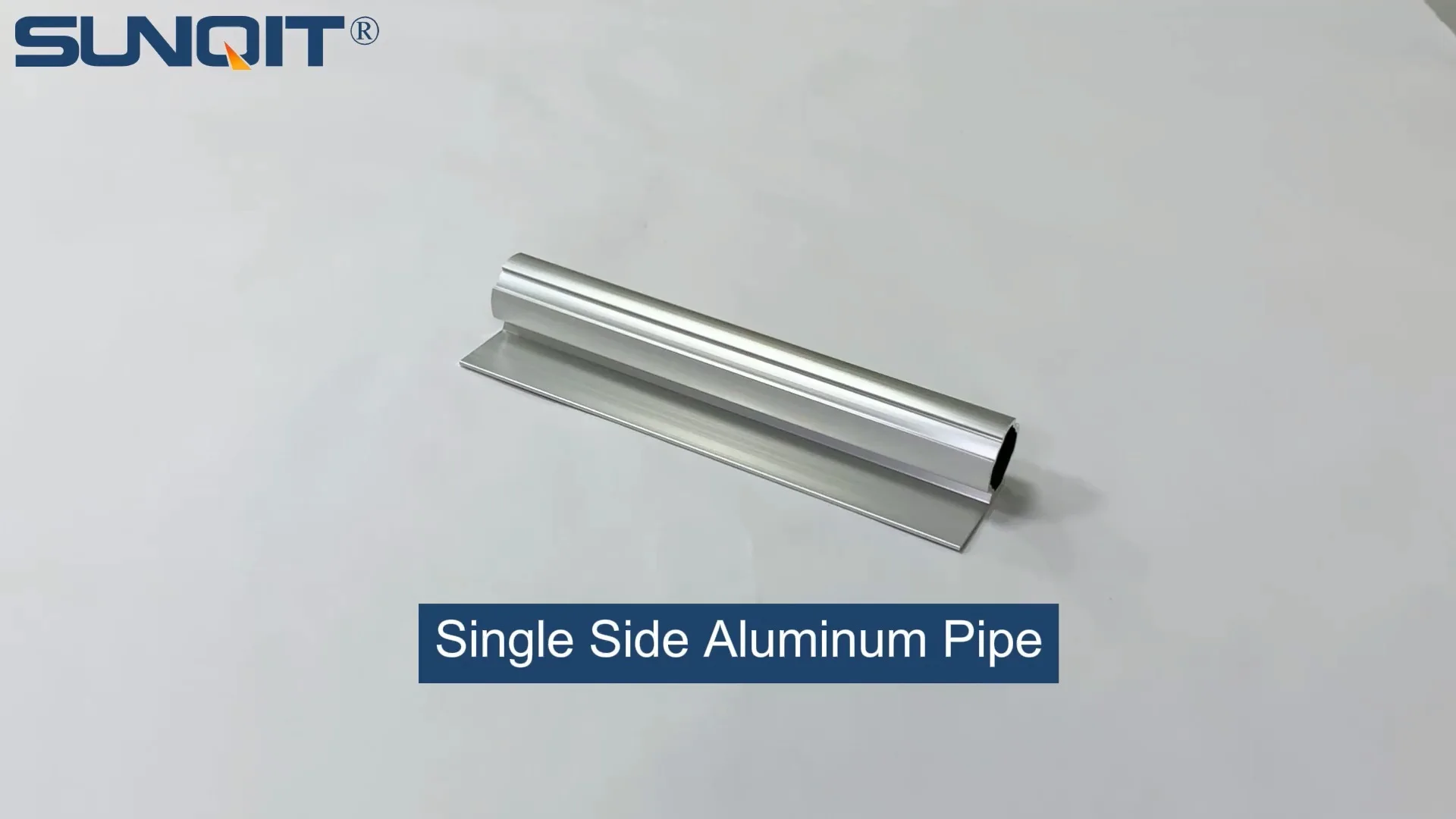
Single Side Aluminum Pipe
The single-sided plane can be installed with a back-mounted material box, and can also be used as a sidewall or partition.
How a simple component is transforming factory floors by putting lean principles into action
The Hidden Cost of Waste in Manufacturing
Walk into any manufacturing facility, and you'll likely see a flurry of activity: workers assembling products, machines humming, materials moving from one station to the next. But beneath that busy surface, there's often a silent drain on productivity: waste. Not the obvious kind—like scrap metal or leftover packaging—but the insidious, everyday inefficiencies that add up to lost time, money, and energy. In lean manufacturing, we talk about the "Seven Wastes," a framework that identifies the most common culprits: overproduction, waiting, transport, defects, inventory, motion, and overprocessing. These aren't just abstract concepts; they're tangible problems that eat into profit margins and slow down innovation.
Consider this: A team spends 20 minutes each morning rearranging a workbench because it's bolted to the floor and can't adapt to a new product's needs. That's "motion waste." A warehouse stocks twice as many components as needed "just in case," tying up capital in "inventory waste." A production line grinds to a halt because a flow rack can't keep up with material demand, leading to "waiting waste." For years, manufacturers accepted these issues as unavoidable—part of the cost of doing business. But what if the solution wasn't in better software or stricter protocols, but in the very tools and structures they use to build their workspace?
Introducing Single Side Aluminum Pipe: Lean Thinking in Physical Form
Enter single side aluminum pipe—a deceptively simple innovation that's quietly redefining what a "lean workspace" looks like. At first glance, it's just a lightweight, corrosion-resistant tube with a single T-slot running along one side. But that slot is where the magic happens: it allows for quick, tool-free attachment of aluminum profile accessories like joints, brackets, and shelves, turning a basic pipe into a fully customizable building block. Unlike traditional steel pipes or wooden beams, which are heavy, fixed, and hard to modify, single side aluminum pipe is designed for flexibility. It's the kind of tool that doesn't just *support* lean practices—it *enables* them by making waste reduction a natural part of the workflow.
What makes aluminum lean pipe stand out? For starters, its material properties. Aluminum is 30% lighter than steel but just as strong, making it easy to handle without heavy machinery. It's also resistant to rust and wear, so it lasts longer in harsh factory environments. But the real game-changer is its modularity. With the right accessories—think swivel joints, quick-connect brackets, or adjustable feet—you can build a workbench in an hour, reconfigure a flow rack in 30 minutes, or disassemble a production line at the end of the day and rebuild it tomorrow for a completely different product. No welding, no drilling, no downtime. That's the power of a system designed to adapt, not just exist.

How Single Side Aluminum Pipe Tackles the Seven Wastes
To understand why single side aluminum pipe is a lean manufacturing powerhouse, let's break down how it addresses each of the Seven Wastes—starting with the ones most affected by workspace design.
1. Motion Waste: Making Every Step Count
Motion waste happens when workers have to reach, bend, or walk more than necessary to do their jobs. A poorly designed workbench, for example, might force an assembler to stretch across a cluttered surface to grab a tool, or a flow rack placed too far from the production line could require constant back-and-forth trips. Single side aluminum pipe solves this by letting you build workspaces tailored to human ergonomics. Need a shelf at waist height? Attach it with a few brackets. Want tools within arm's reach? Add a hanging rail in minutes. Because the system is adjustable, you can tweak heights, angles, and layouts until every movement feels natural—cutting down on unnecessary steps and reducing fatigue.
2. Waiting Waste: Keeping the Line Moving
Waiting waste is the bane of any production manager's existence: machines idle because materials aren't ready, workers stand by because a workbench isn't set up, or a shipment is delayed because a turnover trolley can't handle the load. Aluminum lean pipe systems minimize this by ensuring that materials and tools are always where they need to be, exactly when they need to be there. Flow racks built with aluminum pipe and roller tracks, for instance, use gravity to feed components directly to the assembly line—no more stopping to fetch parts. And because these systems are lightweight, they can be moved closer to the action in seconds, eliminating gaps in the workflow.
3. Transport Waste: Streamlining Material Flow
Transport waste refers to unnecessary movement of materials—like moving a pallet from the warehouse to the production floor, then to a staging area, then back. Single side aluminum pipe reduces this by enabling "point-of-use" storage. Instead of storing components in a distant warehouse, you can build mini-racks or turnover trolleys right next to the assembly line, stocked with exactly what's needed for the current shift. Even better, because aluminum is lightweight, these trolleys can be pushed by a single worker, cutting down on the need for forklifts or heavy machinery. It's a small change, but it adds up: one automotive parts manufacturer reported a 25% reduction in material transport time after switching to aluminum lean pipe trolleys.
4. Overprocessing Waste: Building Only What You Need
Overprocessing waste occurs when you use more resources than necessary to create a product—like using a heavy steel workbench for a lightweight assembly task. Single side aluminum pipe avoids this by letting you "right-size" your workspace. Need a small, temporary station for a prototype? Build it with a few pipes and a plywood top, then disassemble it when you're done. No need to invest in a permanent structure that will sit unused 90% of the time. This "build-as-you-go" approach ensures you're never using more material, space, or labor than required—keeping costs low and efficiency high.

From Concept to Reality: The Lean System in Action
To see how single side aluminum pipe transforms theory into results, let's look at a real-world example. Meet PrecisionTech, a mid-sized electronics manufacturer that specializes in custom circuit boards. A few years ago, their production floor was a patchwork of fixed wooden workbenches, steel flow racks, and hand-me-down shelving. Changeovers for new orders took 8 hours (minimum), workers complained of back pain from awkward reaching, and material transport accounted for 15% of their total labor costs. They were stuck in a cycle of waste—and they knew it.
Case Study: PrecisionTech's Lean Transformation
Before: Fixed wooden workbenches with no adjustability; steel flow racks bolted to the floor; no standardized material transport. Changeover time for new products: 8 hours. Motion waste: Workers reported 2-3 hours per day of "unnecessary movement." Transport waste: 15% of labor spent moving materials.
After: Switched to single side aluminum pipe workbenches and flow racks, paired with aluminum profile accessories like swivel joints and caster wheels. Workbenches now adjust in height (from 70cm to 90cm) and can be reconfigured with new tool holders in 30 minutes. Flow racks, mounted on casters, are wheeled directly to production lines, cutting transport time by 60%. Changeover time for new products: 1 hour.
Results: 40% reduction in motion waste, 50% drop in waiting time, 35% lower material transport costs. Annual savings: $120,000. Workers report less fatigue, and the company has increased production capacity by 20% without adding square footage.
PrecisionTech's story isn't unique. From automotive plants to food packaging facilities, manufacturers are discovering that aluminum lean pipe systems aren't just about building structures—they're about building a culture of continuous improvement. When your workspace can adapt as quickly as your ideas, you stop accepting waste as inevitable and start seeing it as a problem to be solved, one pipe and joint at a time.

Traditional vs. Aluminum Lean Pipe Systems: A Waste Reduction Comparison
| Feature | Traditional Steel/Wood Systems | Single Side Aluminum Pipe Systems | Key Waste Reduction Benefit |
|---|---|---|---|
| Material Weight | Heavy (steel: 7.8g/cm³; wood: 0.6g/cm³ but bulkier) | Lightweight (aluminum: 2.7g/cm³) | Reduces transport and motion waste (easier to move/reconfigure) |
| Modularity | Fixed (requires welding/drilling to modify) | Tool-free adjustability (uses aluminum profile accessories) | Eliminates waiting waste (no downtime for reconfiguration) |
| Setup Time | 8-12 hours for a basic workbench | 1-2 hours for a fully customized workbench | Cuts overprocessing waste (faster setup = less labor) |
| Durability | Prone to rust (steel) or warping (wood) | Corrosion-resistant, weatherproof | Reduces defect waste (fewer repairs/replacements) |
| Reusability | Low (difficult to disassemble and repurpose) | High (components can be reused in new configurations) | Minimizes inventory waste (no need to buy new materials for each project) |
Beyond Waste Reduction: The Long-Term Benefits of Aluminum Lean Pipe
While waste reduction is the star of the show, single side aluminum pipe offers benefits that extend far beyond the Seven Wastes. For one, it's a sustainable choice. Aluminum is 100% recyclable, and because the system is modular, components can be reused for years—reducing the need for new materials and lowering your carbon footprint. It's also a safer option: aluminum's smooth finish and lightweight design reduce the risk of injuries from heavy lifting or sharp edges, a critical factor in lean systems that prioritize worker well-being.
Then there's scalability. As your business grows, your workspace needs to grow with it. With aluminum lean pipe, you don't have to tear down and rebuild—just add more pipes, joints, and accessories. A small startup today can become a large manufacturer tomorrow, and its aluminum system will grow right along with it. This scalability means you're never locked into a single layout, giving you the freedom to experiment, innovate, and adapt to market changes without costly renovations.
Choosing the Right Aluminum Lean Pipe System for Your Needs
Ready to make the switch? Here are a few key considerations to keep in mind: First, assess your current waste hotspots. Do you struggle with long changeover times? Focus on adjustable workbenches and mobile flow racks. Is motion waste a problem? Look for ergonomic accessories like height-adjustable feet and tool holders. Second, prioritize quality aluminum profile accessories. The best pipe in the world won't perform if its joints are flimsy or its brackets break under pressure. Look for suppliers that offer durable, tested components—preferably with a warranty.
Finally, start small. You don't have to overhaul your entire facility in one go. Pick a single production line or work cell, implement an aluminum lean pipe system, and measure the results. Once you see the impact—faster changeovers, happier workers, lower costs—scaling up will feel like the natural next step.
Conclusion: Lean Isn't Just a Philosophy—It's a Tool
At the end of the day, lean manufacturing isn't about following a set of rules; it's about creating a workspace that works *with* your team, not against them. Single side aluminum pipe embodies that idea by turning flexibility, adaptability, and waste reduction into tangible, everyday tools. It's a reminder that the most powerful lean solutions often aren't the ones you buy in software—they're the ones you can touch, build, and reimagine each day.
So, the next time you walk through your factory floor, take a look around. What if that fixed workbench could adjust to your workers' heights? What if that clunky flow rack could move with your production line? What if "waste" became a thing of the past? With single side aluminum pipe, it's not just possible—it's already happening. The future of lean manufacturing isn't in grand gestures; it's in the small, smart choices that add up to big results. And it all starts with a single pipe.