- Company Articles
- Products and Technology
- Product knowledge
- Single Side Aluminum Pipe vs Carbon Steel: Weight and Corrosion Resistance Comparison

Single Side Aluminum Pipe vs Carbon Steel: Weight and Corrosion Resistance Comparison
Related Product
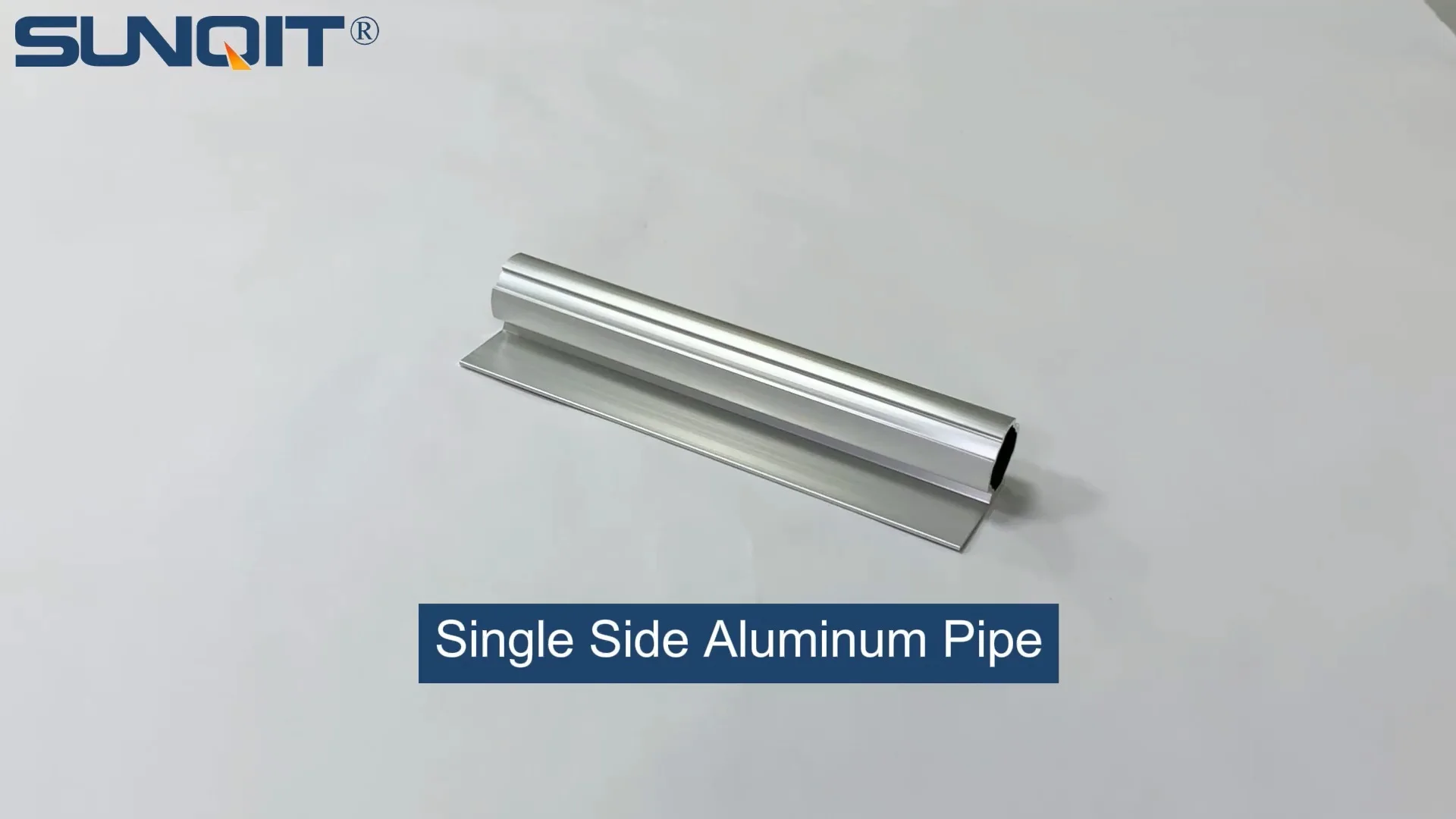
Single Side Aluminum Pipe
The single-sided plane can be installed with a back-mounted material box, and can also be used as a sidewall or partition.
In the world of industrial manufacturing, warehousing, and lean production systems, the materials we choose form the backbone of efficiency, safety, and long-term reliability. From the workbenches where products are assembled to the flow racks that keep materials moving, and the conveyors that streamline production lines, every component plays a role in keeping operations running smoothly. Among these components, pipes are unsung heroes—quietly supporting everything from lightweight trolleys to heavy-duty material racks. Today, we're diving into a head-to-head comparison of two popular options: single side aluminum pipe and carbon steel pipe. We'll focus on two critical factors that often make or break material choices in industrial settings: weight and corrosion resistance. By the end, you'll have a clearer picture of which material aligns best with your needs, whether you're setting up a new lean system, upgrading workstations, or sourcing components for a custom project.
Meet the Contenders: Single Side Aluminum Pipe and Carbon Steel Pipe
Before we jump into comparisons, let's get to know each material. They might both be "pipes," but their origins, properties, and personalities couldn't be more different.
Single Side Aluminum Pipe: The Lightweight Innovator
Aluminum has long been prized in industries where weight and corrosion resistance are non-negotiable, and single side aluminum pipe is a prime example of this. These pipes are typically made from aluminum alloys, often through aluminum extrusion profile processes—where molten aluminum is forced through a die to create consistent, precise shapes. The "single side" designation refers to a design feature where one side of the pipe is flat or shaped to accommodate accessories like brackets or panels, making it incredibly versatile for building custom structures. Think of it as a pipe with a built-in "attachment point," eliminating the need for extra hardware in many cases.
What really sets single side aluminum pipe apart is its compatibility with aluminum pipe accessories . From joints and clamps to brackets and caster wheels, these pipes are part of a modular system that lets you build, modify, and expand structures with minimal effort. Whether you're putting together a simple workbench or a complex conveyor system, the ease of assembly and reconfiguration is a game-changer for dynamic workplaces.
Carbon Steel Pipe: The Heavyweight Champion
Carbon steel, on the other hand, is the tried-and-true workhorse of the industrial world. Made primarily from iron and carbon, with small amounts of other elements, carbon steel pipes are known for their raw strength and affordability. They've been used for decades in everything from construction to manufacturing, where their ability to handle heavy loads and high pressure has made them a staple. Unlike aluminum, carbon steel pipes are often seamless or welded, with thicker walls to boost their structural integrity. They're the kind of material you might picture in old factories—sturdy, no-nonsense, and built to take a beating.
Weight Matters: Why Lightweight Pipes Transform Workplaces
In industrial settings, "lightweight" isn't just a buzzword—it's a practical advantage that ripples through every aspect of operations, from installation to daily use. Let's break down how the weight of single side aluminum pipe stacks up against carbon steel, and why it matters.
The Science of Weight: Density Differences
Density is the key here. Aluminum has a density of about 2.7 grams per cubic centimeter (g/cm³), while carbon steel clocks in at a much heftier 7.85 g/cm³. That means, for the same volume, carbon steel is roughly 2.9 times heavier than aluminum. To put this in real terms, let's take a common scenario: a 10-foot length of 1-inch diameter pipe with a 0.1-inch wall thickness. A carbon steel pipe of this would weigh around 12 pounds, while a single side aluminum pipe of the same size? Just 4.1 pounds. That's a difference of nearly 8 pounds per pipe—and when you're building a workbench with 10 pipes, or a flow rack with 20, that weight adds up fast.
Real-World Impact: Installation, Mobility, and Ergonomics
So, what does 8 pounds per pipe mean for your team? Let's start with installation. Imagine your crew is assembling a lean pipe workbench. With carbon steel pipes, two workers might strain to lift and position each section. With single side aluminum pipe , one worker can handle the same task with ease, cutting installation time by half and reducing the risk of back injuries. Faster installation means less downtime, and fewer injuries mean happier, more productive teams—both wins for your bottom line.
Mobility is another big factor. Many industrial structures, from turnover trolleys to mobile workstations, rely on caster wheels to stay flexible. A carbon steel trolley loaded with materials might be so heavy that even with casters, it's tough to maneuver around tight corners or up slight inclines. Swap in single side aluminum pipe , and suddenly that trolley glides—making it easier for workers to move materials from point A to B without wasted effort. In fast-paced environments where every second counts, this can drastically speed up workflows.
Ergonomics can't be overstated, either. Heavy equipment isn't just hard to move—it's hard on the body over time. Repetitive lifting of carbon steel components can lead to chronic injuries, increased absenteeism, and higher workers' compensation costs. Lightweight aluminum pipes reduce strain, letting your team focus on the job, not the effort of moving materials.
Transportation and Storage: Saving Space and Costs
Weight also affects what happens before installation: transportation and storage. If you're sourcing pipes from a supplier, a truckload of carbon steel pipes might carry 500 units, while the same truck could haul over 1,400 single side aluminum pipe units—cutting shipping costs per unit. In your warehouse, storing lighter pipes means you can stack more without worrying about overloading shelves, and retrieving them is a breeze with a forklift or even by hand.

Corrosion Resistance: The Battle Against Rust and Decay
Weight is critical, but in many environments—think humid factories, food processing plants, or outdoor storage areas—corrosion resistance is the dealbreaker. Nothing derails a production line faster than a rusted pipe weakening a workbench or a corroded joint failing on a conveyor. Let's see how our two contenders hold up against the elements.
Aluminum: The Self-Healing Protector
Aluminum has a secret weapon against corrosion: its oxide layer. When aluminum is exposed to oxygen, it forms a thin, invisible layer of aluminum oxide (Al₂O₃) on its surface. This layer is incredibly stable and adheres tightly to the metal, acting as a barrier that prevents further oxidation. Even if the surface is scratched, the exposed aluminum quickly reacts with oxygen to reform the oxide layer—essentially healing itself. This natural protection makes single side aluminum pipe ideal for environments with moisture, chemicals, or salt air. In food processing facilities, where daily washdowns with water and sanitizers are routine, aluminum pipes won't rust or leach contaminants into products. In coastal warehouses, where salt spray is in the air, they'll stay bright and strong for years.
Carbon Steel: The High-Maintenance Contender
Carbon steel, unfortunately, doesn't have the same built-in defense. Without protection, it reacts readily with moisture and oxygen to form iron oxide—better known as rust. Rust isn't just unsightly; it weakens the metal, creating pits and cracks that compromise structural integrity. To combat this, carbon steel pipes often come coated with paint, galvanization (zinc plating), or other protective layers. But coatings can chip, scratch, or wear off over time, especially in high-traffic areas or when pipes are frequently reconfigured (a common practice in lean systems). Once the coating is damaged, rust takes hold, and suddenly you're looking at maintenance costs: sanding, repainting, or even replacing pipes entirely. In humid environments, this cycle can repeat every few months, turning a "cheap" material into a costly long-term investment.
Stainless Steel vs. Carbon Steel: A Quick Note
You might be thinking, "What about stainless steel? Isn't that steel that resists corrosion?" It is—but stainless steel is an alloy of steel and chromium (and often nickel), making it more expensive than carbon steel and still heavier than aluminum (density ~7.9 g/cm³). While stainless steel is a great option for extreme corrosion resistance, it's not the same as carbon steel, and its higher cost puts it in a different category than our two contenders here.

Beyond Weight and Corrosion: Other Factors to Consider
Weight and corrosion resistance are critical, but they're not the only players in the game. Let's touch on a few other factors that might influence your decision, from strength to cost to compatibility with aluminum pipe accessories .
Strength: When Carbon Steel Flexes Its Muscles
Carbon steel has one clear advantage here: raw tensile strength. Tensile strength measures how much force a material can withstand before breaking. Carbon steel typically has a tensile strength of 400–550 megapascals (MPa), while aluminum alloys used in pipes range from 200–300 MPa. This means carbon steel can handle heavier static loads—think of a material rack holding 500-pound pallets, or a conveyor carrying dense metal parts. That said, single side aluminum pipe often compensates with smart design. Thanks to aluminum extrusion profile techniques, manufacturers can create pipes with reinforced walls or shaped cross-sections (like T-slots) that boost strength without adding weight. For many industrial applications—workbenches, light-duty flow racks, or mobile trolleys—aluminum's strength is more than enough.
Cost: Short-Term vs. Long-Term Thinking
Let's talk dollars and cents. Carbon steel pipes are almost always cheaper upfront. A 10-foot carbon steel pipe might cost $15, while a comparable single side aluminum pipe could be $30 or more. But here's the catch: maintenance. Carbon steel requires regular upkeep—painting, rust treatment, or replacement of corroded sections—to stay functional. Over 5 years, those costs can add up: $500 for paint, $200 for rust removal, and $300 for replacing rusted pipes. Aluminum? Once installed, it needs almost no maintenance. Its oxide layer does the work, so you won't be repainting or replacing sections anytime soon. For many businesses, the higher upfront cost of aluminum pays off in the long run, especially in corrosive environments.
Compatibility: Playing Well with Others
In industrial setups, pipes don't work alone—they rely on joints, brackets, casters, and other accessories to form functional systems. Here, single side aluminum pipe shines thanks to its compatibility with aluminum pipe accessories . These accessories—like internal rotatary aluminum joints, parallel aluminum joints, or T-slot brackets—are designed to snap or bolt onto aluminum pipes seamlessly, making reconfiguration a breeze. Want to add a shelf to your workbench? Just slide on a bracket. Need to adjust the height of a flow rack? Loosen a joint and reposition. Carbon steel pipes, while compatible with their own accessories, often require welding or heavy-duty clamps, which limit flexibility. If your operations demand frequent changes (a hallmark of lean manufacturing), aluminum's modularity is a huge plus.

When to Choose Which: Scenarios Where Each Material Shines
Still on the fence? Let's map out common industrial scenarios and see which material comes out on top.
Choose Single Side Aluminum Pipe If…
- You need lightweight, mobile structures: Think workstations on caster wheels , turnover trolleys, or portable conveyors that workers move daily.
- Corrosion is a concern: Food processing, pharmaceutical, or marine environments, or areas with high humidity or frequent washdowns.
- Flexibility matters: You frequently reconfigure lean systems, upgrade workstations, or adapt to new production lines (hello, aluminum pipe accessories !).
- Ergonomics and safety are priorities: Reducing worker strain from lifting heavy materials or installing equipment.
Choose Carbon Steel Pipe If…
- You need maximum strength for heavy static loads: Heavy-duty material racks, fixed conveyors for dense products, or structural supports.
- Upfront cost is your biggest concern: You're working with a tight budget and don't anticipate needing to reconfigure systems often.
- You're in a dry, indoor environment: A climate-controlled warehouse with low humidity, where corrosion risk is minimal.
The Verdict: Which Pipe is Right for You?
There's no one-size-fits-all answer, but here's a framework to guide you: Start by asking, "What's my biggest pain point?" If your team is struggling with heavy equipment, or you're replacing rusted pipes every year, single side aluminum pipe is likely the way to go. If you need to support extreme loads and operate in a dry, low-maintenance environment, carbon steel might be the better bet.
For many modern industrial operations—especially those embracing lean principles, modular workspaces, or clean manufacturing— single side aluminum pipe offers a compelling package: lightweight mobility, corrosion resistance, and compatibility with aluminum pipe accessories that make adaptation easy. It's an investment in efficiency, safety, and long-term reliability that pays dividends in smoother workflows and fewer headaches down the line.
Comparison Table: Single Side Aluminum Pipe vs. Carbon Steel Pipe
| Factor | Single Side Aluminum Pipe | Carbon Steel Pipe |
|---|---|---|
| Density (g/cm³) | 2.7 | 7.85 |
| Weight (10ft, 1in diameter, 0.1in wall) | 4.1 lbs | 12 lbs |
| Corrosion Resistance | Excellent (self-healing oxide layer) | Poor (prone to rust; needs coatings) |
| Tensile Strength (MPa) | 200–300 | 400–550 |
| Upfront Cost | Higher | Lower |
| Maintenance Cost | Low (no rust treatment/painting) | High (regular coatings/replacement) |
| Compatibility with Accessories | Excellent (modular aluminum pipe accessories) | Good (limited to steel accessories; often requires welding) |
| Best For | Mobile workstations, clean environments, lean systems, humid areas | Heavy static loads, dry environments, budget-focused projects |
Final Thoughts: Building for the Future
Choosing between single side aluminum pipe and carbon steel pipe isn't just about picking a material—it's about building a foundation for your operations. Weight and corrosion resistance are more than specs on a sheet; they're about creating a workplace where your team can move freely, where equipment lasts longer, and where you can adapt quickly to change. Whether you opt for the lightweight versatility of aluminum or the rugged strength of carbon steel, the key is to align your choice with your unique needs, challenges, and long-term goals. After all, the best pipes aren't just tools—they're partners in your success.