- Company Articles
- Products and Technology
- Product knowledge
- Single Side Aluminum Pipe vs Double Side: Choosing Based on Production Needs

Single Side Aluminum Pipe vs Double Side: Choosing Based on Production Needs
Related Product
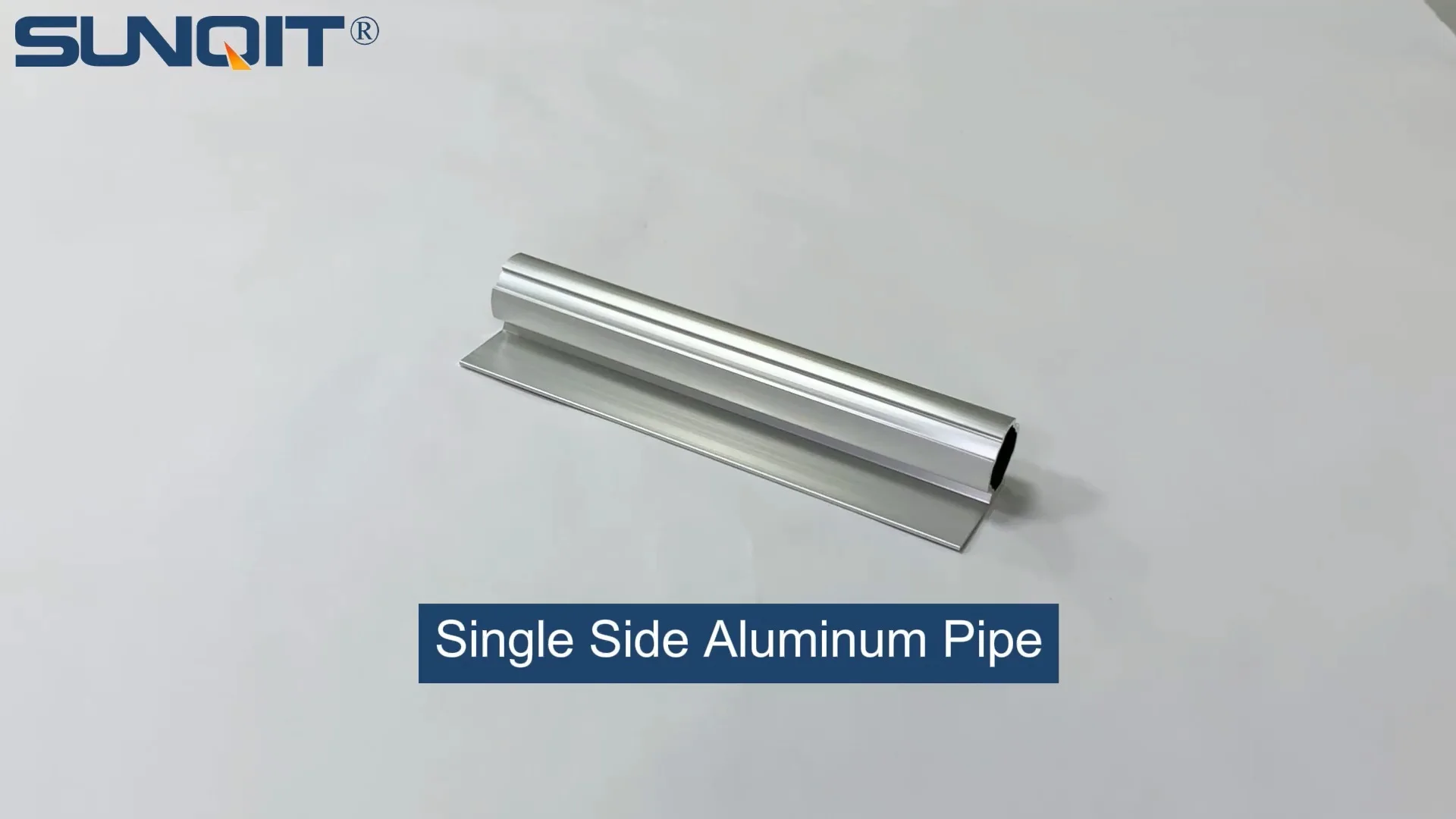
Single Side Aluminum Pipe
The single-sided plane can be installed with a back-mounted material box, and can also be used as a sidewall or partition.
It's 8:30 AM on a Monday, and Raj, the production manager at a mid-sized electronics assembly plant, is staring at a stack of workflow reports. The numbers aren't terrible, but they're not great either. The assembly line is bottlenecking at the material handling stage, and the workbenches—haphazardly built with rigid steel frames—take hours to reconfigure when the product line shifts. Last week, when they launched a new smartphone model, the team spent two full days dismantling and rebuilding the workstations. "There has to be a better way," Raj mutters, scrolling through an email from a supplier about "aluminum lean pipes." He's heard the term before—something about flexibility, modularity, lean manufacturing—but he's stuck on one question: single side or double side? Which one will actually solve his team's problems?
If you've ever found yourself in Raj's shoes—trying to optimize a workspace, balance cost and functionality, or future-proof your production line—you're not alone. Aluminum lean pipes have revolutionized how factories, warehouses, and workshops design their workflows. But with options like single side and double side pipes, the choice can feel overwhelming. In this guide, we'll break down the differences, explore real-world applications, and help you decide which type fits your production needs. By the end, you'll know whether single side aluminum pipes are the right fit for your light-duty, flexible setups or if double side pipes are worth the investment for heavier loads and complex systems.
What Are Aluminum Lean Pipes, Anyway?
Before diving into the single vs. double side debate, let's ground ourselves in the basics: What exactly are aluminum lean pipes, and why have they become a staple in modern manufacturing? At their core, aluminum lean pipes are lightweight, modular tubes designed to build everything from workbenches and flow racks to conveyors and material trolleys. They're the backbone of lean manufacturing systems, built around the idea that workspace should adapt to people—not the other way around.
Unlike traditional steel pipes, aluminum lean pipes are corrosion-resistant, easy to handle, and compatible with a wide range of accessories—think brackets, connectors, casters, and roller tracks. This modularity means you can assemble, disassemble, and reconfigure structures in minutes, not days. And because they're part of a lean system, they help eliminate waste: no more overbuilding fixed structures that gather dust when production needs change. Whether you're running a small workshop or a large-scale factory, aluminum lean pipes turn your workspace into a dynamic, responsive tool.
Now, within the world of aluminum lean pipes, two designs dominate: single side and double side. The difference lies in their profiles—the grooves or channels along the pipe that let you attach accessories. Single side pipes have one continuous groove (or "side") for mounting, while double side pipes have two. It sounds simple, but that extra groove changes everything: load capacity, flexibility, and even how your team interacts with the equipment. Let's unpack each one.
Single Side Aluminum Pipe: Light, Nimble, and Budget-Friendly
Imagine a pipe with a single, smooth groove running along its length—this is the single side aluminum pipe. It's the minimalist of the two, designed for simplicity and agility. Most single side pipes measure between 28mm to 30mm in diameter, with a wall thickness of 1.2mm to 1.5mm, making them lightweight and easy to maneuver. But don't let their size fool you: they're surprisingly strong for their weight, typically supporting loads up to 50kg per linear meter (though this varies by brand and design).
So, when does single side make sense? Think light-duty applications where flexibility and cost are top priorities. Let's take a small electronics assembly shop, for example. The team builds custom circuit boards for medical devices, and their product lines change every 3–6 months. They need workbenches that can be adjusted in height, reconfigured with tool holders, or even broken down and rebuilt in a different part of the shop. Single side aluminum pipes shine here. With a few basic aluminum profile accessories—like internal rotary joints and simple clamps—they can assemble a workbench in under an hour. When the next product line comes in, they loosen a few connectors, rearrange the pipes, and they're ready to go. No welding, no heavy lifting, no wasted materials.
Another sweet spot for single side pipes is temporary or low-load material racks. Picture a warehouse that handles small parts—screws, washers, plastic components. A flow rack built with single side pipes can hold lightweight bins, with roller tracks guiding materials gently from the back to the front. Since the loads are light (maybe 10–15kg per shelf), the single groove is more than enough to secure the roller track placon mounts and side guides. And if the warehouse expands or the parts change, the rack can be extended or shortened with minimal effort.
The benefits of single side pipes boil down to three key points: cost, simplicity, and speed. They're generally cheaper than double side pipes (since they use less material), easier to assemble for teams new to modular systems, and quick to reconfigure. For small businesses, startups, or departments with tight budgets, this can be a game-changer. Why invest in a heavy-duty structure when you don't need the extra strength? As Mike, a workshop owner in Ohio, put it: "I started with single side pipes for my prototype lab, and honestly? They've handled everything I've thrown at them. When I need to build a new test rig, I grab a few pipes, some connectors, and I'm up and running by lunch."

Double Side Aluminum Pipe: Strength, Versatility, and Heavy-Duty Performance
Now, let's flip the script. Double side aluminum pipes have—you guessed it—two grooves, running parallel along the length of the pipe. This seemingly small design change unlocks a whole new level of capability. Most double side pipes are slightly thicker (1.5mm to 2.0mm wall thickness) and larger in diameter (30mm to 40mm), giving them a higher load capacity—often 100kg or more per linear meter. But the real magic is in the dual grooves: they let you attach accessories to both sides of the pipe, turning a simple tube into a multi-functional building block.
When would you need this? Let's think about heavy-duty applications. Take a automotive parts manufacturer, for example, where workers move metal components weighing 20–30kg each. A flow rack built with single side pipes might sag under the weight, or the accessories might slip out of the single groove under constant use. Double side pipes, with their reinforced design and dual mounting points, can handle that load without breaking a sweat. And because you can mount accessories on both sides, you can build deeper racks, add side guides to prevent parts from falling, or even attach tool holders and label bins on one side while keeping the other side free for material flow.
Conveyors are another area where double side pipes shine. Imagine a conveyor system moving packages through a distribution center. The rollers need to be securely mounted, and the frame needs to stay stable even when boxes bump against it. With double side pipes, you can attach roller tracks to one groove and side guards to the other, creating a robust, enclosed system. If you need to add a branch in the conveyor later, the extra groove gives you the flexibility to connect new sections without dismantling the existing setup. It's like having a second set of hands when building—more options, fewer compromises.
Workbenches, too, benefit from double side pipes, especially in environments where space is tight. A workbench built with double side pipes can have tools hanging from one side, a monitor arm clamped to the other, and a shelf above—all without sacrificing stability. For example, in a medical device assembly line, where precision is critical, workers might need a clean, organized space with tools within arm's reach. A double side pipe workbench can accommodate all that: a (ESD) surface on top, tool hooks on one side, and a small flow rack for components on the other. When the product changes, you can swap out the ESD surface for a larger one or add a second shelf—no need to start from scratch.
The tradeoff? Double side pipes are heavier, slightly more expensive, and take a bit more time to assemble (since you have twice as many accessory mounting options to consider). But for many teams, the investment pays off. "We switched to double side pipes for our main assembly line three years ago, and I haven't looked back," says Priya, a production engineer at a consumer goods company. "We used to have to replace single side pipe frames every year because they'd bend under the load. Now, the double side frames are still as sturdy as day one, and we've saved countless hours reconfiguring them for new products."

Single Side vs. Double Side: A Side-by-Side Comparison
To make the choice clearer, let's put single and double side aluminum pipes head-to-head. The table below breaks down their key features, ideal uses, and limitations. Use this as a quick reference when evaluating your own needs.
| Feature | Single Side Aluminum Pipe | Double Side Aluminum Pipe |
|---|---|---|
| Grooves/Sides | 1 continuous groove | 2 parallel grooves |
| Typical Diameter | 28mm–30mm | 30mm–40mm |
| Wall Thickness | 1.2mm–1.5mm | 1.5mm–2.0mm |
| Load Capacity (per linear meter) | Up to 50kg | 100kg+ |
| Accessory Mounting | Single side only; limited to one row of accessories | Dual sides; can mount multiple accessories (e.g., roller tracks + tool holders) |
| Weight | Lighter (easier to handle manually) | Heavier (may require 2 people for assembly) |
| Cost | More budget-friendly (10–20% cheaper than double side) | Slightly higher cost (but more durable long-term) |
| Ideal Applications | Light-duty workbenches, small material racks, temporary setups, low-load conveyors | Heavy-duty workbenches, large flow racks, industrial conveyors, permanent assembly lines |
| Best For Teams That... | Need frequent reconfigurations, work with light materials, have tight budgets | Handle heavy loads, need multi-functional setups, prioritize long-term durability |

Real-World Case Studies: When to Choose Which
Tables and specs are helpful, but nothing beats real stories. Let's look at two businesses that faced similar challenges—optimizing their workspace with aluminum lean pipes—and how their choices (single vs. double side) led to different outcomes.
Case Study 1: Single Side Pipes for a Small Electronics Workshop
The Challenge: GreenWave Electronics, a startup building custom IoT sensors, had a problem: their team of 5 engineers was working out of a 500 sq. ft. garage, and their assembly process was chaotic. They needed workbenches, a small material rack, and a simple conveyor to move PCBs from soldering to testing. But with a tight budget and plans to scale up (or pivot) within 6 months, they couldn't afford fixed steel furniture.
The Solution: After consulting with a lean pipe supplier, GreenWave chose single side aluminum pipes. They built two workbenches (using workbench E frames, single deck without casters), a 3-row/3-floor material rack (Material Rack B), and a mini conveyor with plastic roller track guide rails (yellow, to match their brand). The single side pipes were lightweight enough for the team to assemble themselves over a weekend, and the modular design meant they could take everything apart if they moved to a larger space.
The Outcome: Six months later, GreenWave had doubled their team and moved to a 1,200 sq. ft. workshop. Instead of buying new furniture, they disassembled the single side pipe structures, added a few extra pipes and connectors, and rebuilt them to fit the new space. "We saved at least $5,000 by not buying new workbenches," says CEO Lila. "And when we pivoted to a new sensor model, we reconfigured the material rack in an hour—something that would've taken a day with fixed shelves."
Case Study 2: Double Side Pipes for a Automotive Parts Plant
The Challenge: Precision Auto Parts, a manufacturer of brake components, was struggling with their main assembly line. Their existing steel flow racks were bending under the weight of cast-iron brake calipers (each weighing ~15kg), and the fixed conveyor system couldn't keep up with demand spikes. Workers were complaining about back pain from lifting parts, and reconfiguring the line for new caliper models took 2–3 days.
The Solution: Precision Auto turned to double side aluminum pipes. They replaced the steel flow racks with heavy-duty material racks built from 40mm double side pipes, using aluminum guide rails (Type A) and stainless steel swivel roller balls (1 inch) to ensure smooth part flow. For the conveyor, they used 40 steel roller track (black ESD wheels) mounted on double side pipe frames, with side guards attached to the second groove to prevent parts from falling. They also added casters to the workbenches, making them mobile.
The Outcome: Within three months, part damage dropped by 40% (thanks to the smoother roller tracks), and line reconfiguration time fell to 4 hours. "The double side pipes are a game-changer," says floor supervisor Carlos. "We can load 20 calipers per shelf now, and the racks don't budge. And with the casters on the workbenches, we can rearrange the line in minutes when we need to run a special order." Best of all, worker complaints about back pain decreased—proof that the right tools make a tangible difference in daily life.
Beyond the Pipe: Why Aluminum Profile Accessories Matter
You've probably noticed by now that aluminum lean pipes don't work alone—they're only as good as the accessories that connect them. And here's where the single vs. double side choice gets even more nuanced: some accessories work better with one type than the other. Let's break down the key accessories and how they pair with each pipe design.
Starting with connectors: both single and double side pipes use standard aluminum joints (like internal rotary aluminum joints or 90° aluminum pipe joints), but double side pipes offer more flexibility. For example, a parallel fixation aluminum joint can attach two double side pipes side-by-side, using both grooves to create a stronger, more stable frame. Single side pipes, on the other hand, can only connect via one groove, making parallel setups slightly wobblier (though still functional for light loads).
Roller tracks are another critical accessory. If you're building a flow rack or conveyor, you'll need roller track placon mounts to attach the tracks to the pipes. Single side pipes limit you to mounting tracks on one side, which is fine for narrow racks. But double side pipes let you mount tracks on both sides of a vertical pipe, creating a double-sided flow rack—perfect for high-density storage. For example, a material rack with 3 rows and 3 floors (Material Rack B) built with double side pipes can have roller tracks on both the front and back, doubling storage capacity without taking up extra floor space.
Casters and leveling feet are also worth considering. If you need mobile workbenches or trolleys, casters (and their accessories, like castor install bases) attach to the bottom of pipe frames. Single side pipes can support light-duty casters (up to 50kg per caster), but for heavier loads (like a workbench with tools and materials weighing 150kg+), double side pipes paired with heavy-duty casters are a must. The dual grooves distribute the weight more evenly, reducing the risk of the caster mounts loosening over time.
Finally, don't overlook small accessories like end caps and rubber strips. Single side pipes have one groove to seal, while double side pipes have two—but most aluminum profile accessories kits include caps for both. It's a small detail, but sealing the grooves prevents dust and debris from building up, which can make reconfiguring the pipes easier down the line.
How to Choose: A Step-by-Step Decision Guide
Still on the fence? Use this decision guide to walk through your specific needs. By the end, you'll have a clear answer.
Step 1: Calculate Your Load Requirements
Start with the basics: How much weight will your structure need to support? For workbenches, multiply the weight of tools, materials, and workers (if standing on the bench). For flow racks, calculate the weight of a fully loaded shelf (number of parts × weight per part). If your total load per linear meter is under 50kg, single side pipes will work. If it's over 50kg, or if you anticipate future increases in load, go with double side.
Step 2: Map Your Workflow Needs
How will your team interact with the structure? Do you need to mount accessories on both sides (e.g., tools on one side, materials on the other)? Will the structure be permanent (like a main assembly line) or temporary (like a seasonal product station)? Single side pipes are best for simple, single-access setups and frequent reconfigurations. Double side pipes excel at multi-functional, permanent setups.
Step 3: Consider Your Space Constraints
Do you have limited floor space? Double side pipes let you build upward and outward, using both sides of the pipe to maximize storage or workspace. For example, a narrow aisle can fit a double-sided flow rack (access from both sides) built with double side pipes, whereas a single side rack would only use one side, wasting space.
Step 4: Evaluate Your Budget and Timeline
Single side pipes are cheaper upfront and faster to assemble. If you're on a tight budget or need a quick solution, they're the way to go. Double side pipes cost more initially but last longer and require less frequent replacement. If you can afford the upfront investment and plan to use the structure for 3+ years, double side pipes offer better long-term value.
Step 5: Consult Your Team
Finally, talk to the people who will use the structure daily. Ask: Do you need easy access to tools from both sides? Is reconfiguring the setup something you'll do often? Their input can reveal needs you might have missed—like a desire for mobile workbenches (which pair well with double side pipes and heavy-duty casters) or a need for quick adjustments (where single side pipes shine).
Final Thoughts: It's About Your Workflow, Not Just Pipes
At the end of the day, the choice between single and double side aluminum pipes isn't about picking the "better" option—it's about picking the one that fits your workflow. Single side pipes are the scrappy underdogs: lightweight, flexible, and ready to adapt to whatever your team throws at them. They're perfect for small spaces, tight budgets, and teams that value agility over raw strength.
Double side pipes, on the other hand, are the workhorses: strong, versatile, and built to last. They're ideal for heavy loads, complex setups, and teams that want to invest in a workspace that grows with them.
And remember: There's no rule that says you have to choose one or the other. Many teams mix and match. For example, use double side pipes for your main assembly line (high load, permanent) and single side pipes for auxiliary workstations (light load, frequent reconfigurations). The modularity of aluminum lean pipes makes this hybrid approach possible.
So, whether you're Raj, trying to fix that bottleneck at the electronics plant, or a small business owner building your first workshop, take a deep breath. Assess your load, your space, your budget, and talk to your team. The answer will become clear—and when it does, you'll have a workspace that doesn't just hold tools and materials, but empowers your team to do their best work.
After all, that's the real power of aluminum lean pipes: they don't just build structures—they build better workflows. And better workflows mean happier workers, faster production, and a business that's ready to take on whatever comes next.