- Company Articles
- Products and Technology
- Product knowledge
- Single Side Aluminum Pipe vs Traditional Steel Pipe: Which Suits Lean Manufacturing Better?

Single Side Aluminum Pipe vs Traditional Steel Pipe: Which Suits Lean Manufacturing Better?
Related Product
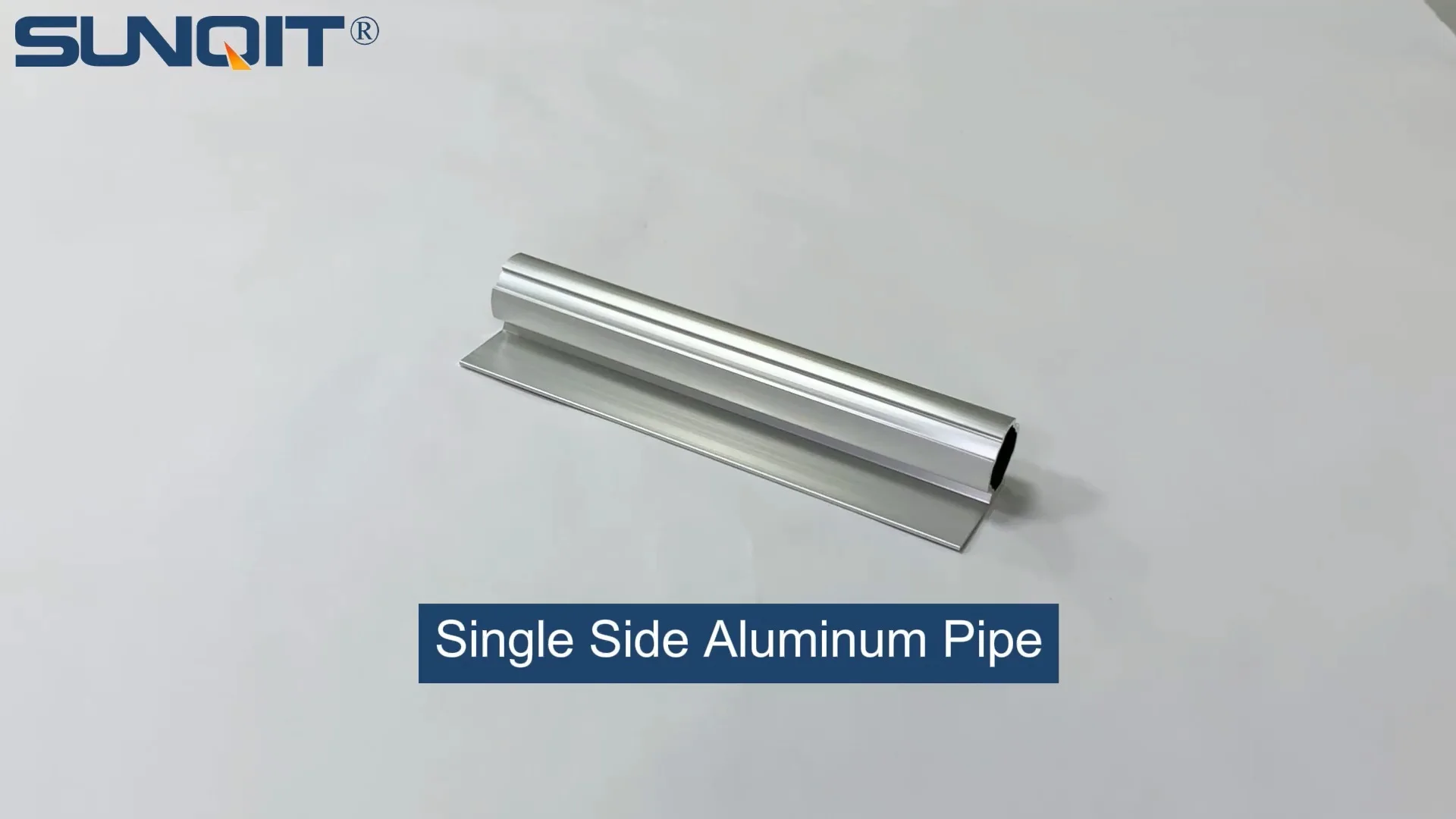
Single Side Aluminum Pipe
The single-sided plane can be installed with a back-mounted material box, and can also be used as a sidewall or partition.
In the fast-paced world of manufacturing, where every second counts and waste is the enemy, lean manufacturing has emerged as more than just a methodology—it's a mindset. At its core, lean is about creating value for customers by eliminating waste, streamlining processes, and fostering continuous improvement. But here's the thing: even the best lean strategies can stumble if the tools and equipment supporting them aren't aligned with these principles. Enter the unsung heroes of the production floor: the pipes, racks, workbenches, and material handling systems that form the backbone of day-to-day operations. Among these, two materials have long vied for dominance: the tried-and-true traditional steel pipe and the newer, lighter contender—single side aluminum pipe. Today, we're diving deep into this showdown to answer a critical question: Which one truly supports lean manufacturing better?
Understanding the Contenders: What Are We Actually Comparing?
Before we pit them against each other, let's make sure we're clear on what we're dealing with. Traditional steel pipe, as the name suggests, is exactly that—pipe made from carbon steel, often coated with materials like PE (polyethylene) to resist corrosion (you might know this as PE coated lean pipe). It's been a staple in factories for decades, valued for its raw strength and affordability. On the other side is single side aluminum pipe, a modern alternative crafted from aluminum alloys, designed with lean principles in mind. It's part of a broader family of aluminum extrusion profiles, which are engineered to be modular, lightweight, and highly adaptable—think of it as the building block of flexible manufacturing systems, often paired with aluminum profile accessories for quick assembly and reconfiguration.
Single Side Aluminum Pipe: The New Kid on the Block (But Not Just a Fad)
Single side aluminum pipe—sometimes called aluminum lean pipe—is a game-changer in material handling. Unlike steel, which is heavy and rigid, aluminum pipe is lightweight yet surprisingly strong, thanks to its alloy composition (typically a mix of aluminum, magnesium, and silicon). What really sets it apart, though, is its modularity. These pipes aren't just tubes; they're part of a system. They work seamlessly with aluminum profile accessories like connectors, brackets, and end caps, allowing teams to build, modify, and disassemble structures in minutes—no welding, no heavy tools, just simple hand-tightened bolts or clips. Imagine a workbench that can be adjusted in height in 10 minutes, or a flow rack that can be reconfigured to handle a new product line before lunch. That's the promise of aluminum lean pipe.
Aluminum's natural resistance to corrosion is another win. In factories where moisture, oils, or chemicals are present, steel pipes can rust and degrade over time, leading to maintenance headaches and safety risks. Aluminum, on the other hand, forms a protective oxide layer when exposed to air, keeping it looking and performing like new for years. And let's not forget weight: aluminum is roughly one-third the weight of steel. For operators who need to move workbenches, adjust flow racks, or reposition turnover trolleys, that difference isn't just a convenience—it's a reduction in physical strain and a boost in productivity.
Fun Fact: Aluminum extrusion profiles, the technology behind modern aluminum lean pipe, were first developed in the early 20th century but gained widespread use in manufacturing in the 1980s. Today, they're the backbone of lean systems in industries from automotive to electronics, thanks to their ability to balance strength, flexibility, and cost.
Traditional Steel Pipe: The Reliable Workhorse (But Not Without Flaws)
Let's give credit where credit is due: traditional steel pipe has earned its reputation as an industrial workhorse. For decades, it's been the go-to for building everything from heavy-duty material racks to fixed production lines. Why? Because steel is strong—really strong. It can handle heavy loads without bending or warping, making it ideal for applications like supporting large machinery or storing dense materials. And upfront, steel is often cheaper than aluminum, which has made it a favorite for budget-conscious operations or one-off, fixed-structure projects.
But here's the catch: steel's strengths are also its weaknesses in a lean environment. Its weight makes it hard to move or reconfigure. Want to adjust the height of a steel workbench? You'll likely need a welder or heavy tools, which means downtime and added labor costs. Corrosion is another issue. While PE coated lean pipe helps, the coating can chip or wear off over time, exposing the steel to rust. And let's talk about waste: steel structures are often built to last "forever," but in lean manufacturing, "forever" is rarely the goal. Products change, production lines evolve, and a structure that can't adapt becomes a liability—wasted space, wasted resources, and wasted potential for improvement.
Lean Manufacturing Requirements: What Does "Good" Look Like?
To judge which pipe is better for lean manufacturing, we first need to define what "better" means in this context. Lean isn't just about cutting costs—it's about creating a system that can adapt, improve, and deliver value with minimal waste. So, what do lean systems demand from their equipment?
- Flexibility: The ability to reconfigure quickly as production needs change. Can a workbench be adjusted for a new operator height? Can a flow rack be modified to handle a different part size? In lean, downtime for reconfiguration is waste, so speed here is critical.
- Durability: Longevity without constant maintenance. Equipment should last, but not at the expense of adaptability. It needs to withstand daily use—scratches, bumps, spills—without breaking down.
- Efficiency: Reducing non-value-added work. Lighter materials mean operators spend less time moving equipment and more time building products. Smoother workflows (like those enabled by well-designed flow racks) cut down on handling time.
- Cost-Effectiveness: Total cost of ownership, not just upfront price. A cheaper steel structure might cost more in maintenance or reconfiguration down the line, while a pricier aluminum setup could save money over time.
- Sustainability: Minimizing environmental impact. Lean is about eliminating waste in all forms, including material waste and energy use. Recyclability and energy efficiency matter here.

Head-to-Head: Aluminum vs. Steel in Lean Systems
Now, let's put aluminum and steel head-to-head against these lean requirements. We'll use real-world scenarios and data to see which one comes out on top.
Flexibility: Aluminum's Modularity vs. Steel's Rigidity
In a lean facility, flexibility isn't a nice-to-have—it's a survival skill. Consider this: a consumer electronics manufacturer launches a new smartphone model. The production line for the old model needs to be reconfigured to assemble the new one, which has different component sizes and assembly steps. The workbenches, flow racks, and material trolleys all need to adapt. How do aluminum and steel stack up here?
With aluminum lean pipe and aluminum profile accessories, reconfiguration is straightforward. Aluminum extrusion profiles use T-slot designs, which allow accessories like brackets, shelves, and guides to be attached anywhere along the pipe with simple bolts or clips. No welding, no cutting—just loosen a few fasteners, adjust, and retighten. A team of two could reconfigure a 10-foot flow rack in under an hour, using nothing more than a hex key. This is why aluminum is the backbone of systems like the "lean pipe workbench E (single deck-without caster)" or "material rack B (3 row and 3 floor)"—these designs are intentionally modular, built to change with the line.
Steel, by contrast, is rigid by design. Most steel structures are welded or bolted together permanently. To reconfigure a steel workbench, you'd need to cut the pipes, reweld them, and repaint the structure—assuming you have a welder on staff. Even with PE coated lean pipe, which uses connectors instead of welding, the weight of the steel makes adjustments cumbersome. A similar 10-foot steel flow rack reconfiguration might take half a day or more, requiring heavy lifting equipment and multiple workers. In lean terms, that's hours of downtime—waste that could have been spent producing value.
| Scenario | Single Side Aluminum Pipe | Traditional Steel Pipe |
|---|---|---|
| Time to reconfigure a workbench height | 15–30 minutes (using aluminum pipe clamps and adjustable feet) | 4–6 hours (requires welding/cutting and repainting) |
| Tools needed for modification | Hex key, adjustable wrench (hand tools only) | Welder, angle grinder, power drill (heavy equipment) |
| Ability to reuse components | High—pipes and accessories can be disassembled and reused in new structures | Low—welded components are often damaged during disassembly |
Durability: Longevity Without the Headaches
Lean manufacturing isn't about cutting corners on quality—durability still matters. A workbench that falls apart after a year is just as wasteful as one that can't be reconfigured. So, how do aluminum and steel hold up over time?
Steel is often hailed as "stronger," and it's true—steel has a higher tensile strength than aluminum. But in most manufacturing applications, the loads aren't extreme enough to require steel's brute force. A typical workbench or flow rack holds parts, tools, or subassemblies—weights that aluminum handles easily. What's more, aluminum's corrosion resistance gives it a longevity edge in harsh environments. A study by the Aluminum Association found that aluminum structures in manufacturing settings last 15–20 years on average, compared to 10–15 years for uncoated steel (and even less for PE coated lean pipe if the coating is damaged).
Maintenance is another factor. Steel requires regular inspections for rust, especially in humid or chemical-exposed areas. Repainting or recoating adds to labor costs and downtime. Aluminum? It's virtually maintenance-free. Wiping it down with a damp cloth is usually enough. And because aluminum structures are modular, damaged components (like a bent bracket or a broken caster) can be replaced individually, instead of replacing the entire structure—a classic example of lean's "fix small problems before they become big ones" philosophy.
Efficiency: Lightweight Design = Faster, Safer Work
In lean, every second an operator spends moving a workbench or adjusting a rack is time not spent building products. Aluminum's lightweight design directly addresses this. Let's crunch the numbers: a 10-foot length of 1-inch steel pipe weighs about 10 pounds; the same length of aluminum pipe weighs just 3–4 pounds. Multiply that by the number of pipes in a workbench or flow rack, and the difference adds up fast.
Consider a team that needs to move a workbench from one side of the line to another. With aluminum, two people can lift and carry it easily. With steel, they might need a forklift or a third person—adding time, effort, and risk of injury. The result? Aluminum structures reduce handling time by up to 30%, according to a case study by the Lean Enterprise Institute. That's not just efficiency—that's better ergonomics, lower worker fatigue, and fewer safety incidents (which, in lean terms, are massive sources of waste).
Aluminum also shines when it comes to flow efficiency. Take flow racks, which rely on gravity to move parts from the "supply" end to the "use" end. Lighter aluminum racks are easier to tilt to the optimal angle, ensuring smooth part flow. Steel racks, being heavier, are harder to adjust, leading to either parts getting stuck (waste) or excessive tilting (which can damage parts). And with aluminum guide rails (like "aluminum guide rail A" or "plastic roller track guide rail yellow"), parts glide more smoothly, reducing friction and further cutting down on waste.
Cost: The Upfront vs. Long-Term Debate
Here's where the decision gets tricky: steel is almost always cheaper upfront. A 10-foot steel pipe might cost $10–$15, while an aluminum one could be $20–$25. For a small operation building a single workbench, steel might seem like the smarter financial choice. But lean thinking is about total cost of ownership (TCO)—not just the initial price tag.
Let's break down TCO for a typical workbench over 5 years:
- Initial cost: Steel workbench = $300; Aluminum workbench = $450 (difference: +$150 for aluminum)
- Maintenance: Steel requires repainting every 2 years ($50/year = $250 over 5 years); Aluminum requires no maintenance ($0)
- Reconfiguration: Steel needs welding/modification twice ($100/mod = $200); Aluminum reconfigured twice (hand tools, $0 labor)
- Efficiency gains: Aluminum saves 2 hours/week in handling time (2 hours x $25/hour x 50 weeks/year x 5 years = $12,500)
When you add it all up, the aluminum workbench actually saves $12,300 over 5 years—even with the higher upfront cost. That's the power of lean economics: focusing on long-term value, not short-term savings.
Sustainability: Lean and Green Go Hand-in-Hand
Modern lean manufacturing isn't just about efficiency—it's about sustainability. Reducing waste includes reducing environmental impact, and here aluminum has a clear edge. Aluminum is 100% recyclable, and recycling it uses just 5% of the energy required to produce new aluminum. Steel is recyclable too, but the recycling process is more energy-intensive, and steel structures are often contaminated with coatings (like PE) that make recycling harder.
Aluminum's lightweight design also reduces transportation emissions. Shipping aluminum pipes uses less fuel than shipping steel, and lighter equipment means lower energy use in factories (e.g., less power needed to move aluminum trolleys). For companies aiming to meet sustainability goals or comply with environmental regulations, aluminum aligns with the "reduce, reuse, recycle" principles that are increasingly central to lean thinking.

Real-World Case Study: A Manufacturer's Switch to Aluminum
Let's look at a real example to bring this to life. A mid-sized automotive parts manufacturer in Michigan was struggling with their steel-based production line. Their products were changing every 6–12 months, and their fixed steel workbenches and flow racks couldn't keep up. Reconfiguring the line took 2–3 days of downtime, and their steel flow racks were rusting in the humid shop, leading to frequent part jams and quality issues.
They decided to test aluminum lean pipe, replacing 10 steel workbenches and 5 flow racks with aluminum versions. The results were striking:
- Reconfiguration time dropped from 3 days to 4 hours, eliminating 2.5 days of downtime per product change.
- Part jams in flow racks decreased by 80%, thanks to smoother aluminum guide rails and lighter, more adjustable racks.
- Worker fatigue complaints dropped by 40%, as operators no longer needed to strain to move heavy steel structures.
- Over 3 years, the company calculated a 27% reduction in total manufacturing costs, driven by efficiency gains and lower maintenance.
The plant manager summed it up: "Steel was like building with concrete—strong, but once it's set, you're stuck. Aluminum is like building with Legos—strong enough, but you can take it apart and rebuild it whenever you need to. In lean, that's not just useful—it's essential."

When Might Steel Still Be the Better Choice?
We'd be remiss not to acknowledge that aluminum isn't perfect for every scenario. There are cases where steel still makes sense:
- Extreme loads: If you're supporting tons of material (e.g., a rack for engine blocks), steel's higher strength may be necessary.
- Fixed, long-term structures: If your production line will never change (a rare scenario in lean, but possible), steel's upfront cost advantage might hold.
- Outdoor, unprotected environments: While aluminum resists corrosion, in extremely harsh conditions (e.g., saltwater exposure), stainless steel (a steel alloy) might be better than aluminum.
But even in these cases, aluminum is closing the gap. New high-strength aluminum alloys (like those used in "aluminum lean pipe") can handle loads that once required steel, and aluminum's corrosion resistance makes it suitable for most outdoor settings with minimal protection.
Conclusion: Aluminum—The Leaner Choice for Modern Manufacturing
At the end of the day, lean manufacturing is about more than tools—it's about mindset. It's about choosing systems that enable adaptability, efficiency, and continuous improvement. Single side aluminum pipe, with its lightweight design, modularity, and low maintenance, aligns perfectly with this mindset. It's not just a material—it's a lean enabler, turning production floors into flexible, responsive ecosystems that can evolve with customer needs.
Traditional steel pipe, while strong and affordable upfront, is a relic of a manufacturing past—one where "set it and forget it" was the goal. In today's fast-changing world, that's no longer enough. Lean demands systems that can grow, change, and improve, and aluminum delivers that in spades.
So, which suits lean manufacturing better? The answer is clear: single side aluminum pipe isn't just better—it's the future. It's time to stop building with steel and start building with lean in mind.