- Company Articles
- Products and Technology
- Product knowledge
- Single-Sided vs. Double-Sided Lean Pipe Clamp B Chrome: When to Choose Each

Single-Sided vs. Double-Sided Lean Pipe Clamp B Chrome: When to Choose Each
Related Product
Lean Pipe Clamp B Chrome
Lean pipe clamp is used for turnover trolley, workbench, flowrack adjust the frame or fix some accessory.
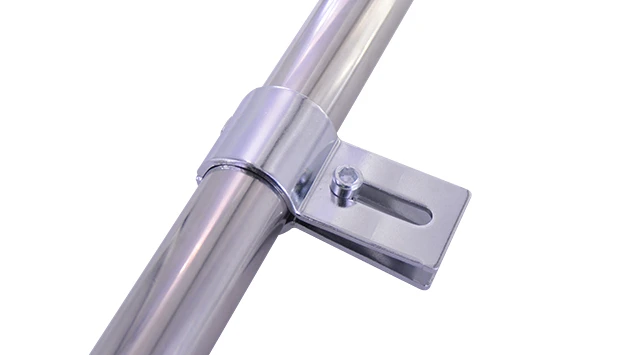
Walk into any modern manufacturing facility, and you'll notice a quiet revolution happening on the factory floor. Lines are sleeker, workstations adapt in a snap, and material flows like water—all thanks to lean systems. At the heart of this revolution? Lean pipe setups. These unassuming metal tubes and joints might not grab headlines, but they're the backbone of efficient production assemble lines, workbenches, and material racks. And if lean pipes are the backbone, then clamps are the ligaments holding everything together. Today, we're zeroing in on two unsung heroes of this system: the single-sided and double-sided Lean Pipe Clamp B Chrome . Let's break down what makes each tick, when to pick one over the other, and how this tiny choice can make or break your lean solution's success.
First Things First: What Even Are Lean Pipe Clamp B Chrome?
Before we dive into the single vs. double debate, let's get clear on what these clamps actually are. If you've ever seen a modular workstation, a turnover trolley, or a material rack in a factory, chances are it's built with lean pipes—hollow metal tubes (often steel or aluminum) that connect using joints and clamps. Lean pipe clamps are the hardware that fastens these pipes to each other or to accessories like shelves, wheels, or guide rails. Think of them as the "glue" of lean systems, but way more adjustable.
The "B Chrome" in the name gives us two key clues. "B" typically refers to a specific model design—think of it as a product code used by most lean pipe suppliers to denote a mid-range, versatile clamp. "Chrome" tells us about the finish: a layer of chromium plating that adds shine, yes, but more importantly, protects against rust and corrosion. That's a big deal in busy factories where spills, humidity, or frequent cleaning are part of the daily grind. So, these clamps aren't just strong—they're built to last in tough environments.
But here's the thing: not all clamps are created equal. While they might look similar at first glance, single-sided and double-sided Clamp B Chrome are designed for very different jobs. Let's start with the nimbler of the two.
Single-Sided Lean Pipe Clamp B Chrome: The Agile Problem-Solver
Picture a single-sided Clamp B Chrome, and you'll see a compact, lightweight piece with—you guessed it—one main clamping surface. It's like a one-armed hug for your lean pipes. But don't let its small size fool you. This clamp is all about flexibility and speed, making it a favorite in setups where adaptability matters most.
Design Breakdown: Simple, But Smart
Most single-sided Clamp B Chrome models are shaped like a small, curved bracket with a single threaded bolt or lever. One side wraps around a lean pipe, and the other connects to an accessory—a shelf bracket, a caster mount, or another pipe at a 90-degree angle. The chrome plating adds a smooth, durable finish, so even after repeated adjustments, it won't stick or corrode. And at around 80-120 grams (depending on size), it's light enough that you won't need a second person to hold it while installing.
What It Does Best: Light Loads, Tight Spaces, Quick Changes
Single-sided clamps shine in scenarios where you need to build something functional without overcomplicating things. Let's break down their superpowers:
- Light to Medium Loads: These clamps typically handle 15-30 kg of vertical load per clamp. That's perfect for holding lightweight tools, small bins of screws, or even a single-level workbench top.
- Space-Saving Design: With only one clamping arm, they take up less room. If you're building a workstation in a tight corner or a trolley that needs to squeeze through narrow aisles, this slim profile is a lifesaver.
- Speedy Installation (and Reinstallation): Tightening a single bolt is quick work—no need for complex tools. This is gold for teams that reconfigure their lines often (looking at you, agile manufacturing!). Swap out a shelf height or add a new rail in minutes, not hours.
Pro Tip: If you're new to building with lean pipes, start with single-sided clamps. Their simplicity makes them forgiving for beginners. Just remember: don't overtighten the bolt—you want a snug fit, not a stripped thread!
Real-World Example: The Small-Batch Electronics Workstation
Let's say you run a small electronics shop that assembles custom circuit boards. Your team switches between 3-4 product types weekly, so your workbench needs to adapt. You might use single-sided Clamp B Chrome to build a lightweight frame with adjustable shelves. Each shelf holds bins of resistors, capacitors, and diodes—nothing too heavy. When a new product comes in, you loosen the clamps, slide the shelves up or down, and retighten. No need for drilling or welding; just a wrench and 10 minutes. That's the single-sided clamp in action: flexible, fast, and just enough strength for the job.
Double-Sided Lean Pipe Clamp B Chrome: The Heavy-Duty Workhorse
Now, let's meet the other contender: the double-sided Clamp B Chrome. If the single-sided is a sprinter, this one's a weightlifter. With two clamping surfaces instead of one, it's built to handle more stress, more weight, and more abuse—making it the go-to for serious, long-term lean setups.
Design Breakdown: Built Like a Tank (But Still Adjustable)
Double-sided clamps look like beefed-up versions of their single-sided cousins. Imagine two curved arms connected by a sturdy bridge, with two bolts (one for each arm) to tighten. The chrome plating here isn't just for show—it protects against the extra wear and tear that comes with heavy loads. These clamps are heavier, too—usually 150-200 grams—because the metal is thicker and the joints are reinforced.
What It Does Best: Heavy Loads, Stability, Longevity
Double-sided clamps aren't about speed—they're about reliability. Here's where they outshine the competition:
- Heavy-Duty Loads: We're talking 40-70 kg per clamp here. Stack three tiers of heavy metal parts? Hang a tool rack with power drills? No problem. They distribute weight evenly across two contact points, so there's less stress on the pipes and joints.
- Rock-Solid Stability: Two clamping arms mean zero wobble. If you've ever built a shelf with single-sided clamps only to have it sway when you grab a tool, you'll appreciate this. Double-sided clamps lock everything in place, even during rough handling (like a turnover trolley rolling over uneven floors).
- Long-Term Durability: Thicker metal and double the contact points mean these clamps last longer under constant use. They're the kind of hardware you install once and forget about—until you need to expand the system years later.
Real-World Example: The 3-Tier Material Rack for Automotive Parts
Let's head to an automotive parts warehouse. They need a material rack B (3 row and 3 floor) to hold heavy engine components—think alternators, starter motors, and transmission parts. Each shelf needs to support 150+ kg. Single-sided clamps would bend under that weight, but double-sided Clamp B Chrome? They lock the vertical pipes to the horizontal rails with zero give. Even when a forklift operator bumps the rack (oops), the shelves stay put. And because the clamps are so secure, the warehouse team can stack parts higher without worrying about collapse. That's peace of mind you can't put a price on.
Side-by-Side Showdown: Single vs. Double-Sided Clamp B Chrome
Still on the fence? Let's put them head-to-head with a quick comparison. This table will help you map your needs to the right clamp:
| Feature | Single-Sided Lean Pipe Clamp B Chrome | Double-Sided Lean Pipe Clamp B Chrome |
|---|---|---|
| Load Capacity (Per Clamp) | 15-30 kg vertical load | 40-70 kg vertical load |
| Weight | 80-120 grams | 150-200 grams |
| Installation Time | 2-3 minutes (1 bolt to tighten) | 4-5 minutes (2 bolts to tighten, more precision needed) |
| Best For | Light shelves, small workbenches, mobile trolleys, tight spaces | Heavy material racks, multi-tier systems, permanent workstations, high-stress areas |
| Adjustability | High (easy to loosen and reposition) | Medium (more torque needed to adjust, but still possible) |
| Price (Relative) | Lower (simpler design) | Higher (more material, reinforced build) |
The Big Question: When Do You Pick Which?
At the end of the day, the "right" clamp depends on three things: what you're building, how much it weighs, and how often you'll change it. Let's simplify with some clear rules of thumb.
Choose Single-Sided If…
- Your load is light to medium: If you're holding bins of paper, small tools, or a single-level workbench, single-sided has enough strength.
- Space is tight: Narrow aisles, corner workstations, or trolleys that need to fit through doorways? Go slim with single-sided.
- You reconfigure often: Agile teams, small-batch producers, or R&D labs that tweak setups weekly will love how fast these adjust.
- Budget is a priority: Single-sided clamps cost less per unit, so they're great for large projects where you need dozens of clamps but don't want to overspend.
Choose Double-Sided If…
- Your load is heavy or stacked: Multi-tier racks, workbenches with heavy machinery, or material racks holding metal parts? Double-sided is non-negotiable.
- Stability can't fail: If a wobble or collapse would risk injury or downtime (looking at you, production lines!), double-sided clamps add that critical security.
- It's a permanent setup: If you're building something that'll stay in place for months or years (like a dedicated assembly line), the extra installation time is worth the long-term reliability.
- You need to future-proof: Even if your current load is light, if you think you'll scale up later, double-sided clamps save you from rebuilding down the line.
A Quick Word on Lean Pipe Joints and Accessories
Before we wrap up, let's not forget: clamps don't work alone. They're part of a ecosystem that includes lean pipe joints , pipes, and accessories like caster wheels or roller tracks. When choosing between single and double-sided clamps, check that they're compatible with your other components. Most lean pipe suppliers design Clamp B Chrome to work with standard 28mm or 30mm lean pipes, but it never hurts to double-check (pun intended!). And if you're mixing and matching—say, using single-sided clamps for the top shelf and double-sided for the bottom heavy shelf—just make sure the joints and pipes can handle the combined stress.
Final Thoughts: It's About Balance, Not Perfection
At the end of the day, there's no "better" clamp—only the right clamp for your job. Single-sided Clamp B Chrome is the agile problem-solver, perfect for flexibility and light loads. Double-sided is the steady workhorse, built for strength and stability. And sometimes, the best solution is a mix of both: use double-sided clamps for the heavy hitters (like the base of a material rack) and single-sided for the lighter, adjustable parts (like the top shelves).
Remember, lean systems are all about efficiency and adaptability. The right clamp helps you build a setup that grows with your needs, reduces waste, and keeps your team working smoothly. So next time you're planning a workstation or rack, take a minute to think about these tiny but mighty components. Your factory floor (and your bottom line) will thank you.