- Company Articles
- Products and Technology
- Product knowledge
- Single vs. Dual Wheel Flat Swivel Castor Wheels: Which Design Is Better?

Single vs. Dual Wheel Flat Swivel Castor Wheels: Which Design Is Better?
Related Product
Flat Swivel Castor Wheel
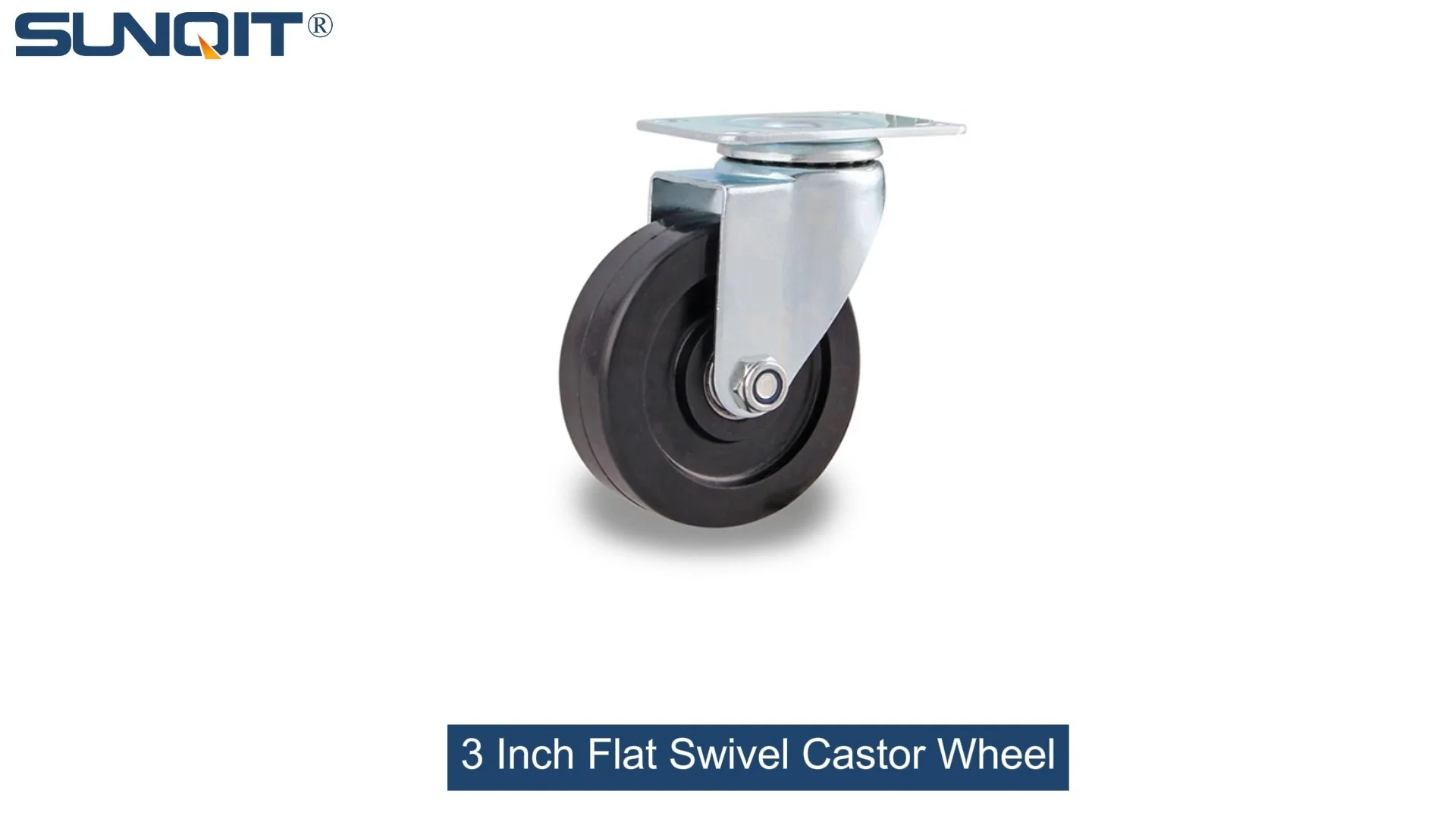
Chair Casters Ball Bearing Wheels Rubber Base. Resistant to abrasion, impact and corrosion. Heavy payload can hold 70-90Kgs per pcs,which can make it works at a stable and smooth status.
Think about the last time you moved a heavy cabinet across the room, pushed a loaded cart through a warehouse, or adjusted your office chair to reach your keyboard. Chances are, you didn't give much thought to the small wheels making that movement possible—but those unassuming components? They're caster wheels, and their design can make or break how smoothly, safely, and efficiently things move in our daily lives, workplaces, and industries. Among the many caster types, flat swivel castors stand out for their versatility, but when it comes to choosing between single and dual wheel designs, the decision isn't always clear. Is one inherently better than the other? The answer, as with most things in engineering and design, depends on your specific needs. In this article, we'll dive deep into the world of single and dual wheel flat swivel castor wheels, exploring their mechanics, benefits, drawbacks, and real-world applications to help you decide which is right for your project.
Understanding Flat Swivel Castor Wheels: The Basics
Before we compare single and dual wheel designs, let's start with the fundamentals. A flat swivel castor wheel is a type of caster where the wheel assembly is mounted on a swivel plate, allowing it to rotate 360 degrees. This swivel action is what makes them so maneuverable—unlike fixed casters, which only roll forward and backward, swivel casters let you change direction with minimal effort. The "flat" in their name typically refers to the mounting plate, which sits flush against the bottom of the equipment or furniture it's attached to, providing stability and a low profile.
At the heart of any caster wheel is, of course, the wheel itself, but there's more to it than that. A typical flat swivel castor includes a mounting plate, a swivel head (which houses bearings for smooth rotation), a fork or yoke that holds the wheel, and the wheel with its own bearings. Depending on the design, you might also find brakes, locks, or specialized caster accessories like dust covers or floor protectors. These components work together to determine how much weight the caster can handle, how easily it rolls, and how well it holds up over time.
Now, the key distinction we're exploring today: single wheel vs. dual wheel. As the names suggest, a single wheel flat swivel castor has one wheel per caster, while a dual wheel design has two smaller wheels mounted side by side on the same fork. At first glance, this might seem like a minor difference, but it impacts everything from load capacity to floor pressure, maneuverability, and even cost. Let's break down each design in detail.
Single Wheel Flat Swivel Castor Wheels: Agility in Simplicity
How They Work
Single wheel flat swivel castors are the most straightforward design: one caster wheel (usually larger in diameter than those in dual designs) mounted on a single axle within the fork. The simplicity of this design is its greatest strength. With fewer moving parts, there's less that can go wrong, and they're often lighter and more compact than their dual wheel counterparts. The larger wheel diameter also plays a role—bigger wheels roll more easily over small obstacles like cracks in the floor or debris, making them ideal for uneven surfaces.
The single wheel design puts all the load on one point of contact with the floor. While this might sound like a downside, it can actually improve maneuverability in tight spaces. Because there's only one wheel, the caster has a smaller turning radius, allowing for sharper turns and easier navigation around corners or through narrow aisles. This is why you'll often see single wheel casters on office chairs, shopping carts, and lightweight equipment where agility is key.
Benefits of Single Wheel Designs
1. Superior Maneuverability: As mentioned, the single wheel's smaller footprint and larger diameter make it highly agile. If you've ever pushed an office chair with single wheel casters, you know how easy it is to spin, glide, and adjust position—even in cramped cubicles. This makes them perfect for applications where frequent direction changes are needed.
2. Lower Profile: Single wheel casters often have a lower overall height than dual wheel designs, since there's no need to fit two wheels side by side. This is a big advantage for equipment that needs to sit close to the floor, like medical carts that need to slide under beds or workbenches with limited ground clearance.
3. Reduced Maintenance: With only one wheel, axle, and set of bearings, single wheel casters have fewer components to wear out or break. This means less time spent on upkeep and lower replacement costs over time—great news for budget-conscious projects or high-traffic environments where downtime is costly.
4. Cost-Effective: Simplicity often translates to lower production costs. Single wheel casters are generally cheaper to manufacture than dual wheel ones, making them a popular choice for applications where budget is a primary concern, such as lightweight furniture or temporary setups.
Drawbacks to Consider
Of course, no design is perfect. Single wheel casters have limitations that make them unsuitable for certain tasks:
1. Lower Load Capacity: A single wheel has to bear the entire load of the equipment it's attached to. While modern materials like reinforced rubber or polyurethane can boost capacity, single wheels still can't match the load-bearing ability of dual wheels, which distribute weight across two points.
2. Higher Floor Pressure: All that weight on a single point means more pressure on the floor. On soft surfaces like carpet or vinyl, this can lead to indentations or damage over time. Even on hard floors, concentrated pressure might cause scuffing if the wheel material isn't properly chosen.
3. Less Stability on Uneven Ground: While single wheels handle small obstacles well, they can be less stable on highly uneven surfaces. If one side of the wheel hits a bump, the entire caster might tilt, making the equipment harder to control.
Dual Wheel Flat Swivel Castor Wheels: Stability Through Distribution
How They Work
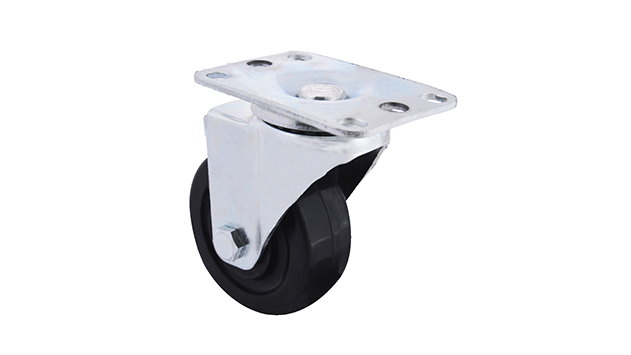
Dual wheel flat swivel castors take a different approach: instead of one large wheel, they use two smaller wheels mounted on the same axle, side by side. This design is all about distribution—weight, pressure, and stress are spread across two contact points, which solves many of the limitations of single wheel casters. The wheels are typically smaller in diameter than single wheels, but their combined surface area often exceeds that of a single wheel, leading to better performance in heavy-duty applications.
The dual wheel setup also adds stability. With two points of contact, the caster is less likely to wobble or tip, even when the equipment it's attached to is loaded unevenly. This makes them a favorite in industrial settings, where stability can mean the difference between a smooth workflow and a costly accident.
Benefits of Dual Wheel Designs
1. Higher Load Capacity: This is perhaps the biggest advantage of dual wheel casters. By splitting the load between two wheels, they can handle significantly more weight than single wheel designs of the same size. For example, a dual wheel caster with two 4-inch wheels might support 800 lbs, while a single 4-inch wheel caster might only handle 400 lbs. This makes them ideal for heavy machinery, warehouse carts, and industrial equipment.
2. Reduced Floor Pressure: More contact points mean less pressure per square inch on the floor. This is a game-changer for delicate surfaces like hardwood, tile, or polished concrete, as it minimizes the risk of scratches, dents, or indentations. It also makes dual wheel casters better suited for use on soft floors like carpet, where they're less likely to sink in.
3. Enhanced Stability: With two wheels, the caster has a wider base of support, reducing the risk of tipping—even when the equipment is moving over uneven terrain or making sharp turns. This stability is crucial in environments like hospitals, where medical carts carrying fragile equipment or patient supplies can't afford to wobble.
4. Longer Lifespan Under Heavy Use: Because the load is distributed, each wheel in a dual setup experiences less wear and tear than a single wheel carrying the same weight. This means the casters last longer, even in high-traffic areas like factories or distribution centers.
Drawbacks to Consider
Dual wheel casters aren't without their downsides, either:
1. Reduced Maneuverability: The two wheels add width to the caster, increasing its turning radius. This can make them harder to navigate in tight spaces, like narrow aisles or crowded offices. If you need to make sharp turns or move in confined areas, a single wheel might be more practical.
2. Higher Cost: Two wheels, two sets of bearings, and a sturdier fork mean higher manufacturing costs. Dual wheel casters are almost always more expensive than single wheel ones of similar quality, which can be a barrier for budget-sensitive projects.
3. Heavier Weight: The extra components make dual wheel casters heavier, which can add up if you're using multiple casters on a single piece of equipment. This extra weight might not matter for stationary or motorized equipment, but it can be a hassle for manually pushed carts.

Single vs. Dual Wheel: A Side-by-Side Comparison
To make the differences clearer, let's compare single and dual wheel flat swivel castors across key factors that matter most in real-world use:
| Feature | Single Wheel Flat Swivel Castor | Dual Wheel Flat Swivel Castor |
|---|---|---|
| Load Capacity | Lower (typically 100–600 lbs per caster, depending on wheel size/material) | Higher (often 400–1,200 lbs per caster, with heavy-duty models exceeding 2,000 lbs) |
| Maneuverability | Excellent—smaller turning radius, ideal for tight spaces | Good, but wider footprint reduces agility in confined areas |
| Floor Pressure | Higher (more risk of floor damage on soft or delicate surfaces) | Lower (gentler on floors due to distributed weight) |
| Stability | Moderate—can wobble on uneven terrain with heavy loads | High—wider base reduces tipping risk |
| Cost | More affordable (simpler design, fewer materials) | More expensive (two wheels, sturdier components) |
| Maintenance | Lower (fewer parts to clean, lubricate, or replace) | Higher (two wheels mean twice the bearings and potential wear points) |
| Weight of Caster Itself | Lighter (good for manually moved equipment) | Heavier (better for stationary or motorized equipment) |

Real-World Applications: When to Choose Which Design
Now that we've compared the specs, let's look at concrete examples of where each design shines. The best way to choose between single and dual wheel flat swivel casters is to match the design to your specific use case.
Single Wheel Casters: Best For...
1. Office Furniture: Office chairs, filing cabinets, and small printers rarely need to carry more than 200–300 lbs. Here, maneuverability is key—you want to spin your chair to reach a colleague or roll a cabinet into a corner without hassle. Single wheel casters are perfect for this, offering smooth, 360-degree movement on carpet or hardwood floors.
2. Lightweight Carts: Think of the folding carts used in retail stores to restock shelves or the utility carts in home garages. These carts are often pushed manually and don't carry extremely heavy loads, so the agility and low cost of single wheel casters make sense.
3. Medical Equipment (Light Duty): Small medical carts for supplies, like those used in exam rooms, often use single wheel casters. They need to be easy to maneuver around patients and tight spaces, and their lower profile helps them fit under tables or counters.
4. DIY Projects: If you're building a homemade workbench or rolling shelf, single wheel casters are a budget-friendly choice. They're easy to install, require minimal maintenance, and work well for light to moderate loads.
Dual Wheel Casters: Best For...
1. Industrial Warehouses: Heavy-duty carts carrying pallets of goods, tools, or raw materials need to handle 500+ lbs. Dual wheel casters here distribute the weight, protect warehouse floors from damage, and reduce the risk of tipping when navigating loading docks or uneven concrete.
2. Hospital Stretcher Carts: Stretcher carts carry patients, making stability and load capacity non-negotiable. Dual wheel casters ensure smooth, steady movement even when the stretcher is fully loaded, and their reduced floor pressure is gentle on hospital floors.
3. Manufacturing Equipment: Machinery like assembly line workstations or tool chests often sits on dual wheel casters. These casters need to support the weight of the equipment itself plus any tools or materials, and they must hold up to constant use in dusty, oily environments.
4. Food Service (Heavy Loads): Commercial kitchen carts carrying pots, pans, or bulk ingredients can weigh several hundred pounds. Dual wheel casters here provide the stability needed to move safely through busy kitchens, where spills or uneven floors are common.
Beyond the Wheel: Other Factors to Consider
While the number of wheels is a critical factor, it's not the only one. To choose the best caster for your needs, you'll also want to consider:
Wheel Material
The material of the caster wheel affects everything from rolling resistance to floor protection. Rubber wheels are quiet and gentle on floors but might wear quickly under heavy loads. Polyurethane wheels are durable, resistant to chemicals, and offer good traction. Nylon wheels are hard and roll easily but can be noisy and may scratch floors. For dual wheels, matching the material to the load and environment is just as important as it is for single wheels.
Swivel Bearings
The swivel head's bearings determine how smoothly the caster turns. Ball bearings are standard for light to medium loads, while tapered roller bearings are better for heavy-duty use. If you're using dual wheels, opt for high-quality bearings—more weight on the swivel head means more stress on these components.
Brakes and Locks
Many casters come with brakes that lock the wheel (to prevent rolling) or the swivel head (to keep the caster facing a fixed direction). For safety-critical applications like medical carts or industrial equipment, brakes are a must. Dual wheel casters often have more robust braking systems to handle heavier loads.
Mounting Type
Flat swivel casters are typically mounted via a plate (bolted or welded to the equipment) or a stem (inserted into a socket). Swivel stem caster wheel designs are common for furniture, while plate-mounted casters are better for heavy equipment. Make sure the mounting type matches your equipment's structure—dual wheels often require sturdier mounting plates to support their weight.
Common Misconceptions: Debunking Myths About Caster Wheels
There are a few myths floating around about single and dual wheel casters that can cloud your decision. Let's set the record straight:
Myth 1: "Dual wheels are always more durable." Not necessarily. While dual wheels distribute weight, their extra components (two wheels, two axles) mean more parts that can fail if not maintained. A high-quality single wheel caster with reinforced materials might outlast a cheap dual wheel caster in light-duty use.
Myth 2: "Single wheels are only for light loads." While they're not ideal for 1,000+ lbs, modern single wheel casters can handle up to 600–800 lbs with the right materials (like steel rims and polyurethane tires). For mid-range loads, they're a viable option.
Myth 3: "Dual wheels can't be maneuverable." Some dual wheel designs use smaller, more agile wheels (e.g., 2-inch wheels instead of 4-inch) to reduce the turning radius. While they'll never match the agility of single wheels in tight spaces, they can still be surprisingly nimble for their size.
Maintenance Tips: Extending the Life of Your Casters
No matter which design you choose, proper maintenance will keep your casters rolling smoothly for years. Here's how:
1. Clean Regularly: Dirt, hair, and debris can get stuck in wheel bearings or swivel heads, causing friction. Wipe wheels with a damp cloth and use a brush to clean out crevices—especially in industrial settings with oil or dust.
2. Lubricate Bearings: Apply a light machine oil or silicone lubricant to swivel bearings and wheel axles every 3–6 months (more often for heavy use). This reduces wear and ensures smooth rotation.
3. Check for Wear: Inspect wheels for cracks, flat spots, or uneven wear. replace wheels if they're damaged—worn wheels can cause instability or damage floors. For dual wheels, replace both wheels at the same time to ensure even wear.
4. Tighten Loose Parts: Bolts, nuts, and caster accessories can loosen over time. Periodically check the mounting plate, fork, and axle nuts to make sure everything is secure.
Final Verdict: Which Design Is Better?
There's no one-size-fits-all answer to whether single or dual wheel flat swivel castors are better. It all comes down to your priorities: Do you need to move heavy loads with stability? Dual wheels are the way to go. Are agility and cost more important for light to medium loads? Single wheels will serve you well. The key is to assess your needs honestly—consider the weight of your equipment, the environment it will operate in, how often it will be moved, and the space you have to work with.
Remember, even within each category, quality matters. A well-made single wheel caster with premium bearings and a durable wheel will outperform a cheap dual wheel caster with flimsy materials. So, whether you're outfitting an office chair or a factory cart, invest in casters that match your needs—and don't forget to maintain them. After all, the right wheels don't just move things—they keep your workflow smooth, your environment safe, and your projects on track.