- Company Articles
- Products and Technology
- Product knowledge
- Size Selection Guide: Finding the Perfect T-Slot Rubber Seal Cover for Your Lean Workbench

Size Selection Guide: Finding the Perfect T-Slot Rubber Seal Cover for Your Lean Workbench
Related Product
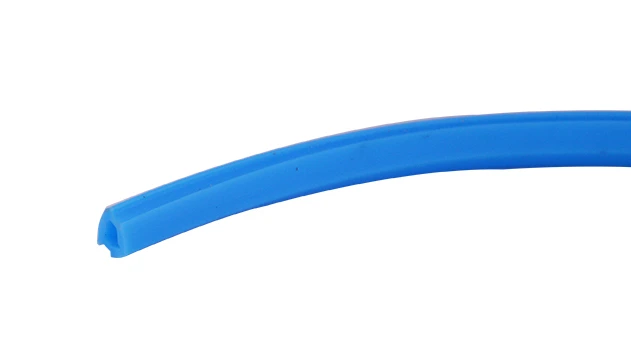
T-slot Rubber Seal Cover
The rubber T-slot seal cover prevents dust and debris buildup, covers wires in the T-slot channel, and adds an extra layer of protection to applications. It rolls into the T-slot, making it easy to assemble.
A practical roadmap to protect, optimize, and elevate your workspace
Walk into any well-run manufacturing floor, warehouse, or workshop, and you'll notice something subtle but crucial: the little details that keep operations running smoothly. Among these unsung heroes? The T-slot rubber seal covers on lean workbenches. These unassuming strips of rubber might not grab attention at first glance, but ask any seasoned supervisor, and they'll tell you—they're the difference between a workspace that hums and one that constantly hits snags.
Whether you're setting up a new aluminum profile workbench, upgrading an existing lean pipe workbench, or just trying to fix a frustrating issue with debris jamming your T-slots, choosing the right size seal cover matters more than you might think. Too loose, and it falls off, leaving slots exposed. Too tight, and you'll struggle to install it, risking damage to both the cover and the workbench. Get the size right, though, and you'll protect your equipment, boost safety, and even extend the life of your workspace.
This guide is your go-to resource for navigating the world of T-slot rubber seal covers. We'll break down why they matter, how to measure your workbench's slots accurately, and which sizes work best for common setups—including tips for avoiding the mistakes that cost workshops time and money. Let's dive in.
Why T-Slot Rubber Seal Covers Deserve Your Attention
Let's start with a story. A few years back, I visited a small electronics assembly shop that was struggling with delays. Their aluminum workbench—a sturdy 4040 aluminum profile model—looked great on paper, but the team kept stopping production to fish tiny screws, dust, and even coffee spills out of the T-slots. "It's like a black hole," one technician joked, but there was frustration in his voice. "Every time we slide a tool holder or a cable management clip into the slot, something gets stuck. We're losing 10 minutes an hour just cleaning it out."
Sound familiar? If you've ever dealt with T-slots that collect debris, you know the drill. What they were missing? A simple T-slot rubber seal cover. These covers aren't just "nice to have"—they're a foundational part of maintaining a lean, efficient workspace. Here's why:
1. Protection: Keep Debris Out, Keep Your Workbench Working
T-slots are the "backbone" of modular workbenches. They let you attach accessories—tool hooks, monitor arms, storage bins—with ease. But those open slots are magnets for dust, metal shavings, liquids, and small parts. Over time, debris builds up, making it hard to slide accessories in or out. Worse, it can scratch the aluminum profile's interior, wearing down the slots and reducing their lifespan. A well-fitted rubber cover acts like a shield, blocking debris from entering in the first place. No more fishing screws out with tweezers. No more jamming when you need to reposition a tool holder.
2. Safety: Prevent Snags, Cuts, and Accidents
Ever brushed your arm against an exposed T-slot? The edges, while rounded on most aluminum profiles, can still catch on clothing, gloves, or even skin. In busy workshops, where hands and tools are constantly moving, this isn't just annoying—it's a safety risk. A rubber seal cover softens those edges, turning a potential hazard into a smooth, safe surface. It also prevents small tools or parts from slipping into the slots and getting lost (or worse, causing a tripping hazard if they fall out later).
3. Aesthetics and Longevity: Keep Your Workbench Looking (and Working) Like New
Let's be honest: a workbench with cracked, missing, or ill-fitting seal covers looks unprofessional. It sends a message that details matter less than speed—and in lean manufacturing, details are speed. Beyond looks, seal covers protect the aluminum profile from corrosion, especially in humid or dusty environments. Without them, moisture can seep into the slots, leading to rust (even on anodized aluminum) or discoloration. A little protection today means your workbench stays functional and presentable for years to come.
Key Factors to Consider Before You Buy
Choosing a T-slot rubber seal cover isn't as simple as grabbing the first one you see. To get the perfect fit, you'll need to consider three critical factors: the dimensions of your T-slots, the type of aluminum profile you're working with, and how you use your workbench day-to-day.
1. T-Slot Dimensions: Width, Depth, and the "Lip"
The most important measurement is the size of the T-slot itself. T-slots on aluminum profiles are designed with a specific width (the opening at the top) and depth (how far down the slot goes). But here's the catch: not all slots are created equal. A 2020 aluminum profile (common in smaller workbenches) has a narrower slot than a 4040 profile (used for heavy-duty setups). Even within the same profile series, there can be variations—some have rounded edges, others have slightly wider lips (the small overhangs that keep T-slot accessories from falling through).
For example, a standard 3030 EU standard aluminum profile typically has a T-slot width of 8mm and a depth of 10mm. A 4040 profile, on the other hand, might have a 10mm width and 12mm depth. If you buy a cover designed for an 8mm slot and try to stretch it over a 10mm slot, it will tear. Too narrow, and it will pop out. Measure twice, buy once—this is where most people go wrong.
2. Aluminum Profile Type: Know Your Workbench's "DNA"
Your workbench's aluminum profile isn't just a random frame—it's engineered for specific uses. Are you using a lean pipe workbench with aluminum lean pipe and accessories? Or a heavy-duty aluminum extrusion profile workbench meant for automotive assembly? The profile type dictates the T-slot size. For instance:
- 2020/3030 profiles : Common in light to medium-duty workbenches (e.g., electronics assembly, small parts sorting). Their T-slots are narrower, so they need slimmer seal covers.
- 4040/4080 profiles : Found in heavy-duty setups (e.g., industrial manufacturing, tool storage). These have wider, deeper slots to accommodate larger aluminum profile accessories, requiring more robust covers.
- Specialty profiles : Some workbenches use custom or niche profiles (like 3060 national standard profiles), which may have unique slot dimensions. Always check the manufacturer's specs if you're unsure.
3. Workbench Usage: Match the Cover to Your Workflow
How you use your workbench matters, too. If you're constantly sliding accessories in and out of the T-slots (e.g., reconfiguring the bench for different projects), you need a cover that stays put even with frequent movement. For high-moisture environments (like a workshop near a wash station), look for water-resistant rubber. If your workspace is prone to heavy debris (metal shavings, wood dust), a thicker, more durable cover will hold up better than a thin one.
Pro tip: If you're using your workbench with roller track and accessories (e.g., material flow racks), make sure the seal cover doesn't interfere with the track's movement. A cover that's too thick might raise the slot's surface, causing rollers to jam.

Step-by-Step: How to Measure Your T-Slot (Like a Pro)
Measuring your T-slot doesn't require fancy tools—just a ruler (or caliper, if you have one) and a steady hand. Follow these steps to get accurate numbers, and you'll avoid the "guess and hope" approach that leads to returns and frustration.
Tools You'll Need
- A digital caliper (preferred) or a metal ruler with mm markings (avoid flexible tape measures—they're too imprecise).
- A piece of paper and a pen to jot down measurements.
- A flashlight (optional, but helpful for seeing into deep slots).
Step 1: Measure the T-Slot Width (Opening Size)
The width is the distance between the two "lips" of the T-slot—the part you can see when looking straight down at the workbench. Here's how to do it:
- Place your ruler or caliper across the opening of the slot. Make sure it's parallel to the edge of the profile—tilting it will give a false reading.
- For a ruler: Align the 0mm mark with one lip, then read the measurement where the other lip ends. Example: If the left lip is at 0mm and the right lip is at 8mm, the width is 8mm.
- For a caliper: Gently close the jaws around the opening (without pressing too hard) and note the measurement. Digital calipers will display this as a number (e.g., 10.2mm).
Common mistake: Measuring the entire width of the aluminum profile instead of the slot. A 4040 profile is 40mm wide overall, but its T-slot is only ~10mm wide—don't mix the two!
Step 2: Measure the T-Slot Depth (How Far It Goes Down)
The depth is how far the slot extends below the opening. This is trickier to measure, but just as important:
- insert the ruler or caliper's depth probe into the slot until it hits the bottom. If using a ruler, hold it straight up and down (perpendicular to the workbench surface).
- Read the measurement where the top of the slot meets the ruler. For example, if the ruler's 0mm mark is at the top of the slot and the bottom is at 12mm, the depth is 12mm.
- For rounded-bottom slots (common in many profiles), measure to the lowest point of the curve.
Step 3: Check for Lip Thickness (The "Overhang")
Some T-slots have small lips (overhangs) that extend inward from the opening. These lips help hold T-slot accessories in place, but they can affect how the seal cover fits. To check lip thickness:
- Measure the total width of the slot opening (as in Step 1).
- Then, measure the width of the inner "channel" (the part below the lips). The difference between these two measurements is the combined thickness of both lips. For example, if the opening is 8mm and the inner channel is 6mm, each lip is 1mm thick (since 8mm - 6mm = 2mm total, divided by 2 lips).
Why does this matter? A cover with a "bulb" (a rounded top) needs to fit under the lips without getting stuck. If the lips are thick, you may need a cover with a slimmer bulb.

Common T-Slot Sizes and Which Workbench They Fit
To take the guesswork out of shopping, we've compiled a handy reference table of the most common T-slot sizes, the aluminum profiles they fit, and the workbench types where they're typically used. Keep in mind that these are general guidelines—always double-check your measurements against the manufacturer's specs!
| T-Slot Size (Width x Depth) | Compatible Aluminum Profiles | Typical Workbench Types | Best For |
|---|---|---|---|
| 6mm x 6mm | 2020 EU Standard, 2020 National Standard | Small workbenches, tabletop setups, aluminum workbench A/B | Electronics assembly, jewelry making, light tool storage |
| 8mm x 10mm | 3030 EU Standard, 3030 National Standard, 3060 National Standard A | Medium-duty lean pipe workbench, aluminum workbench C/D/E | General manufacturing, parts sorting, material rack B (3 row/3 floor) |
| 10mm x 12mm | 4040 EU Standard (A/B/C/D/E/F/R), 4080 EU Standard (A/B) | Heavy-duty aluminum workbench K/L, industrial assembly stations | Automotive repair, heavy tool mounting, roller track conveyor setups |
| 12mm x 15mm | 5050, 6060, or custom heavy profiles | Specialty workbenches, machinery bases, high-capacity racks | Aerospace manufacturing, large component assembly |
Pro tip: If your measurements fall between two sizes (e.g., 9mm width instead of 8mm or 10mm), always round up. A slightly snug cover can be stretched gently to fit, but a cover that's too small will never stay in place. Most manufacturers list compatible slot sizes on their product pages—use this table as a starting point, then cross-verify with the supplier.
Troubleshooting: When the Fit Isn't Quite Right
Even with careful measuring, sometimes things don't go as planned. Here's how to fix common issues:
Problem: The Cover Falls Off Constantly
This is almost always due to a cover that's too narrow for the slot. If the width measurement was correct, check the depth—maybe the cover is too shallow, so it doesn't "grip" the slot's sides. Solution: Try a cover with a slightly wider width (e.g., if you used 8mm, try 9mm) or a deeper bulb. For temporary fixes, you can apply a small dot of silicone adhesive to the ends (but avoid getting glue inside the slot—it will make future replacements harder).
Problem: The Cover Tears When Installing
You're forcing a cover that's too small into a slot that's too big. Rubber is flexible, but it has limits. If the cover stretches more than 10-15% during installation, it will tear. Solution: Measure again—you likely underestimated the slot width. Order a larger size, and take your time installing it (stretch gently, working from one end to the other, not all at once).
Problem: Debris Still Gets In
If the cover is the right size but gaps remain, check for warped or damaged slots. Over time, aluminum profiles can bend slightly, creating uneven surfaces. Solution: For minor gaps, try a cover with a thicker bulb. For major warping, you may need to replace the profile section (ask your lean pipe workbench supplier for replacement parts).
Final Thoughts: Invest in the Little Things
At the end of the day, T-slot rubber seal covers are one of those "little things" that add up to big improvements. They protect your aluminum profile workbench, keep your team safe, and ensure your workspace runs like a well-oiled machine. By taking the time to measure your slots accurately, match the cover to your workbench type, and troubleshoot any fit issues, you're not just buying a rubber strip—you're investing in the efficiency and longevity of your entire operation.
So the next time you're setting up a new lean pipe workbench or upgrading an old one, don't overlook the T-slots. Grab your caliper, take those measurements, and choose a cover that fits like a glove. Your future self (and your team) will thank you.