- Company Articles
- Products and Technology
- Product knowledge
- Size Selection: Standard Diameters for Vertical Lean Pipe Joint Chrome

Size Selection: Standard Diameters for Vertical Lean Pipe Joint Chrome
Related Product
Vertical Lean Pipe Joint Chrome
Vertical lean pipe joint is used for 28mm lean pipe fixed on ground and keep it stable.
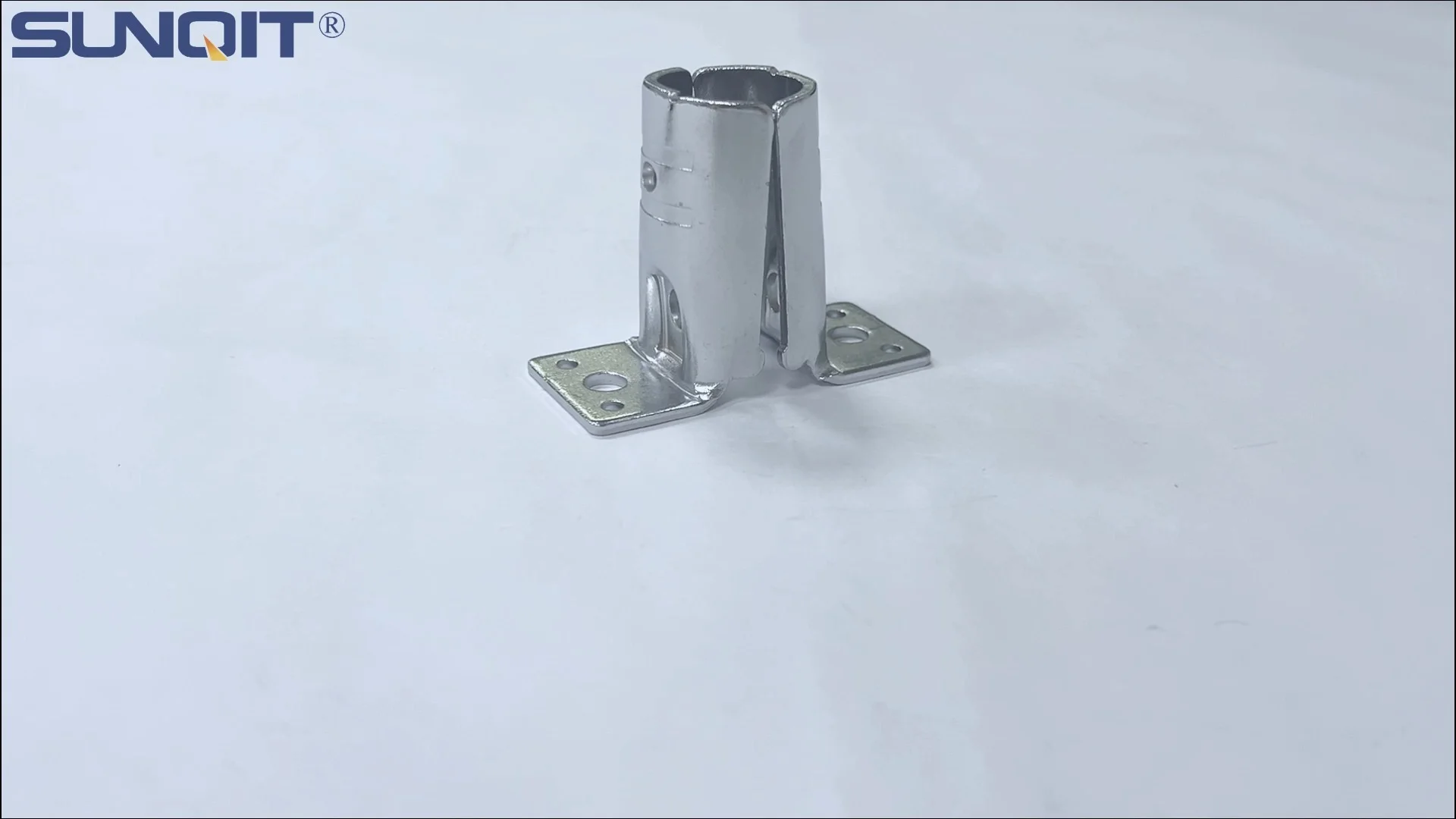
In the world of manufacturing and facility management, the phrase "the right tool for the job" isn't just a cliché—it's the backbone of efficient operations. When it comes to building lean systems that streamline workflows, reduce waste, and boost productivity, every component matters. Among these, the vertical lean pipe joint chrome stands out as a yet critical player. These small, metallic connectors are the unsung heroes that hold together workbenches, roller tracks, material racks, and entire production lines. But here's the thing: not all vertical lean pipe joints are created equal. Their diameter—the thickness of the pipe they connect—can make or break the stability, load capacity, and longevity of your entire setup. Choose too small a diameter, and you risk sagging structures or even dangerous collapses under heavy loads. Opt for something oversized, and you're wasting space, money, and resources that could be better allocated elsewhere. So, how do you navigate the maze of standard diameters to find the perfect fit for your needs? Let's dive in.
What Even Is a Vertical Lean Pipe Joint Chrome?
Before we get into sizes, let's make sure we're all on the same page about what a vertical lean pipe joint chrome actually is. At its core, it's a connector designed to join lean pipes (also called "lean tubes") at vertical angles, forming the framework for everything from simple workbenches to complex conveyor systems. The "chrome" part refers to its finish—a layer of chromium plating that adds corrosion resistance, durability, and a sleek, professional look. Unlike plastic or uncoated steel joints, chrome-plated ones hold up better in humid factories, food processing plants, or outdoor storage areas where rust is a constant threat.
But their real value lies in versatility. These joints are part of the broader lean system philosophy, which emphasizes adaptability. Need to reconfigure your assembly line next month? Loosen the joints, adjust the pipes, and tighten them back up—no welding, no special tools, just quick, hassle-free changes. This flexibility is why they're a staple in industries from automotive manufacturing to electronics assembly, where production needs can shift overnight.
Why Size Matters More Than You Think
Imagine (oops, scratch that—let's consider ) a scenario: A small electronics workshop builds a workbench using 20mm vertical lean pipe joints. They're assembling circuit boards, so the tools and components on the bench aren't extremely heavy—maybe 10-15 kg per shelf. At first, everything works fine. But six months in, they start noticing the shelves are dipping slightly in the middle. A few weeks later, a technician places a box of capacitors (weighing around 8 kg) on the edge, and the whole shelf tilts, spilling parts everywhere. The culprit? Those 20mm joints were never meant to support that much weight over time. The workshop assumed "smaller is cheaper," but they ended up paying for it in lost parts, downtime, and a rushed rebuild.
On the flip side, a automotive parts warehouse once installed 40mm vertical joints for a light-duty roller track used to move small plastic bins. The track worked, but the thick joints took up extra space, making it harder to fit as many bins as needed. The warehouse team also found that the heavier joints made reconfiguring the track a two-person job instead of one, slowing down their ability to adapt to new inventory needs. In both cases, the diameter was the problem—not the product itself.
Diameter directly impacts three key factors: load capacity, structural stability, and compatibility. A larger diameter means a thicker wall (in most cases), which can support more weight without bending or breaking. It also provides a sturdier connection between pipes, reducing wobble in tall structures like material racks. But compatibility is crucial too—if your joint diameter doesn't match your lean pipe diameter, you're looking at a loose fit (which is unsafe) or a custom fabrication (which is expensive). That's why standardization exists: to take the guesswork out of pairing joints with pipes and ensure that components from different suppliers work together seamlessly.

Key Factors to Consider When Choosing Diameter
Selecting the right diameter isn't a one-size-fits-all process. It depends on your specific use case. Here are the critical factors to weigh:
1. Load Requirements: How Much Weight Will It Carry?
Start with the basics: What's the maximum weight the structure will need to support? This includes both static loads (items that stay put, like tools on a workbench ) and dynamic loads (items that move, like boxes sliding down a roller track ). Dynamic loads are trickier because they add momentum—even a 5kg box sliding down a slope exerts more force on the joints than a 5kg box sitting still.
Manufacturers usually provide load ratings for their joints, but these are often based on ideal conditions (perfectly vertical pipes, evenly distributed weight). In real life, pipes might be slightly angled, weight might be concentrated on one side, or the structure might vibrate (common near heavy machinery). To account for this, add a 20-30% buffer to the maximum expected load. If your calculations say you need a joint that can handle 50kg, aim for one rated for 60-65kg.
2. Environmental Conditions: Where Will It Live?
Chrome plating helps with corrosion, but diameter still plays a role here. In damp environments—like a brewery or a car wash facility—thicker-walled joints (larger diameters) are less likely to develop pinholes or cracks where moisture can seep in and cause rust. Similarly, in high-temperature areas (think bakery ovens or foundries), heat can weaken metal over time. A larger diameter joint has more material to withstand thermal stress, reducing the risk of warping.
Outdoor use is another consideration. UV rays, rain, and temperature swings can degrade even chrome-plated surfaces. If your structure is outside, a larger diameter might not just be about load—it's about longevity. Thicker metal takes longer to corrode, meaning you won't have to replace joints as frequently.
3. Integration with Existing Systems
Unless you're building a brand-new facility from scratch, you'll probably be integrating new vertical joints with existing pipes, shelves, or aluminum profile structures. This is where diameter compatibility becomes non-negotiable. Most lean pipe systems use standard pipe diameters (25mm, 28mm, 30mm, etc.), and joints are designed to fit these exactly. Mixing a 28mm joint with 30mm pipes will result in a loose connection, while forcing a 30mm joint onto 28mm pipes can crack the joint or deform the pipe.
If you're unsure what diameter your existing pipes are, measure them with a caliper (not a ruler—ruler measurements can be off by a millimeter or two, which makes a big difference here). If the pipes are old or corroded, clean them first to get an accurate measurement. When in doubt, contact your lean pipe supplier —they can often help identify pipe diameters based on photos or part numbers.
4. Regulatory and Safety Standards
Certain industries have strict safety standards that dictate minimum joint diameters. For example, OSHA (Occupational Safety and Health Administration) in the U.S. has guidelines for guardrails and material racks in warehouses, which often specify load capacities and structural requirements. In the medical device industry, FDA regulations might require certain materials or finishes, but diameter can still be a factor in ensuring cleanliness (larger joints have fewer crevices where bacteria can hide).
Ignoring these standards isn't just risky for your workers—it can lead to fines, production shutdowns, or even legal liability if an accident occurs. Always check local and industry-specific regulations before finalizing your diameter choice.
5. Cost vs. Long-Term Value
Larger diameter joints cost more upfront—there's no getting around that. More metal, more chrome plating, more material to ship. But cheaper, smaller joints might end up costing more in the long run. If a small joint fails, you'll have to replace not just the joint but possibly the pipes, shelves, and any damaged goods. Plus, downtime while you fix the problem can eat into profits. It's a classic "penny-wise, pound-foolish" scenario.
To find the sweet spot, calculate the total cost of ownership (TCO). TCO includes the initial purchase price, installation costs (larger joints might be heavier, requiring more labor), maintenance costs (cleaning, replacement), and potential downtime costs. A slightly pricier 30mm joint might have a lower TCO over five years than a cheaper 25mm joint that needs frequent repairs.

Standard Diameters: A Closer Look
Now that we've covered the "why," let's get into the "what"—the most common standard diameters for vertical lean pipe joint chrome, and when to use each.
| Diameter (mm) | Typical Load Capacity (Static) | Typical Load Capacity (Dynamic) | Common Applications | Best For |
|---|---|---|---|---|
| 25mm | 20-30 kg | 10-15 kg | Light-duty workbenches, small tool racks, display shelves | Offices, retail, labs (light, stationary loads) |
| 28mm | 40-50 kg | 25-30 kg | Medium workbenches, roller tracks for small parts, mobile carts | Electronics assembly, pharmacies, small warehouses |
| 30mm | 60-80 kg | 40-50 kg | Heavy-duty workbenches, material racks, conveyor systems | Automotive shops, manufacturing plants, large warehouses |
| 40mm | 100-150 kg | 70-90 kg | Industrial conveyor systems, outdoor storage racks, heavy machinery supports | Foundries, construction sites, shipping yards |
| 50mm | 200+ kg | 120+ kg | Ultra-heavy-duty racks, crane supports, large-scale material handling | Mining, steel mills, port facilities |
25mm: The Lightweight Contender
At 25mm, this is the smallest standard diameter, and it's all about light-duty tasks. Think of it as the "office-friendly" joint. It's perfect for workbenches in tech startups where employees are assembling small gadgets, or in retail stores for display shelves holding lightweight products (cosmetics, phone cases). Static load capacity tops out around 30kg, so it's not meant for heavy tools or bulky items.
One advantage of 25mm joints is their size—they're compact, making them ideal for tight spaces. A home workshop with limited square footage might use 25mm joints to build wall-mounted tool racks that don't stick out too far. They're also lightweight, so even a single person can assemble or reconfigure a structure without help. The downside? They're not built for stress. Overloading a 25mm joint with, say, a 50kg toolbox will almost certainly lead to bending or snapping, especially if the weight is uneven.
28mm: The All-Rounder
If there's a "goldilocks" diameter, 28mm might be it. With a static load capacity of 40-50kg and dynamic capacity of 25-30kg, it's versatile enough for most small to medium-sized operations. You'll find 28mm joints in electronics factories (supporting circuit board assembly lines), pharmacies (holding medication shelves), and small warehouses (light roller track systems for picking orders).
What makes 28mm popular is its balance of strength and flexibility. It's sturdy enough to handle daily use but not so heavy that it's hard to work with. Many lean system suppliers stock 28mm joints in bulk, so they're easy to source and replace if needed. They also pair well with standard 28mm lean pipes and aluminum profiles, making integration with existing systems a breeze. If you're unsure which diameter to choose and your loads are moderate, 28mm is a safe bet.
30mm: The Heavyweight
When things start getting serious, 30mm joints step in. With a static load capacity of 60-80kg, they're built for heavy tools, large parts, and constant use. Automotive repair shops love 30mm joints for workbenches that hold engines or transmissions. Warehouses use them for material racks that store bulky items like tires or boxes of industrial supplies. Even some conveyor systems rely on 30mm joints to support the weight of moving packages.
The tradeoff for strength is size and weight. 30mm joints are bulkier than 25mm or 28mm, so they take up more space. A 30mm-based roller track might have less clearance underneath than a 28mm one, which could be an issue if you need to slide bins or carts under it. They're also heavier—assembling a large rack with 30mm joints might require two people or a dolly to move parts around. But for operations where downtime is costly, the extra strength is worth it. A 30mm joint can handle occasional overloading (within reason) without failing, giving you a buffer against human error.
40mm and Above: Industrial-Grade Power
40mm (and larger) joints are for the big leagues. We're talking foundries, steel mills, shipping ports—places where loads regularly exceed 100kg. A 40mm joint can support a static load of 100-150kg, making it suitable for heavy machinery bases, outdoor storage racks for construction materials, or conveyor systems that move pallets of goods.
These joints are built tough, with thick walls and reinforced threading to prevent stripping under pressure. They often have extra features, like larger clamping surfaces or locking mechanisms, to ensure a secure fit with pipes. The downside? They're expensive—sometimes double the cost of 28mm joints. They're also heavy and require specialized tools (like pipe wrenches) to tighten properly. Unless you're dealing with truly heavy loads, 40mm joints are overkill and will only add unnecessary cost to your project.
Avoiding Common Mistakes
Even with all this information, it's easy to slip up when choosing diameters. Here are a few pitfalls to watch out for:
Mistake #1: Underestimating Loads
This is the biggest one. It's tempting to round down to save money, but "close enough" doesn't cut it with structural components. A warehouse manager once told me they used 28mm joints for a rack holding 60kg boxes because "28mm is close to 30mm, right?" Six months later, three shelves collapsed, costing them thousands in damaged inventory. Always calculate loads carefully, add a buffer, and choose the next size up if you're unsure.
Mistake #2: Ignoring Joint Quality
Diameter isn't the only factor in load capacity—quality matters too. A cheaply made 30mm joint with thin walls or poor chrome plating might fail before a well-made 28mm joint. Always buy from reputable suppliers who provide load test certificates. Check for signs of shoddy craftsmanship: uneven plating, rough edges, or loose threading. A $5 "bargain" joint isn't a deal if it breaks and causes an accident.
Mistake #3: Mixing Diameters
Some people think mixing 28mm and 30mm joints in the same structure will "average out" the load capacity. It doesn't work that way. The weakest joint in the chain determines the overall strength. If you have a 30mm joint supporting one corner of a shelf and 28mm joints on the others, the 28mm ones will fail first, even if the 30mm is strong enough. Stick to one diameter per structure for consistency.
Mistake #4: Forgetting About Future Growth
Your needs today might not be your needs tomorrow. A startup brewery might start with small batches, using 25mm joints for grain storage racks. But if they expand and start storing 50kg sacks of grain, those 25mm joints will be obsolete. Plan for growth by choosing a diameter that can handle future loads. It might cost a bit more upfront, but it's cheaper than rebuilding everything later.
Maintenance Tips for Longevity
Once you've chosen the right diameter, proper maintenance will keep your vertical lean pipe joint chrome in top shape for years. Here's how:
Clean Regularly
Chrome plating resists corrosion, but it's not invincible. Dust, grease, and chemicals can build up on joints, trapping moisture and causing pitting over time. Wipe joints down with a damp cloth weekly, and use a mild detergent (like dish soap) for stubborn grime. Avoid abrasive cleaners or steel wool—they'll scratch the chrome, making it easier for rust to take hold.
Check for Wear
Inspect joints monthly for signs of damage: cracks, bent threads, or loose clamping. If a joint feels wobbly, tighten it immediately—loose joints put extra stress on neighboring components. If tightening doesn't help, replace the joint. It's better to spend $10 on a new joint than risk a $1000 accident.
Lubricate Moving Parts
Some vertical joints have moving parts, like swivel mechanisms or adjustable clamps. Keep these lubricated with a light machine oil (like 3-in-1 oil) to prevent squeaking and reduce wear. A drop or two every few months is usually enough—over-lubricating can attract dust, which acts like sandpaper on metal.
Protect Outdoor Joints
If your joints are outside, add a layer of car wax twice a year. Wax adds an extra barrier against UV rays and rain, extending the life of the chrome plating. For extreme conditions (like coastal areas with salt spray), consider using a rust inhibitor spray in addition to wax.
Final Thoughts: It's All About Balance
Choosing the right diameter for your vertical lean pipe joint chrome isn't rocket science, but it does require careful thought. It's about balancing load needs, environment, cost, and future growth. Whether you opt for 25mm, 28mm, 30mm, or larger, remember that the goal is to support your lean system —not just today, but for years to come. A well-chosen joint is one you barely notice—it just does its job, quietly keeping your operation running smoothly.
And if you're still unsure? Talk to your lean pipe supplier . They've seen it all and can help you calculate loads, assess your environment, and recommend the perfect diameter. After all, the best decisions are the ones made with a little expert help. Now go build something strong, flexible, and ready to adapt—just like the lean system it supports.