- Company Articles
- Products and Technology
- Product knowledge
- Sizing Flat Rigid Castor Wheels: Which Diameter Fits Your Conveyor System?

Sizing Flat Rigid Castor Wheels: Which Diameter Fits Your Conveyor System?
Related Product
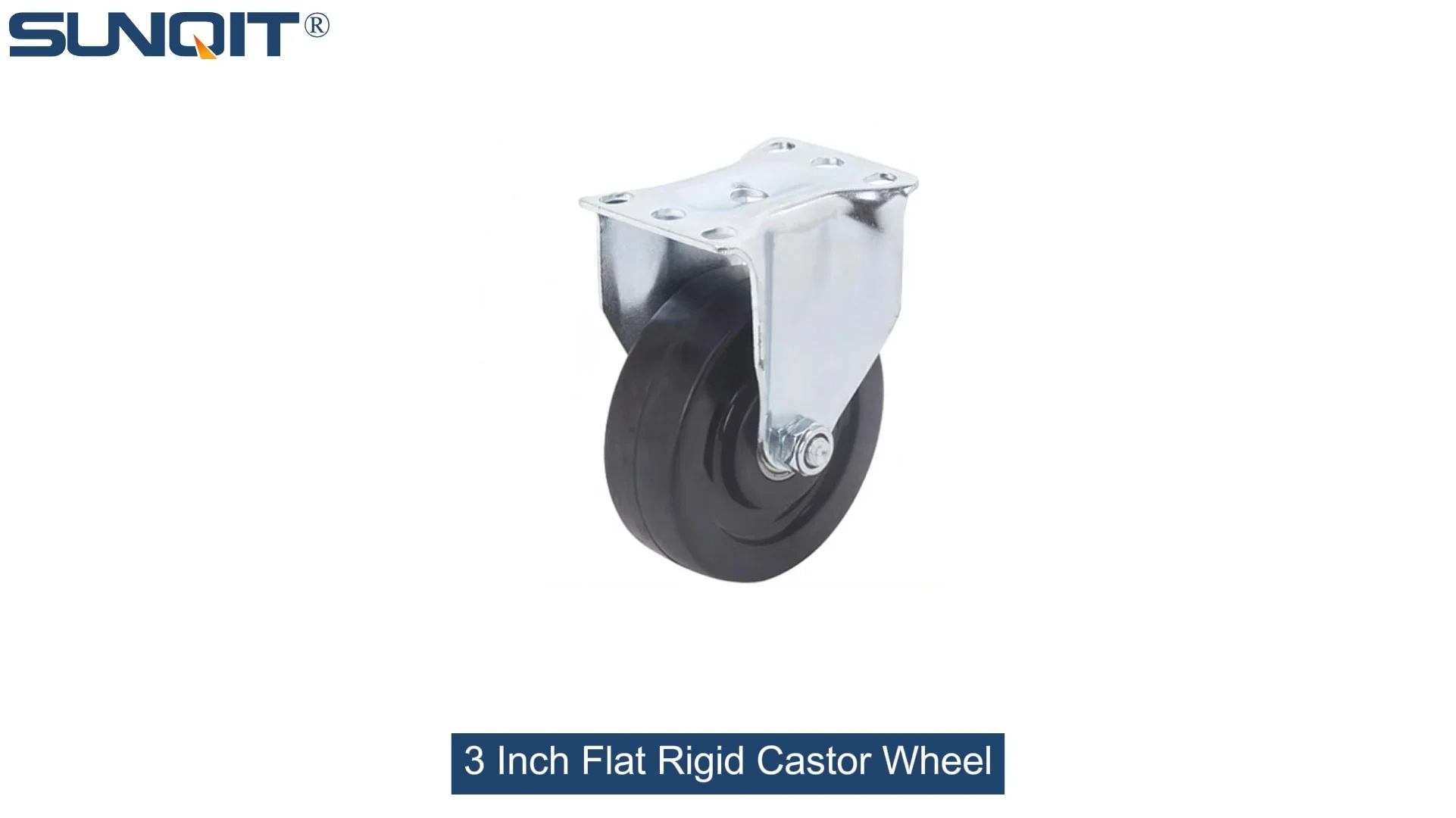
Flat Rigid Castor Wheel
Chair Casters Ball Bearing Wheels Rubber Base. Resistant to abrasion, impact and corrosion. Heavy payload can hold 70Kgs per pcs,which can make it works at a stable and smooth status.
In the rhythm of a busy warehouse or manufacturing floor, conveyor systems hum like the pulse of productivity. They move materials, connect workstations, and keep operations flowing—until a small, often overlooked component throws off the beat: the castor wheels. Specifically, flat rigid castor wheels, the unsung heroes that bear the weight of your conveyor's success. Choosing the right diameter isn't just a technical detail; it's the difference between smooth, efficient workflows and frustrating delays, worn floors, or even safety hazards. Let's dive into how to size these critical components to keep your conveyor—and your lean system—running at its best.
Understanding Flat Rigid Castor Wheels: More Than Just "Wheels"
Before we talk diameters, let's get clear on what flat rigid castor wheels are and why they matter. Unlike swivel castors, which pivot 360 degrees, rigid castors are fixed in direction—they move straight, providing stability for linear motion, making them ideal for conveyor systems where predictability is key. The "flat" refers to their tread design: a flat, often rubber or polyurethane surface that grips floors and distributes weight evenly. This stability is crucial for conveyor belts, roller tracks, and material racks, where shifting loads or uneven movement can disrupt the entire line.
Imagine a roller track conveyor in an electronics assembly plant, gliding PCBs from one workbench to the next. If the flat rigid castors under that conveyor are too small, every bump in the floor or slight incline could cause the track to jostle, misaligning components or even damaging sensitive parts. On the flip side, oversized castors might raise the conveyor too high, creating ergonomic issues for workers loading materials. The diameter of these wheels directly impacts load capacity, rolling resistance, and how well they interact with your facility's unique environment.
So, why "rigid"? In high-throughput settings, swivel castors can "drift" under heavy loads, leading to conveyor misalignment. Rigid castors keep the system on track, especially when paired with roller tracks that demand precise linear movement. They're the steady hands guiding your conveyor's path—so getting their size right is non-negotiable.
The Key Factors That Dictate Diameter: It's Not One-Size-Fits-All
Choosing a diameter starts with asking the right questions about your conveyor system, your workspace, and your goals. Let's break down the critical factors that will guide your decision.
1. Load Capacity: How Much Weight Are You Moving?
At the core of any castor selection is load capacity—the maximum weight a wheel can support without failing. But here's the catch: it's not just about the "static" load (the weight when the conveyor is stopped) but the "dynamic" load (the weight when it's moving). A conveyor carrying 500 lbs of parts per minute places different stress on castors than one holding a stationary 500 lbs load.
Smaller diameters (like 2–3 inches) often have lower load capacities, typically topping out around 300 lbs per wheel. They work well for light-duty conveyors, such as those moving small components or empty bins. Larger diameters (4–6 inches), however, distribute weight over a larger surface area, handling 500–1,000 lbs or more. If your conveyor moves heavy pallets or dense materials, skimping on diameter here could lead to cracked wheels, bent axles, or even conveyor collapse.
2. Floor Type: Smooth Concrete vs. Rough Terrain
Your facility's floor isn't just a surface—it's a collaborator in your conveyor's performance. A smooth, polished concrete floor is forgiving, allowing smaller castors to roll with minimal resistance. But if your floor is uneven, cracked, or covered in debris (think a warehouse with expansion joints or a factory with oil spills), smaller wheels will get caught, causing jolts that damage both the conveyor and the materials it carries.
Larger diameters shine here. A 5-inch wheel, for example, can roll over small gaps or debris more easily than a 2-inch wheel, reducing vibration and keeping the conveyor stable. If your floor is less than perfect, prioritize diameter over cost—replacing damaged castors every month costs more in downtime than investing in larger wheels upfront.
3. Conveyor Design: Inclines, Declines, and Speed
Is your conveyor straight and horizontal, or does it climb inclines or descend declines? Inclined conveyors add gravitational force to the load, meaning castors must work harder to prevent rolling backward. Larger diameters provide better traction and momentum, making them safer for slopes. Similarly, high-speed conveyors (those moving at 100+ feet per minute) generate more heat and friction; larger wheels dissipate this better than smaller ones, reducing wear.
For example, a roller track conveyor used to feed parts to an assembly workbench at floor level might thrive with 3-inch castors. But a conveyor that carries heavy tooling up a 15-degree incline? That's a job for 5-inch or larger wheels.
4. Environment: Temperature, Chemicals, and ESD Concerns
Extreme temperatures, exposure to oils, or the need for electrostatic discharge (ESD) protection can also influence diameter. In cold storage facilities, smaller wheels made of standard rubber might harden and crack, while larger wheels with thicker, more durable treads (like polyurethane) can withstand the cold. Similarly, in ESD-sensitive environments (common in electronics manufacturing), ESD-rated flat rigid castors are a must—but their diameter still needs to align with load and floor conditions.

Diameter by the Numbers: Common Sizes and When to Use Them
Now that we've covered the "why," let's get to the "what." Below is a breakdown of the most common flat rigid castor wheel diameters, their typical applications, and the scenarios where they excel.
| Diameter (Inches) | Load Capacity (Per Wheel, lbs) | Best Floor Type | Ideal Conveyor Speed | Common Applications |
|---|---|---|---|---|
| 2–2.5 | 150–300 | Smooth concrete, tile | Slow (≤50 ft/min) | Light-duty roller tracks, small parts conveyors, workbench feeders |
| 3–3.5 | 300–500 | Smooth to moderately rough concrete | Medium (50–100 ft/min) | General-purpose conveyors, assembly line material transport |
| 4–5 | 500–800 | Uneven concrete, warehouse floors with debris | Medium-High (100–150 ft/min) | Heavy parts conveyors, inclined/declined systems, pallet handling |
| 6+ | 800–1,200+ | Rough terrain, outdoor use | Variable (up to 200 ft/min) | Industrial conveyors, outdoor material transport, heavy machinery feeding |
Real-World Example: The 3-Inch vs. 5-Inch Dilemma
Let's say you manage a mid-sized electronics plant with a roller track conveyor that moves circuit boards from a storage area to an assembly workbench. The conveyor is horizontal, the floor is smooth concrete, and each board tray weighs about 50 lbs. Initially, you installed 3-inch flat rigid castors, and for months, everything ran smoothly. Then, production ramped up: now the conveyor carries twice as many trays, and it's moving faster to keep up with demand.
Soon, you notice the 3-inch castors are leaving scuff marks on the floor, and the conveyor jolts occasionally, causing boards to shift. The problem? The increased load (now 100 lbs per section) and speed (up to 80 ft/min) are pushing the 3-inch wheels beyond their limits. After consulting with a supplier, you switch to 5-inch castors. The larger diameter distributes the weight better, the conveyor glides silently, and the scuff marks disappear. Productivity stays on track, and your team no longer wastes time readjusting shifted boards.

How to Measure and select the Right Diameter: A Step-by-Step Guide
Choosing a diameter isn't guesswork—it's a process. Follow these steps to ensure you get it right:
Step 1: Calculate Your Total Load
Start by determining the maximum weight your conveyor will carry at any given time. This includes the weight of the materials, the conveyor frame itself, and any additional components (like side rails or guides). Divide this total by the number of castors on the conveyor to get the load per wheel. For example, a 1,000-lb total load on 4 castors = 250 lbs per wheel. Choose a diameter with a load capacity that exceeds this number (to account for dynamic forces).
Step 2: Assess Your Floor
Walk your facility and note floor conditions. Are there cracks, bumps, or debris? Is the floor smooth (polished concrete) or porous (unfinished concrete)? Take photos if needed—this will help your supplier recommend the right diameter. If your floor is uneven, add 1–2 inches to your initial diameter estimate.
Step 3: Check Conveyor Specs
Review your conveyor's manual or contact the manufacturer to find its recommended castor size range. Some conveyors have clearance limits (e.g., "maximum wheel diameter: 6 inches") to ensure proper alignment with roller tracks or other components. Ignoring these specs could lead to misalignment or damage.
Step 4: Test Before Committing
If possible, test different diameters on your actual conveyor and floor. Borrow sample castors from a supplier (many offer trial periods) and run them under typical load and speed conditions. Pay attention to noise, vibration, and how easily the conveyor moves. This real-world test is the best way to confirm your choice.

Case Study: How the Right Diameter Solved a Lean System's Biggest Headache
ABC Manufacturing, a maker of automotive parts, prided itself on its lean system—until its main conveyor line became a bottleneck. The system, which moved heavy metal components from welding to painting, used 3-inch flat rigid castors. Over six months, downtime spiked: castors were cracking, the conveyor would stall on small floor gaps, and workers spent 2 hours a day troubleshooting.
A consultant visited and immediately noticed the issue: the conveyor carried 800 lbs per section, but the 3-inch castors were rated for only 500 lbs. Worse, the factory floor had expansion joints that the small wheels caught on. The solution? Upgrading to 5-inch flat rigid castors with polyurethane treads. The result? Downtime dropped by 75%, castor replacements went from monthly to quarterly, and the conveyor's speed increased by 20%—all while reducing floor damage. "It was like giving our lean system a new set of legs," said the plant manager.
Avoiding Common Mistakes: What Not to Do
Even with the best intentions, it's easy to make missteps when sizing castors. Here are the pitfalls to avoid:
Mistake 1: Choosing Based on Cost Alone
Smaller castors are cheaper upfront, but they cost more in the long run if they fail. A $20 3-inch castor that needs replacement every month is pricier than a $50 5-inch castor that lasts a year.
Mistake 2: Ignoring Dynamic Load
Static load (when stopped) is only part of the equation. A castor that handles 500 lbs statically might fail under 400 lbs when moving at high speeds. Always factor in dynamic load.
Mistake 3: Overlooking Future Needs
Your business grows, and so might your conveyor's load. Choose a diameter that can handle 1.5x your current load to avoid re-sizing later.
Conclusion: Your Conveyor's Success Starts with the Right Diameter
Flat rigid castor wheels may be small, but their impact on your conveyor system—and your lean system as a whole—is enormous. By matching diameter to load, floor conditions, and conveyor design, you'll reduce downtime, extend equipment life, and keep your operations flowing smoothly. Remember, the goal isn't just to "pick a wheel"—it's to pick a partner in productivity. So take the time to measure, test, and consult with experts. Your team, your bottom line, and your lean system will thank you.