- Company Articles
- Products and Technology
- Product knowledge
- Small Batch Production: Advantages of Four Way Straight Lean Pipe Joint Chrome

Small Batch Production: Advantages of Four Way Straight Lean Pipe Joint Chrome
Related Product
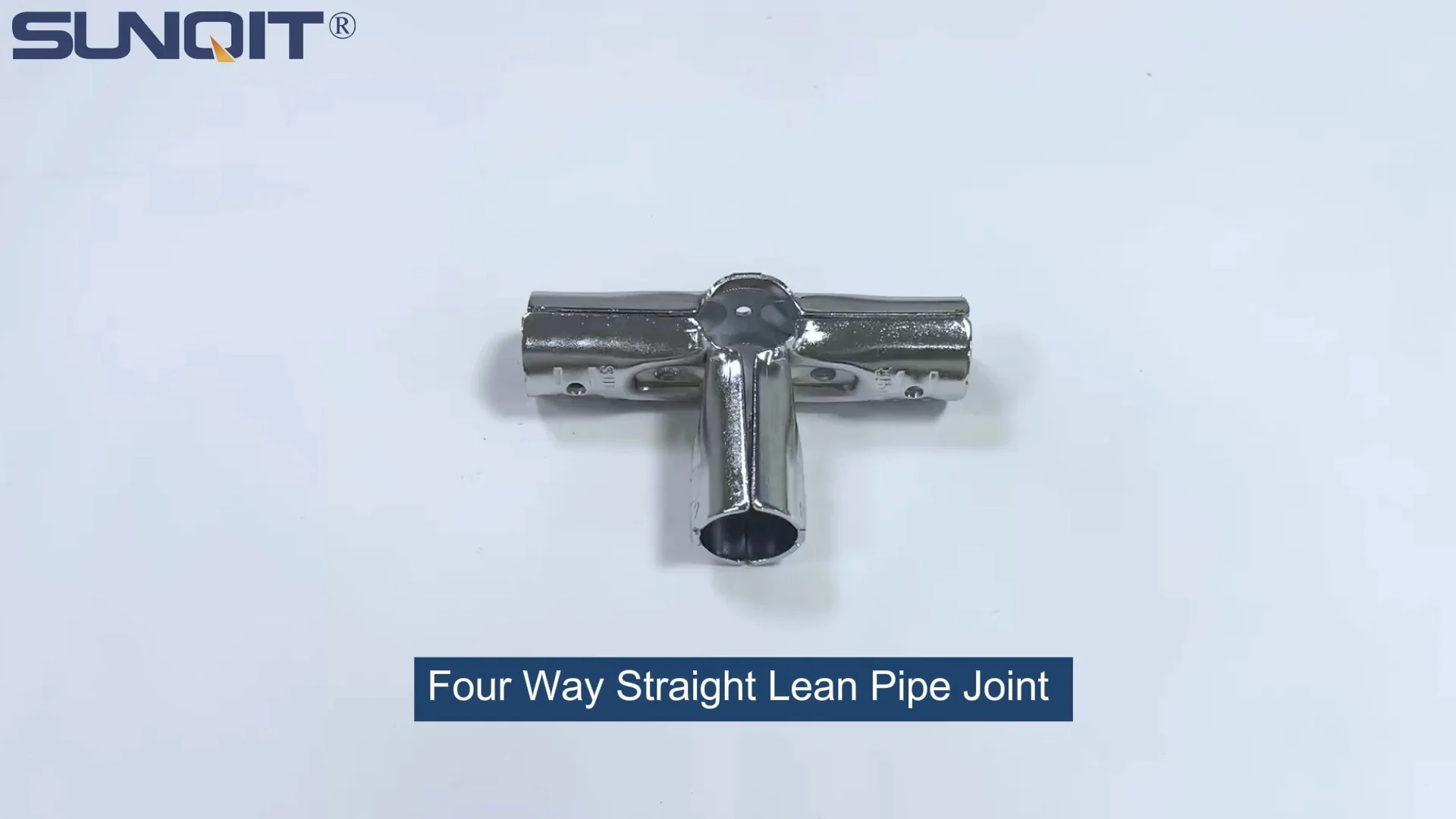
Four Way Straight Lean Pipe Joint Chrome
Four way lean pipe joint for 4 pcs 28MM lean pipe connection in straight angle, which used widely in workbench, flow rack, hand trolley frame connection.
Small batch production is the heartbeat of countless industries—from custom electronics and artisanal furniture to specialized medical devices. It's where innovation meets flexibility, where teams pivot quickly to meet unique customer demands, and where every inch of workspace and minute of time counts. But here's the catch: traditional manufacturing setups, with their rigid conveyor belts, fixed workbenches, and one-size-fits-all material racks, often feel like trying to fit a square peg into a round hole. They're slow to adapt, expensive to reconfigure, and leave little room for the agility small batch operations need to thrive. That's where lean pipe systems step in—and at the center of this adaptable revolution? The four way straight lean pipe joint chrome. Let's dive into why this unassuming component is becoming the unsung hero for small batch producers everywhere.
The Small Batch Challenge: Why Rigidity Kills Efficiency
Imagine running a small workshop that builds custom guitar amplifiers. One week, a client wants a compact 5-watt model with a vintage tube layout; the next, a touring band orders a 100-watt beast with built-in effects. Your workspace needs to shift from assembling tiny circuit boards to mounting heavy speakers, from storing delicate vacuum tubes to organizing bulky power transformers. If your workbench is bolted to the floor, your material rack can't adjust its shelf heights, and your assembly line is a fixed conveyor—you're stuck. You'll spend hours (or days) rearranging, lose momentum, and maybe even miss deadlines.
Small batch producers face this reality daily: product variability , space constraints , and tight budgets . Rigid setups don't just slow you down—they drain resources. Welding new frames, buying custom racks, or hiring contractors to reconfigure workspaces eats into profits. What you need isn't just equipment; it's a system that bends without breaking, that grows and changes as your projects do. Enter lean pipe systems, and more specifically, the components that make them tick: joints.
Lean Pipe Systems 101: Building Blocks of Flexibility
Lean pipe systems (often called "flexible pipe systems") are modular frameworks built from simple components: pipes (usually steel, aluminum, or stainless steel), joints, and accessories like caster wheels, roller tracks, and workbench surfaces. Think of them as industrial Erector sets for adults—you snap pipes into joints, add accessories, and create exactly what you need, when you need it. No welding, no drilling, no permanent commitments.
At the core of these systems are the joints. They're the connectors that turn straight pipes into workbenches, flow racks, material trolleys, or conveyor supports. And while there are dozens of joint types—two-way, three-way, swivel, fixed—one stands out for its versatility in small batch settings: the four way straight lean pipe joint chrome . Let's break down why this joint, in particular, is a game-changer.
Meet the Star: What Is a Four Way Straight Lean Pipe Joint Chrome?
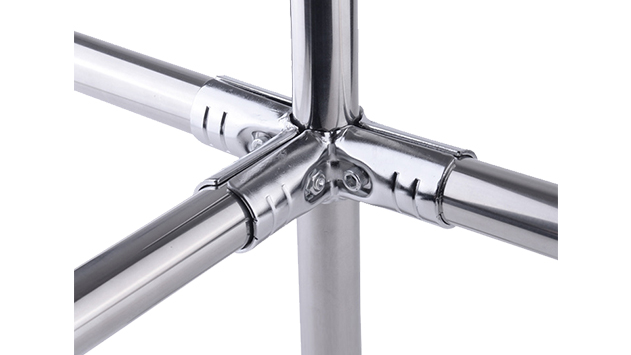
At first glance, it's a small, unassuming piece—usually made of die-cast metal with a sleek chrome finish, shaped like a cross with four openings (hence "four way"). Each opening is designed to grip a lean pipe (typically 28mm or 30mm in diameter) securely, using a combination of friction and set screws. But don't let its size fool you. This joint is the Swiss Army knife of lean systems. It lets you connect four pipes in a straight line or at 90-degree angles, creating sturdy, customizable structures that can be taken apart and rebuilt in minutes.
Why chrome? Chrome plating isn't just for looks. It adds a layer of durability, resisting rust and corrosion—critical if your workshop deals with moisture (like a food packaging facility) or frequent cleaning (like a medical device lab). It also reduces friction, making it easier to adjust pipes when reconfiguring. For small batch producers who reuse components across projects, that chrome finish ensures the joint stays strong, even after years of assembly, disassembly, and reassembly.

Advantage 1: Unmatched Flexibility—Build, Break, Rebuild (in Minutes)
The biggest pain point for small batch production? Setup time . With a four way straight lean pipe joint chrome, that pain disappears. Let's say you need a workbench for assembling smartphone components today and a material rack for storing finished products tomorrow. Here's how it works:
- Snap-and-go assembly : No tools? No problem. Most four way joints use hand-tightened set screws—just slide a lean pipe into the joint, twist the screw, and it's locked. Need to adjust? Loosen the screw, reposition, and retighten. It takes seconds, not hours.
- Four-way versatility : Unlike two-way joints (which only connect two pipes) or three-way joints (limited to T-shapes), the four way joint lets you build in multiple directions. Want a workbench with shelves on both sides? Add pipes upward and outward. Need a flow rack with vertical dividers and horizontal roller tracks? Connect pipes front-to-back and left-to-right. It's like having a 3D puzzle where every piece fits exactly where you need it.
- Zero permanent changes : Drill a hole in a wooden workbench, and it's ruined if you need to move a shelf. Weld a steel frame, and it's fixed forever. With lean pipe joints, there's no damage—just disassembly. Last month's "fixed" workbench becomes next month's "mobile trolley" with the addition of caster wheels (another key accessory) and a few joint adjustments.
Take a real example: A small electronics manufacturer in Ohio was struggling with setup times for their circuit board assembly. They switched to lean pipe workbenches using four way joints. Now, when a new board design comes in, they reconfigure the workbench's tool holders, component bins, and ESD (electrostatic discharge) mats in under 30 minutes—down from 8 hours with their old wooden benches. That's not just efficiency; that's a competitive edge.
Advantage 2: Durability That Saves Money (No More "Disposable" Equipment)
Small batch operations can't afford to replace equipment every time a project changes. A flimsy joint that cracks after a few reconfigurations? A rusted connector that weakens under load? That's money down the drain. The four way straight lean pipe joint chrome solves this with its industrial-grade build .
Chrome plating isn't just about shine—it's a protective barrier. It resists scratches, corrosion, and wear, even in high-traffic workshops. The die-cast metal body (often zinc or aluminum alloy) handles heavy loads: most four way joints can support 50-100kg per pipe, depending on the pipe material (steel vs. aluminum lean pipe). That means you can build sturdy material racks for storing metal parts, workbenches for assembling heavy machinery, or even roller track conveyors for moving finished goods—all without worrying about joints bending or breaking.
Compare this to plastic joints, which warp under heat or crack under pressure, or low-quality steel joints that rust after a year in a humid workshop. The four way chrome joint is built to last, which means you're not buying replacements every few months. For small businesses, that's a direct line to higher profits—less spent on equipment, more invested in growth.
Advantage 3: Compatibility with Every Tool in Your Lean Arsenal
A joint is only as good as the system it fits into. The four way straight lean pipe joint chrome plays well with others, making it the ultimate team player in your lean setup. Here's how it pairs with key accessories:
| Accessory | How It Works with Four Way Joints | Small Batch Benefit |
|---|---|---|
| Aluminum Lean Pipe | Lightweight, corrosion-resistant, and easy to cut to length. Snaps into four way joints for quick builds. | Build mobile workbenches (add caster wheels!) that are easy to move around tight workshops. |
| Roller Track | Mount roller track (plastic or steel) to horizontal pipes using brackets, connected via four way joints. | Create custom flow racks for parts—slope the track, and gravity feeds components to your assembly line. |
| Caster Wheels | Attach caster wheel plates to vertical pipes connected by four way joints. | Turn a fixed workbench into a mobile trolley in 5 minutes—move materials directly to the assembly station. |
| ESD Workbench Surfaces | Mount ESD-safe plywood or aluminum panels to a frame built with four way joints. | Protect sensitive electronics during assembly, then reconfigure the frame for non-ESD projects later. |
Take flow racks, for example. A small bakery in Portland uses four way joints to build adjustable flow racks for storing muffin tins, cake pans, and decorating tools. By angling roller track (connected via the joints) downward, they let pans "flow" to the front of the rack, reducing bending and reaching for workers. When holiday season hits and they need to store larger cookie sheets, they adjust the shelf heights by moving the four way joints up the vertical pipes—no tools, no hassle.
Advantage 4: Scalability—Grow Without Overspending
Small batch production rarely stays "small" forever. As orders grow, you need a system that grows with you. The four way straight lean pipe joint chrome makes scaling affordable. Instead of buying a brand-new conveyor system when you need to expand your assembly line, you can add more pipes and joints to your existing setup. Need a second workbench? Use leftover pipes and extra four way joints from your first build. Want to extend a flow rack to hold more inventory? Just add a few more sections—no need to replace the entire rack.
This scalability is a lifesaver for startups and small businesses. A lean system supplier (another key partner) can sell you joints and pipes in small quantities, so you don't have to invest in bulk upfront. As your needs grow, you buy only what you need—no wasted money on oversized equipment that sits idle.
Advantage 5: Safety First (Because Accidents Cost More Than Money)
Small workshops often skip safety upgrades because they're "too small" or "too busy." But a cluttered workspace with unstable racks, wobbly workbenches, or loose tools is a disaster waiting to happen. The four way straight lean pipe joint chrome prioritizes safety in two key ways:
- Secure connections : Unlike cheap plastic joints that slip or weak metal joints that bend, chrome-plated four way joints grip pipes tightly. No more "wobbly" shelves or workbenches that shift mid-assembly—critical when handling heavy tools or fragile components (like glassware or medical devices).
- ESD compatibility : Many lean pipe systems, including joints, are ESD-safe (especially when paired with aluminum lean pipe or ESD workbench surfaces). For electronics manufacturers, this prevents static electricity from frying circuit boards—a $50 component ruined by static is a $500 mistake if it delays an order.
- No sharp edges : Chrome plating smooths the joint's surface, eliminating burrs or rough spots that could catch clothing or skin. In a busy workshop, that means fewer cuts, scrapes, and distractions.
Why Chrome? Comparing Joint Materials
You might be wondering: Why chrome-plated joints over plastic, plain steel, or aluminum? Let's break it down:
Plastic Joints
Pros: Cheap, lightweight. Cons: Warp in heat, crack under heavy loads, not ESD-safe. Good for very light tasks (like craft workshops), but risky for industrial use.
Plain Steel Joints
Pros: Strong, affordable. Cons: Rust easily, especially in humid environments. Require painting or coating to last, adding maintenance time.
Aluminum Joints
Pros: Lightweight, corrosion-resistant. Cons: Less load capacity than steel, pricier. Great for mobile setups but not ideal for heavy-duty storage.
Chrome-Plated Steel Joints (Four Way Straight)
Pros: Best of both worlds—steel strength + chrome corrosion resistance. Durable, ESD-compatible, and affordable. The sweet spot for small batch producers who need reliability without overspending.
Choosing the Right Partner: Why a Lean System Supplier Matters
Not all four way straight lean pipe joints are created equal. A cheap joint from a no-name supplier might look the part, but it could have weak metal, shoddy plating, or ill-fitting pipe openings. That's why partnering with a reputable lean system supplier is as important as choosing the joint itself.
A good supplier will offer:
- Quality testing : Joints should be load-tested to ensure they can handle advertised weights. Ask for specs—if a supplier can't tell you how much weight a joint supports, walk away.
- Compatibility : Pipes, joints, and accessories (like roller track or caster wheels) should all work together. A supplier that sells "mismatched" parts will leave you with wobbly setups.
- Technical support : Need help designing a custom workbench or flow rack? A good supplier offers guidance, not just products. They'll help you choose the right joints, pipes, and accessories for your specific projects.
Real Results: How One Small Business Transformed with Four Way Joints
Let's wrap up with a story. A family-owned custom cabinet shop in Colorado was struggling with space. They built everything from kitchen cabinets to bathroom vanities, and their workshop was cluttered with fixed workbenches and mismatched material racks. Employees wasted 2 hours daily just searching for tools or moving materials across the shop.
They switched to a lean pipe system using four way straight lean pipe joint chrome, aluminum lean pipe, and roller track. Here's what happened:
- Workbenches were reconfigured daily to fit cabinet sizes—no more "one-size-fits-all" surfaces.
- Roller track flow racks stored cut wood, letting it "flow" to the assembly area instead of being carried by hand.
- Caster wheels added to workbenches turned them into mobile assembly stations, reducing walking time by 70%.
- Setup time for new cabinet designs dropped from 2 days to 2 hours.
- Profits increased by 15% in the first year—all from saving time and reducing waste.
Conclusion: The Four Way Joint—Small Component, Big Impact
Small batch production isn't about being "small"—it's about being smart, agile, and ready to adapt. The four way straight lean pipe joint chrome embodies that spirit. It's a small component, but it unlocks big possibilities: faster setup times, durable and flexible workspaces, cost savings, and a safer environment. When paired with the right lean pipe (aluminum or steel), accessories (roller track, caster wheels), and a reliable lean system supplier, it's not just equipment—it's a growth tool.
So, if you're tired of rigid setups holding back your small batch operation, ask yourself: What could you accomplish with a workspace that bends to your needs? With four way joints, the answer is simple: anything you want .