- Company Articles
- Products and Technology
- Product knowledge
- Small Iron Corner Code vs. Spring Clips: Stability in High-Vibration Production Environments

Small Iron Corner Code vs. Spring Clips: Stability in High-Vibration Production Environments
Related Product
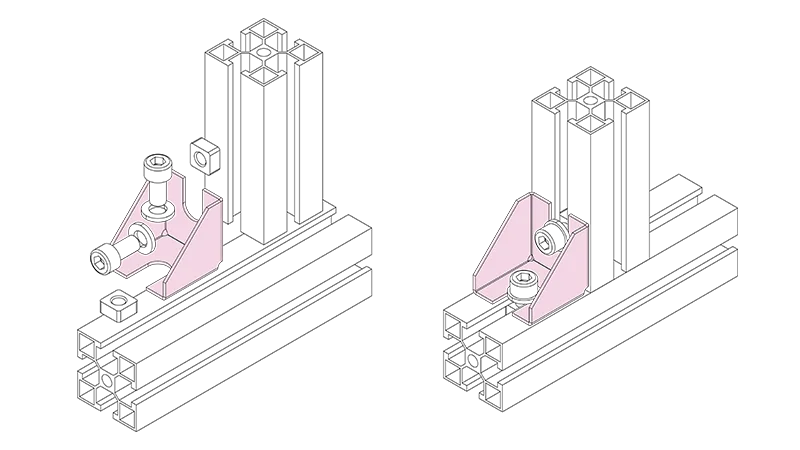
Small Iron Corner Code
Used for 30 series aluminum profile 90° plane connection
Walk onto any busy factory floor, and you'll hear it before you see it: the steady hum of machinery, the rhythmic clatter of conveyor belts, the occasional whir of a power tool. These sounds are the heartbeat of production—but they're also a reminder of a hidden challenge: vibration. Every drill press, every assembly line, every pallet being dropped sends tiny (or not-so-tiny) shocks through the workspace. Over time, that vibration can turn tight joints into wobbly connections, sturdy workbenches into shaky platforms, and reliable systems into ticking time bombs of downtime.
In these high-stakes environments, stability isn't just a nice-to-have—it's the backbone of safety, efficiency, and quality. And when it comes to keeping things stable, two unassuming components often fly under the radar: small iron corner codes and spring clips. These humble fasteners might not grab headlines, but they're the unsung heroes holding together everything from lean pipe workbenches to roller tracks. Today, we're diving deep into the world of these two workhorses, comparing their strengths, weaknesses, and performance in the one place where "good enough" just doesn't cut it: high-vibration production settings.
First Things First: What Are We Actually Talking About?
Before we pit them against each other, let's make sure we're on the same page. What exactly are small iron corner codes and spring clips, and where do they fit into the production puzzle?
Small Iron Corner Codes: Picture a tiny, L-shaped bracket made of sturdy iron, often with pre-drilled holes for screws or bolts. These unglamorous pieces are the quiet enforcers of structural integrity. You'll find them wherever two pieces of material meet at a right angle—think the corners of a workbench frame, the joints of a material rack, or the edges of a lean pipe assembly. Their job? To lock those joints into place, preventing lateral movement and ensuring the frame stays square, even when the floor beneath it is shaking like a washing machine on spin cycle.
Spring Clips: If iron corner codes are the strong, silent types, spring clips are the flexible problem-solvers. Made from thin, resilient metal (usually steel or stainless steel), these small, curved pieces rely on tension to hold parts together. They're designed to snap into place, gripping onto edges, grooves, or tabs without the need for bolts or screws. You might spot them securing roller tracks to aluminum profiles, holding panels in place on a turnover trolley, or attaching accessories to a caster wheel mount. Their claim to fame? Quick installation and a "give" that lets them absorb some movement—though whether that's a strength or weakness depends on the situation.
At first glance, both seem simple. But in a high-vibration environment—where even a loose joint can lead to misaligned parts, damaged goods, or worse—their differences become critical. Let's break down why vibration matters, and how these two fasteners stack up.
Why Vibration Is the Silent Enemy of Production Stability
Vibration in manufacturing isn't just an annoyance—it's a force that can unravel even the best-laid plans. Let's start with the basics: what causes all that shaking? It could be the high-speed rotation of a machine part, the impact of materials being loaded onto a conveyor, or even the natural resonance of a lightweight aluminum profile frame. Over time, these vibrations act like a slow-motion wrench, loosening screws, stretching materials, and creating microscopic gaps in joints.
The consequences? Imagine a lean pipe workbench where the corner joint has started to wobble. A worker trying to assemble precision electronics on that bench might misalign a component, leading to defects. Or consider a roller track where spring clips have loosened: a box might get stuck mid-transport, jamming the line and halting production. In the worst cases, a compromised frame could collapse, risking injury or costly equipment damage.
For managers, the hidden cost is downtime. Every minute spent tightening loose fasteners, replacing bent clips, or realigning a rack is a minute not spent making products. And in industries where margins are tight, that downtime adds up fast. So when choosing between iron corner codes and spring clips, the question isn't just "which is easier to install?"—it's "which will keep this system stable
for months
, even when the machines are roaring?"

Small Iron Corner Codes: The Heavyweights of Rigidity
Let's start with the iron corner code. Its design is all about brute strength. Made from thick, rigid iron (sometimes coated in zinc to resist rust), it's built to withstand force. When you bolt an iron corner code onto a joint—say, connecting two pieces of lean pipe to form the corner of a workbench—it creates a fixed, immovable bond. There's no "give" here; the bracket acts like a third piece of metal, distributing stress across the joint and preventing the two pipes from pulling apart or twisting.
How They Handle Vibration
In high-vibration settings, rigidity is often a good thing. Iron corner codes don't flex, so they don't absorb vibration—instead, they resist it. Think of it like a rock in a stream: the water (vibration) crashes against it, but the rock stays put. As long as the bolts holding the corner code in place stay tight, the joint remains secure. This makes them ideal for heavy-duty applications, like workbenches used for assembly tasks that require precision, or material racks loaded with heavy parts (we're talking 500+ pounds).Installation and Longevity
Installing an iron corner code takes a bit more effort than a spring clip. You'll need to drill holes, line up the bracket perfectly, and tighten bolts—sometimes with a wrench. But that extra work pays off in longevity. Unlike spring clips, which can lose tension over time, iron corner codes are permanent (or close to it). They're also less prone to wear and tear. Even in dusty or humid environments, a zinc-coated iron corner code resists corrosion better than many spring clips, which might rust if their protective coating chips.The Catch?
Rigidity isn't always a plus. If the vibration is extreme—think a stamping press that shakes the entire floor—an iron corner code might transfer that vibration to the rest of the frame, potentially weakening other joints. And if you ever need to reconfigure the frame (say, adjusting the height of a workbench), removing an iron corner code means unbolting it, which takes time. They're also bulkier than spring clips, so they might not fit in tight spaces or on lightweight frames where every ounce counts.Spring Clips: The Flexible Contenders
Now, let's turn to spring clips. These little fasteners are all about flexibility—literally. Made from thin, springy metal, they're designed to bend slightly when installed, creating tension that grips the parts they're holding. For example, if you're attaching a plastic roller track guide rail to an aluminum profile, a spring clip might snap into the profile's T-slot, gripping the rail tightly without the need for tools.
How They Handle Vibration
Spring clips' flexibility is a double-edged sword in high-vibration environments. On one hand, their ability to flex can help absorb small vibrations. Imagine a conveyor belt that jostles as boxes pass over it: a spring clip might "bounce" slightly with the movement, reducing the stress on the joint. This can be useful in lightweight applications, like small roller tracks or temporary fixtures where vibration is mild and frequent reconfiguration is needed. On the other hand, that same flexibility can be a liability. Over time, constant vibration can cause the clip to lose tension. Think of a paperclip you bend back and forth too many times—it weakens and eventually breaks. In a factory where machines run 24/7, a spring clip might start to loosen after a few weeks, leading to rattling, misalignment, or even detachment. This is especially true if the clip is holding a heavy load; the extra weight amplifies the stress, the loss of tension.Installation and Versatility
The biggest advantage of spring clips is speed. No drilling, no bolts, no tools—just snap them into place. This makes them a favorite for quick setups or temporary structures, like a turnover trolley used for short-term projects. They're also versatile: you can find spring clips in various sizes and shapes, designed to fit everything from aluminum profile T-slots to the edges of plastic panels. But speed comes with trade-offs. Unlike iron corner codes, which create a permanent bond, spring clips are temporary by nature. They're easy to remove, which is great for reconfiguration, but that also means they're easier to dislodge accidentally—say, if a worker bumps into the frame or a heavy box slams against it.When Spring Clips Struggle
In environments with constant, high-amplitude vibration —think automotive assembly lines with heavy machinery or metalworking shops with pneumatic tools—spring clips often fall short. A study by a manufacturing consultancy found that in such settings, spring clips on roller tracks needed replacement every 2–3 months, compared to iron corner codes, which lasted 2+ years with minimal maintenance. The cost of those replacements (not to mention the downtime) adds up fast.Head-to-Head: Comparing Key Features
To really understand how these two fasteners stack up, let's put them side by side. The table below breaks down their performance in critical areas for high-vibration production environments:
| Feature | Small Iron Corner Code | Spring Clip |
|---|---|---|
| Material | Thick iron (often zinc-coated for rust resistance) | Thin, flexible steel or stainless steel |
| Installation | Requires drilling, bolts, and tools; permanent bond | Tool-free; snaps into place; temporary/removable |
| Vibration Resistance | High; rigid design resists movement | Low to moderate; flexibility leads to tension loss over time |
| Load Capacity | High (supports 500+ lbs when properly installed) | Low to moderate (best for light to medium loads, <200 lbs) |
| Maintenance Needs | Low; occasional bolt tightening | High; frequent replacement due to tension loss |
| Best For | Heavy-duty, permanent structures (lean pipe workbenches, material racks, fixed assembly stations) | Lightweight, temporary setups (temporary roller tracks, quick-assembly frames, low-vibration areas) |
The Takeaway
Iron corner codes are the reliable workhorses—slow to install, but built to last in tough conditions. Spring clips are the sprinters—fast and flexible, but not built for the long haul in high-vibration settings. The choice between them depends on your priorities: Do you need something that can handle heavy loads and constant shaking, or something quick to set up and easy to reconfigure?Real-World Stories: How They Perform on the Factory Floor
Numbers and tables tell part of the story, but nothing beats real-world examples. Let's look at two factories that faced high-vibration challenges and chose different fasteners—with very different outcomes.
Case Study 1: Automotive Plant Upgrades to Iron Corner Codes
A mid-sized automotive parts manufacturer in Michigan was struggling with frequent downtime on its transmission assembly line. The line used lean pipe workbenches to hold tools and components, and those workbenches were secured with spring clips. Within weeks of installation, the constant vibration from nearby stamping presses caused the clips to loosen, leading to wobbly work surfaces. Workers reported misaligning parts, and the maintenance team was spending 8+ hours per week retightening or replacing clips. The solution? The plant replaced the spring clips with small iron corner codes. It took a weekend to retrofit the workbenches (drilling holes, installing brackets, and tightening bolts), but the results were immediate. Six months later, the maintenance team reported zero issues with loose joints. Downtime related to workbench instability dropped by 95%, and workers noted improved precision in their assembly tasks. The plant manager estimated the upgrade paid for itself in less than a year, thanks to reduced downtime and fewer defective parts.Case Study 2: Electronics Plant Sticks with Spring Clips (and Regrets It)
A consumer electronics manufacturer in California used spring clips to secure roller tracks on its circuit board assembly line. The tracks transported delicate circuit boards between workstations, and the plant chose spring clips for their quick installation and "gentle" grip (they worried bolts might scratch the aluminum profile frames). At first, things went smoothly. But after three months, the constant vibration from overhead conveyor belts caused the clips to loosen. Circuit boards started jamming on the tracks, leading to scratched components and production delays. The maintenance team tried using heavier-duty spring clips, but the problem persisted—this time, the clips themselves began to bend under the stress of holding the tracks in place. Eventually, the plant switched to iron corner codes for the roller track supports. While installation took longer, the tracks have remained stable for over a year, with no jams or scratches. The lesson? Even in "light" industries like electronics, high vibration demands robust fasteners.Choosing the Right Fastener: A Practical Guide
So, how do you decide between small iron corner codes and spring clips for your production environment? Here's a step-by-step guide to help you weigh the factors:
Step 1: Assess Your Vibration Level
Start by evaluating how much vibration your workspace experiences. Is it constant (e.g., near a conveyor belt or large machine), or intermittent (e.g., occasional use of power tools)? High, constant vibration calls for iron corner codes. Low, occasional vibration might be manageable with spring clips—if other factors align.Step 2: Consider the Load
What's the maximum weight the structure will hold? If you're building a material rack for 400-pound engine parts, iron corner codes are non-negotiable. If it's a lightweight turnover trolley for empty boxes, spring clips might work—just keep an eye on them for loosening.Step 3: Think About Permanence
Is the structure permanent (e.g., a fixed assembly station) or temporary (e.g., a pop-up workstation for a short project)? Iron corner codes are ideal for permanent setups; spring clips make sense for temporary ones. But even temporary setups in high-vibration areas might need iron corner codes—remember the automotive plant's experience with "temporary" spring clips that became a long-term headache.Step 4: Calculate Long-Term Costs
Spring clips are cheaper upfront, but factor in replacement costs and downtime. If you're replacing clips every 2–3 months, the total cost over a year could be 3–4 times that of installing iron corner codes once. Don't forget labor costs: every hour spent replacing clips is an hour not spent on production.Step 5: Consult Your Team
Talk to the people who use and maintain the equipment. Maintenance workers can tell you how often fasteners fail; operators can share how instability affects their work. Their input might reveal hidden issues—like a "low-vibration" area that actually has more shaking than you thought.Final Thoughts: Stability Isn't Optional
In the fast-paced world of manufacturing, it's easy to overlook the small stuff—like the fasteners holding your workbenches and racks together. But as we've seen, small iron corner codes and spring clips aren't "small stuff" at all. They're the difference between a smooth-running production line and one plagued by downtime, defects, and safety risks.
For high-vibration environments—where every shake and rattle tests the limits of your equipment—small iron corner codes are the clear winner. Their rigidity, durability, and resistance to vibration make them the backbone of stable, reliable structures. Spring clips have their place, of course—in lightweight, temporary, or low-vibration settings—but they're not a substitute for the strength of iron when the going gets tough.
At the end of the day, stability is an investment. It's investing a little extra time in installation to avoid hours of maintenance later. It's choosing a fastener that can keep up with the rhythm of your factory, not slow it down. And when you make that investment, you're not just building better workbenches or sturdier racks—you're building a more efficient, safer, and more profitable operation.
So, the next time you walk onto your factory floor, take a closer look at those joints and connections. Are they held together by heroes or by quick fixes? The answer might just determine how smoothly your production runs—today, tomorrow, and for years to come.